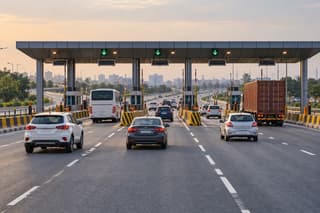
MoRTH will run Special Campaign 6.0 from 2 to 31 October 2026 with a focus on cleaning and maintaining national highways and toll plazas. For drivers and transport operators, the practical point is better road markings, lighting, toll-facility upkeep and pothole work at identified locations; this announcement is a maintenance programme, not a new toll-rate notification.
Key takeaways
- The main campaign is scheduled for 2–31 October 2026, after a preparatory phase from 15–30 September.
- Planned work includes garbage removal, toll-plaza cleaning and painting, toilet refurbishment, better lighting and solarisation.
- MoRTH also lists road-sign improvements, more visible lane markings and efforts to make national highways pothole-free.
- A 50-km national highway stretch, including one toll plaza, has been selected for focused inspection, geo-tagging of deficiencies and monitoring of corrective work.
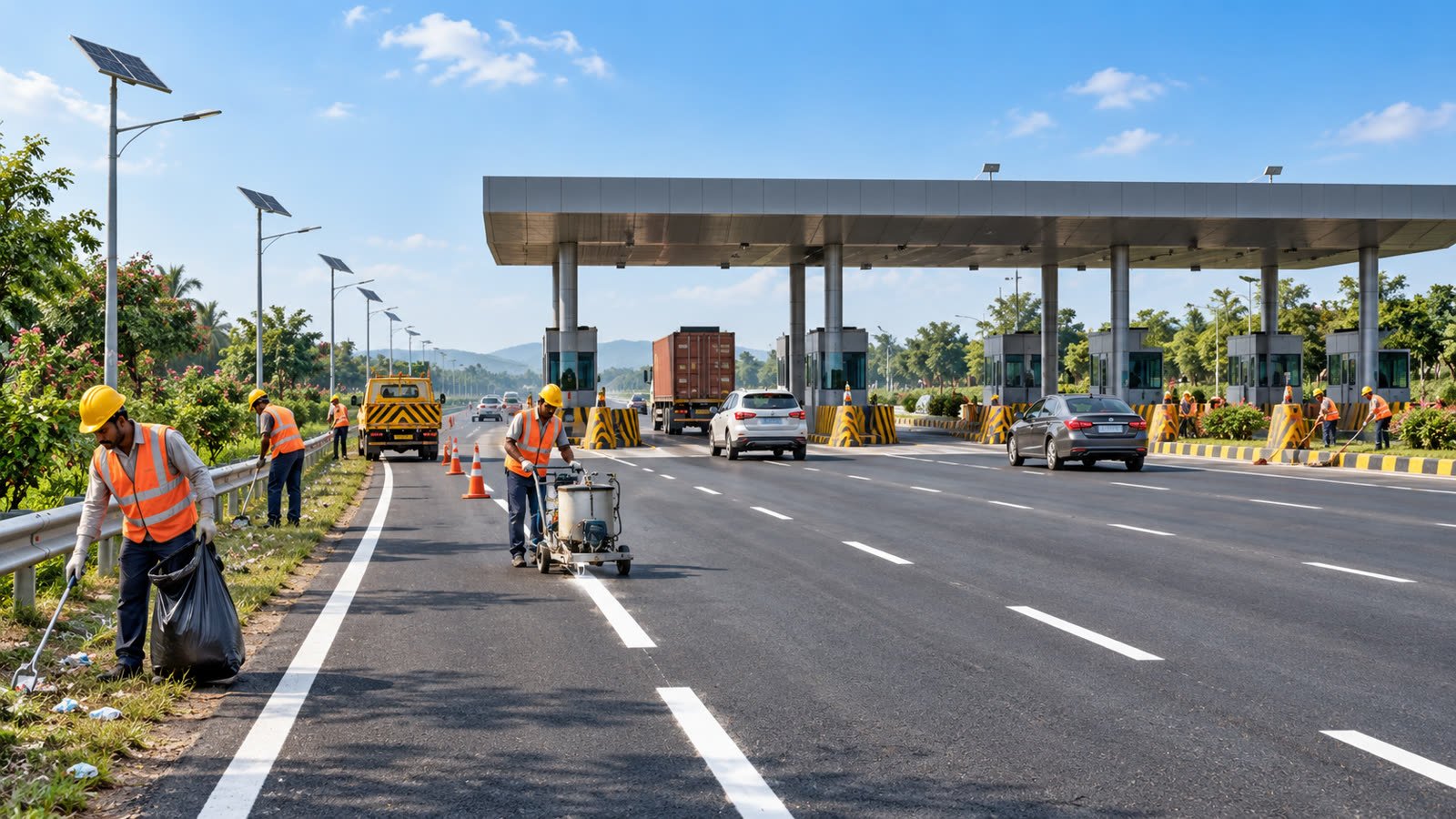
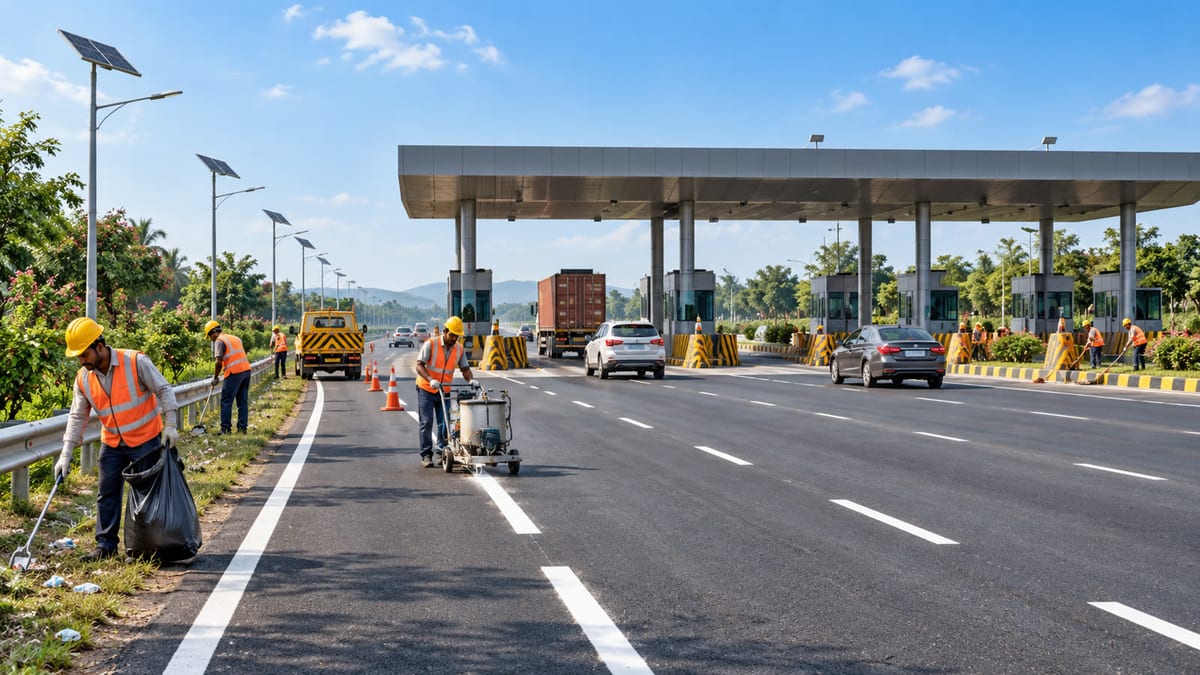 Illustration: highway and toll-plaza maintenance work; not a photograph of a specific campaign site. Credit: FuelPrice / AI-generated editorial illustration.
What the October highway campaign covers
The Ministry of Road Transport and Highways has confirmed a month-long Special Campaign 6.0 focused on the public-facing parts of the highway network. Its stated work list begins with removing garbage along national highways, especially in urban stretches, and improving the condition of toilet blocks and other facilities at toll plazas and along the highway.
The plan also covers cleaning and painting toll-plaza structures, improving lighting and using solarisation where planned. Road users should see the effect most clearly in places where lane guidance is weak or where a facility has been difficult to use after dark. MoRTH has included new or improved road signs, better visibility of road markings and pothole-repair work in the same campaign.
The scope matters because a toll plaza is not only a payment point. Its approach lanes, lighting, signs, toilets and shoulders shape how safely a private car, bus or goods vehicle enters, crosses and leaves the facility. Better upkeep can reduce confusion and help drivers read lane changes earlier, although the announcement does not promise that every national-highway kilometre or every toll plaza will be upgraded during October.
What it means for drivers and transport operators
The most useful expectation is targeted maintenance, not an automatic improvement on every route. The ministry has identified a 50-km highway stretch with one toll plaza for focused intervention, while field offices will coordinate work elsewhere under the campaign. That means road conditions may remain uneven between selected sites and the rest of a corridor.
Maintenance activity can also create short work zones, narrowed shoulders or temporary lane changes. Drivers using a route during the campaign should follow cones, signs and marshals, especially near a toll plaza where vehicles, maintenance equipment and heavy trucks may share limited space. A cleaner plaza does not remove the need to keep a valid FASTag and enough balance for the journey.
Because the announcement is not a toll-revision order, users should not treat it as a change in the amount charged at a fee plaza. Before a long drive, the toll-charge calculator can help estimate the route cost, while the road-trip planner can help organise stops and timing around the road conditions you expect.
Why markings, lighting and toilets matter
For a driver, lane paint and signs are practical safety information. They show where to merge, which lane leads to a toll booth and where a shoulder begins. When markings fade or lighting is poor, the burden shifts to last-second braking and lane changes. This is more difficult for buses, multi-axle trucks and cars travelling at night or in rain.
Facility upkeep also has a direct trip-quality effect. A usable toilet and a cleaner rest area matter to families, long-distance drivers and fleet crews who need a safe break without leaving the highway. Those improvements do not change fuel consumption by themselves, but avoiding unnecessary detours or prolonged idling can make a planned trip easier to manage. For a route where a work zone may add distance or time, the fuel-cost calculator provides a way to check the running-cost effect using the vehicle and trip details.
How MoRTH plans to monitor results
The campaign’s accountability mechanism is concentrated on the selected stretch and toll plaza. Officers from the ministry headquarters are to inspect the assigned locations, identify deficiencies, geo-tag them and track rectification work. The ministry says the aim is timely resolution and visible improvement in cleanliness, safety and general upkeep during the campaign period.
Nodal officers have also been designated across organisations under MoRTH’s administrative control. The Joint Secretary (Coordination) is responsible for overall coordination, while the ministry’s Secretary is reviewing the preparatory phase in weekly senior-officers’ meetings. That reporting structure is important because a one-day clean-up is less useful than maintenance that remains in place after the campaign ends.
What to watch from 2 October
Motorists should look for practical changes rather than assume that a campaign label means a route is fully repaired. The useful indicators are visible lane markings, working lights, readable signs, usable toilets, cleared shoulders and potholes that have actually been repaired instead of only marked. On corridors carrying freight or festival traffic, drivers should allow extra time if maintenance teams are working close to a toll plaza.
The ministry has not published a route-by-route public list in the announcement, so a driver should continue to check the current route, toll and traffic conditions before leaving. If a defect is dangerous, note the direction of travel, nearest landmark and toll-plaza name; precise details make a maintenance complaint easier to verify and follow up.
Reader takeaway
Special Campaign 6.0 gives highway users a clear maintenance window from 2 to 31 October 2026, with toll-plaza facilities, road markings, lighting and potholes in focus. The benefit will depend on execution at individual locations, so plan using current route information and treat any visible improvement as a site-level change until MoRTH reports wider results.