India is considering a limited “no-insurance, no-fuel” pilot at 10 petrol pumps, with five each in Haryana and Uttar Pradesh, according to reports published on 25 Nov 2026. The same reports say the government is examining single-premium four-year cover for cars and six-year cover for two-wheelers, but neither proposal is a nationwide rule or an automatic change to current policies.
For drivers, the immediate takeaway is restraint: there is no announced nationwide instruction to refuse petrol or diesel to uninsured vehicles. The reported pilot would test whether automated number-plate recognition (ANPR) can check insurance status at selected pumps. Any wider rollout would need official implementation details, including how recently renewed policies, connectivity failures and disputed records would be handled.
Key takeaways
- The reported pilot would cover five petrol pumps each in Haryana and Uttar Pradesh; a start date has not been announced.
- The Road Transport Ministry is reported to be examining single-premium policies covering four years for cars and six years for two-wheelers.
- Linking future premiums to recorded traffic offences is also under consideration, but no offence list, formula or rate has been published.
- A separate IRDAI four-layer motor-insurance structure is confirmed for policies issued from 15 Dec 2026; it is different from the proposed fuel-station pilot.
What the latest reports say
The Times of India, The Economic Times and Dainik Jagran reported on 25 Nov that the road transport ministry is working on measures to bring more vehicles into the mandatory insurance system. The reports describe three connected strands: a limited insurance check at fuel stations, longer single-premium cover, and a possible link between traffic violations and future motor-insurance pricing.
Ten-pump pilot is not a national fuel rule
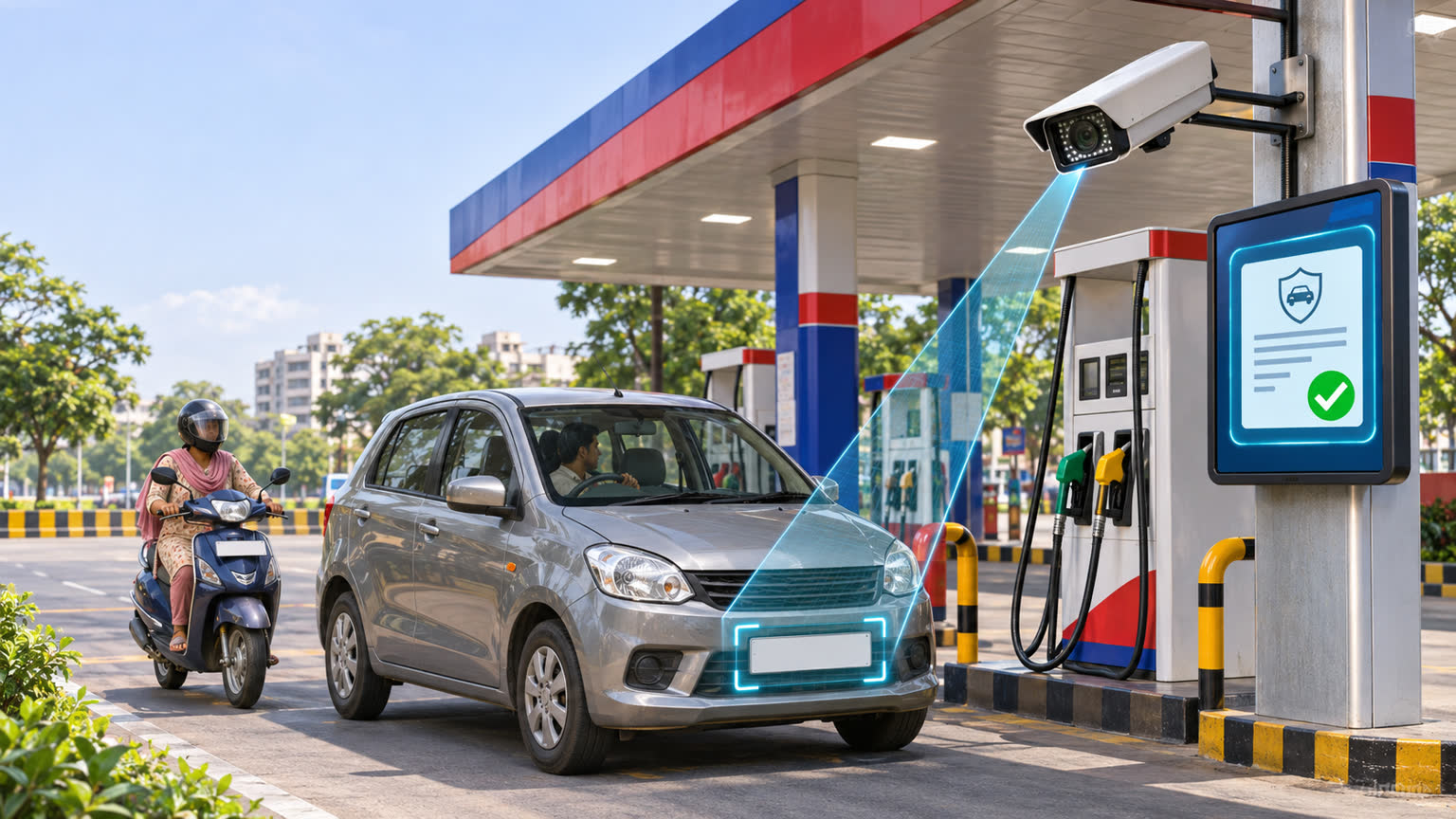
The reported trial would use five petrol pumps in Haryana and five in Uttar Pradesh where ANPR cameras are available. The system would read a vehicle’s registration plate and check its insurance status before fuel is dispensed. The reports do not give a launch date, identify the pumps or explain what happens when a policy has just been renewed but the database has not updated.
This is a reported implementation detail, not a nationwide direction. In its 4 Aug 2026 judgment in National Insurance Company Limited vs Smt. Thungala Dhana Laxmi, the Supreme Court directed IRDAI, in consultation with the Ministry of Road Transport and Highways, to evolve a pilot linking fuel supply with valid insurance. The judgment said the Ministry of Petroleum and Natural Gas had no in-principle objection and that ANPR could be used. It did not announce a nationwide fuel-denial date or name the 10 pumps now described in media reports.
What four-year and six-year cover means
The Supreme Court judgment directed that third-party insurance for new cars should cover four years and for new two-wheelers six years. The current reports describe the government’s implementation work as a possible single-premium arrangement. That distinction matters: the direction exists, but the reports do not provide a live premium table, a purchase process or a nationwide operational date for the revised terms. Existing vehicle owners should not treat the reports as an automatic rewrite of a current policy.
The reports also say the ministry is examining whether traffic offences recorded in the preceding year could influence a vehicle owner’s future premium, along with possible revisions to base rates for selected categories, including electric vehicles. FuelPrice has already covered that separate traffic-linked motor-premium proposal; the new development here is the reported 10-pump pilot detail and the emphasis on multi-year cover.
What is confirmed for vehicle owners
Third-party motor insurance remains the mandatory minimum for vehicles used in public places under Section 146 of the Motor Vehicles Act, as recorded in the Supreme Court judgment. The court’s directions on enforcement and longer third-party terms are not the same as an immediate fuel-station rule. The operational details still matter because an insurance database check must distinguish a genuinely uninsured vehicle from one whose renewal is valid but not yet visible in the system.
Separately, IRDAI Circular IRDAI/CIR/MOT/10/2026 makes a four-layer structure mandatory for private-car and two-wheeler policies issued from 15 Dec 2026. The structure separates third-party liability, occupant or pillion-rider liability, personal-accident protection and own-damage cover. The regulator requires a customer option form, a Customer Information Sheet and separate disclosure of the premium for each section. The confirmed framework is explained in this four-layer motor-insurance guide.
| Measure | Status as of 26 Nov 2026 | What it means |
|---|---|---|
| Insurance-linked fuel pilot | Reported proposal | Five pumps each in Haryana and Uttar Pradesh; no nationwide fuel denial or start date announced. |
| Four-year car and six-year two-wheeler third-party cover | Supreme Court direction; implementation details pending | Intended for new vehicles under the judgment; no new premium table is published in the current reports. |
| Four-layer policy format | Confirmed IRDAI rule | Policies issued from 15 Dec 2026 must show mandatory and optional sections separately. |
| Traffic-linked premium | Reported proposal | No official offence list, weighting method or premium formula has been announced. |
What to check before the next renewal
A vehicle owner reviewing cover now can separate the confirmed requirements from the proposals. The policy’s expiry date, registration number and insurer records should match, and the vehicle should have valid third-party cover before it is used on public roads. The reported fuel-pump pilot does not change that legal requirement or create a nationwide new penalty.
From 15 Dec, the IRDAI framework requires insurers to show the selected sections and their premiums separately. The practical comparison is therefore not just the total amount: the policy schedule and Customer Information Sheet should make clear whether third-party liability, occupant or pillion-rider liability, personal-accident protection and own-damage cover are included. The site’s guide to third-party, own-damage and personal-accident cover explains those distinctions in plain language.
For owners in Haryana or Uttar Pradesh, the reported pilot should be treated as a limited test until a ministry or regulator notice identifies its start date, participating pumps, data source and exception process. A policy renewal receipt alone may not settle a failed database check if the system cannot verify it, so the eventual operating instructions will be as important as the proposal itself.
What to watch next
The next useful update would be an official circular or pilot protocol from MoRTH, IRDAI or the Ministry of Petroleum and Natural Gas. It should clarify whether the pilot only alerts owners or can actually stop fuelling, which insurance database will be used, how appeals will work and whether commercial vehicles are included. Until those points are published, the 10-pump plan remains a reported proposal, while the four-layer IRDAI format is the confirmed change with a stated effective date.
Image note: The hero is an illustrative editorial visual, not a photograph of a live pilot or an official fuel-denial notice.
Sources
- The Times of India — Govt plans multi-year motor insurance for cars, bikes; no insurance, no fuel pilot at 10 petrol pumps in NCR — 25 Nov 2026
- The Economic Times — Traffic violators to pay more for motor insurance premium? Single premium for 4- and 6-year car and bike insurance likely soon — 25 Nov 2026
- Dainik Jagran — Motor insurance premiums may be linked to traffic violations — 25 Nov 2026
- Supreme Court of India — National Insurance Company Limited vs Smt. Thungala Dhana Laxmi, 2026 INSC 793 — 4 Aug 2026
- IRDAI — Four Layer Structure-Motor Insurance Policy, Circular IRDAI/CIR/MOT/10/2026 — 2 Nov 2026
This article is for general information only and is not financial, insurance or legal advice.