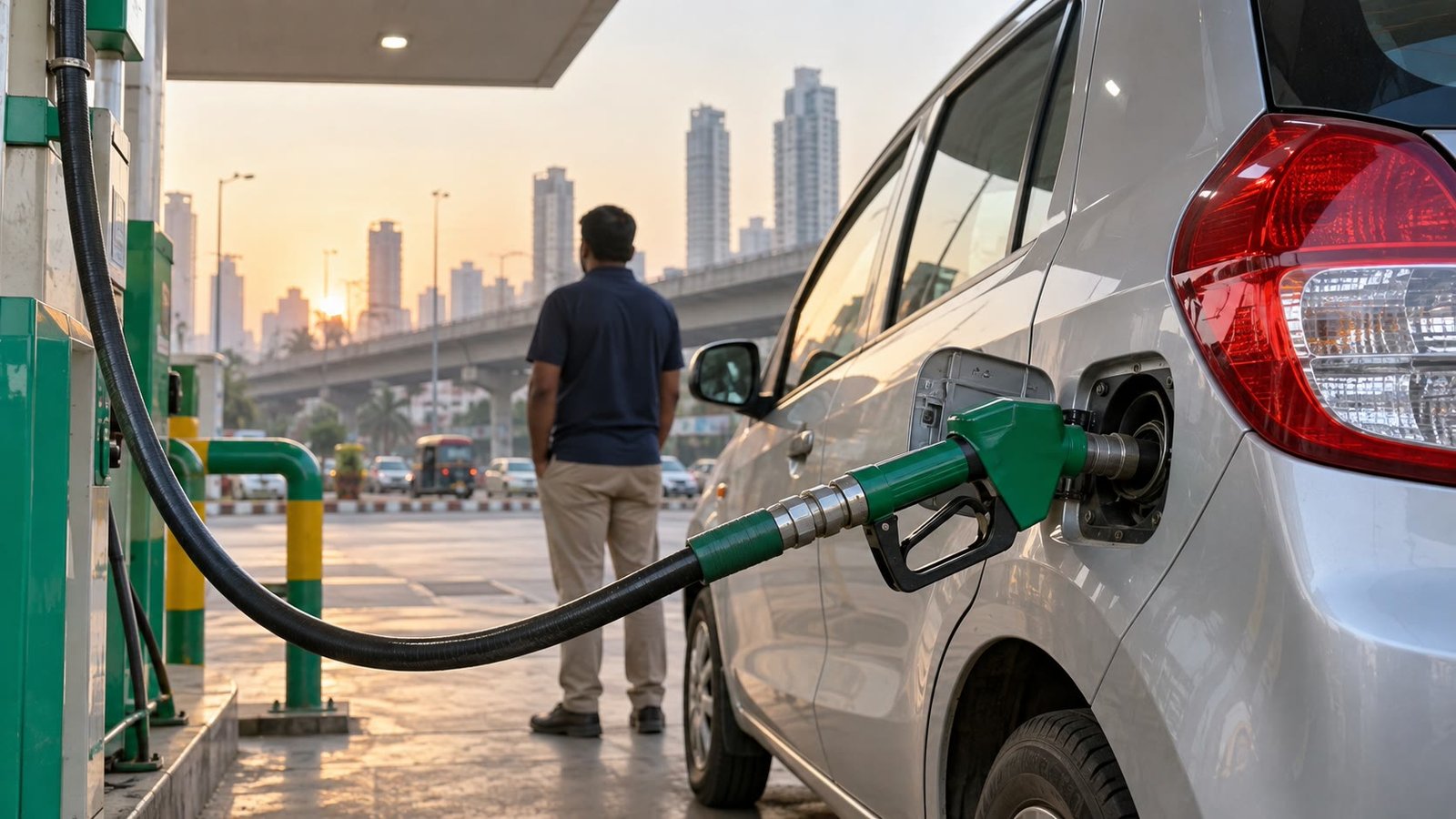
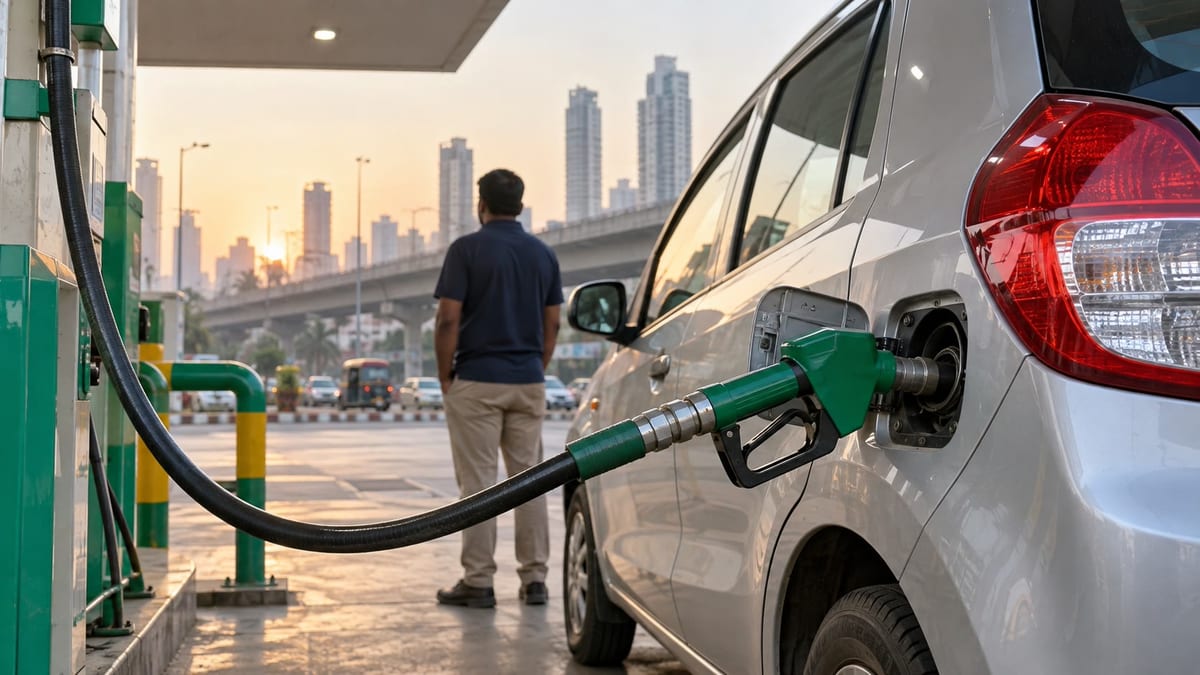
 Representative CNG refuelling scene in an urban Indian setting; FuelPrice illustration.
Mahanagar Gas Limited (MGL) has raised the price of its compressed natural gas (CNG) by ₹1 per kg in Mumbai and nearby Mumbai Metropolitan Region (MMR) areas, effective from 1 October 2026. The revised rate is ₹89 per kg, so private motorists, autorickshaw and taxi operators, and transport vehicles using MGL-supplied CNG now need to recalculate their running costs.
The increase is a local retail-price revision, not a nationwide CNG change. MGL attributed it to higher input-gas costs, including domestically produced gas and imported regasified liquefied natural gas (RLNG), according to reports quoting the company’s statement.
Key takeaways
- MGL-supplied CNG in Mumbai and adjoining MMR areas is ₹89 per kg from 1 October 2026, up from ₹88 per kg.
- The ₹1-per-kg increase applies to CNG sold through MGL’s network; rates from other city-gas distributors can differ.
- MGL said higher domestic-gas and imported RLNG costs led to the revision.
- A purchase of 100 kg now costs ₹8,900, compared with ₹8,800 at the earlier rate—a ₹100 difference before any change in usage.
What changed for Mumbai CNG users
The revised ₹89-per-kg price took effect from midnight on 30 September and the morning of 1 October, as reported by The Indian Express and Mid-Day. The change covers MGL-supplied CNG in and around Mumbai, which means the relevant price for a driver depends on whether the vehicle is being refuelled at an MGL station and where that station falls within the distributor’s service area.
The immediate effect is straightforward: every kilogram purchased costs ₹1 more than it did in September. For a driver buying 100 kg in a month, the fuel bill moves from ₹8,800 to ₹8,900 at the published rates. For a commercial vehicle buying 500 kg, the increase works out to ₹500 over the same quantity. These are quantity-based illustrations; the actual monthly impact depends on the vehicle’s fuel consumption, distance and time spent carrying passengers or goods.
Private owners can use the fuel cost calculator to recalculate a trip with their own CNG quantity or mileage assumptions. That is more useful than applying the increase to every journey as a flat amount, because vehicles and driving conditions consume different amounts of gas.
Who is affected
The revision affects CNG-powered autorickshaws, taxis, private cars and vehicles operated by transport authorities across the MGL-supplied MMR network. MGL’s own network information also covers buses, light commercial vehicles, tempos, trucks and private buses, so the change matters beyond household cars.
For a taxi or autorickshaw operator, CNG is a direct operating expense. A ₹1-per-kg increase raises the cost of every refuelling cycle, but it does not automatically change passenger fares. Any fare decision would depend on the applicable local rules and announcements by the relevant transport authorities; the reports used for this article did not announce a new MMR fare.
Fleet managers face a similar calculation. The useful figure is the extra rupees per vehicle over a defined period, based on kilograms dispensed, rather than the headline increase alone. Recording each vehicle’s CNG purchases can show whether the change is being driven by higher prices, more kilometres, heavier loads or lower real-world efficiency.
Why MGL raised the rate
MGL said the revision was needed to partly offset higher input-gas costs and maintain supply. The company pointed to higher prices for domestically produced gas and imported RLNG. It also said a larger share of incremental CNG demand was being met through spot RLNG, whose prices had risen with international gas markets.
This explains why a distributor-level CNG price can move even while petrol and diesel prices elsewhere remain unchanged. CNG is supplied through city-gas distribution networks, and each distributor’s procurement mix, supply allocation, taxes and operating costs can affect its retail rate. Mumbai’s revision therefore should not be treated as a signal that every Indian city will see the same ₹1-per-kg change.
What drivers should check now
- Confirm the displayed rate at the station and keep the fuel receipt, especially if the vehicle is used for business or reimbursement.
- Compare the kilograms purchased over a normal week or month with the same period before 1 October 2026. This separates the price effect from changes in travel.
- Use the CNG price listings for Indian cities when planning a trip beyond MGL’s service area, because the distributor and city may be different.
- For a longer drive, combine the current fuel assumption with the road-trip planner so fuel stops and route distance are included in the estimate.
What to watch next
The next relevant update is whether input-gas costs stabilise or lead to another distributor revision. MGL has said it will continue looking for ways to optimise procurement while maintaining natural-gas supply. Until another company announcement or rate-card update is issued, ₹89 per kg is the reported MGL CNG rate for Mumbai and adjoining areas as of 2 October 2026.