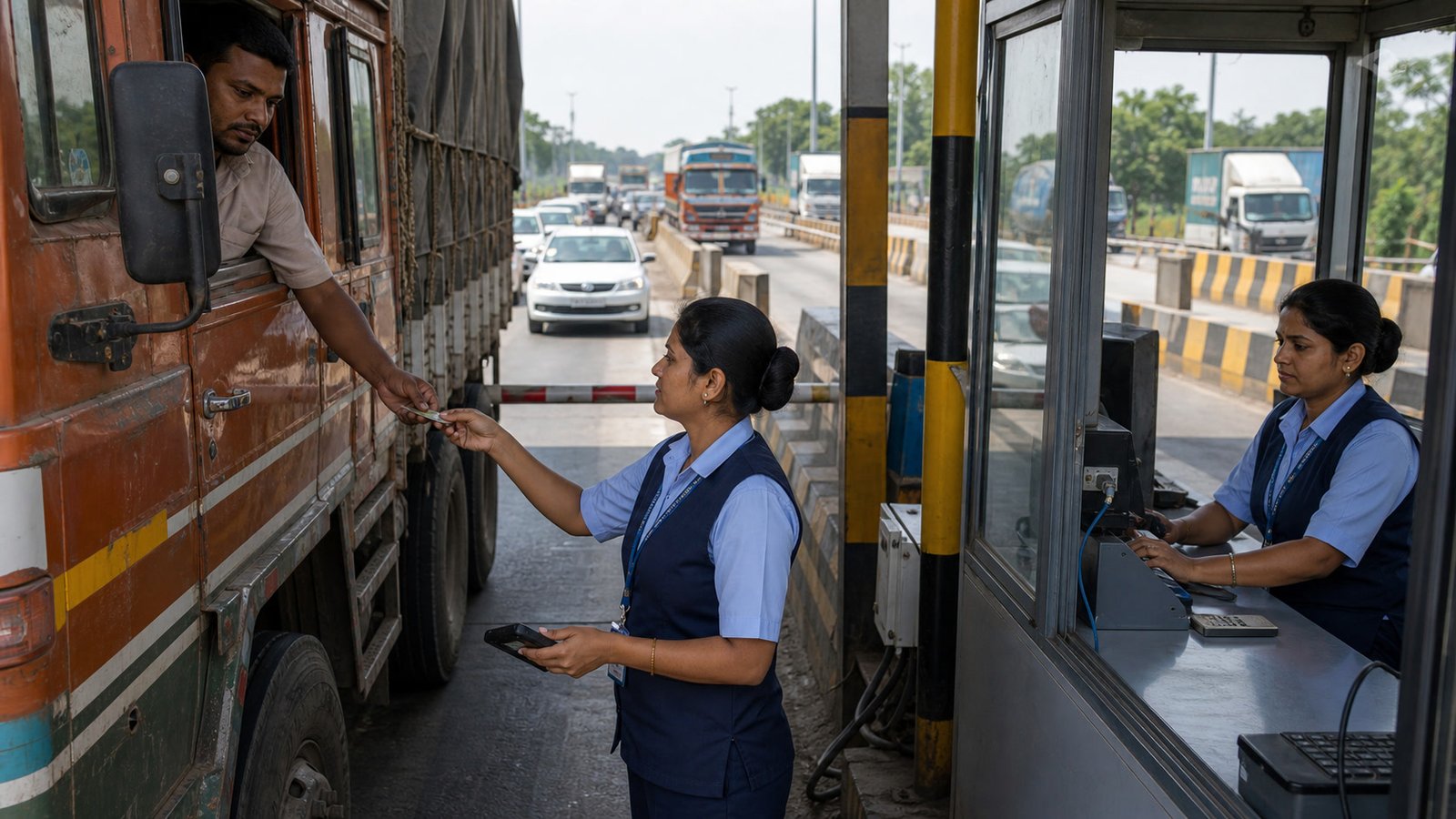
In a policy move that directly affects how India’s toll plazas function every day, the National Highways Authority of India (NHAI) has deployed more than 5,100 women staff in day shifts across over 1,140 toll plazas on National Highways and Expressways. The Ministry of Road Transport and Highways announced the initiative on 6 March 2026, framing it as a workforce inclusion and service-quality intervention rather than a symbolic staffing change.
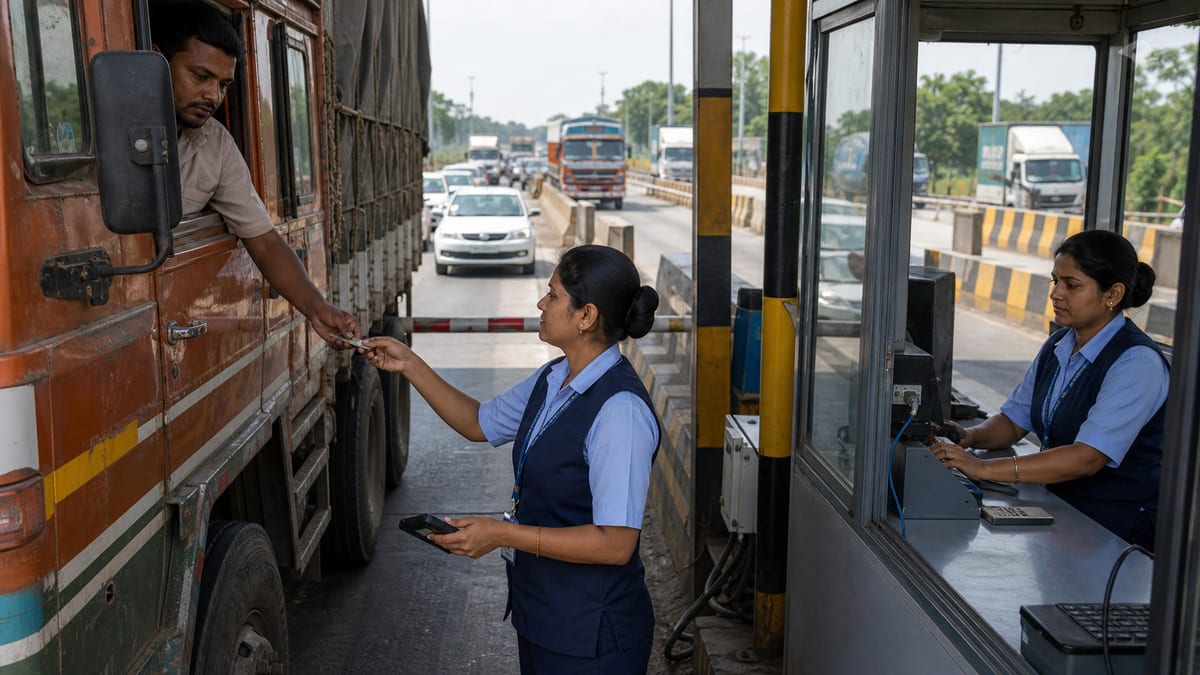 NHAI’s day-shift women deployment at toll plazas is aimed at both inclusion and improved highway user experience.
What Exactly Has Changed
The official update states that women are being deployed in frontline user-fee collection roles during day shifts at scale, covering a large footprint of toll locations nationwide. The ministry says the objective is two-fold:
- Promote women’s empowerment and social inclusion in infrastructure operations.
- Improve toll-plaza user experience through more efficient, empathetic and commuter-friendly operations.
The rollout followed consultations with operators and industry associations, including the National Highways Builder Federation (NHBF), Highway Operators Association of India (HOAI), and the All India User Fee Contractors Federation (AIUCF). According to the release, operators agreed to the day-shift women deployment model, and the ministry expects additional onboarding beyond the already deployed count.
Why This Is a High-Niche but Important Mobility Story
This is not a fuel-price revision, a toll-rate change, or a vehicle launch. Yet it sits squarely inside the mobility economy. Toll booths are operational choke points in freight and passenger movement. Staffing quality at these points influences lane throughput, dispute incidence, queue management, and incident response behaviour.
By positioning women in high-visibility toll operations, NHAI is attempting a behavioural and service shift at the exact point where millions of highway users interact with the system. If implemented consistently, the move could alter daily user experience more materially than many policy announcements that remain on paper.
| Programme Indicator | Reported Value | Operational Relevance |
|---|---|---|
| Women staff deployed | 5,100+ | Shows scaled implementation rather than isolated pilots. |
| Toll plazas covered | 1,140+ | Indicates broad network footprint across NH/Expressway operations. |
| Shift focus | Day shifts | Targets peak interaction windows for highway users. |
| Training support | Specialised module support by NHAI | Helps standardise service quality and emergency handling behaviour. |
Who Is Affected and How
- Highway commuters: user-facing interactions at toll points can become more structured and less conflict-prone if training and deployment quality remain high.
- Truck and fleet operators: smoother toll interactions can reduce avoidable stoppage friction in high-frequency freight lanes.
- Toll concessionaires: need to align workforce management, training, and safety protocols around a larger and more diverse operations team.
- Women workforce in rural/semi-urban belts: initiative creates formal jobs in infrastructure operations where local opportunities are often limited.
Fuel, Logistics and Corridor-Efficiency Link
The connection to fuel and logistics is indirect but important. Toll delays, lane-level disputes, and inefficient booth operations contribute to stop-go movement and idle time, especially for heavy commercial traffic. In cumulative terms, such inefficiencies increase diesel consumption per corridor cycle and create freight-time unpredictability.
If this staffing-plus-training initiative lowers operational friction at toll points, there can be downstream benefits in corridor throughput and trip-time consistency. For supply chains, reliability is often as critical as headline freight rates. Even modest reductions in delay variance can improve dispatch planning and vehicle utilisation.
Training and Safety: The Critical Execution Layer
According to the official statement, NHAI will facilitate specialised training for deployed women staff, particularly those from rural areas. The training focus includes:
- courteous behaviour with highway users,
- handling emergency situations,
- basic safety protocols, and
- efficient toll-plaza operations.
This matters because deployment numbers alone do not guarantee results. The quality of process training, shift supervision, and local safety arrangements will determine whether user experience meaningfully improves on the ground.
What Changes Now and What to Watch Next
The immediate policy signal is clear: toll operations are being treated as a public-interface service layer, not just a collection mechanism. Over the next two quarters, stakeholders should track:
- whether deployment expands beyond current count and coverage,
- measurable reduction in toll-plaza conflict incidents,
- service-time and queue-performance shifts in high-volume corridors,
- staff retention and safety outcomes in rural and semi-urban locations,
- integration of this initiative with FASTag and wider digital toll transition plans.
FuelPrice Takeaway
NHAI’s 5,100+ women deployment across 1,140+ toll plazas is one of the most operationally relevant people-side interventions in India’s highway system this year. It combines inclusion goals with service-delivery intent and has the potential to improve toll interactions where highway economics is actually experienced in real time. For mobility users and logistics operators, the core question now is execution quality: if training, compliance, and monitoring hold up, this initiative can become a meaningful corridor-efficiency multiplier rather than a one-cycle announcement.
Sources:
- PIB (MoRTH), 06 Mar 2026: NHAI Deploys more than 5,100 Women Staff at Toll Plazas on National Highways & Expressways
- News On AIR, 06 Mar 2026: Government informs over 5000 female staff have been deployed by NHAI
- The Economic Times (PTI), 06 Mar 2026: NHAI deploys 5100 women staff across 1140 NH toll plazas