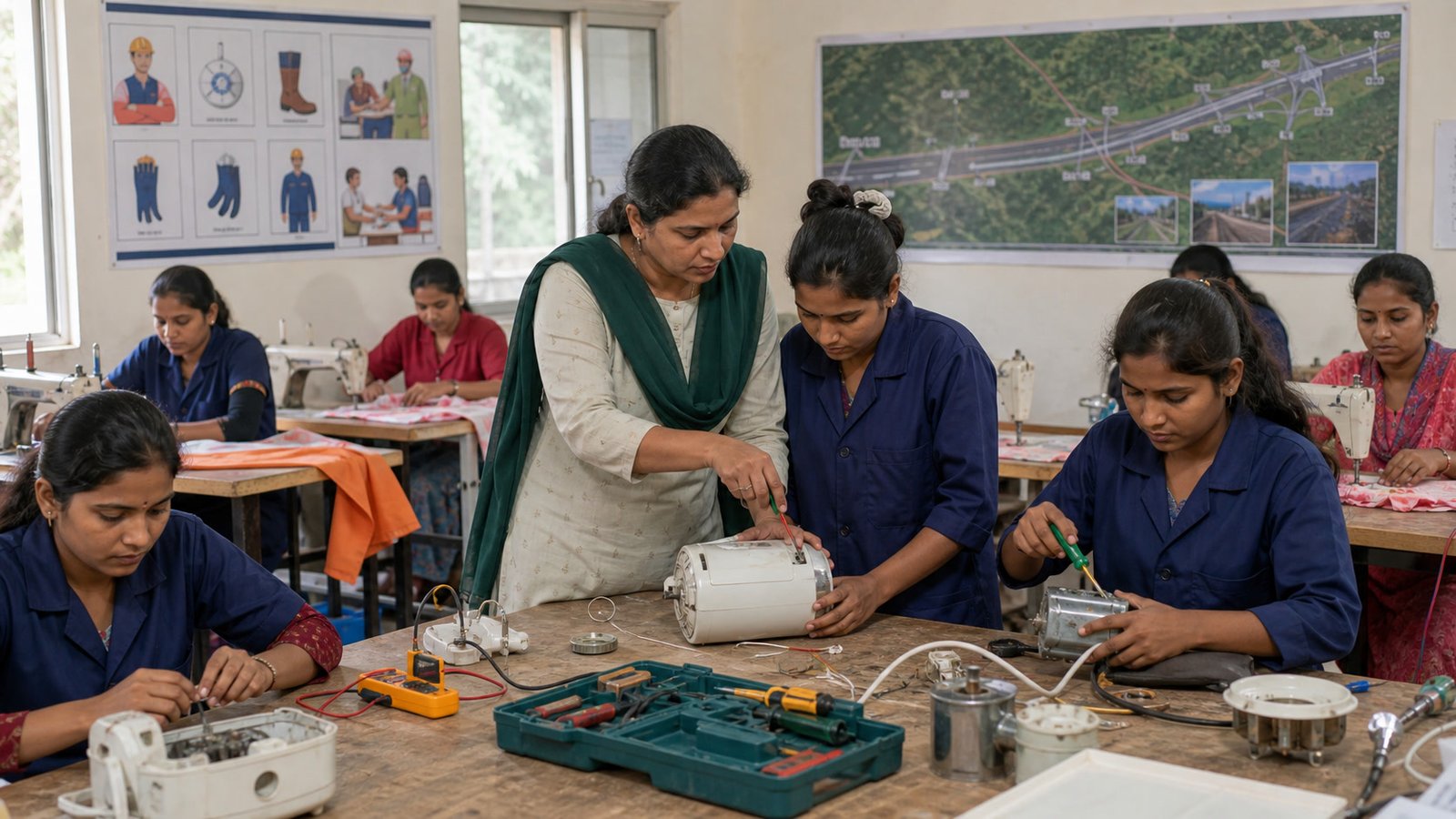
India’s highway narrative is usually measured in kilometres built, travel-time savings and freight efficiency. A newer signal from the National Highways Authority of India (NHAI) adds another dimension: community-linked workforce outcomes around highway corridors. In an official release dated 15 May 2026, the Ministry of Road Transport and Highways said NHAI, in partnership with the Vertis Foundation, is scaling women-focused skilling through Project Saksham to improve livelihood access for underserved communities living along National Highway influence zones.
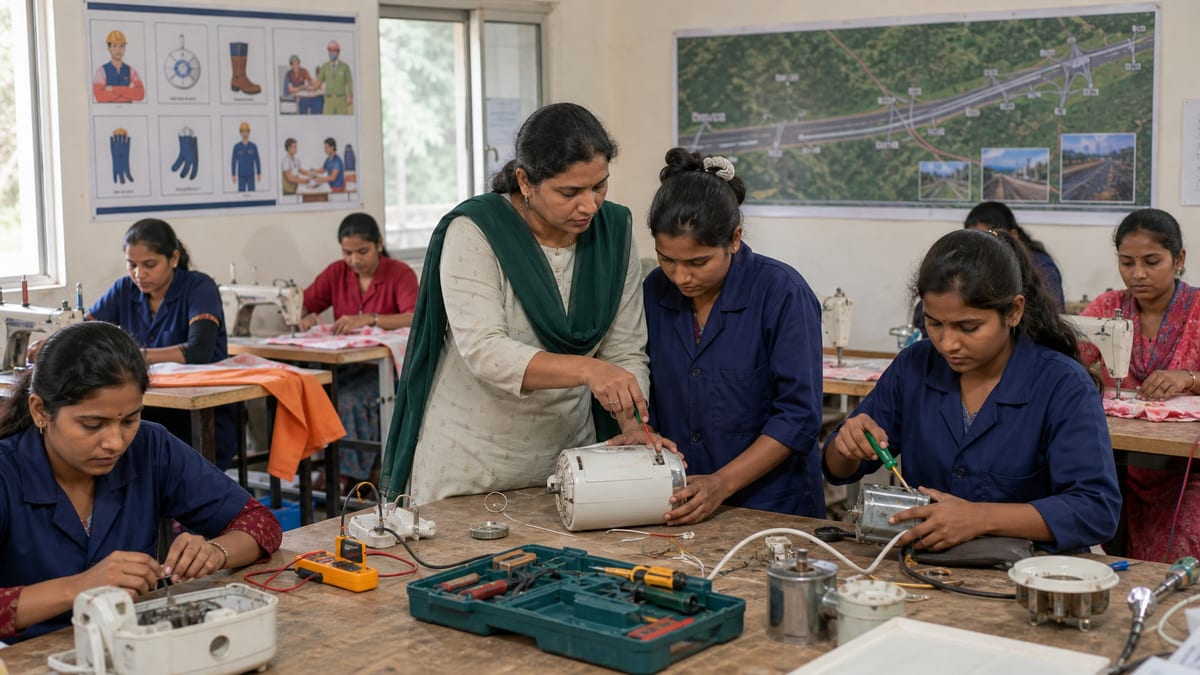 Project Saksham links infrastructure-led growth with employability by training women and youth from communities near highway corridors.
What Happened
According to the PIB release (PRID 2261367), Project Saksham now operates through a network of 12 training centres across India. The programme has reportedly trained over 6,000 youth, with more than 4,000 placements across sectors. The release also states that beneficiaries are earning average monthly incomes in the Rs 13,000–16,000 range, and that over 80% beneficiaries are women.
The ministry frames this as part of NHAI’s inclusive development approach: infrastructure expansion should not only move vehicles faster, but also generate structured economic opportunities for communities that often remain outside formal workforce channels despite living close to high-growth corridors.
Before vs After: Why This Shift Is Important
Before: Highway projects typically created value through construction, logistics and mobility outcomes, while local skill and employability spillovers were uneven and mostly informal.
Now: Project Saksham introduces an institutional skilling layer into the highway ecosystem. That means communities in corridor geographies can potentially access formal training pathways and wage opportunities tied to real market demand, rather than relying only on temporary or low-visibility local jobs.
This is a high-niche but strategic shift for mobility economics. If labour-force participation and local employability improve around highway zones, it can strengthen service ecosystems that freight operators, transport companies, toll operations and highway-adjacent businesses depend on.
| Project Saksham Metric | Reported Number | Why It Matters |
|---|---|---|
| Training centres | 12 | Shows structured implementation footprint, not a one-off pilot. |
| Youth trained | 6,000+ | Indicates meaningful programme scale for corridor communities. |
| Placements | 4,000+ | Suggests employability linkage beyond training completion. |
| Average monthly income | Rs 13,000–16,000 | Creates measurable livelihood impact in rural/underserved segments. |
| Women participation | 80%+ | Signals strong gender-focused workforce inclusion in mobility-linked geographies. |
Who Is Affected and How
- Rural women and youth: Access to market-linked training and formal placement pathways can improve income stability and financial independence.
- Highway-adjacent service economy: Skilled local workforce can support maintenance services, small enterprises and operations around expanding transport corridors.
- Logistics and transport ecosystem: A stronger local labour base improves ecosystem resilience in corridor regions where freight demand is rising.
- Policy and public-finance stakeholders: Programmes that convert infrastructure spend into inclusive livelihoods can improve social return on public infrastructure investment.
Fuel and Mobility Relevance
Project Saksham is not a direct petrol-diesel pricing decision, but it has second-order importance for the fuel and mobility chain. Corridor economies with better-skilled local labour can reduce friction in transport-linked services, improve response capacity in highway operations, and support continuity in high-traffic logistics zones. Over time, this can contribute to smoother freight movement and lower disruption-driven inefficiencies that indirectly inflate operating costs.
From a mobility-policy lens, this is also a governance signal: the highway agenda is gradually broadening from “build and operate” to “build, operate and include.” That matters in a country where transport corridors increasingly shape regional labour markets and local enterprise growth.
What Changes Now
The immediate change is not at toll rates or fuel prices; it is at programme framing and measurable outcomes. The published numbers give stakeholders a benchmark to track: training scale, placement conversion and income bands. If these indicators continue improving, Project Saksham could become a repeatable template for integrating social-capital outcomes into national highway development.
What to Watch Next
- Expansion pace beyond the current 12-centre network.
- State-wise placement retention and wage progression trends.
- Whether training verticals evolve based on corridor-specific industry demand.
- Integration with other highway operations, safety and service programmes.
- Independent reporting on long-term outcomes for women-led economic participation.
FuelPrice Takeaway
NHAI’s Project Saksham update is a high-niche mobility story with long-tail relevance. The official metrics—6,000+ trained, 4,000+ placed, 80%+ women participation and Rs 13,000–16,000 income band—show that highway expansion is being linked with livelihood architecture, not only traffic flow. For readers tracking the broader transport economy, this is a meaningful signal: resilient mobility systems need strong physical corridors and stronger human-capital ecosystems around them.
Sources: