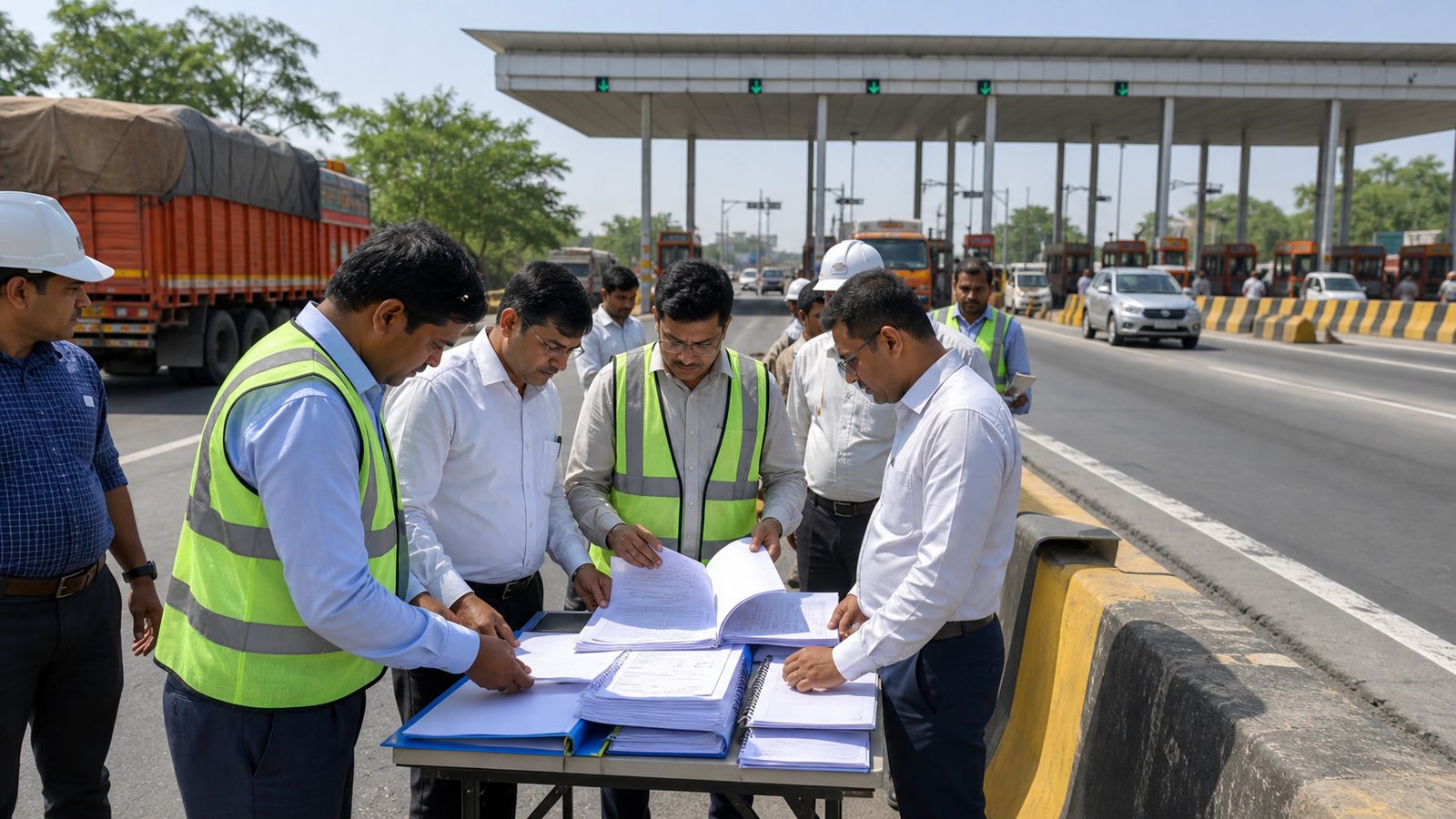
India’s highway sector has logged a major but under-discussed policy outcome: the National Highways Authority of India (NHAI) has successfully defended two high-value arbitration disputes linked to the Panipat–Jalandhar section of NH-44. According to the Ministry of Road Transport and Highways press release (PIB Release ID 2260347, dated 12 May 2026), concessionaire claims above Rs. 8,375 crore and NHAI counterclaims of Rs. 2,888.64 crore were resolved into a net award of around Rs. 819.96 crore in favour of NHAI.
 The Panipat–Jalandhar NH-44 arbitration outcomes are being read as a public-funds protection signal for highway PPP and concession projects.
What Happened in the NH-44 Arbitration Cases
The disputes were connected to execution and operation issues under the Panipat–Jalandhar corridor. The claim sets included alleged termination payments, toll-revenue loss compensation, prolongation costs, escalation, extension of concession period and project-delay damages. After hearings and review of contract records, technical evidence and submissions, the arbitral tribunal substantially upheld multiple NHAI contentions.
The first case involved claims exceeding Rs. 5,443 crore. As per the official release, the tribunal rejected major monetary claims against NHAI and accepted several counter-positions and defences from the authority, resulting in a net award of around Rs. 115.73 crore in favour of NHAI plus applicable interest.
The second case involved claims above Rs. 2,931.79 crore. NHAI contested contractual entitlement and documentation standards, and after set-off and adjustments the tribunal awarded a net sum of around Rs. 704.23 crore in favour of NHAI.
| Case Snapshot | Amount | Outcome |
|---|---|---|
| Total concessionaire claims (2 matters) | Exceeding Rs. 8,375 crore | Settled with net award in NHAI’s favour |
| NHAI counterclaims | Rs. 2,888.64 crore | Partly reflected through tribunal findings and set-off outcomes |
| First arbitration net award | ~Rs. 115.73 crore | In favour of NHAI |
| Second arbitration net award | ~Rs. 704.23 crore | In favour of NHAI |
| Combined net outcome | ~Rs. 819.96 crore | In favour of NHAI |
Why This Matters Beyond Legal Headlines
This development matters because highway arbitration is not just a courtroom issue. It directly affects public finances, project-bankability assumptions, investor confidence in concession contracts and future pricing discipline in engineering/procurement/construction models. When large adverse claims are avoided or substantially reduced, the fiscal burden on the public infrastructure system is contained.
For highway users, the impact is indirect but real. Lower litigation-related financial pressure can improve room for operational spending, maintenance planning and project continuity decisions. For the logistics ecosystem, fewer financially stressed concession outcomes can reduce uncertainty around corridor performance and toll-linked project operations over time.
Fuel and Logistics Link: Why Transport Stakeholders Should Track This
At first glance, arbitration awards may look disconnected from fuel users. In reality, corridor disruptions, contract uncertainty and delayed project decisions can increase freight cycle time, vehicle idling and route inefficiency. Those factors add to diesel consumption per trip and can eventually raise logistics costs for cargo owners and distributors.
- Fleet operators: Better legal closure on project disputes can support continuity and predictability in major freight corridors like NH-44.
- Toll users: Contract-accountability outcomes can strengthen operational governance in concession-based toll assets.
- Supply chains: Stable corridor planning lowers disruption probability and helps schedule-sensitive freight movement.
- Public finance: Successful defence against oversized claims helps preserve fiscal headroom for network upgrades and safety interventions.
Broader Pattern NHAI Is Signalling
The PIB release also references an earlier Gujarat case on the Kamrej–Chalthan section of NH-48, where a claim of around Rs. 174.49 crore reportedly ended with an award of only Rs. 54 lakh. Taken together, these outcomes project a consistent NHAI stance: stricter contractual enforcement, evidence-led defence strategy and strong focus on protecting public funds in complex highway contracts.
For concessionaires and EPC stakeholders, this implies that documentation quality, contractual compliance and delay-causation proof standards will continue to be central in any dispute pathway. For lenders and policy watchers, this may support a more disciplined risk framework in future concession design and dispute provisioning.
What Changes Now, and What to Watch Next
What changes immediately is narrative confidence around government-side legal preparedness in big-ticket highway disputes. But operationally, stakeholders should watch three things:
- Whether this arbitration approach influences future concession agreement drafting and risk-sharing clauses.
- How frequently large historical claims in other corridors are settled or defended with similar outcomes.
- Whether better claim discipline translates into faster closure cycles for pending project disputes.
FuelPrice Takeaway
The Panipat–Jalandhar NH-44 arbitration outcomes are a high-niche but high-impact mobility story. NHAI’s reported net outcome of around Rs. 819.96 crore in its favour, against much larger claim stacks, is less about legal optics and more about system efficiency: protected public funds, stronger contract accountability and potentially lower disruption risk across critical freight and toll corridors. For transport businesses and fuel-linked logistics users, this is an infrastructure-governance signal worth tracking closely.
Sources: