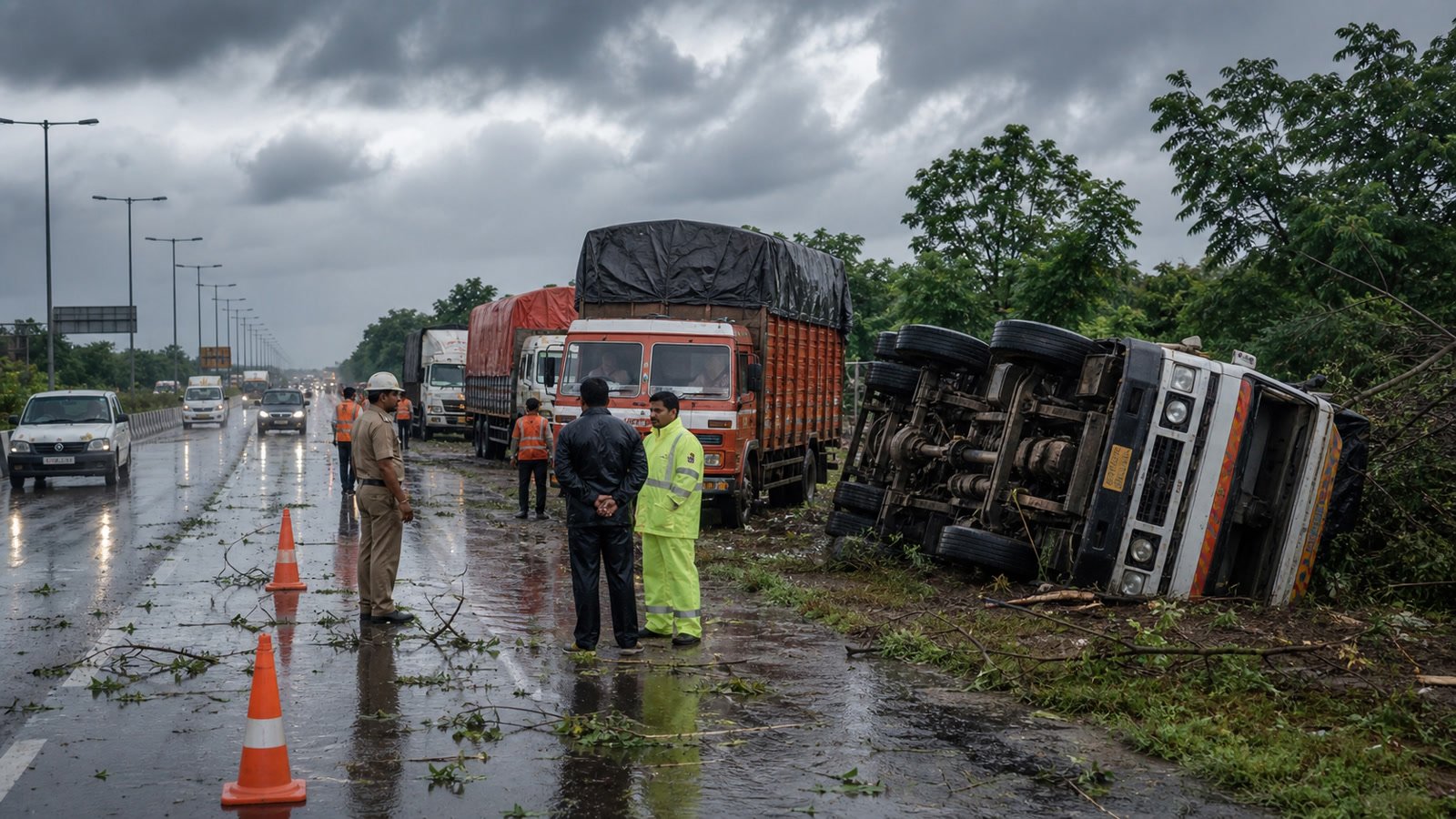
Severe thunderstorms, high winds, heavy rain and hail have disrupted road movement across parts of Punjab, Haryana and Himachal Pradesh, with the clearest transport impact reported on National Highway-152D near Ambala. Times of India reported that three parked trucks were overturned near Naggal in Haryana after drivers had halted because weather conditions were worsening. No injuries were reported, but the incident shows how quickly a storm alert can become a highway freight and fuel-planning problem.
The disruption matters for FuelPrice readers because highway movement is not affected only by fuel rates and toll costs. Weather can change driving speed, detour length, idling time, delivery schedules, fuel consumption and driver safety. When storms bring crosswinds, hail, falling trees and power disruptions, trucks, buses, taxis and private cars all face higher operating risk even if pump prices remain unchanged.
What happened on North India roads
The TOI report said thunderstorms and winds of up to 90 kmph were reported in parts of the region, along with lightning and hailstorm activity. In Haryana's Ambala district, three parked trucks on NH-152D were toppled by powerful winds. The same report said trees and an electricity pole were uprooted in several places, disrupting traffic and power supply.
Wind speeds were also significant across nearby districts. The report cited 72 kmph winds in Kaithal, 54 kmph in Karnal, 50 kmph in Panchkula and 46 kmph in Jind. In Punjab, gusts touched 68 kmph in Mohali, 63 kmph in Patiala and 56 kmph in Sangrur. These speeds are not minor for large vehicles. Empty or lightly loaded trucks, container vehicles and buses can become unstable in strong side winds, especially on open expressways, elevated stretches and exposed flyovers.
Why this matters for freight and fuel planning
For transport operators, a weather disruption can change the cost of a trip without changing the price of diesel. A truck that waits out a storm may burn fuel while idling. A vehicle forced to take a safer detour uses extra kilometres. A delayed delivery can push drivers into night movement or tighter turnaround windows. If a route remains blocked by fallen trees, damaged power lines or overturned vehicles, fleet managers must reschedule dispatches and update customers quickly.
The impact is also operational. A storm-hit highway can create long slow-moving stretches where fuel economy drops sharply. Heavy vehicles consume more fuel in stop-start traffic than on steady highway runs. Drivers may also need to keep lights, wipers and cabin systems running for longer periods. On refrigerated or sensitive cargo routes, delay can add generator or auxiliary fuel use as well.
| Road user | Main storm risk | FuelPrice check |
|---|---|---|
| Truck and fleet operators | Crosswinds, route delay, idling and detours. | Plan extra fuel buffer and avoid exposed corridors during severe gust alerts. |
| Bus and taxi operators | Slow movement, passenger delays and road debris. | Update ETAs and avoid aggressive speed recovery after storm stoppages. |
| Private car users | Low visibility, sudden braking and hydroplaning. | Refuel before long trips and postpone non-essential highway travel during warnings. |
| Highway agencies | Fallen trees, toppled vehicles and power-line hazards. | Fast clearance reduces queue fuel burn and secondary crashes. |
Alerts continue beyond one storm event
This is not only a one-evening disruption. TOI's wider traveller weather report, citing the latest All India Weather Summary and Forecast Bulletin from the India Meteorological Department, said varied weather conditions could affect travel across India between June 12 and June 17. That includes heavy rain, thunderstorms, hailstorms, heat waves and rough sea conditions in different regions.
For North India specifically, the storm report said IMD expected fairly widespread rain over Punjab and Haryana till June 12, followed by scattered rain till June 17. It also mentioned thunderstorms with lightning and gusty winds of 40-60 kmph over the next several days, with isolated stronger squalls possible. Separately, TOI reported that Himachal Pradesh is expected to see a wet spell until June 17, which matters for hill-road users, tourist traffic and goods movement into mountain districts.
What drivers and operators should do now
Fleet operators should treat weather alerts as routing inputs, not background information. Before dispatch, check forecast windows, exposed highway stretches, driver rest plans and refuelling points. If a corridor is under thunderstorm or high-wind warning, it may be cheaper and safer to delay departure than to risk a breakdown, rollover or long queue after road closure.
Drivers should avoid parking heavy vehicles under trees, weak structures, electric poles or signboards during storm stoppages. Where safe, trucks should be parked away from the carriageway with hazard indicators and reflective markers. Lightly loaded high-sided vehicles need extra caution because they are more vulnerable to crosswinds. Private vehicle users should slow down early, keep more distance from trucks, and avoid sudden lane changes on wet roads.
Fuel planning should also change. A driver entering a storm-affected route with a nearly empty tank has fewer options if traffic is diverted. Operators should carry enough fuel margin for detours and idling, but avoid unsafe storage practices. For passenger cars, refuelling before a long trip is sensible when IMD warnings indicate possible route disruption.
What to watch next
The next indicators are fresh IMD warnings, state traffic advisories, highway clearance updates, and reports of fallen trees, power-line hazards or waterlogging. If storms continue in Punjab, Haryana and Himachal Pradesh through the forecast window, freight operators may need to adjust dispatch timing for Ambala, Chandigarh, hill-state entry routes and adjoining logistics corridors.
The reader takeaway is clear: severe weather is a real transport cost. The NH-152D truck-topple incident did not cause injuries, but it shows how strong winds can disrupt freight movement and raise fuel, safety and scheduling risks. For the next few days, road users should treat weather alerts as seriously as toll, fuel and route planning.
Sources: Times of India storm and truck disruption report, Times of India traveller weather disruption report, Times of India Himachal wet spell report, IMD All India Weather Forecast Bulletin.