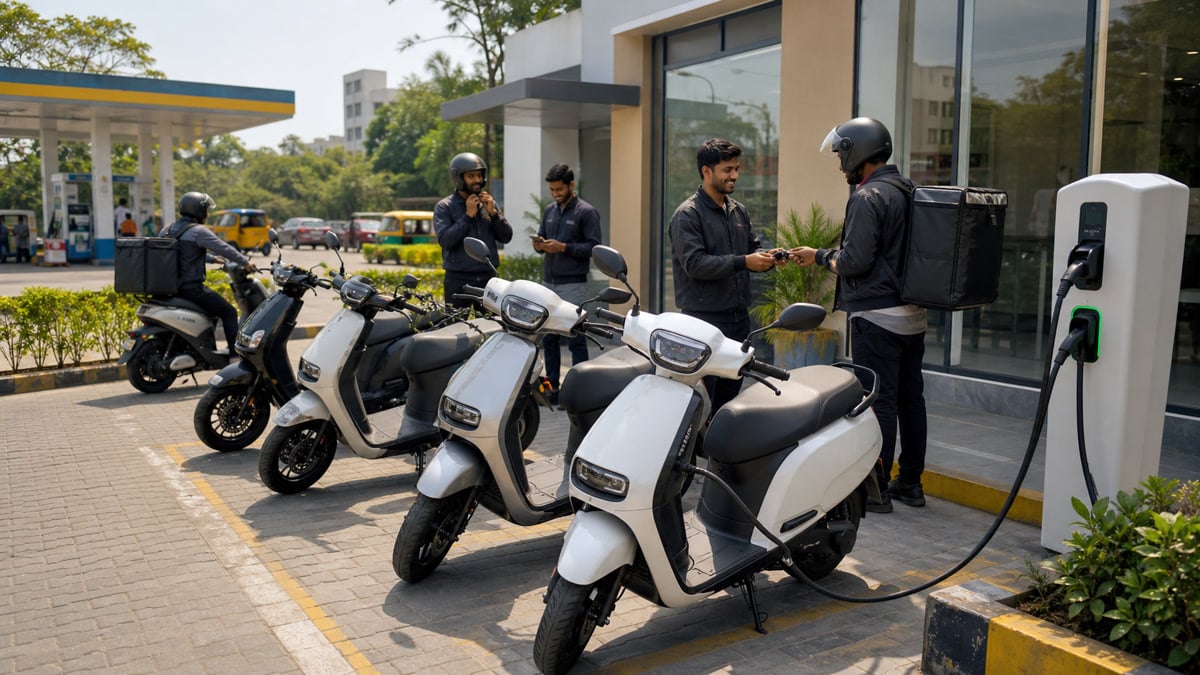
Ola Electric has reported a sharper-than-industry recovery in May 2026 registrations, giving India's electric two-wheeler market a useful demand signal at a time when petrol running cost remains a key buying trigger. The company said registrations rose to 15,139 units in May 2026 from 12,323 units in April, a 23% month-on-month increase based on VAHAN data.
Ola Electric's May 2026 registration growth highlights how electric scooters remain tied to delivery use, lower running-cost demand and urban mobility choices.What happened
Ola Electric's latest investor and newsroom update says May was the company's third consecutive month of registration recovery. The company reported 15,139 registrations for May 2026, compared with 12,323 in April. The number matters because the broader electric two-wheeler industry also grew, but at a slower pace: reports citing the company's update say industry volumes moved from about 1.48 lakh units in April to around 1.70 lakh units in May, a roughly 15% month-on-month rise.
That means Ola's reported 23% growth outpaced the category in May. The company linked the recovery to a front-end retail rejig, better operational execution and demand support for its electric two-wheeler portfolio. Several reports also noted that higher petrol prices have strengthened the consumer argument for electric mobility, especially for riders who use scooters daily.
| May 2026 signal | Number | Reader impact |
|---|---|---|
| Ola Electric registrations | 15,139 units | Shows sequential recovery in electric scooter demand. |
| Month-on-month growth | 23% | Higher than the reported 15% growth for the wider electric two-wheeler industry. |
| April registrations | 12,323 units | Provides the base for the May recovery signal. |
Why this matters for fuel users
For a daily commuter or delivery rider, electric scooter demand is not just about technology preference. It is a running-cost calculation. Petrol price increases make every regular commute, delivery route and local business trip more expensive. That is why electric two-wheelers remain closely linked to household budgets, gig-worker earnings and small-business operating costs.
A scooter used for 40-80 km a day is exposed to fuel-price movement far more than a weekend-use vehicle. If charging access is available at home, work or fleet hubs, the economics can be attractive. But the calculation is still practical: buyers must compare ex-showroom price, financing, battery warranty, charger access, service response, resale value and real-world range under Indian traffic and summer heat.
What changes for the EV two-wheeler market
Ola's May recovery gives the market two separate signals. First, demand for electric scooters is still alive when price, product availability and retail execution align. Second, registration-led growth must be watched with care because VAHAN registrations represent registered vehicles, not necessarily the full picture of bookings, enquiries or future repeat demand.
This distinction matters for investors, dealers and buyers. A one-month jump can reflect operational catch-up, improved store-level processes or stronger delivery execution. A durable recovery needs consistency across registrations, service quality, customer satisfaction and product reliability. Ola has faced scrutiny in the past around service experience and execution, so May's number is encouraging but not the final proof of a sustained turnaround.
Who is affected
- Commuters: Higher petrol costs make EV scooter ownership more attractive, but charging access and real-world range remain decisive.
- Gig and delivery riders: More EV scooter options can lower per-km operating cost, but downtime and service turnaround directly affect earnings.
- Dealers and service centres: A recovery in registrations increases the need for reliable handover, parts availability and after-sales capacity.
- Fuel retailers: Immediate petrol demand impact is limited, but long-term two-wheeler electrification can change urban fuel-use patterns.
- EV competitors: Faster category growth raises pressure on Ather, TVS, Bajaj, Hero Electric and other players to protect price, range and service propositions.
Market and stock-angle context
For the stock market, the May number is useful because it follows a period when investors were watching whether Ola Electric could stabilise volumes after earlier weakness. The company's official messaging highlights recovery momentum and execution improvement, while market coverage has framed the data as a sequential improvement from April.
Still, a registration rebound should not be read as a complete business reset. EV makers need volume, margin discipline, after-sales control and battery-cost efficiency together. If May growth continues into June and July, the market may treat it as a stronger recovery signal. If it fades, the May number will look more like a catch-up month.
What to watch next
The key watchpoints are June registrations, product-level mix, service turnaround, financing offers and whether petrol-price pressure keeps pushing high-use riders toward EVs. For buyers, the important step is to calculate monthly kilometres and charging access before deciding. An EV scooter can reduce running cost, but the ownership benefit depends on usage intensity, local service support and battery confidence.
Final takeaway: Ola Electric's 23% May 2026 registration growth is a positive signal for India's EV two-wheeler market and fuel-sensitive riders, but the real test is whether the company can convert one month of stronger VAHAN registrations into sustained deliveries, reliable service and durable buyer trust.