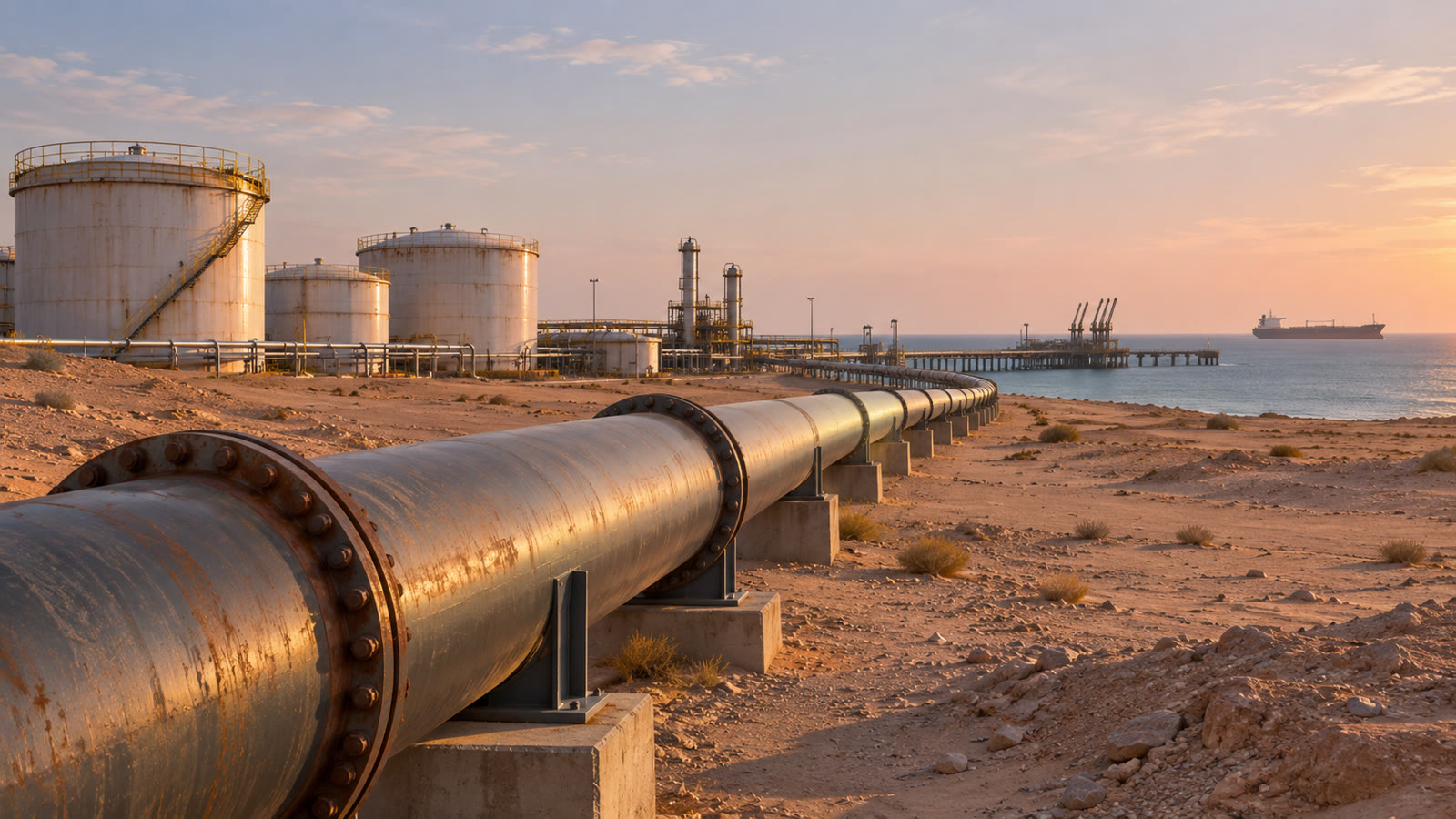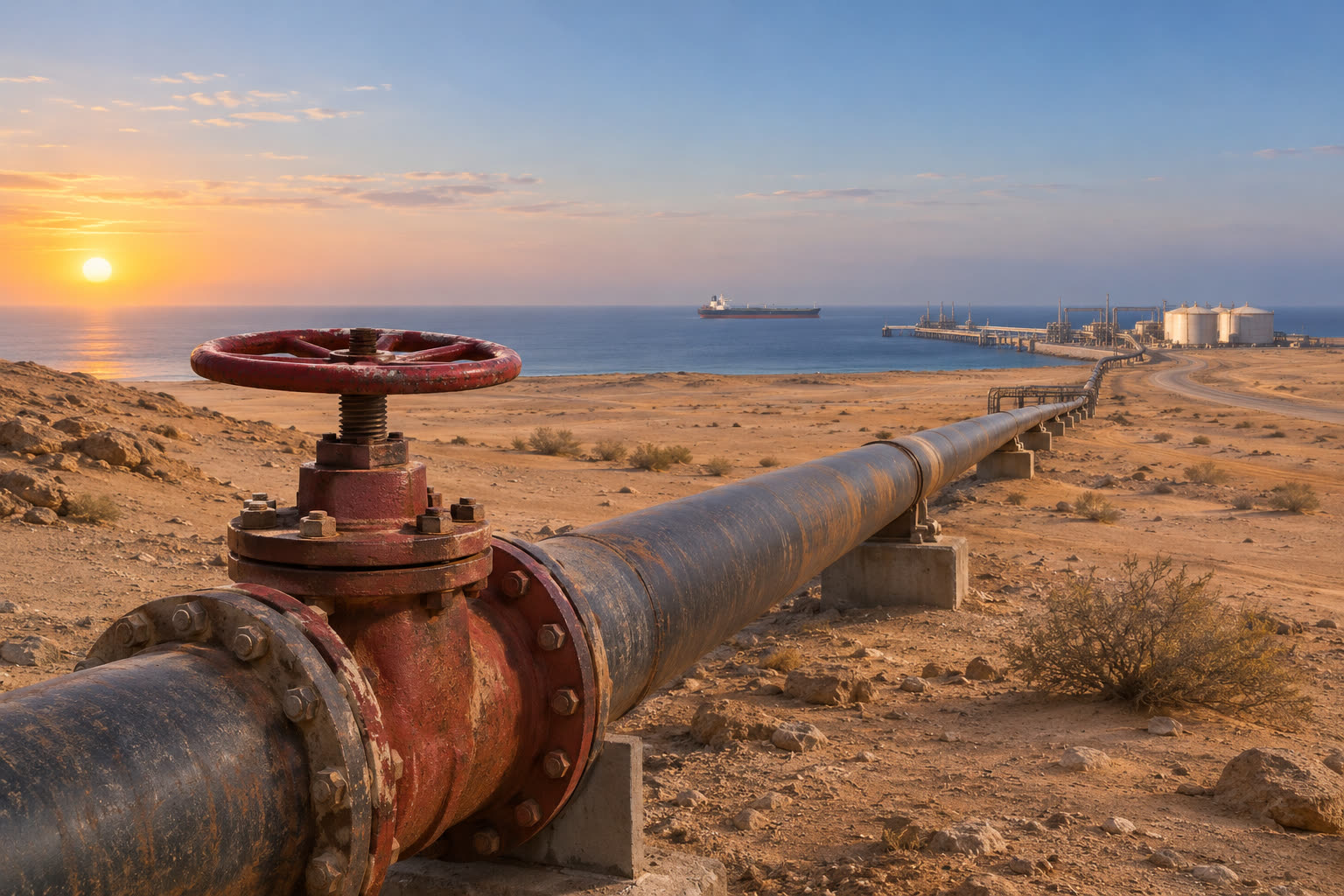
Iraq and Kazakhstan are pressing OPEC+ to lift preliminary estimates of their sustainable crude-production capacity before ministers meet on 29 Nov 2026. The dispute matters globally because OPEC says this first capacity assessment will be used as a reference for 2027 production baselines, potentially changing the alliance's room to pump even as analysts see surplus risk.
Key takeaways
- Reuters reported that Iraq and Kazakhstan want OPEC+ to raise their capacity estimates; Kazakhstan's energy ministry confirmed the review but did not disclose its findings.
- Reuters reported a preliminary Iraqi capacity assessment of about 4.9 million barrels per day (mb/d). The IEA's November report puts Iraq's sustainable capacity at 4.87 mb/d.
- Bloomberg and OilPrice reported that Baghdad has sought recognition of capacity near 6 mb/d, but that request is not an automatic new production quota.
- OPEC+ is scheduled to meet on 29 Nov to discuss its 2027 output policy. The timing comes as the IEA and US EIA both see global supply moving ahead of demand in late 2026.
What is being disputed
OPEC+ is completing its first alliance-wide review designed to estimate how much crude each participating country can produce sustainably. Reuters reported on 25 Nov that Iraq and Kazakhstan are asking the group to lift their preliminary figures, raising the political stakes before the meeting. The review is intended to provide a common capacity baseline, rather than rely only on each country's own claim or on recent production.
Reuters said a preliminary assessment put Iraq's capacity at about 4.9 mb/d. That is close to the IEA's independently published estimate of 4.87 mb/d in its 13 Nov Oil Market Report. The two figures are not identical, but they show why the review is sensitive: a small change in a baseline can influence the argument over future production targets.
Bloomberg reported that the review was completed this month by Dallas-based consultant DeGolyer and MacNaughton Corp., with countries receiving their own results but not a full ranking of every member. The same report said Iraq has sought a baseline near 6 mb/d; OilPrice separately reported that Baghdad was rejecting an assessment below 5 mb/d and wanted OPEC+ to recognise roughly 6 mb/d. Those are reported positions, not an agreed OPEC+ figure.
Kazakhstan's energy ministry confirmed to Reuters that the review took place, while declining to comment on the findings or next steps. OPEC did not immediately respond to Reuters' request for comment. The alliance's public position is clearer: in its June press statement, OPEC said the maximum sustainable production capacity assessment would be used as a reference for 2027 production baselines and scheduled the next ministerial meeting for 29 Nov 2026.
Why a capacity baseline matters
A capacity baseline is not the same thing as a quota and neither is the same as actual output. It is the starting point from which ministers can negotiate how much each producer may pump. A higher assessed capacity gives a country a stronger case for a larger target; accepting one country's request could mean more total barrels, or it could force a redistribution of room among members.
That distinction is important for readers. Even if Iraq or Kazakhstan receives a higher baseline, OPEC+ would still have to agree on the production formula and the market conditions under which any target is used. A decision on paper would not guarantee an immediate rise in exports. Conversely, a higher ceiling can become important later if shipping routes reopen, damaged infrastructure recovers or producers decide to compete for market share.
Global market backdrop is pulling in both directions
The capacity dispute arrives as the oil market is trying to rebalance after severe supply and shipping disruption. The IEA's November assessment said global oil supply increased by 2.3 mb/d in October to 105.4 mb/d and that its balances pointed to a return to surplus in the fourth quarter of 2026, with a larger build in 2027. The US EIA's November outlook also said global production would outpace consumption in the fourth quarter and inventories would begin building.
That is the bearish side of the debate: if Gulf flows continue recovering and other producers keep adding barrels, a larger OPEC+ capacity baseline could reinforce surplus pressure on crude. But the products drivers buy are not just crude. The IEA said diesel supply remained especially tight because refinery and export disruptions were still limiting product availability. That means a softer crude outlook does not guarantee an immediate or equal fall in petrol, diesel or jet-fuel prices in every market.
What it means for drivers, fleets and refiners
For drivers and fleet operators, the practical effect will come through the chain from crude benchmarks to refining margins, freight, currency and local taxes. Pump prices can move later, move by less or move in the opposite direction if refined-product supply is tight. Readers can compare their market's current rates in the live fuel-price tracker and model a journey with the fuel cost calculator rather than treating an OPEC+ headline as a direct pump-price change.
Refiners will watch the spread between crude availability and product margins. Airlines and road-freight companies will be more exposed to jet fuel and diesel conditions than to the headline capacity number alone. EV owners may see the relative cost comparison between charging and liquid fuels shift, but that comparison also depends on local electricity tariffs and charging access; FuelPrice's EV charging directory is a separate practical reference.
FuelPrice previously explained why OPEC+'s December targets were being held steady while a 2027 decision approached; this capacity review is the materially new development to watch alongside that earlier OPEC+ coverage.
What to watch after 29 November
The key test will be whether OPEC+ publishes or clearly signals the capacity baselines, how it translates them into 2027 targets and whether Iraq and Kazakhstan accept the outcome. A larger collective supply allowance would matter most if disrupted Middle East flows keep recovering. If shipping or security risks return, physical availability could again dominate quota arithmetic.
Until the meeting produces a confirmed statement, claims about new quotas or lower pump prices remain expected outcomes, not facts. The next official OPEC+ release and the direction of crude and refined-product markets will show whether this dispute changes barrels in the water or only the negotiating position around the table.
This article is for general information only and is not financial, insurance or legal advice.
Sources
- Reuters via Gulf Times: Kazakhstan also seeks higher oil output capacity estimate ahead of 2027 Opec+ quota debate — 25 Nov 2026
- Bloomberg via BusinessMirror: Opec+ faces its most consequential supply decision of the year — 25 Nov 2026
- OPEC: 41st OPEC and non-OPEC Ministerial Meeting — 7 Jun 2026
- IEA: Oil Market Report – November 2026 — 13 Nov 2026
- OilPrice.com: Iraq Refuses to Accept OPEC+ Assessment of its Production Capacity — 24 Nov 2026
- US EIA: Short-Term Energy Outlook, crude oil market review — 10 Nov 2026