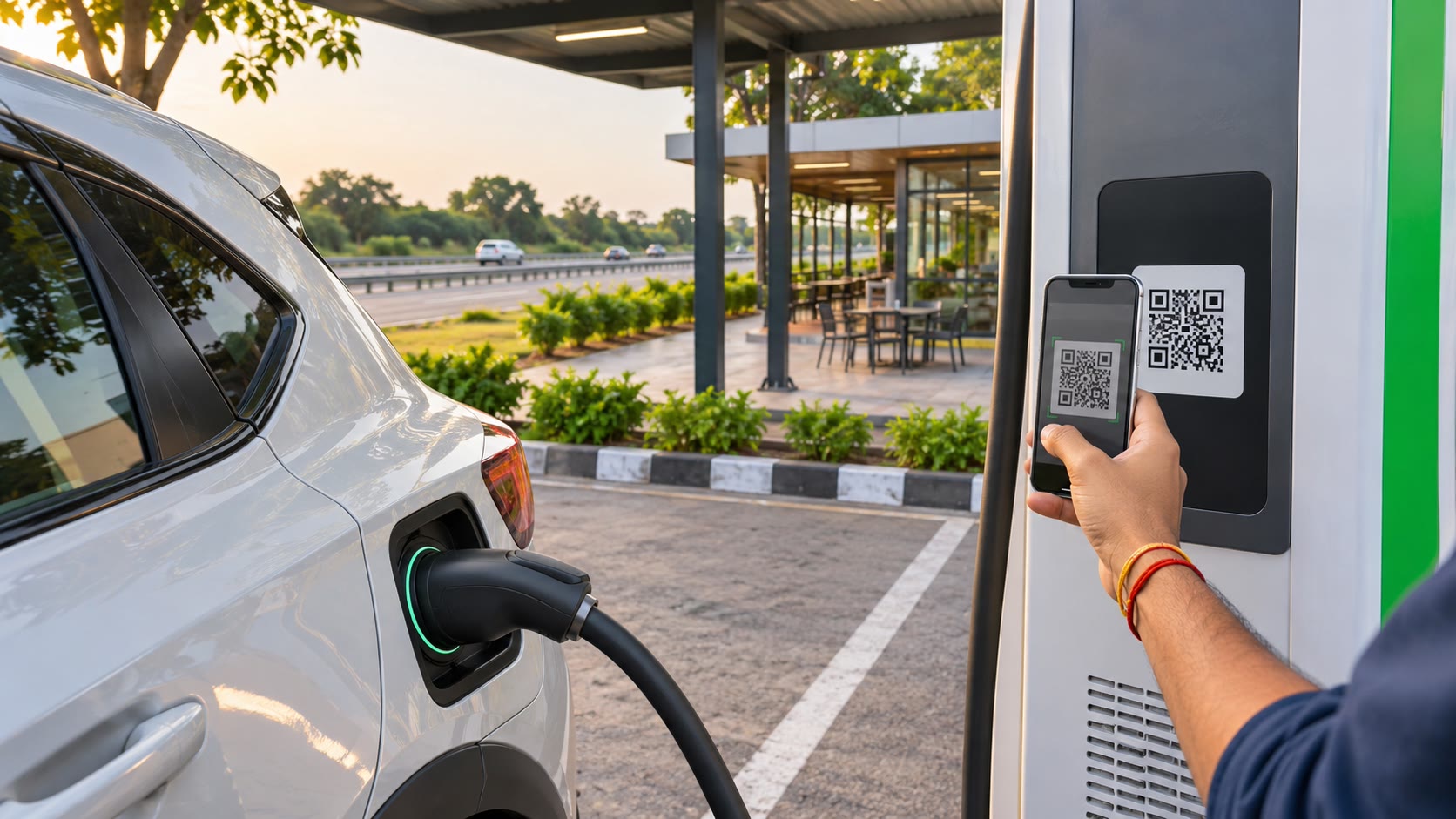
Paytm and ChargeZone have announced a QR-payment arrangement for more than 15,000 high-speed EV charging points across India. For EV drivers, the practical change is that a dedicated Paytm QR can be scanned at participating ChargeZone stations, with the amount entered and paid before charging begins.
That can remove one familiar friction point on an inter-city trip: having to manage a separate charging app or wallet at the moment a vehicle needs power. It does not, however, guarantee that every charger is available, compatible with every vehicle or active for Paytm payments at the same time. Drivers still need to check the individual station and plan a backup.
Key takeaways
- Paytm and ChargeZone announced QR-based payments at more than 15,000 high-speed EV charging points in India.
- The network figure covers more than 1,200 locations, including highways, urban centres and commercial hubs, according to the companies' 23 Nov 2026 announcement.
- The stated flow is: open Paytm, scan the dedicated QR at the charging point, enter the amount, complete payment and then begin charging.
- ChargeIndia is described as the aggregation layer connecting Paytm with multiple charging networks through one integration.
- The partnership changes one part of the payment experience; it does not publish a common charging tariff, guarantee live availability or replace route and connector checks.
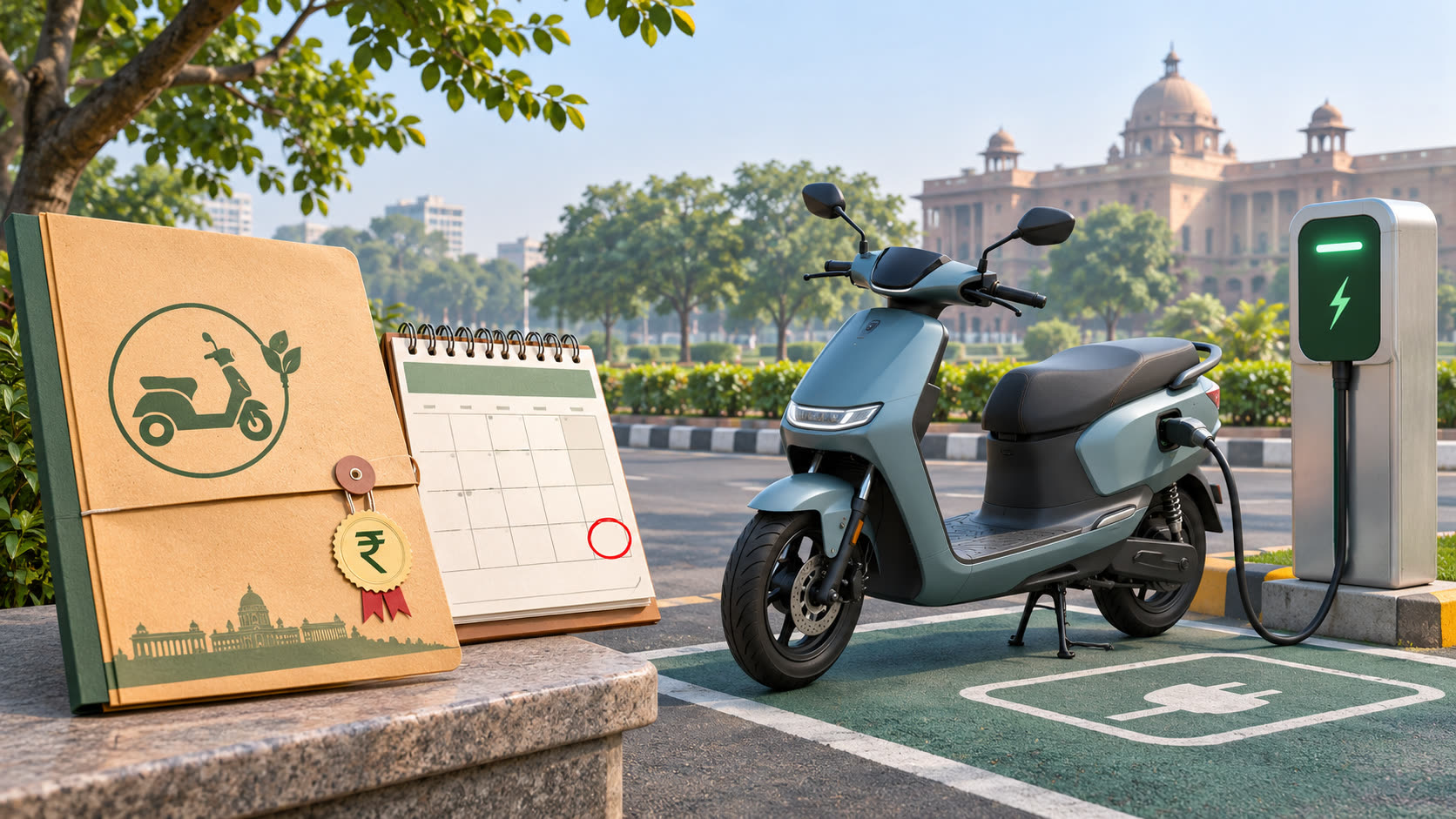
Illustrative image: a generic EV charging stop and QR-payment interaction, not a photograph of a specific ChargeZone site. Credit: FuelPrice editorial illustration.
What Paytm and ChargeZone announced
Paytm said on 23 Nov 2026 that it had partnered with ChargeZone to enable Paytm QR payments across more than 15,000 high-speed EV charging points. EVreporter reported the same arrangement on the same date, including the payment sequence and the network's stated footprint. Together, the reports establish the headline development while keeping the wording important: this is an announced payment integration, not a claim that every public charger in India now accepts Paytm.
ChargeZone's network is described as covering more than 1,200 locations. The companies place those locations across major highways, urban centres and commercial hubs, which is relevant for both daily users and drivers making longer trips. A payment method is most useful when it appears at the point where a driver needs to start a session, rather than only in a pre-trip booking workflow.
How the QR-payment flow works
The published process is straightforward:
- Open the Paytm app after arriving at a participating ChargeZone charging point.
- Scan the dedicated Paytm QR code displayed at the charger.
- Enter the amount intended for the charging session.
- Complete the payment through Paytm.
- Start charging after the payment succeeds.
The sequence means the payment is made before charging begins, so drivers should check the displayed station or merchant details and the amount before confirming. They should also retain the transaction confirmation until the session is complete. If a charger is out of service, the connector is not suitable or the station's instructions require another method, the QR announcement does not by itself solve that problem.
Why the change matters for EV road trips
Public charging is not only a question of charger numbers. A driver also has to find a usable location, identify the correct connector, understand the session price and complete payment without losing time. Reducing one app or wallet step can make the stop easier, especially for a driver who is visiting a corridor for the first time or is trying to avoid keeping several operator accounts active.
That convenience should be treated as a practical improvement, not a promise of faster charging or lower cost. The Paytm and ChargeZone announcements do not state a single nationwide price per kilowatt-hour, a common service fee or a guaranteed charging speed for all points. Tariffs, power output, idle fees, connector availability and station operating hours can vary by location and operator. Those are still the details that determine how much a stop costs and how long it takes.
Before leaving, drivers can start with FuelPrice's state-wise EV charging directory to identify stations along the likely route. The station check should go beyond distance: confirm the connector supported by the vehicle, the operator's current status, the charging capacity and whether a backup location is practical.
What to check before relying on the arrangement
- Look for the dedicated QR at the station. The announcement refers to a Paytm QR displayed at participating ChargeZone charging points. Do not assume that a generic sign or an unrelated code will start the session.
- Verify the amount and station details. Check the merchant or station information shown in the payment flow before confirming. Keep the receipt or transaction reference if the session does not start immediately.
- Confirm compatibility. A QR payment does not make an incompatible connector usable. Check the vehicle's connector type, the charger's power rating and any restrictions shown by the operator.
- Plan for a second option. Highway charging can be affected by queues, outages, traffic or a vehicle arriving before you. A backup station or a realistic reserve range is still part of a safe trip plan.
For a planned journey, the road-trip planner can help frame the route and likely stops. EV users should add charging time to the journey rather than treating it as the same as a short fuel stop. A station that is close on a map may still be a poor choice if it requires a detour, has limited power or is busy at the expected arrival time.
What this means for running-cost comparisons
The partnership can make payment more familiar, but it does not settle the cost comparison between an EV and a petrol or diesel vehicle. EV charging expense depends on the energy used, the station tariff, charging losses and the mix of home, workplace and public charging. Public fast charging may also carry a different price from slower charging elsewhere.
Readers comparing a new EV with a conventional vehicle can use the fuel-cost calculator to establish a dated petrol or diesel baseline for the same route. That is only one part of the comparison: purchase price, financing, insurance, maintenance, charging access and battery warranty remain separate questions. The announced payment integration helps with the transaction step, not with those wider ownership costs.
What to watch next
The next useful development will be practical rollout detail: which locations display the dedicated QR, whether availability is shown clearly before arrival, how failed or interrupted sessions are handled, and whether the same payment path works consistently across the network. Neither the Paytm announcement nor the EVreporter report gives a station-by-station rollout timetable or a universal tariff, so drivers should treat the integration as an added option and verify the individual location.
ChargeIndia's role is also worth watching. Paytm and ChargeZone describe it as the EV charging aggregation platform connecting Paytm to multiple networks through a single integration. If that model expands without making station status, pricing and receipts harder to understand, it could reduce some of the fragmentation that EV drivers face today. The more important test will be reliability at the charger, not the number of apps mentioned in a partnership announcement.
The reader takeaway is simple: Paytm QR payments are being added to a large ChargeZone charging network, which may make the payment step easier on Indian EV journeys. The arrangement does not remove the need to verify a station, connector, tariff, live status and backup plan before setting out.
Sources
- Paytm — Paytm Partners With ChargeZone to Bring Paytm QR Payments at Over 15,000 EV Charging Points Across India — 23 Nov 2026
- EVreporter — Paytm Partners With ChargeZone for QR Payments at 15,000+ EV Charging Points — 23 Nov 2026
- The Economic Times Kannada — Paytm and ChargeZone partnership enables QR payments at more than 15,000 EV charging points — 23 Nov 2026