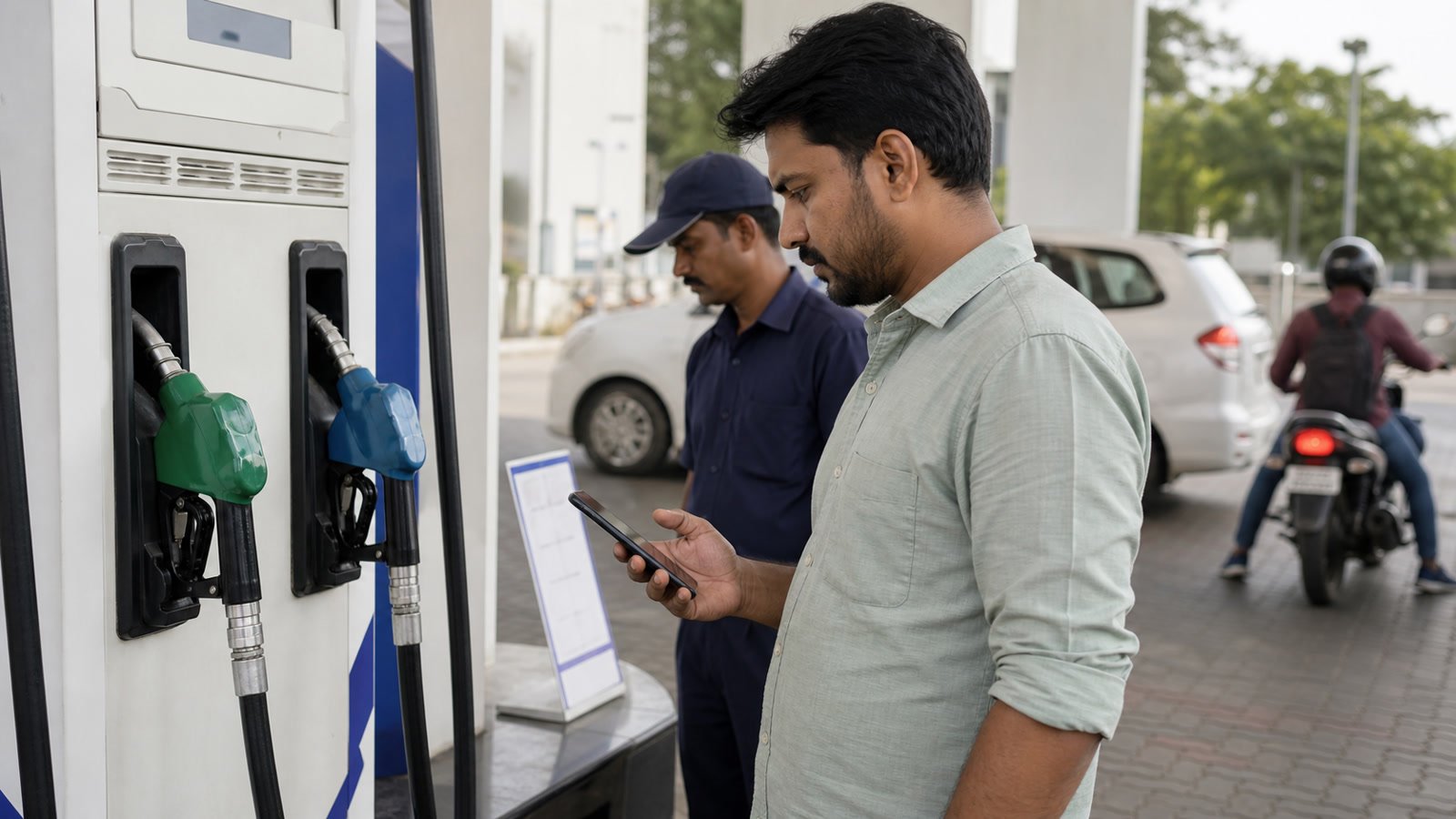
Petrol and diesel prices were reported unchanged across major Indian cities on Saturday, June 13, 2026. Economic Times said pump rates stayed steady in cities including Delhi, Mumbai and Bengaluru, while Navbharat Times also reported no change in petrol and diesel prices on June 13 even as crude oil had softened from recent levels. For consumers, that sounds like relief. For transporters, commuters and small businesses, the better reading is more cautious: the meter has stopped moving for the day, but the cost base remains higher than it was before the recent round of hikes.
This is why the June 13 price pause matters for FuelPrice readers. A stable rate for one morning does not automatically reverse the pressure created by earlier increases. It gives households and fleets a planning window. It also gives oil marketing companies, dealers, transporters and consumers time to assess whether the market is entering a genuine cooling phase or merely holding before another revision.
What Happened On June 13
Retail petrol and diesel prices were kept unchanged in major city updates published on June 13. Daily pump-rate updates in India are closely watched because even a small movement can alter monthly running cost for two-wheeler riders, cab drivers, delivery workers, intercity bus operators and diesel freight fleets. The latest update is therefore not a dramatic price cut story; it is a stability story after a difficult fuel-cost phase.
The stability came after recent increases had already lifted rates in many markets. Economic Times reported in late May that state-run oil marketing companies raised petrol and diesel prices by about Rs 2.7 per litre in one revision, taking the cumulative increase over that round to roughly Rs 7.5-8 per litre. Times of India reported a city-level example from Lucknow, where petrol had reached Rs 101.89 per litre after the fifth hike since May 14, with diesel also rising over the same period. These numbers explain why unchanged prices on June 13 still feel expensive to many users.
Why A Pause Still Matters
The immediate benefit of unchanged prices is predictability. A commuter filling a two-wheeler, a family planning weekend travel, a cab driver estimating daily earnings, and a small shopkeeper paying local delivery charges all get one less variable to worry about. For truck operators, a steady diesel price helps quote freight rates with less uncertainty, even if the absolute fuel bill remains elevated.
But the pause does not erase the pass-through effect. Diesel is embedded in freight, cold-chain movement, construction material transport, agriculture logistics and city distribution. Petrol affects personal mobility, delivery riders, service technicians and small-business movement. When pump prices rise quickly, businesses often adjust freight buffers, delivery charges, route planning or product pricing. When pump prices merely stop rising, those adjustments do not immediately disappear.
- Private vehicle users: Monthly fuel budgets remain under pressure even if there is no fresh hike today.
- Two-wheeler commuters: A stable day helps short-term budgeting, but higher per-litre rates still affect daily travel.
- Cab and delivery workers: Earnings depend on whether fares, incentives and fuel reimbursements keep pace with the new base.
- Truck and bus operators: Diesel stability helps rate negotiation, but fleet margins remain sensitive to every rupee per litre.
- Retailers and consumers: Freight costs can still influence shelf prices even after pump prices stop changing.
Crude Oil Cooling Is Not The Same As Pump Relief
Navbharat Times highlighted that crude oil had fallen to a lower level, raising expectations that consumers could eventually see relief. That expectation is understandable, but retail fuel pricing does not always move one-to-one with crude oil on the same day. Pump prices depend on international product prices, rupee-dollar movement, taxes, dealer margins, freight, inventory cycles, and the financial position of oil marketing companies.
This is the important distinction for readers: crude cooling is a positive signal, but not a retail-price guarantee. OMCs may hold prices steady to evaluate market direction, recover earlier under-recoveries, maintain supply discipline or wait for a clearer trend. State-level taxes and local logistics can also keep city prices different even when the broad national direction is stable.
What Consumers Should Do Now
The practical response is not panic buying or assuming a cut is certain. Consumers should check the latest city rate before refuelling, especially before long travel. Daily fuel prices are usually updated in the morning by oil marketing companies, and city-specific rates can vary because of state taxes and dealer-location factors. A person travelling between states can see a meaningful difference in the cost of a full tank.
For households, the useful check is weekly fuel spend, not just the headline per-litre price. A rider who buys small quantities every few days may not notice the full monthly impact until the end of the month. For families using one petrol car and one two-wheeler, combining errands, maintaining tyre pressure, avoiding unnecessary idling and planning refuelling locations can reduce wastage without changing the vehicle.
For fleets, June 13 stability is a signal to review rather than relax. Operators should compare current diesel spend with pre-hike assumptions, check whether freight contracts have fuel-adjustment clauses, and watch whether customers are accepting revised rates. If crude remains soft and pump prices later ease, fleet margins may improve. If prices hold at elevated levels, freight and delivery cost pressure can remain embedded.
What To Watch Next
The next signals are crude oil direction, rupee-dollar movement, OMC pricing decisions, state tax changes, and whether any city-level revisions appear after the current pause. Consumers should also watch diesel more closely than petrol if they are tracking inflation pressure, because diesel moves the goods that households eventually buy.
The reader takeaway is clear: June 13 brings pump-rate stability, not full relief. For car and two-wheeler owners, it reduces day-to-day uncertainty. For transporters and businesses, it helps planning but does not remove the higher fuel-cost base created by the recent hikes. If crude oil continues to cool and OMCs pass on the benefit, consumers may see a better outcome later. Until then, the most sensible approach is to track city-wise rates, budget on the current higher base, and treat every stable day as a planning window rather than a price-cut promise.
Sources: Economic Times June 13 fuel-rate update, Navbharat Times June 13 price update, Economic Times fuel-hike context, Times of India Lucknow price-hike context.