Petrol and diesel prices were unchanged across major Indian city listings on 29 Sep 2026, according to current fuel-rate trackers. The pause means drivers did not face a fresh day-on-day increase at the pump, but the amount paid still depends on the city, fuel type, outlet and the route being planned.
Key takeaways
- Current 29 Sep listings showed no day-on-day movement in the major-city petrol rates they track.
- The latest official PPAC reference for Delhi, dated 28 Sep, listed petrol at ₹102.12 per litre and diesel at ₹95.20 per litre.
- A stable national headline does not mean one price applies across India: state taxes, local levies and outlet-level differences still matter.
- Before refuelling, check the date-stamped city rate and use the actual figure in your trip-cost estimate.
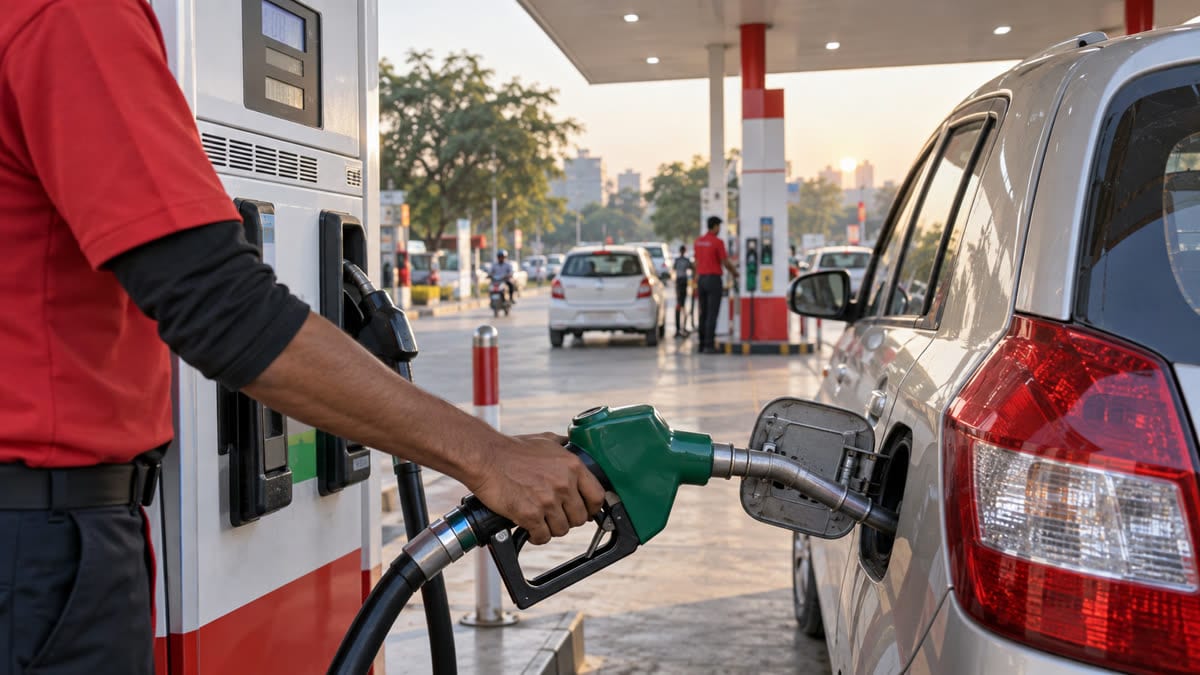 Refuelling at an Indian petrol station. Credit: FuelPrice, AI-generated editorial image.
What changed on 29 Sep
The latest 29 Sep listing from Gadgets 360 showed zero day-on-day movement across the metro petrol entries on its India fuel page. The Hindustan Times Delhi tracker also displayed no change for the date. Those readings match NDTV Profit’s 28 Sep report that state-run oil marketing companies had kept retail petrol and diesel prices unchanged across cities.
The most recent official reference on the Petroleum Planning and Analysis Cell’s price page is dated 28 Sep. It lists the retail selling price at an IndianOil outlet in Delhi as ₹102.12 per litre for petrol and ₹95.20 per litre for diesel. NDTV Profit reported the same Delhi reference rates in its city-wise update. These are useful, dated anchors, not a guarantee that every pump in every locality will display the same amount.
For scale, a 40-litre petrol fill at the ₹102.12-per-litre Delhi reference would work out to about ₹4,084.80. That is an illustration based on the published reference rate; the actual bill can differ with the vehicle’s tank size, the selected outlet and the rate applicable in the city on the day of purchase.
What stable rates mean for drivers
Unchanged prices provide short-term predictability, but they are not the same as a price cut. A commuter who refuels today can plan around the same city rate shown yesterday, while a family leaving for a longer drive should still estimate fuel for the full distance rather than assume that a familiar home-city price will apply on the road.
For transporters and delivery operators, a flat diesel rate avoids an immediate change in the fuel line of a trip budget. It does not remove other costs such as tolls, maintenance, wages or delays, and a route crossing state borders may encounter a different pump rate. For that reason, a stable metro headline is most useful as a planning signal, not as a complete operating-cost forecast.
The practical distinction is simple: today’s pause protects the next refill from a fresh day-on-day increase, but it does not make an earlier high price disappear. Drivers comparing monthly spending should use their own litres bought and the rates printed on their fuel bills.
Why crude volatility does not always reach the pump
Retail fuel pricing reflects more than the international crude benchmark. The exchange rate, refining and freight costs, dealer margins, central excise and state-level VAT or other local levies all affect the final figure. NDTV Profit noted that a move in international crude does not automatically translate into a same-day change in domestic petrol and diesel prices. The Hindustan Times fuel explainer also notes that petrol and diesel remain outside the GST regime, leaving state-level taxation important to the city-to-city difference.
That helps explain why a driver can see reports of volatile global oil markets while the local pump board remains unchanged. It also explains why the right follow-up question is not only whether the national rate moved, but which city and outlet rate applies to the next refill.
Do not use one national price for a trip
FuelPrice’s live fuel prices page is the right starting point for a date-stamped check. If you are comparing several destinations, the all-cities petrol price list helps show how the rate changes between locations. Current online trackers can show small paise-level differences because they may use different outlets, update times or data feeds, so do not average two figures or copy an old listing into a new trip budget.
What to check before your next refill
- Confirm the fuel type and city, then check the date beside the rate. A petrol figure cannot be used for a diesel estimate, and a home-city rate may not apply at the destination.
- Enter the route distance and the vehicle’s realistic mileage in the fuel cost calculator. Use the current city rate as the input rather than a national average.
- For a multi-city drive, use the road-trip planner to map the route and allow for traffic, diversions and rest stops before deciding how much fuel to carry.
- At the pump, compare the displayed retail selling price with the date-stamped listing. IndianOil says its online and SMS prices are indicative and that prices can vary between outlets in a city.
What to watch next
There is no confirmed price increase in the sources reviewed for 29 Sep. The next meaningful signal will be an official retail-price update from PPAC or an oil marketing company, alongside the direction of crude, the rupee and any change in central or state fuel taxes. A period of unchanged prices should therefore be read as the current position, not as a promise about the next revision.
For drivers, the takeaway is practical: the 29 Sep pause makes the next refill easier to budget, but the safest trip estimate remains city-specific and date-specific. Check the live rate immediately before fuelling and calculate the route with the price that actually applies to your vehicle.
Sources
- Petroleum Planning and Analysis Cell, “RSP of Petrol and Diesel in Delhi as per IOCL outlet” — 28 Sep 2026
- IndianOil, “Petrol and Diesel Price” — accessed 29 Sep 2026
- NDTV Profit, “Petrol, Diesel Prices On September 28: Check New Fuel Rates In Mumbai, Bengaluru, Chennai, Kolkata And More” — 28 Sep 2026
- Gadgets 360, “Petrol Price Today | Petrol Price in India (29th September 2026)” — 29 Sep 2026
- Hindustan Times, “Petrol Price in Delhi: Check Latest Petrol Rates in Delhi Today” — accessed 29 Sep 2026