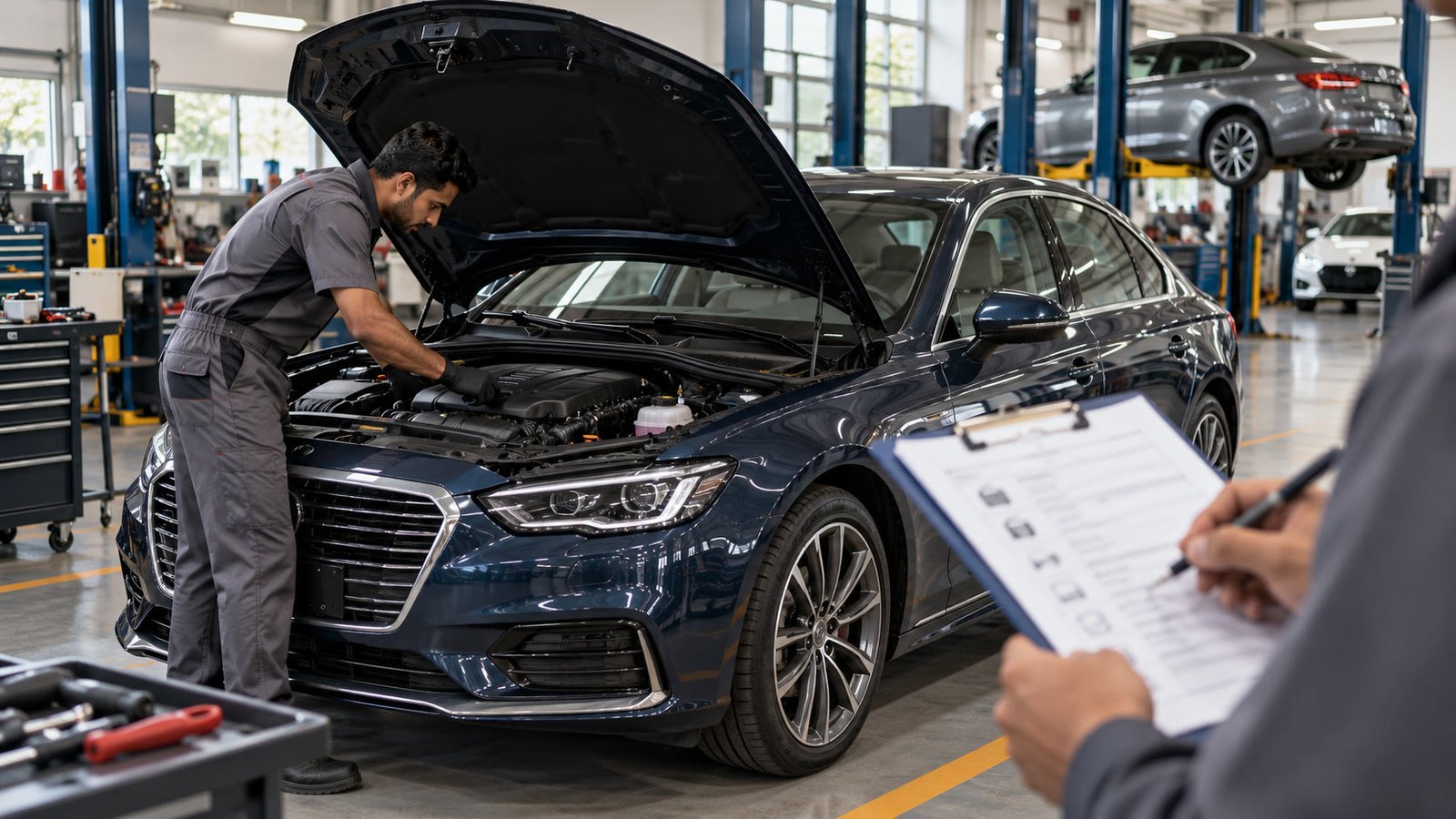
Edel Assurance is offering extended warranty plans for premium and luxury cars that run from 3 to 10 years, with reported annual plan values from ₹1 lakh to ₹8 lakh. The practical point for owners is that a warranty for specified mechanical or electrical breakdowns is different from motor insurance for covered accident loss and third-party liability, so the terms—not the headline price—decide what risk is actually covered.
The figures and coverage details below are reported or provider-stated, not a standard tariff for every premium car. Actual eligibility, price and claim treatment depend on the vehicle and the plan documents.
Key takeaways
- Autocar Professional and TOI Auto describe extended warranty plans with terms of 3 to 10 years.
- The reports put annual plan values at about ₹1 lakh to ₹1.5 lakh for entry-level premium cars and ₹7 lakh to ₹8 lakh for high-end models; most buyers are reported to choose plans in the ₹2 lakh to ₹3 lakh range.
- The cover is intended for specified mechanical and electrical components after the manufacturer warranty ends, subject to the chosen plan’s conditions.
- Repairs or replacements are described as being handled through authorised manufacturer workshops, which makes the workshop and claims process important to check.
What the latest reports say
Autocar Professional reported on 28 Oct 2026 that Edel Assurance offers three- to 10-year extended warranty plans for premium cars. Its report said annual plan values typically range from ₹1 lakh to ₹1.5 lakh for entry-level premium cars and from ₹7 lakh to ₹8 lakh for high-end models, while most customers choose plans between ₹2 lakh and ₹3 lakh.
A separate TOI Auto report published on 7 Oct 2026 described the same broad duration and price bands. It also said the company is focused on premium brands including BMW, Mercedes-Benz, Audi, Jaguar, Land Rover and Range Rover. These figures should be read as reported company ranges, not as quotes that apply to every car or owner.
The provider’s own coverage information describes protection for listed parts and labour across systems such as the engine, automatic transmission, steering, air conditioning, braking, electrical and fuel systems. It says eligible repairs are carried out through authorised dealers. That wording matters: an extended warranty is a contract for specified failures, not a promise that every repair bill will be paid.
Extended warranty versus motor insurance
The two products address different ownership risks. A motor policy can include compulsory third-party liability cover and, where selected, own-damage protection for covered loss or damage. The IRDAI’s motor insurance handbook tells policyholders to check what the policy covers, what it excludes, deductibles, the insured value and the claims process.
| Product | What it is generally meant to address | What to verify |
|---|---|---|
| Extended warranty | Specified mechanical or electrical component failures after the manufacturer warranty, subject to contract terms. | Covered parts, exclusions, term, mileage limits, inspection conditions and authorised repair location. |
| Motor insurance | Third-party liability and, where purchased, covered accidental loss or damage to the vehicle. | Policy type, insured value, deductibles, exclusions, add-ons and claim procedure. |
| Routine maintenance | Scheduled servicing and normal upkeep that may not be a warranty claim. | Service schedule, consumables, labour charges and the vehicle’s maintenance history. |
In practical terms, renewing motor insurance does not automatically protect an owner from a failed gearbox or electrical control unit, while a warranty does not replace mandatory third-party motor cover. The exact boundary is set by each contract, so the documents should be compared separately rather than treated as interchangeable.
What the reported ₹1–8 lakh range means
The headline range is wide because the potential parts and labour exposure varies sharply between premium cars. A plan for an entry-level premium model and a plan for a high-end luxury vehicle may not cover the same components, use the same limits or carry the same price. The reported ₹2 lakh to ₹3 lakh band describes where most customers are said to fall; it is not a benchmark or a promised saving.
The provider’s website says it evaluates the vehicle and then provides a quote. That means an owner should ask whether the quoted amount is for the full selected term or is an annual figure, which components carry caps, and whether an inspection or service-history condition applies. Comparing only the rupee premium without reading the schedule can make two apparently similar plans impossible to compare fairly.
A warranty is also separate from day-to-day running cost. Owners can use the fuel cost calculator to estimate trip and monthly fuel spending, then keep that recurring cost separate from a one-time or annual protection quote. For the fuel-rate input, the live fuel-price pages provide a separate reference point.
Checks before comparing a plan
- Read the component schedule. Check which assemblies and parts are included, what is excluded and whether the wording covers repair, replacement, parts and labour.
- Check the validity conditions. The provider’s FAQ says the vehicle must be serviced in line with the manufacturer’s recommendations. Keep the service records and ask how missed or delayed servicing affects a claim.
- Confirm the workshop route. Current reports and the provider’s coverage page refer to authorised manufacturer workshops. Confirm whether this is mandatory, how a claim is opened and who approves a repair.
- Separate warranty from insurance. For the insurance portion of ownership, the car insurance renewal comparison guide covers IDV, no-claim bonus and add-ons as separate questions from mechanical-failure protection.
- Keep the quote in context. Compare the price, term, exclusions and claim conditions for the specific car. Do not assume that a longer duration or a higher price means broader protection.
What changes for owners now
This is a commercial extended-warranty offering, not a new IRDAI rule and not a change to compulsory third-party motor insurance. The immediate reader takeaway is to distinguish the type of risk being covered: accident and liability protection belong to the motor-insurance decision, while specified post-warranty component failures belong to the warranty decision.
The next useful information to watch is not a general promise of cover, but the plan-specific schedule, exclusions, eligibility conditions and claim process for the individual vehicle. Owners comparing a quote should also check whether the manufacturer’s own extended warranty is available and compare its terms on the same basis. Actual offers vary by vehicle, age, inspection outcome and contract conditions.
Sources
- Autocar Professional — Edel Assurance Offers Extended Warranties for Premium Cars in India (28 Oct 2026)
- TOI Auto — Edel Assurance Expands Premium Vehicle Warranty Focus in India, Offers Coverage Beyond Manufacturer Warranty (7 Oct 2026)
- Edel Assurance — Car Warranty Coverage Plan (accessed 29 Oct 2026)
- Insurance Regulatory and Development Authority of India — Motor Insurance Handbook (accessed 29 Oct 2026)
This article is for general information only and is not financial, insurance or legal advice.