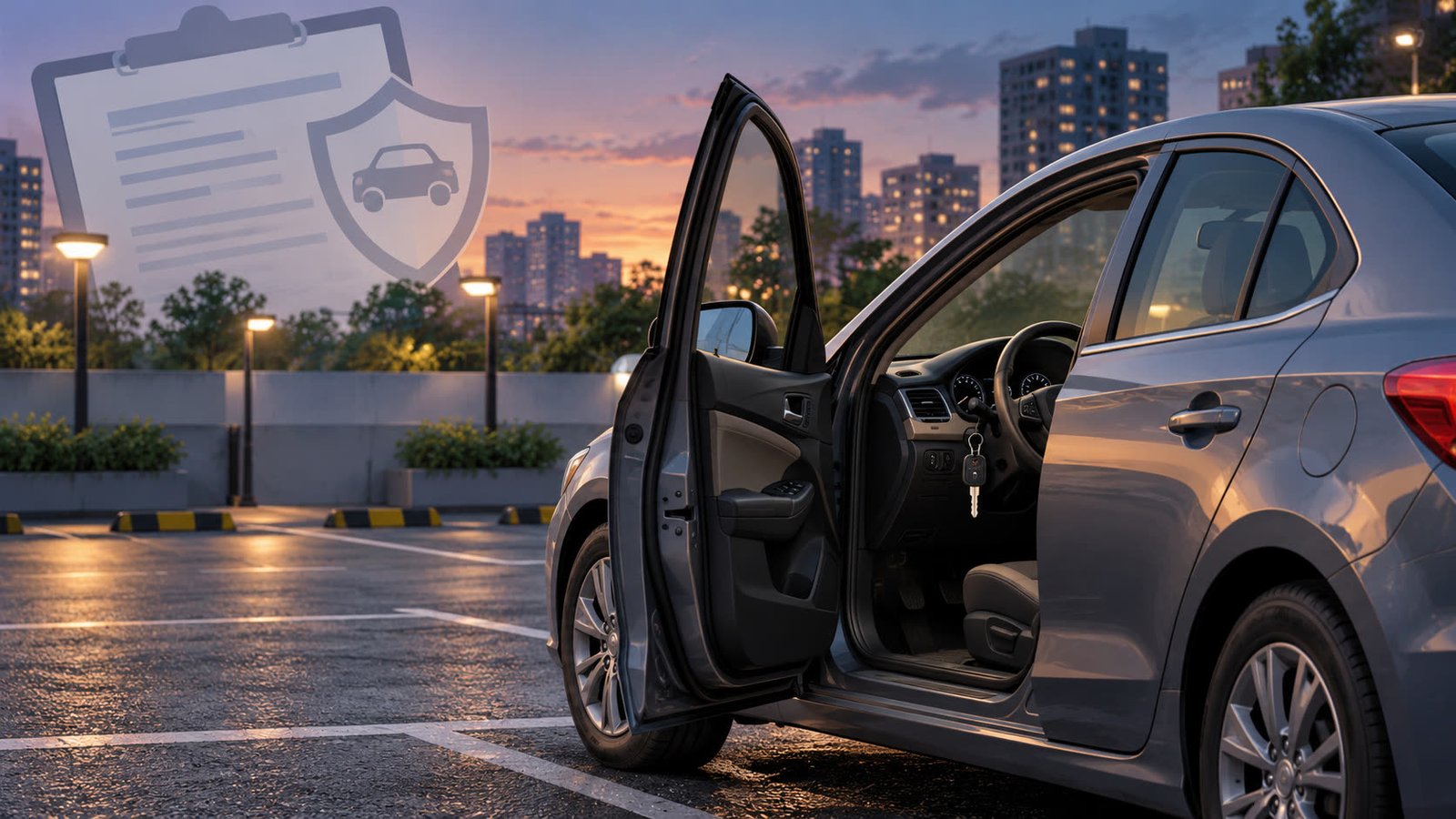
A Delhi consumer commission has ordered an insurer to pay ₹4.25 lakh after a theft claim was rejected because the insured vehicle was left with its key in the ignition. The decision, dated 8 Oct 2026 and reported on 28 Oct, turns on the facts of one case; it does not mean leaving a vehicle with keys inside guarantees a claim.
Key takeaways
- The commission treated the alleged policy breach as insufficient on its own to end the insurer’s liability.
- The reported total is ₹4.25 lakh: ₹4 lakh as the vehicle’s insured declared value and ₹25,000 towards litigation costs and related hardship.
- The insurer had argued that leaving the key in the ignition amounted to gross negligence and breached a motor-policy condition.
- The outcome is fact-specific. Theft claims still depend on the policy wording, evidence, reporting, investigation and the connection between the alleged breach and the loss.
What the Delhi commission decided
According to reports by The Indian Express and The Indian Witness published on 28 Oct 2026, the case involved a vehicle stolen on the night of 21 Sep 2020. The owner initially lodged an electronic first information report. The reporting says the insurer later rejected the claim under a policy condition requiring the insured to take reasonable steps to safeguard the vehicle, after the owner disclosed that the key had been left in the ignition.
The insurer also challenged the complaint on other grounds, including the vehicle’s hypothecation and the absence of the financer as a party. The commission nevertheless held that the complaint could be considered and that the insurer could not avoid liability merely by pointing to a technical breach. Its reasoning, as reported, was that the theft was an unforeseen event and that the circumstances did not establish negligence or collusion that contributed to the loss.
The order awarded the insured declared value of ₹4 lakh and ₹25,000 towards litigation costs, including the hardship, mental agony and loss of time described in the report. The result is therefore a reported total of ₹4.25 lakh. It is not a ruling that every theft claim must be paid whenever a policy condition has been breached.
Why the ruling matters for vehicle owners
Motor insurance policies commonly include a reasonable-care requirement. The IRDAI motor policy wording also says that a policyholder must take reasonable steps to safeguard the vehicle and must notify the police promptly in the event of theft. Those duties remain relevant even though a consumer commission has found, on these facts, that the breach did not automatically defeat the claim.
The important question is the link between the conduct cited by the insurer and the loss. A commission may examine whether the alleged breach was fundamental and whether it materially contributed to the theft. That is different from treating a policy condition as irrelevant. Fraud, concealment, inconsistent statements, an unsupported theft report or a breach that directly enabled the loss can still affect the outcome under the applicable policy and evidence.
The amount also shows why the insured declared value matters. For a total loss, standard motor-policy wording generally ties the insurer’s liability to the IDV stated in the policy, subject to the contract and applicable deductions. The IDV is not automatically the same as the vehicle’s current resale price. Owners comparing cover can use the guide on third-party and comprehensive car insurance to understand which type of cover addresses damage or theft of their own vehicle.
What to check in a theft claim
Read the safeguard and exclusion clauses
Policyholders can check the sections dealing with theft, keys, reasonable care, exclusions, IDV, financed vehicles and claim intimation. The full schedule and endorsements matter as much as the headline cover. FuelPrice’s guide on how to read a car insurance policy document is a useful checklist for locating those terms.
Keep the reporting trail together
A theft file normally includes the policy schedule, registration certificate, police complaint or FIR, claim intimation, correspondence with the insurer, details of the keys and any documents requested during investigation. The exact list varies by insurer and policy. Keeping dated copies helps show when the theft was reported, when the claim was notified and what information was supplied.
Ask for the written reason if a claim is rejected
A repudiation letter should identify the policy clause and the facts relied on. That makes it possible to compare the insurer’s position with the policy wording and the investigation record. If the response remains disputed, the IRDAI grievance FAQ says a policyholder can first approach the insurer’s grievance redressal officer and then use the Bima Bharosa process when the matter is not resolved within the stated window.
What changes now
Nothing in the reported decision changes the need for valid cover, prompt reporting or reasonable precautions. It does, however, underline that a claim cannot be assessed only by quoting one policy condition without examining whether that breach caused or materially contributed to the theft. For renewal, the relevant comparison is not only premium: policyholders can also review IDV, theft exclusions, deductibles, reporting instructions and the claim escalation path. The separate checklist on car insurance renewal after a claim covers those renewal questions.
For drivers, the practical takeaway is narrow but useful: keep the keys with you, report a theft without delay, preserve the evidence and read the written reason for any rejection. The Delhi order offers a fact-specific consumer remedy, not a promise that a future claim will be accepted.
Sources
- The Indian Express — Car stolen, claim rejected over keys left in ignition, insurer liable to pay Rs 4.25 lakh — 28 Oct 2026
- The Indian Witness — Delhi Consumer Commission Orders Insurer to Pay Rs 4.25 Lakh After Rejected Car Theft Claim — 28 Oct 2026
- IRDAI — Motor Insurance Policy Wording — accessed 29 Oct 2026
- IRDAI — Policyholder grievance FAQ — accessed 29 Oct 2026
This article is for general information only and is not financial, insurance or legal advice.