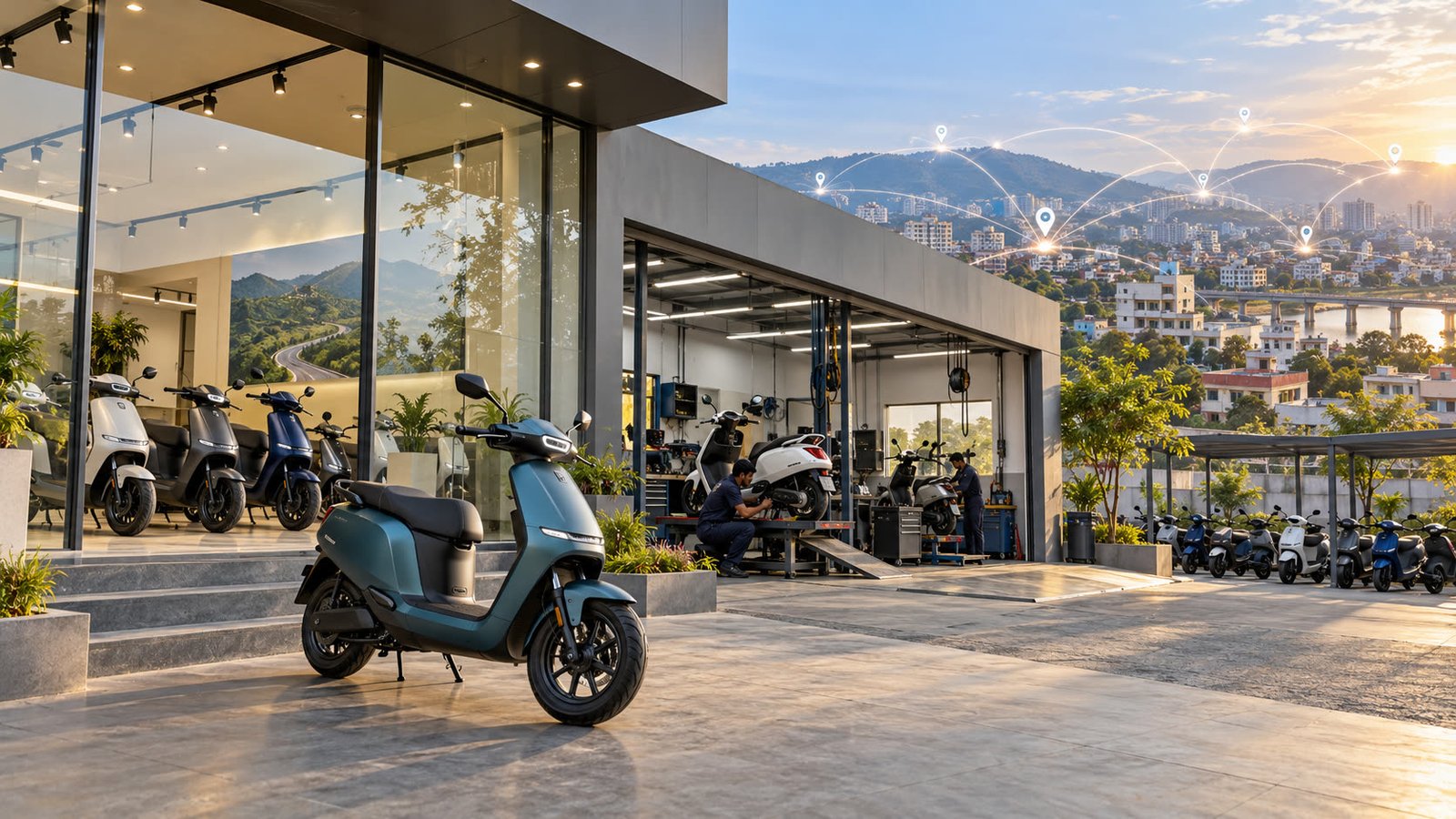
River Mobility says it has crossed 100 showrooms in India after opening 10 outlets in a day, taking its retail and service footprint to 65 cities across 12 states. The expansion gives more riders access to test rides, bookings and service support, while the company’s next targets remain plans rather than a completed network.
The milestone was announced in a River company update and independently reported by Autocar Professional and HT Auto. For potential electric-scooter buyers, the practical change is greater access to a physical outlet; it does not by itself guarantee stock, delivery timing or service capacity in every city.
Key takeaways
- River Mobility says its Indian showroom network has crossed 100 outlets after 10 new stores opened across locations including Delhi, Lucknow, Agra, Udaipur, Ajmer, Chennai, Puducherry, Navi Mumbai, Pune and Visakhapatnam.
- The company places the network at 65 cities across 12 states, with test rides, bookings, accessories and service support offered through its stores.
- River is targeting 150 stores by the end of 2026 and more than 200 outlets by March 2027; these are company targets, not current counts.
- The expansion is backed by the company’s reported USD 120 million Series C funding, with retail and service infrastructure among the planned uses.
What River has announced
River’s latest expansion adds 10 outlets to its Indian retail footprint in one rollout. The company’s update names first-time or newly added access in Puducherry and Navi Mumbai, along with new showrooms in Delhi, Lucknow, Agra, Udaipur, Ajmer, Chennai, Pune and Visakhapatnam. Autocar Professional reported the same 10-location expansion on 29 Oct 2026, while HT Auto’s 1 Nov 2026 report said the additions took the network to 65 cities across 12 states.
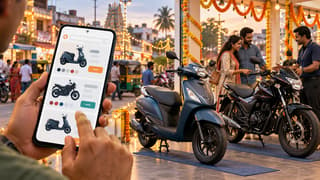
That footprint matters because an electric two-wheeler is easier to assess when a buyer can sit on it, take a test ride, ask about charging and understand the local service process. River says its stores bring test rides, bookings, accessories and service support together. The company has also started its first international retail presence in Kathmandu, Nepal, but the India network remains the main change for domestic riders.
What the wider network means for buyers
More chances to inspect the ownership experience
Showroom expansion can reduce the distance between an online shortlist and a real purchase decision. A prospective buyer can check riding position, storage practicality, braking feel and the fit of the vehicle for a daily route before considering a booking. A local outlet also gives the buyer a place to ask how service appointments, spare parts and warranty claims are handled.
That access should be treated as a starting point, not as proof that ownership will be trouble-free. A new store may still be building its workshop team, and the availability of a test vehicle does not necessarily mean that the preferred variant is ready for delivery. Buyers can ask for the expected delivery window, the service location that will handle the vehicle, and the documents that describe warranty coverage.
Charging remains a separate check
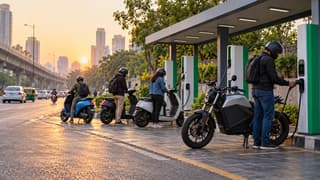
More sales outlets do not automatically create more public charging points. Many electric-scooter owners will depend mainly on a suitable home or workplace charging arrangement, so the buyer’s parking and electricity access can matter more than the distance to a showroom. The state-wise EV charging station directory can help identify public options, but operating hours, connector compatibility and payment rules still need to be confirmed with the network operator.
Expansion targets are not delivery promises
River says it wants to reach 150 stores by the end of 2026 and more than 200 by March 2027. Autocar Professional and HT Auto both reported those targets, which are supported by the company’s stated USD 120 million Series C funding. The funding figure describes capital raised by the business; it is not a discount, subsidy or buyer benefit.
The next test will be whether retail growth is matched by service depth. More outlets can improve access, but a strong ownership network also requires trained technicians, parts availability, reliable diagnostics and a clear process for escalated complaints. Those elements are harder to judge from a showroom count alone.
What to check before booking
- Local availability: confirm the exact variant, colour, on-road price and delivery estimate at the outlet serving your location.
- Service coverage: ask whether routine service and warranty work are done at that store or at another facility, and how appointments are scheduled.
- Charging fit: check whether home parking permits safe charging and whether the electricity connection can support the stated setup.
- Ownership terms: read the battery warranty, roadside assistance, software support and exclusions before comparing the total cost.
- Route economics: use the fuel cost calculator to establish a petrol-scooter baseline, then compare it with the electricity tariff and charging pattern relevant to the actual commute.
FuelPrice’s guide to EV battery warranty and ownership-cost checks can help frame that comparison. It is also useful to read the recent October electric two-wheeler registration snapshot as market context, while remembering that national registration data does not show local stock or service quality.
What to watch next
River’s 150-store year-end target and 200-plus March 2027 target will show how quickly the company can convert its funding and retail push into a durable service network. The useful indicators will be outlet openings, delivery capacity, workshop coverage and the time taken to resolve routine ownership issues, not just the number of storefronts.
For riders, the 100-showroom milestone makes River easier to investigate in more Indian markets. The decision still depends on the local price, charging arrangement, warranty terms, route and after-sales support available to the individual buyer.