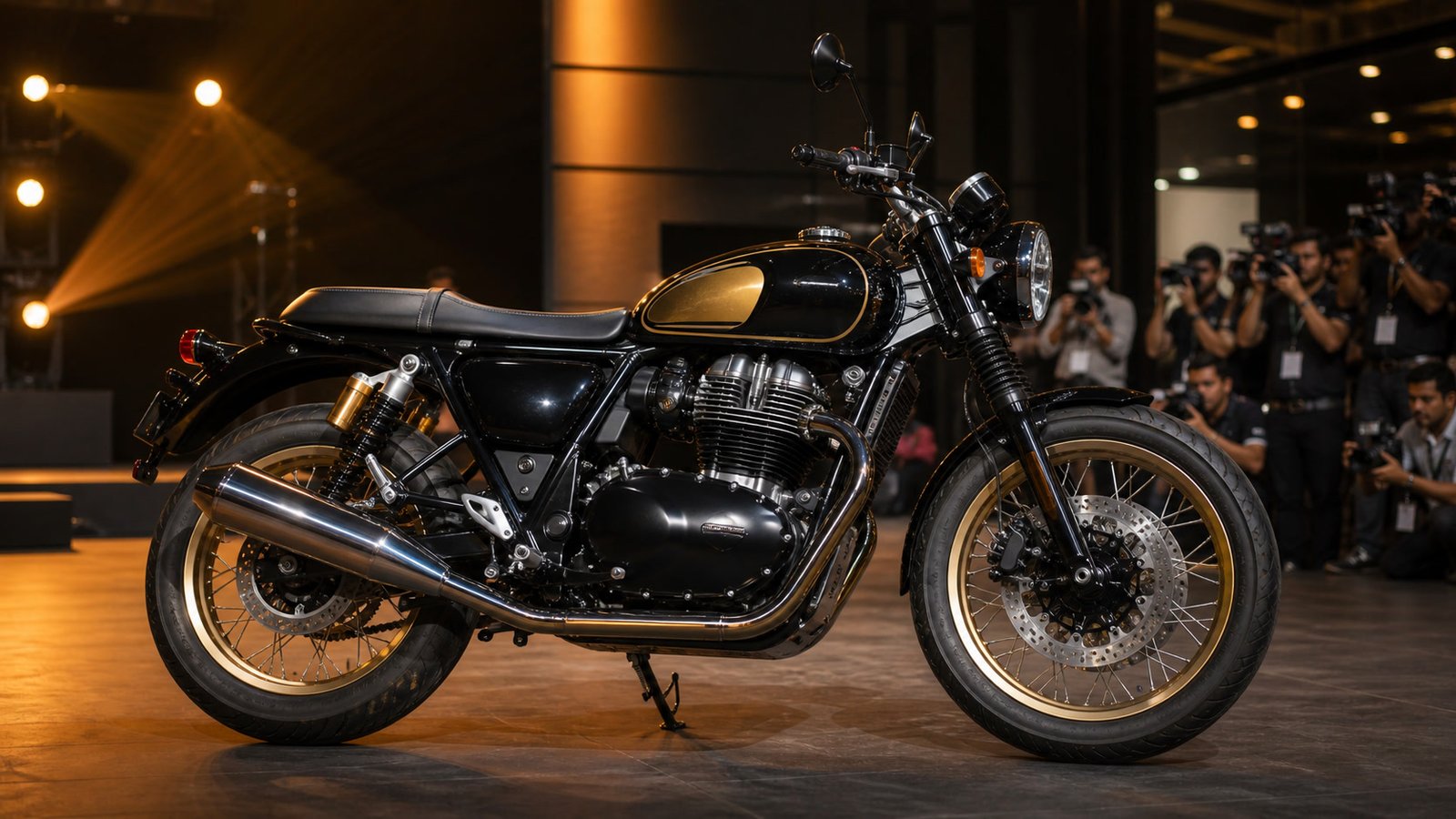
Royal Enfield has officially launched the Bullet 650 in India, giving the iconic Bullet badge its most powerful factory avatar yet. In a filing-backed press release dated May 28, 2026, the company said the motorcycle is priced at Rs 3,64,856 (ex-showroom), offered in Cannon Black and Battleship Blue, with retail availability starting across India.
For FuelPrice readers, this is not just a launch headline. The Bullet 650 enters a high-interest zone where product pricing, fuel-running behavior, touring demand, and premium two-wheeler competition are all moving together. The model also strengthens Royal Enfield's 650cc strategy at a time when buyers are actively comparing value per rupee across petrol motorcycles, hybrids, and entry EVs.
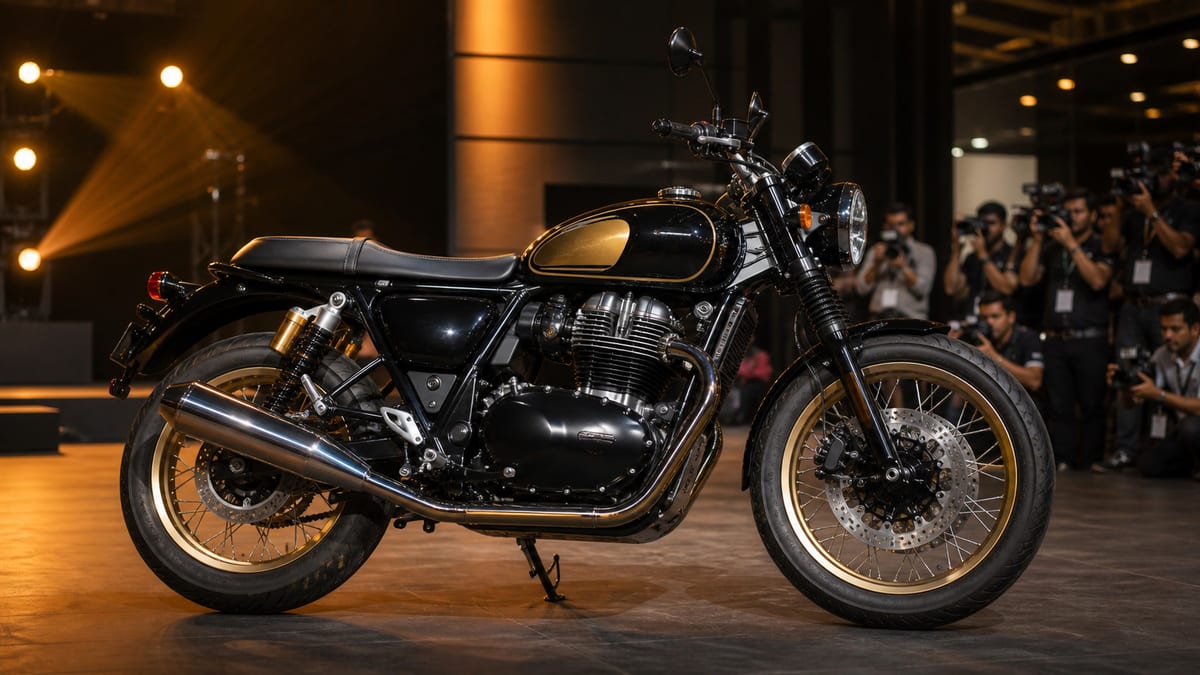 Launch-stage view of a classic-style 650cc motorcycle, representing Royal Enfield's new Bullet 650 positioning in India.
Launch Snapshot
- Model: Royal Enfield Bullet 650
- India launch date: 28 May, 2026
- Price: Rs 3,64,856 (ex-showroom)
- Colours: Cannon Black, Battleship Blue
- Availability: Retails begin across India
- Powertrain class: 650cc parallel-twin platform with 6-speed gearbox
What Exactly Has Changed
Royal Enfield has not treated this as a cosmetic badge extension. The Bullet 650 keeps the classic Bullet design language, but moves it to the company's larger twin-cylinder architecture. Official communication highlights legacy cues such as the teardrop tank, hand-painted pinstripes, bench-seat silhouette, and the casquette-mounted LED headlamp with tiger-eye pilot lamps.
At the same time, the motorcycle gets modern usability elements expected by current buyers: a clean analogue-plus-digital instrument layout, service reminders, gear position information, and hardware tuned for highway confidence. Media reports around the launch also confirm that the 650 twin remains the known high-refinement unit from the brand's larger platform family, with outputs around the 47 bhp and 52.3 Nm mark.
Why Pricing Is the Real Story
The Bullet 650's launch price is strategically important. Independent auto-media comparisons indicate it sits around the lower end of Royal Enfield's long-wheelbase 650 cluster and undercuts some higher Classic 650 trims. That makes it a strong value bridge for buyers who wanted the 650 riding experience without immediately stepping into higher-priced variants.
In practical market terms, this can expand the addressable base in three ways:
- Upgrade buyers: Existing 350cc users seeking smoother highway cruising may now have a clearer in-brand upgrade path.
- Cross-shoppers: Riders comparing Triumph, BSA and other lifestyle middleweights now get another price-performance anchor.
- Touring users: Buyers prioritizing relaxed torque delivery and long-distance stability can evaluate this as a core highway machine rather than a city-biased retro product.
Fuel and Ownership Impact for Readers
Because this is a 650cc petrol motorcycle, ownership economics will be judged differently from commuter bikes. Buyers in this segment generally optimize for ride feel, torque, and long-haul comfort first, then evaluate monthly fuel outflow as part of total ownership. If petrol prices stay volatile through the next two quarters, variant-level buyer behavior could split between lifestyle-first buyers and utility-minded tourers who compare running costs more aggressively.
For transport and mobility observers, this is a useful signal: premium petrol motorcycles are still attracting demand even in a cost-conscious environment. That can influence dealership stocking, accessory sales, financing offers, and state-wise retail momentum in the mid-size two-wheeler market.
Who Is Affected Most
- Retail buyers: More choice in the 650cc classic segment at a key price point.
- Dealers: Potential showroom footfall from both existing Bullet loyalists and new 650 shoppers.
- Competing brands: More pricing pressure in heritage-style middleweights.
- Aftermarket ecosystem: Likely demand for touring accessories, protective parts, and personalization kits.
- Fuel consumers in this segment: Continued preference for performance motorcycles despite ongoing petrol-cost sensitivity.
Background: Why the Bullet Name Still Carries Weight
Royal Enfield's own launch note emphasizes the Bullet's long production lineage since 1932, making it one of the strongest heritage badges in global motorcycling. That legacy matters commercially: buyers do not just purchase a specification sheet; they purchase identity, resale confidence, and ecosystem familiarity. By pairing that legacy with the twin-cylinder platform, the company is effectively defending its classic-bike moat while widening its price ladder.
What to Watch Next
The next 6 to 10 weeks will decide whether this becomes a steady-volume winner or a halo-led niche product. Watch these checkpoints:
- Dealer-level waiting period trends by city tier
- Accessory attachment rates and average billing
- How strongly it converts Classic 350 and Meteor-class upgraders
- Competitive response in pricing, financing, or feature packaging
- Real-world owner feedback on comfort, heat management, and touring practicality
Final Takeaway
The Bullet 650 launch is a high-signal India two-wheeler update: a legacy nameplate, an aggressive mid-size pricing move, and a product strategy aimed at retaining loyalists while unlocking new premium-buyer demand. For consumers, the decision now is less about whether the motorcycle has brand pull and more about usage fit, fuel budget comfort, and total ownership expectations over the next three years.