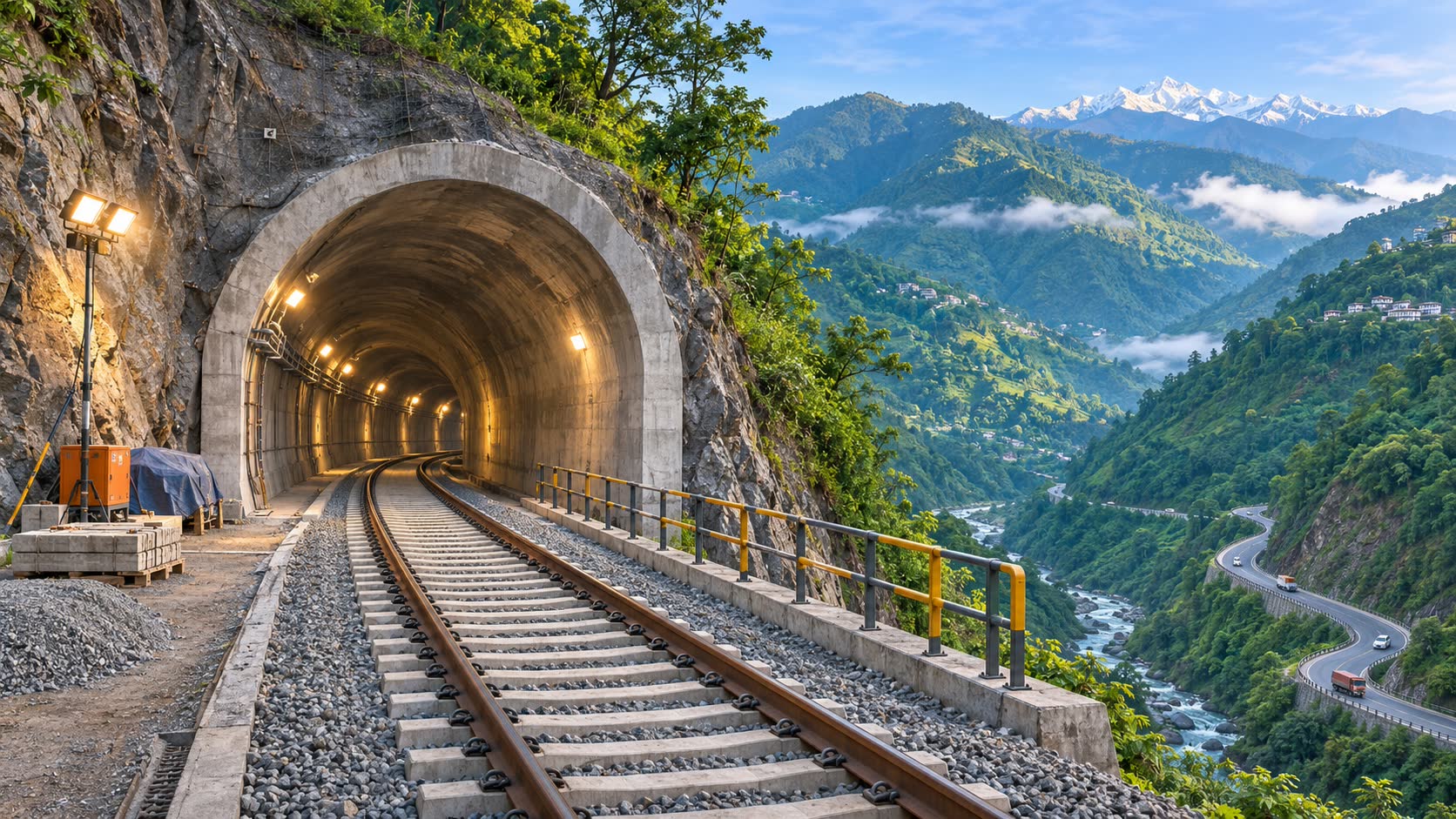
Indian Railways has completed excavation in all 14 tunnels on the 45-km Sivok–Rangpo new line, after breaking through Tunnel No. 10, its longest at 5.3 km, on 27 Nov 2026. For Sikkim travellers and road users, this is a construction milestone rather than an immediate route change: the line is not operational, so road journeys still depend on National Highway 10 (NH10), according to the Railway Ministry’s 28 Nov 2026 release.
Key takeaways
- Excavation is complete in all 14 tunnels, including the 5.3-km Tunnel No. 10.
- The 45-km broad-gauge line has 23 bridges and tunnels covering about 86% of its route.
- Tunnel lining, track laying and essential railway safety systems are still pending.
- There is no immediate change to NH10 road travel, tolls or fuel costs from this announcement.
- The future rail link is expected to give Sikkim residents, tourists and goods movement another connectivity option, but no operating date was announced.
What happened on the Sivok–Rangpo line
The breakthrough took place on 27 Nov 2026 in Tunnel No. 10, the longest tunnel on the project. The Ministry of Railways announced the milestone on 28 Nov 2026, saying that the excavation fronts had joined and that the work completed excavation across all 14 tunnels. The Indian Express and The Economic Times independently reported the same sequence and figures on 28 Nov 2026.
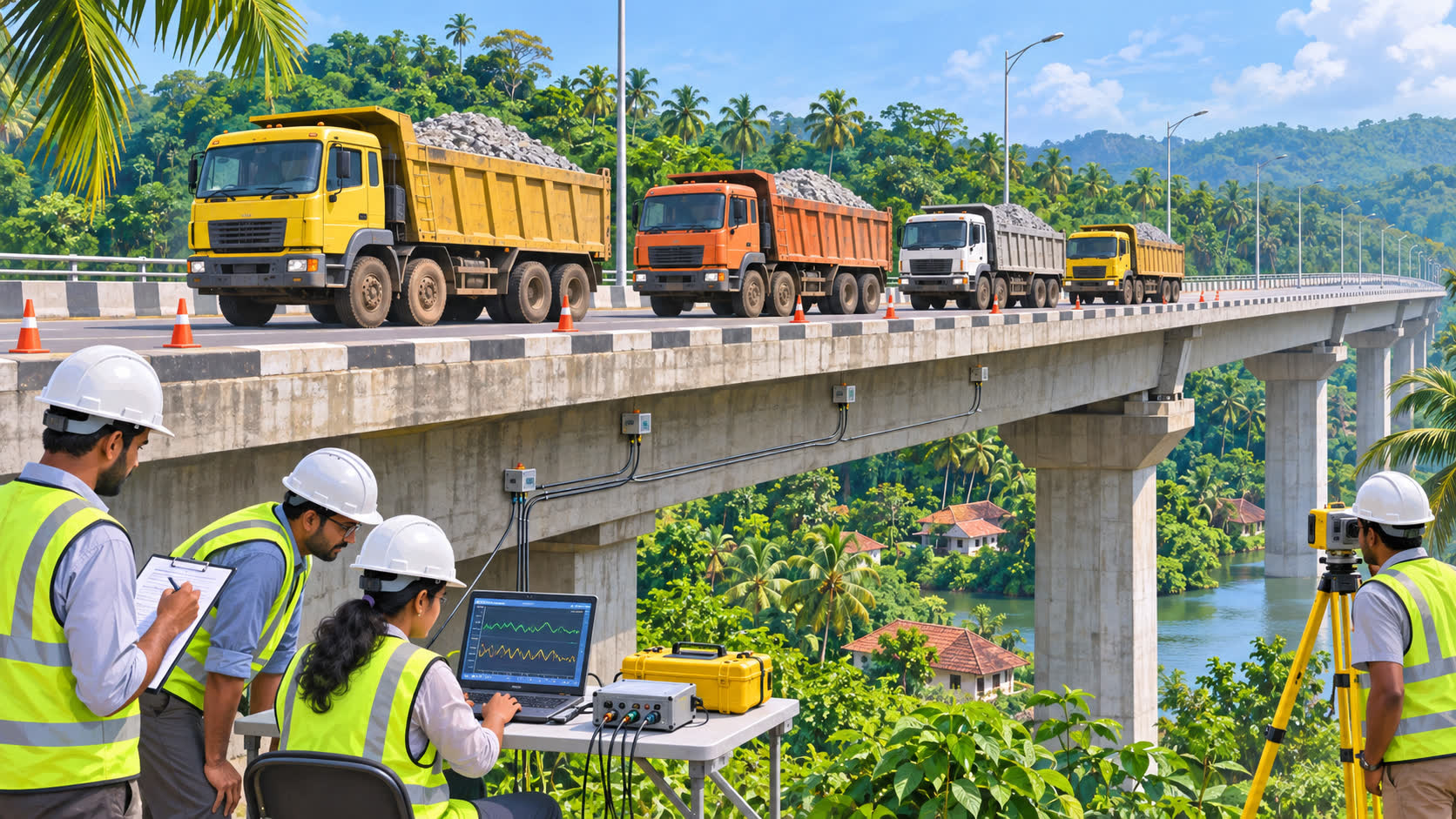
The project is a 45-km broad-gauge line running through Darjeeling and Kalimpong districts in West Bengal and Pakyong district in Sikkim. The Railway Ministry says the 14 tunnels account for approximately 86% of the route length, underlining how much of the alignment passes through difficult Himalayan terrain. The project also includes 23 bridges and will serve Sivok, Riyang, Melli and Rangpo, with an underground halt at Teesta Bazaar. These route details were set out in the ministry release and repeated in the independent reports.
What it means for road travellers now
The biggest caveat is timing. Completing tunnel excavation does not mean trains can run yet. The official update says the next activities include tunnel lining, track laying and installation of essential railway safety systems. Until those stages are completed and an operational timetable is issued, Sikkim road trips remain road trips.
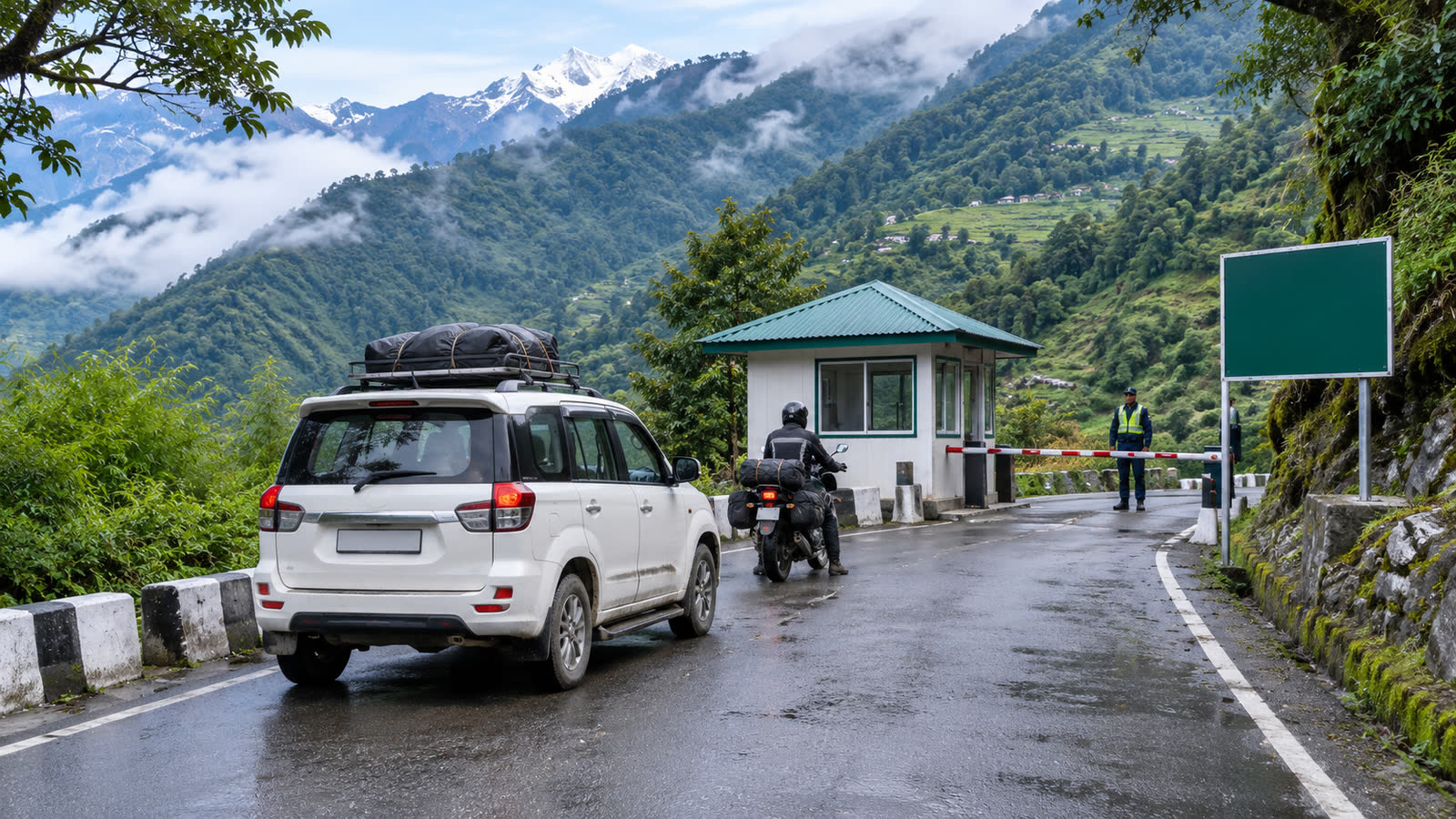
For drivers travelling through the region today, NH10 remains the current road corridor. The announcement does not revise any fuel price, toll fee or road rule, and it does not replace a current traffic advisory. Travellers planning a road journey can use the road-trip planner to organise the route, then check the latest local advisories before departure.
The rail milestone also does not remove separate road-trip costs or entry requirements. Anyone planning a Sikkim visit can review FuelPrice’s earlier explainer on Sikkim tourist vehicle permit fees from 1 Jan 2027 for that distinct, route-specific issue.
Why the milestone matters beyond construction
Once operational, the ministry expects the Sivok–Rangpo line to provide a safer, faster and more reliable alternative to road travel via NH10. It also says the link should help move essential goods, improve local businesses’ access to markets and support tourism. Those are expected benefits of the completed railway, not current savings for a driver or transporter.
For fleet operators and logistics businesses, the practical possibility is a future shift in the mix of passenger and freight movement between road and rail. That could reduce dependence on a single mountainous road corridor for some trips, but the current announcement does not quantify any future reduction in fuel use, toll spending or delivery time. It would be premature to convert the construction milestone into a trip-cost forecast.
For travellers, the project is significant because it is intended to give Sikkim its first direct railway connectivity. However, there is no train timetable, ticketing announcement or service-start date in the 28 Nov 2026 update. Travellers should therefore avoid treating the line as an alternative available for the upcoming journey.
What changes next
The next visible milestones should be the completion of tunnel lining, track installation and safety-system work, followed by the approvals and operational information needed before passenger or freight services can begin. The official release does not provide a commissioning date, so the useful signal for road users will be a later railway announcement that specifies when a service is actually open.
Until then, the current road route remains the basis for planning. Use the fuel cost calculator to estimate the fuel spend for the road journey, and use the toll-charge calculator separately where the selected route includes applicable tolls. A future rail option may change how some trips are planned, but it does not change today’s road budget by itself.
Reader takeaway
The 28 Nov 2026 announcement confirms a major engineering step on the Sivok–Rangpo railway: all 14 tunnel excavations are complete, but the line is not ready for trains. Drivers can treat it as a long-term connectivity update, not an immediate travel instruction. If travelling now, check the current NH10 conditions, permits, weather and fuel prices, and do not assume that future railway access has changed present road costs.
Sources
- Press Information Bureau, Ministry of Railways, Indian Railways Achieves Breakthrough in 5.3-km-long Tunnel No. 10 of Sivok-Rangpo New Line Project — 28 Nov 2026
- The Indian Express, Sivok-Rangpo railway project: Sikkim moves closer to first-ever rail connectivity as excavation of 14 tunnels completed — 28 Nov 2026
- The Economic Times, Sikkim connectivity: Indian Railways completes excavation of longest tunnel on Sivok-Rangpo line — 28 Nov 2026