The Economic Times reported on 26 Sep 2026 that Indian states are seeking more than 10,000 electric buses beyond the 14,028 buses planned under the PM E-DRIVE scheme. The demand matters to commuters because, if the requests are approved, it could add electric buses and charging depots to more city and inter-city routes; it is not a new subsidy announcement for private EV buyers.
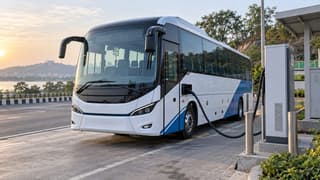
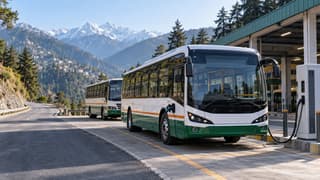
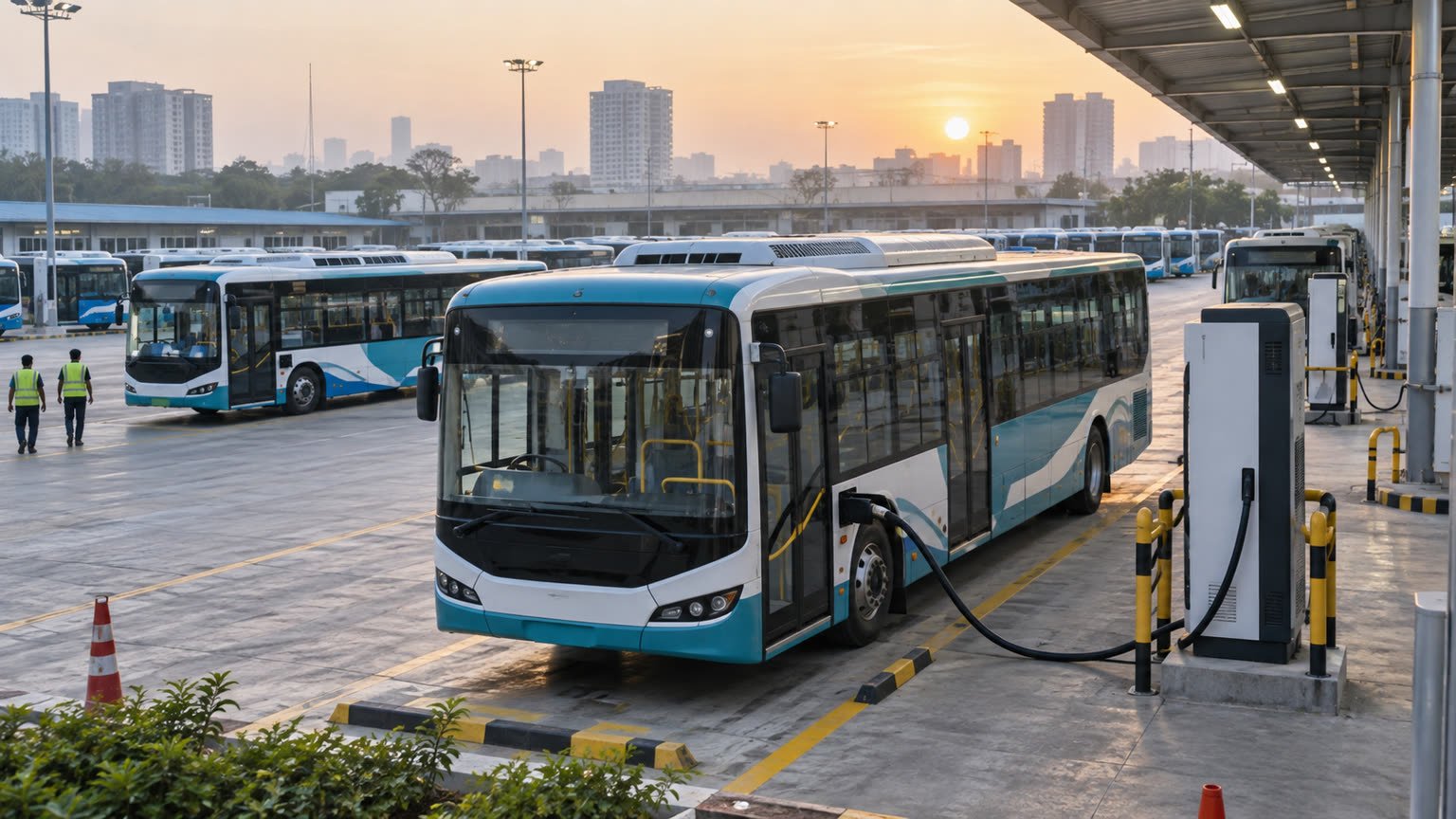
 Electric buses at a charging depot. Credit: FuelPrice/AI-generated editorial visual; for illustration only.
Key takeaways
- The latest reported requests exceed 10,000 buses beyond the existing PM E-DRIVE plan; no fresh allocation has been approved yet.
- The current scheme supports 14,028 e-buses for nine large Indian cities, with ₹4,391 crore earmarked for the bus component.
- The specific requests publicly documented for Surat, Hyderabad, Andhra Pradesh, Rajasthan, Meghalaya and Jammu & Kashmir add up to 4,220 buses; the wider demand reported by ET also includes other states and transport undertakings.
- PM E-DRIVE has been extended to 31 Mar 2028 for the relevant segments, but the overall outlay remains ₹10,900 crore.
What changed on 26 Sep
The new development is a reported jump in demand, not a confirmed change to the scheme. Citing government officials, ET said states want more than 10,000 additional e-buses and that the request is larger than the scheme’s permitted 20% variation from state-level estimates. The report said West Bengal, Delhi, Telangana and Karnataka governments or their state transport undertakings are likely to make formal requests. Uttar Pradesh and Himachal Pradesh were also reported to be seeking buses for inter-city routes.
The distinction is important for readers: an official notification, revised allocation or approved tender would be a confirmed change. Until one is issued, the additional-bus figure should be treated as reported demand and an issue the Union heavy industries ministry may have to assess.
The current PM E-DRIVE baseline
The Ministry of Heavy Industries’ written reply published through PIB on 17 Mar 2026 recorded the existing allocation. It said PM E-DRIVE supports 14,028 e-buses across nine cities with populations above four million. The same reply recorded 13,800 buses allocated as of 10 Mar 2026: 10,900 in the first phase and 2,900 in the second phase. The first tender had concluded, while the second tender had been floated at that point.
| Item | Figure | What it means |
|---|---|---|
| PM E-DRIVE bus plan | 14,028 e-buses | Support available across nine large cities, according to the 17 Mar 2026 PIB reply. |
| Bus-component support | ₹4,391 crore | Allocation cited by the Ministry for deploying the planned e-buses. |
| Allocation recorded by 10 Mar 2026 | 13,800 e-buses | 10,900 in Phase I and 2,900 in Phase II. |
| Additional demand reported on 26 Sep 2026 | 10,000+ e-buses | ET said the requests are beyond the current plan and may require a fresh initiative. |
On a simple calculation, 20% of the 14,028-bus plan is about 2,806 buses. That is far below the additional demand reported by ET, which explains why the next decision may require a new programme or a formal expansion rather than a small adjustment inside the existing scheme.
Why the requests matter to road users
For urban passengers, more e-buses can mean higher frequency, additional routes or replacement of older buses, but none of those benefits is guaranteed until a state receives approval and signs the required contracts. The immediate reader value is therefore in knowing what to watch: a city allocation, a tender award, a concession agreement, depot work and a published service launch are separate steps.
The proposed inter-city angle is also relevant to people who travel between cities. If buses are approved for longer corridors, charging locations, turnaround time and route scheduling will matter as much as the vehicle count. EV owners planning a journey can use FuelPrice’s state-wise EV charging station directory to check available infrastructure, but they should not assume a newly requested bus allocation means a new public charging point is already operational.
Why approvals and contracts will decide the outcome
PM E-DRIVE does not work like a direct cash benefit paid to every bus passenger or private EV owner. The Centre invites bids and uses the process for price discovery; state transport undertakings then place demand, sign concession agreements and receive buses through the procurement and operating structure. Moneycontrol’s 10 Jul 2026 report documented the earlier 4,220-bus request from six states or cities and linked the issue to delays in Bengaluru’s approval for its sanctioned fleet.
That example shows why the headline number alone should not be read as an immediate service expansion. A fresh request can compete with the available scheme envelope, while a sanctioned bus can still take time to arrive if the state, operator, depot and charging arrangements are not ready. The Ministry’s own extension note says the scheme remains fund-limited: its ₹10,900-crore outlay is unchanged, and the relevant components can close if the sanctioned funds are exhausted before 31 Mar 2028.
What private drivers should watch next
This development does not change petrol or diesel prices, toll fees or the current cost of charging a private EV. It could, however, influence the mix of public transport available in large cities and on selected inter-city routes. Drivers comparing an EV with a petrol or diesel vehicle can use the fuel cost calculator to model their own distance and efficiency assumptions, while the road-trip planner can help compare routes once charging and public-transport links are confirmed.
Watch for four concrete signals: a Ministry of Heavy Industries decision on the additional requests; a state-wise revised allocation; a fresh tender or scheme notification; and route-level announcements from state transport undertakings. Until those appear, the 10,000-plus figure is a strong demand signal, not a promise that every requested bus will be delivered.
Sources
- The Economic Times — “States seek 10,000+ more e-buses beyond PM E-DRIVE allocation” — 26 Sep 2026
- Ministry of Heavy Industries via PIB — “FAME-II and PM E-DRIVE Schemes” — 17 Mar 2026
- Ministry of Heavy Industries via PIB — “The Ministry of Heavy Industries extends the tenure of the PM E-DRIVE Scheme by 2 years” — 8 Aug 2025
- Moneycontrol — “Bengaluru’s delay over 4,500 PM E-DRIVE e-buses opens door for six states seeking 4,220 more buses” — 10 Jul 2026