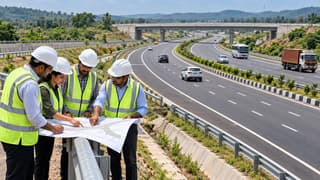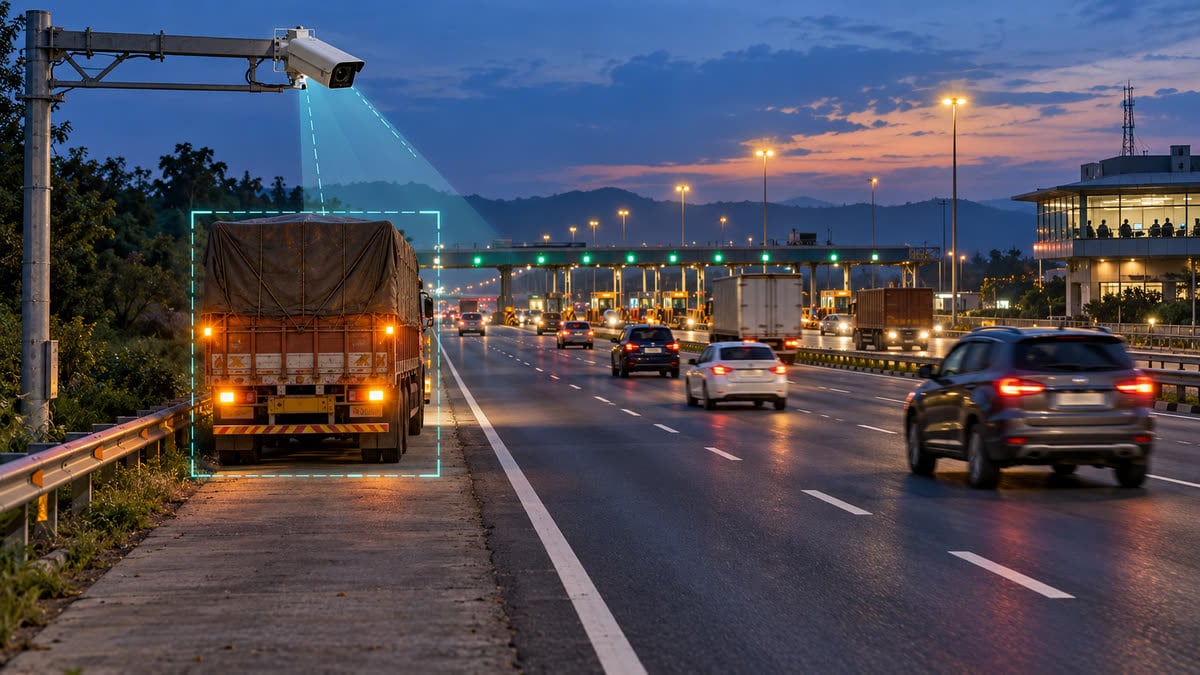
The Supreme Court on 6 Oct 2026 questioned why the National Highways Authority of India (NHAI) does not have an electronic surveillance mechanism to immediately identify stationary or parked vehicles on national highways. For drivers, the development points to a possible faster response to a familiar highway hazard, but it does not introduce a new toll, FASTag fee or nationwide camera rule today.
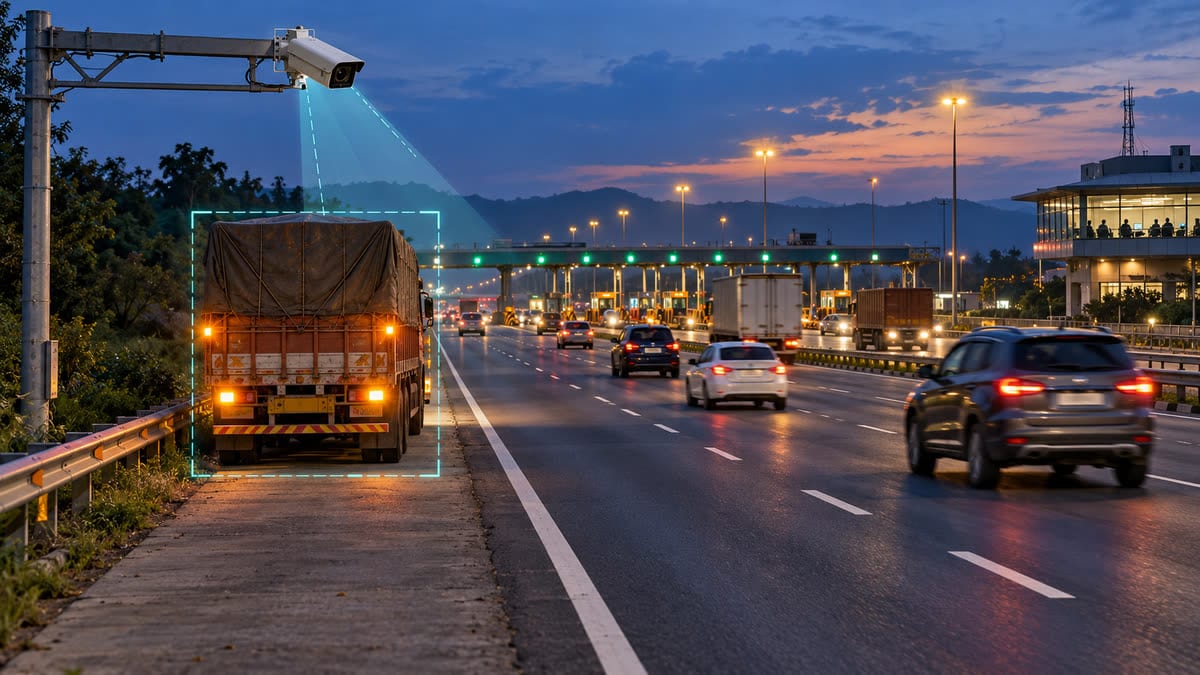 Illustration: an AI-generated editorial visual of electronic detection of a stationary highway vehicle; not an official accident photograph.
Key takeaways
- The question was raised during a 6 Oct 2026 hearing in the suo motu Phalodi accident case, which concerns highway safety and encroachments.
- The bench asked about immediate electronic tracking of stationary or parked vehicles; the reports do not announce a rollout date or a new FASTag enforcement rule.
- The matter is listed again for 13 Oct 2026, when the Court is expected to consider applications concerning highway encroachments.
- A 13 Apr 2026 Supreme Court order already bars heavy or commercial vehicles from stopping on a national-highway carriageway or paved shoulder except at designated facilities.
What happened in the hearing
According to The Economic Times report, Justices Vikram Nath, Augustine George Masih and Sandeep Mehta asked why NHAI could not use electronic surveillance to immediately track any vehicle found stationary or parked on a highway. Senior advocate A N S Nadkarni, who is assisting the Court as amicus curiae, referred to recent accidents linked to highway parking. An advocate appearing in the case told the bench that NHAI already carries out highway patrolling.
The hearing followed the Court’s continuing consideration of a November 2025 crash in Rajasthan’s Phalodi area. In that incident, a tempo traveller hit a stationary trailer truck near Matoda village on the Bharat Mala Highway; reports said 15 people died. The Court had taken suo motu cognisance of the case after the accident.
The wording matters for motorists. The 6 Oct hearing produced a judicial question about how parked vehicles could be detected faster. It did not, on the information reported, create a new toll charge, change FASTag balance rules or declare that a new nationwide camera network is already operational. The next listing is for 13 Oct 2026, with encroachment-related applications on the agenda.
Why faster detection could matter
A stationary truck, bus or broken-down car can become a high-risk obstacle when it is hard to see at night, sits near a curve or remains close to moving lanes. In practical terms, an electronic layer could identify a stopped vehicle, send its location to a control room and help a patrol or recovery crew reach it before a collision. Those are possible functions, not a confirmed description of a new NHAI system.
Detection alone would not solve the problem. The safety benefit would depend on the alert being verified, approaching traffic being warned, and the vehicle being moved to a safe place. For fleet operators, the useful measure would therefore be the time from detection to intervention, not simply the number of cameras installed. The Court’s question brings that response chain into focus.
What the 13 April Supreme Court order already requires
The Court’s 13 Apr 2026 interim order in In Re: Phalodi Accident is more concrete than the latest hearing observation. It says that no heavy or commercial vehicle may park or stop on a national-highway carriageway or paved shoulder except at a designated bay, lay-by or wayside amenity. It also says enforcement should use Advanced Traffic Management System real-time alerts to State Police, GPS-timestamped photographic evidence and integrated e-challan generation. The order set a 60-day compliance period for the listed directions.
The same order directed NHAI to operationalise its ATMS, including traffic-management control-centre cameras, speed detectors, incident-detection cameras, variable-message signboards and emergency call boxes across four- and six-lane highways and expressways. It said non-operational components were to be made functional within 60 days. It also directed dedicated highway-surveillance teams, supported by NHAI route patrolling, and required those patrol vehicles to carry vehicle-tracking devices.
For wider context, the April order recorded the Court’s finding that national highways make up approximately 2% of India’s total road length but account for nearly 30% of road fatalities. It also directed authorities to identify accident blackspots and critical areas, publish a list, and install measures such as lighting, speed-enforcement cameras and retro-reflective warning signs at those locations.
What changes for drivers and fleet operators now
There is no reported toll or FASTag action for a private motorist to take solely because of the 6 Oct hearing. Heavy-vehicle and commercial-fleet operators should, however, treat the April order’s designated-bay, lay-by and wayside-amenity requirement as the relevant compliance point. A question about electronic tracking should not be read as permission to stop on a carriageway or paved shoulder.
If a vehicle becomes immobilised, the immediate priority is to reduce exposure to moving traffic, use warning equipment where it is safe to do so and seek assistance. The April order also referred to NHAI’s Rajmargyatra encroachment complaint module and toll-free 1033 for encroachment complaints. That channel is not a substitute for emergency services, but it shows the kind of reporting and response link the Court expects authorities to maintain.
Before a highway journey, drivers can use the toll-charge calculator to plan toll expenses and the road-trip planner to organise stops and the route. A realistic stop plan matters because designated rest areas and lay-bys are part of the safety problem under review, not just a convenience for long-distance travel.
What to watch on 13 October
The next hearing should show whether the Court receives more detail on NHAI’s existing surveillance coverage, control-room monitoring, patrol response and the removal of encroachments. It may also clarify how any electronic alerting should connect with State Police, transport authorities, recovery crews and e-challan systems. Until a direction or implementation notice says otherwise, those remain questions for the authorities rather than a new obligation for every FASTag user.
Bottom line for highway users
The fresh development is a renewed push for quicker detection of parked or stationary vehicles on national highways. The confirmed position is the Court’s concern, the 13 Oct 2026 follow-up and the safety directions in its 13 Apr 2026 order; a nationwide electronic-surveillance rollout has not been announced in the 6 Oct reports. Drivers should watch the next hearing, while fleet operators should continue using designated stopping facilities and follow the existing highway-safety directions.
Sources
- The Economic Times — Why can't NHAI have electronic surveillance mechanism to track parked vehicles on highways: SC — 6 Oct 2026
- Amar Ujala — Supreme Court asks NHAI why electronic surveillance cannot track parked highway vehicles — 6 Oct 2026
- Supreme Court of India — In Re: Phalodi Accident, 2026 INSC 388 — 13 Apr 2026