MoRTH’s Chintan Shivir 2026 has put safer highway design, quality monitoring and toll reform on the agenda, with the two-day conclave being held in Ekta Nagar, Gujarat, on 5–6 Oct 2026. For drivers, the immediate message is that this is an agenda-setting exercise—not a new toll fee or FASTag rule: the government’s release highlights road-safety, project-quality and technology reforms but does not announce a new charge or effective date.
Key takeaways
- The Ministry of Road Transport and Highways is using the 5–6 Oct 2026 conclave to discuss highway planning, safety, quality assurance and toll reform.
- Road safety is being positioned as a design-stage issue, including the identification of accident-prone locations before and during construction.
- FASTag Annual Pass and Multi-Lane Free Flow (MLFF) were highlighted as technology-led tolling initiatives already being pursued.
- No new toll rate, FASTag eligibility rule, annual-pass price or immediate route restriction was announced in the 5 Oct release.
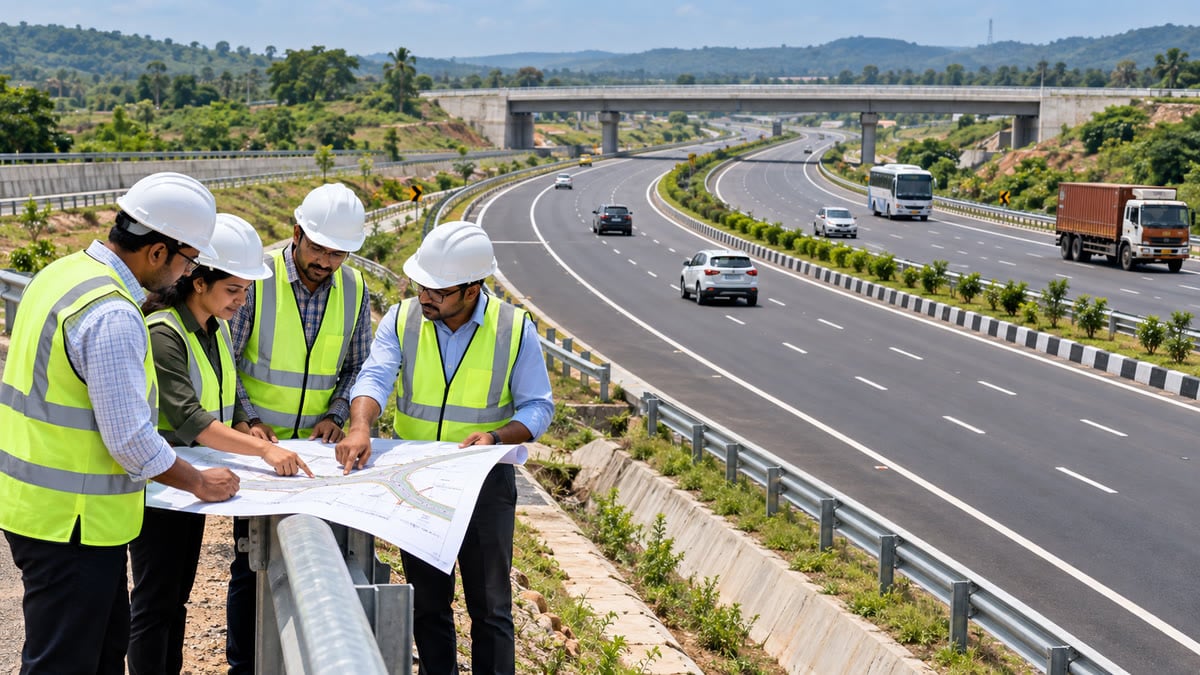
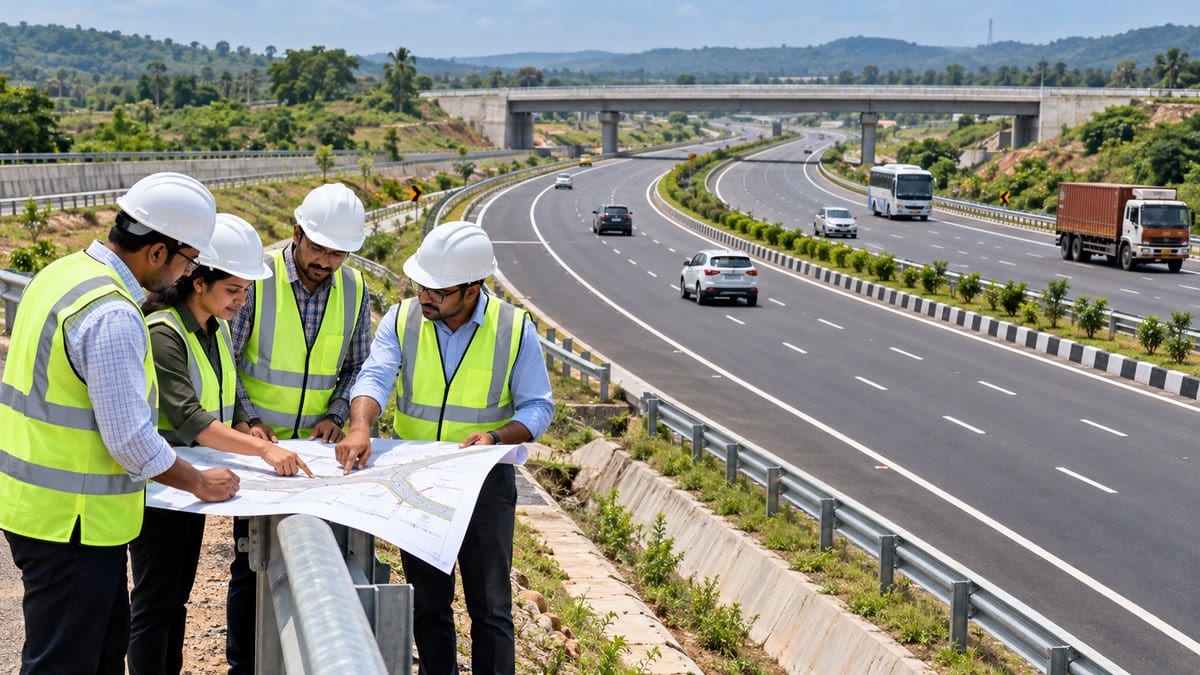 Illustration: FuelPrice. Representative AI-generated visual of highway planning and safety work; it is not a photograph of the Chintan Shivir or a named project.
What happened at the MoRTH conclave
Union road transport minister Nitin Gadkari inaugurated Chintan Shivir 2026 at Ekta Nagar on 5 Oct. The event brought together state transport and public works ministers, officials, implementing agencies and other highway stakeholders. The stated purpose is to share field-level practices and develop solutions that can be applied across projects, rather than to announce a single corridor or toll-plaza change.
The Ministry’s agenda covers PM GatiShakti and integrated planning, land acquisition, concession agreements and ratings, safe and green highway design, road safety and toll reform, and quality assurance and project monitoring. The New Indian Express had reported before the event that Centre and state road agencies would use the two-day meeting to discuss project delivery, safety and efficiency. That makes the conclave relevant to drivers, but its proposals still have to move through notifications, contracts or project-level decisions before they change a trip.
What could change for highway users
1. Safety may move earlier in project planning
Gadkari called for stronger preparation at the Detailed Project Report stage, including surveys, alignment planning, land acquisition, utility shifting and statutory clearances. He also said accident-prone locations should be identified and safety interventions built into planning and construction.
If implemented consistently, that approach could reduce avoidable redesigns, unsafe merges and late changes that create diversions or bottlenecks during construction. It could also give road users clearer safety features—such as better barriers, markings, drainage and junction treatment—when a corridor is opened or upgraded. The release does not, however, name a new safety deadline or order an immediate repair on a particular highway.
2. Quality checks may become more visible
The quality-assurance and project-monitoring session is intended to address how projects are built, supervised and maintained. The Ministry also called for wider use of technology, innovative construction practices and cost-effective materials. For commuters and fleet operators, the practical test will be whether those ideas produce more predictable construction schedules, durable road surfaces and fewer unplanned closures.
That benefit is prospective, not guaranteed. A conclave discussion is not the same as a completed road-safety audit, a contractor direction or a road-opening notice. Drivers should continue to rely on corridor-specific advisories for current diversions and restrictions.
3. Tolling is moving toward more automation
The official account specifically mentions the FASTag Annual Pass and Multi-Lane Free Flow system while describing the Ministry’s technology-led tolling direction. MLFF is designed to reduce dependence on conventional booths by reading vehicles in motion, while the annual pass is a separate user-facing toll product. Their mention at the conclave signals policy attention; it does not by itself change the amount charged on a trip.
As of 6 Oct 2026, the release does not revise the annual-pass price, qualifying vehicle categories, toll rates or FASTag compliance process. A future notification would need to state the effective date and scope. Until then, drivers can estimate route charges with the toll charge calculator using the rules and rates currently shown for the journey.
What changes now—and what does not
Nothing in the 5 Oct announcement requires a private car, motorcycle, bus or truck operator to buy a new pass, pay a new toll or change a FASTag setting immediately. The government has set an agenda and highlighted existing technology reforms; it has not published a new toll schedule or a universal MLFF rollout date in the release.
The next useful signals will be official notifications, updated NHAI operating instructions, project-level traffic advisories and concession documents. Those are the places where a proposed reform becomes a confirmed rule, and where drivers can check whether a particular plaza, vehicle category or route is affected.
Reader takeaway
The Chintan Shivir matters because design quality, safety audits and tolling technology influence how reliably people travel and budget for highways. It is not a reason to change today’s trip plan on its own. Before a long drive, compare the route’s tolls and fuel costs, leave room for announced diversions, and check official updates if the journey crosses a corridor under construction. The road-trip planner can help organise the route, while the fuel cost calculator can keep the fuel estimate separate from toll charges.
Frequently asked questions
Does Chintan Shivir 2026 change toll rates today?
No. The 5 Oct government release discusses toll reform and technology initiatives but does not announce a new toll rate or effective date.
Will FASTag users need to change anything now?
No immediate change is stated. Continue using FASTag under the current instructions and wait for an official notification before assuming that eligibility, pricing or plaza operations have changed.
Sources
- Press Information Bureau — Union Minister Shri Nitin Gadkari inaugurates Chintan Shivir 2026, Sets Agenda for Future-Ready Highway Infrastructure (5 Oct 2026).
- DD India — Nitin Gadkari inaugurates Chintan Shivir 2026, calls for safer, greener highways and better project planning (5 Oct 2026).
- The New Indian Express — Centre, state road ministers to deliberate on highway infrastructure at two-day Chintan Shivir (4 Oct 2026).