The Supreme Court has directed states and Union Territories to freeze vehicle-related online services for vehicles with unpaid e-challans, and has said random checks may lead to impounding when a fine has not been honoured. For Indian motorists, the practical risk is that a pending traffic fine could complicate RC renewal, duplicate RC requests, address updates, fitness and PUC certification, or vehicle ownership transfer once authorities implement the order.
The order in S. Rajaseekaran v. Union of India is dated 28 Sep 2026 and was made public on 1 Oct 2026. It is a direction to enforcement authorities, not a new nationwide fine amount; states, Union Territories and road agencies must put the recovery and electronic-enforcement measures into practice.
Key takeaways
- The court directed authorities to freeze online vehicle services when traffic fines remain outstanding.
- RC renewal, duplicate RC issuance, address updates, fitness certificates and PUC certificates can be blocked until the dues are cleared.
- Vehicles with an unpaid, unhonoured e-challan may be impounded during random checks.
- The order records approximately ₹49,194.05 crore in e-challan dues to be recovered, of which ₹26,175.05 crore had been recovered.
- For multiple violations, driving-licence renewal and an existing licence can also face suspension measures.
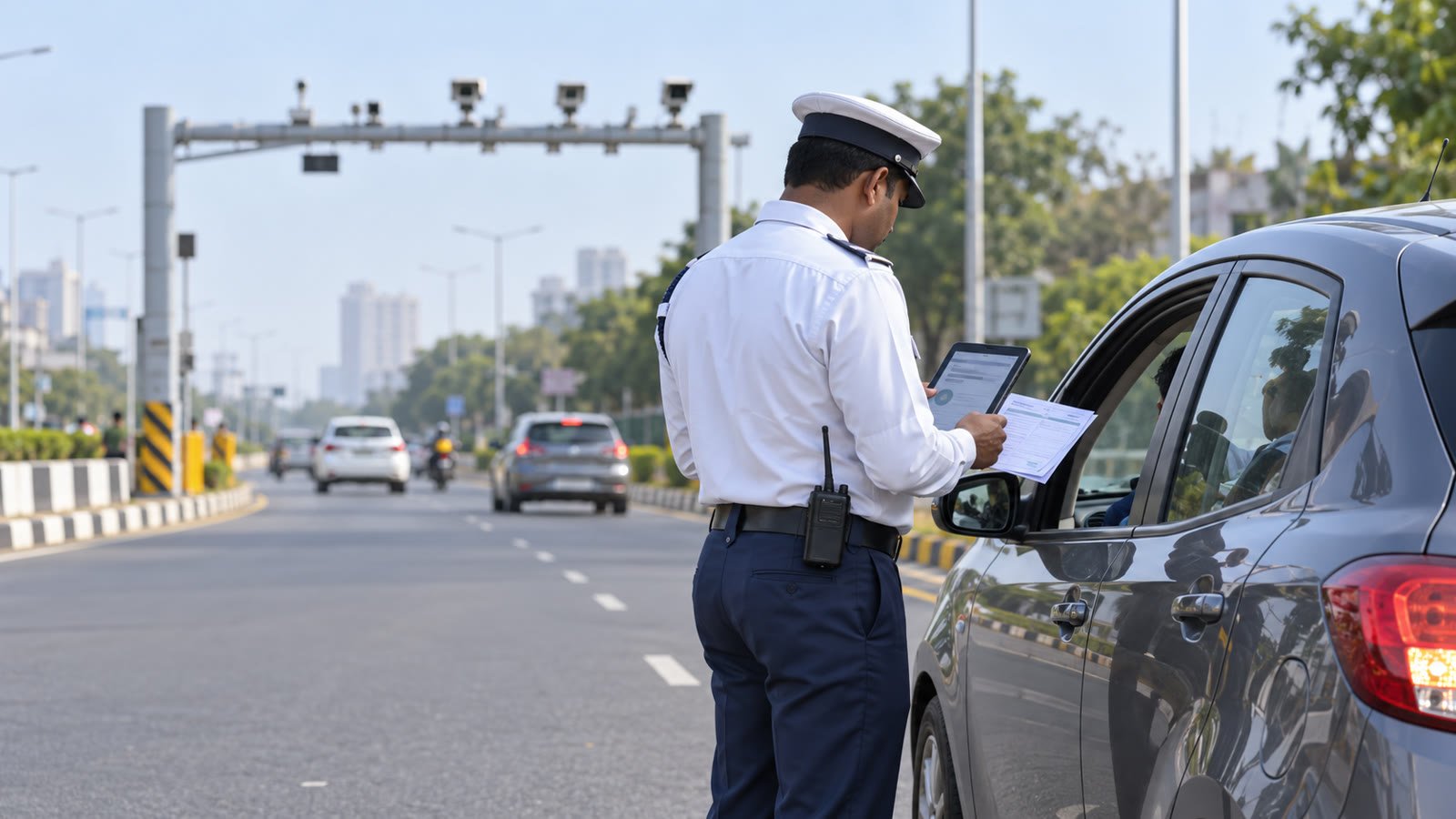
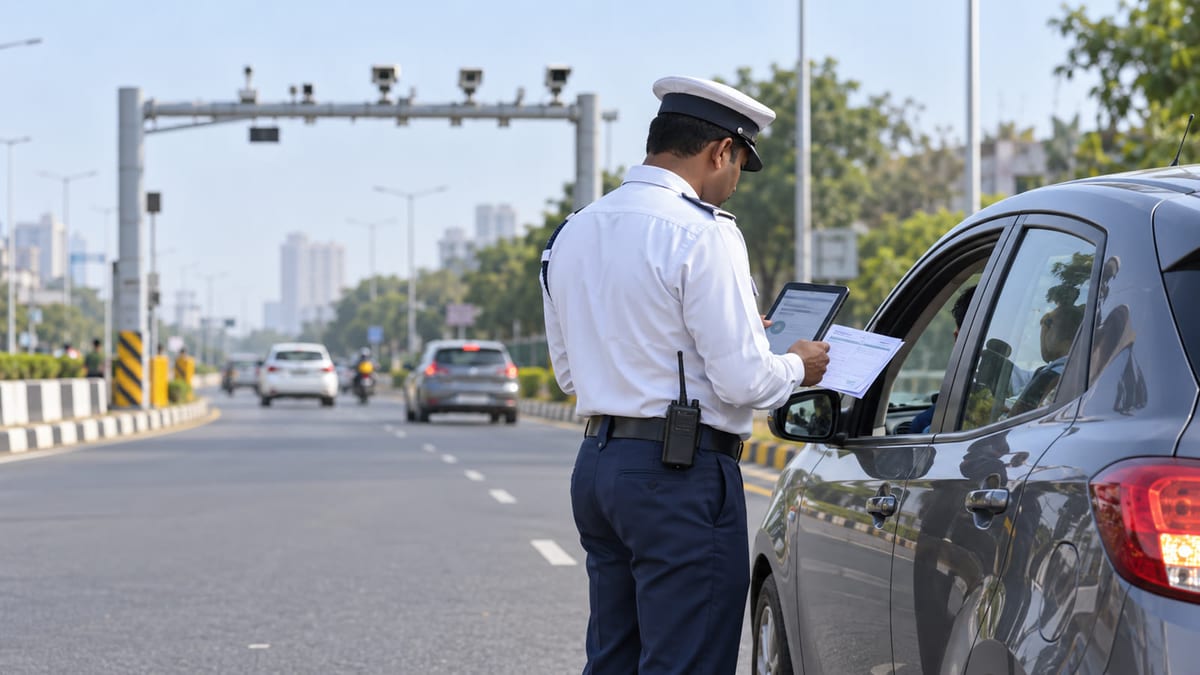 Illustrative editorial image of digital traffic enforcement; not a photograph of the Supreme Court order. Credit: FuelPrice.
What the Supreme Court ordered
The court directed all states and Union Territories to implement the Ministry of Road Transport and Highways’ Standard Operating Procedure dated 28 Oct 2025 for electronic monitoring and enforcement. It linked that implementation to Section 136A of the Motor Vehicles Act, 1988 and Rule 167A of the Central Motor Vehicles Rules, 1989.
The most immediate change for vehicle owners is the proposed service block for vehicles with outstanding amounts. The order says authorities should not renew a registration certificate, issue a duplicate RC or process an owner-address update while the dues remain unpaid. It also says fitness certificates should be withheld and the vehicle should be blacklisted on the Parivahan portal, which can prevent a sale or ownership transfer.
The order separately says that no centre should issue a PUC certificate for a vehicle with pending traffic fines. That makes an old e-challan relevant even when the vehicle is otherwise roadworthy: a routine PUC renewal, fitness test or resale process could expose the pending amount after the state system is connected to the relevant service.
When can a vehicle be impounded?
The direction is serious, but it should not be read as an automatic seizure of every vehicle the moment an e-challan appears. The court called for random vehicle checks and directed authorities to take necessary steps to impound a vehicle if its e-challan has not been honoured. The operational details, including how each state conducts checks and records payment or a dispute, will depend on implementation by the concerned authorities.
The order also records the scale of the recovery problem. It says states and Union Territories had approximately ₹49,194.05 crore in e-challan amounts to recover over time, while ₹26,175.05 crore had been recovered. The gap explains why the court focused on linking recovery to vehicle and licence services instead of relying only on court referrals.
What it means for owners, sellers and fleets
Private vehicle owners
A pending challan can become a paperwork issue, not just a payment reminder. Owners may face a blocked RC service or PUC certificate when they try to renew documents, change an address or complete a transfer. Before a long trip, a check of the vehicle’s official challan status and document validity is therefore separate from checking fuel and toll costs. The FuelPrice road-trip planner can help with route preparation, but it does not replace the required vehicle-document checks.
Used-vehicle buyers and sellers
The blacklisting and ownership-transfer directions matter at the time of sale. A buyer may need to confirm that the vehicle’s RC, PUC, fitness record and pending-fine position can be processed through the official system. A seller should retain payment receipts or records of a formal challenge rather than relying on a verbal assurance that an old challan will be cleared later.
Fleet and commercial operators
For operators managing several cars, taxis, buses or goods vehicles, a single overlooked notice can affect dispatch planning or document renewals. The court also directed authorities to strengthen electronic enforcement and data exchange between VAHAN-4, SARATHI, e-Challan, e-DAR, iRAD and traffic-control rooms. That points to more connected checks across roads and transport services, although the order does not set a new penalty tariff for commercial vehicles.
What motorists can check now
- Use the official state or Parivahan e-challan service to check the vehicle number, notice details and payment status.
- If a notice appears incorrect, use the formal dispute or court process available through the issuing authority and keep the acknowledgement.
- Check RC validity, PUC validity, fitness status where applicable and any pending ownership-transfer request before a sale or renewal.
- Keep the payment receipt or disposal record after a fine is cleared; system updates may take time between the issuing authority and transport portal.
- Remember that an e-challan is a traffic-enforcement amount, not a FASTag toll deduction. For the toll portion of a journey, use the toll-charge calculator separately.
What to watch next
The next practical test is implementation. The court asked MoRTH to create a public dashboard with state-wise and National Highway corridor-wise information on enforcement devices, functional status, violations monitored and e-challans generated, updated at least once a month. It also asked states, NHAI and other road-owning agencies to ensure electronic systems can detect 12 categories of violations under Rule 167A(3).
That means motorists should watch for notices from their state transport or traffic authority explaining the service-integration process, rather than assuming the court order alone changes every portal overnight. FuelPrice will track material updates in its latest road and mobility news.
The reader takeaway
The Supreme Court’s order raises the cost of ignoring an unpaid e-challan: the problem can follow the vehicle into RC, PUC, fitness, licence and ownership services, and a random check can lead to impounding under the directions. Check the official record, resolve or formally contest a notice through the authorised channel, and keep proof of the outcome before a trip, renewal or sale.
Sources
- Supreme Court of India order copy, “S. Rajaseekaran v. Union of India” — 28 Sep 2026
- Business Standard, “SC orders vehicle seizure, licence renewal curbs over unpaid e-challans” — 2 Oct 2026
- Hindustan Times, “Block vehicle licence renewals, registration & pollution certificates over unpaid traffic fines: Supreme Court” — 1 Oct 2026
- The New Indian Express, “Supreme Court orders impounding of vehicles with unpaid e-challans until fines are cleared” — 1 Oct 2026