India's petrol and diesel sales grew in September 2026, while LPG consumption fell sharply, according to preliminary data from the Petroleum Planning and Analysis Cell (PPAC). The split matters because it shows stronger road-fuel demand alongside pressure on cooking-gas consumption, but it does not by itself announce a change in what drivers pay at the pump.
For motorists, the most important distinction is between fuel volume and fuel price. The September figures describe how much product was sold across India; they are not a new petrol, diesel, CNG or LPG retail-price notification.
Key takeaways
- Petrol sales rose 7.21% year on year to 3.64 million tonnes in September 2026.
- Diesel sales increased 4.86% to 7.12 million tonnes during the same month.
- LPG consumption fell 9.15% to 2.64 million tonnes, continuing a recent decline.
- The data are preliminary and national. They do not mean that every driver used 7.21% more petrol or that pump prices will automatically rise.
- Drivers and fleet operators should use their dated city fuel price and actual vehicle efficiency when calculating a trip or monthly budget.
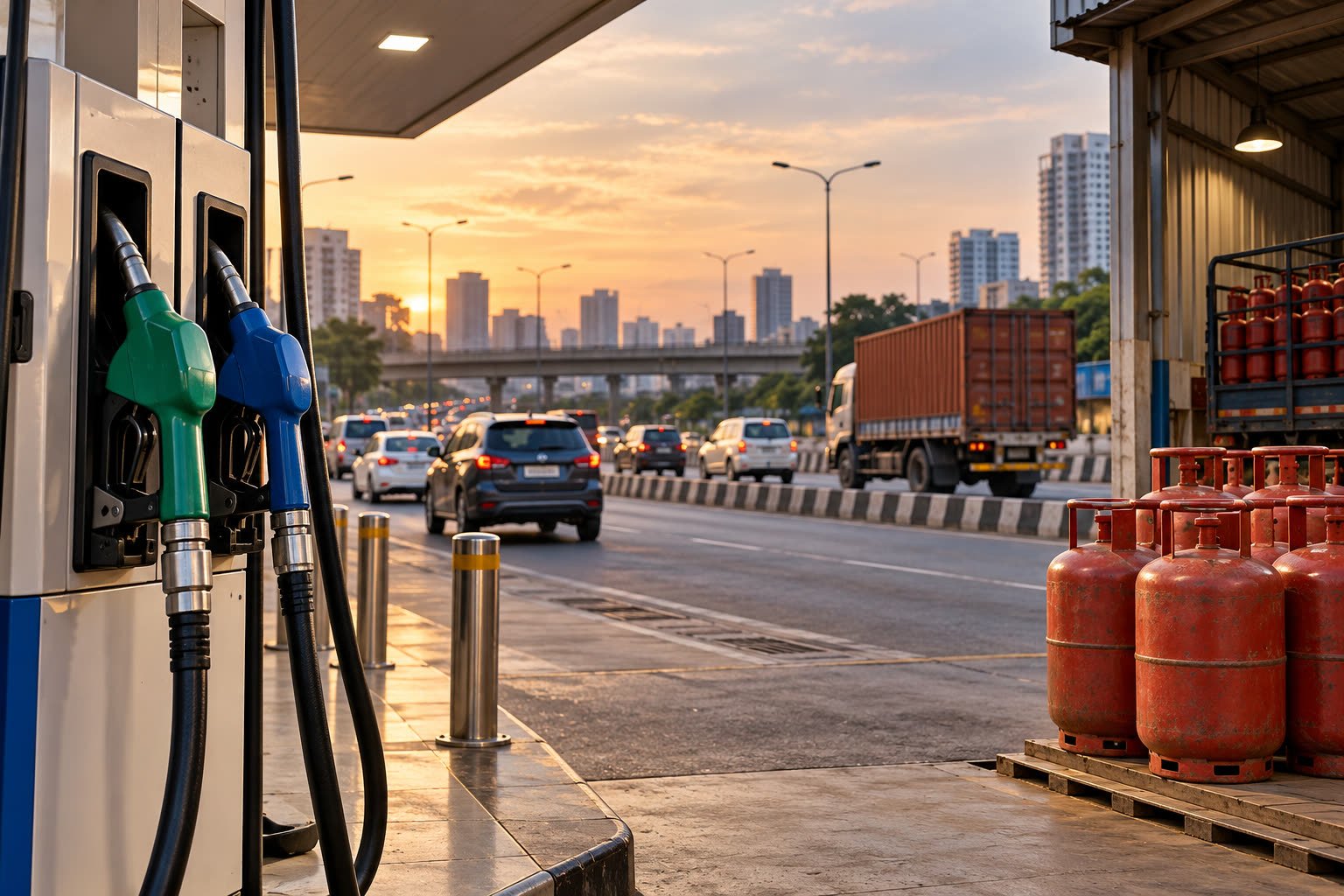
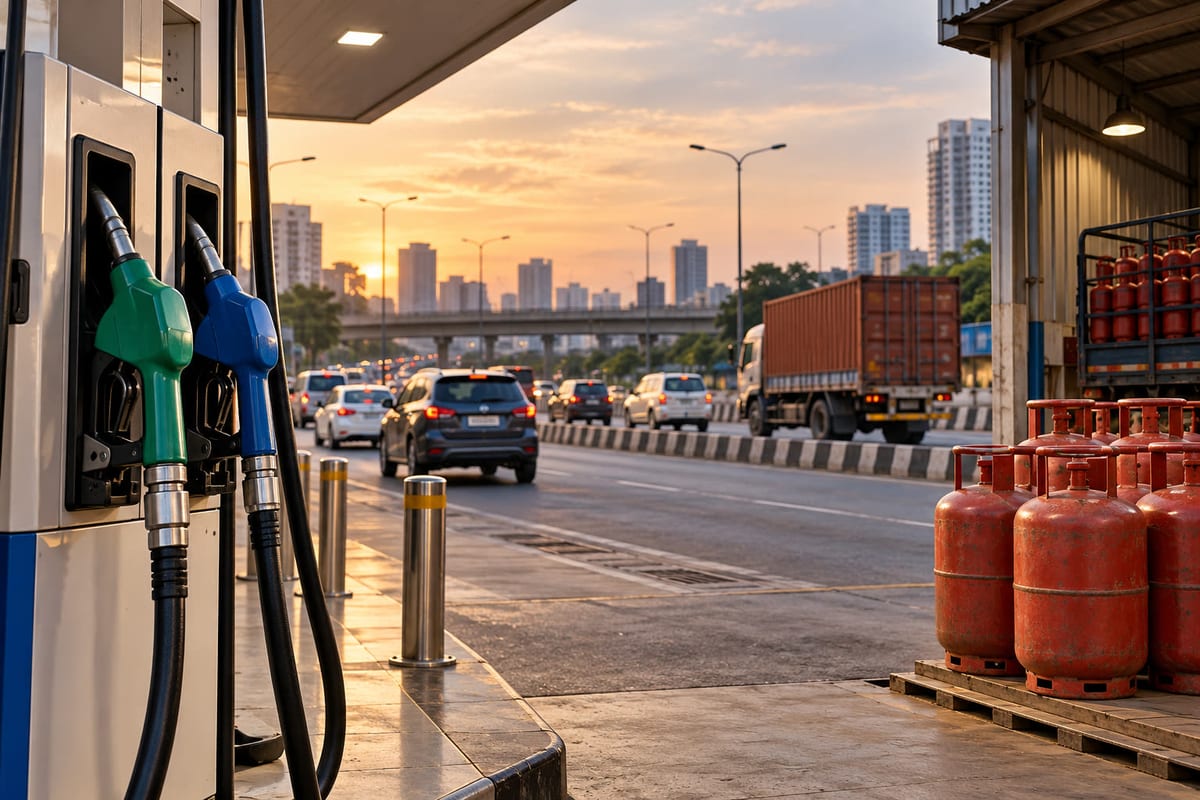 Illustration: petrol and diesel road use alongside LPG supply context. Credit: FuelPrice editorial illustration; not a photograph or official data graphic.
What the September PPAC data shows
PPAC's preliminary September 2026 flash report records a clear split between transport fuels and LPG. Petrol sales increased 7.21% from September 2025 to 3.64 million tonnes. Diesel, India's largest-selling petroleum product, rose 4.86% year on year to 7.12 million tonnes. LPG consumption moved in the opposite direction, falling 9.15% to 2.64 million tonnes.
| Fuel | September 2026 sales or consumption | Year-on-year change |
|---|---|---|
| Petrol | 3.64 million tonnes | Up 7.21% |
| Diesel | 7.12 million tonnes | Up 4.86% |
| LPG | 2.64 million tonnes | Down 9.15% |
The comparison is a national volume measure and should not be read as a direct measure of individual driving. A person who drives the same distance in the same vehicle may see no change in fuel use even when national sales rise. Likewise, a lower LPG total does not mean that every household used less cooking gas.
Why the fuel mix moved
The Economic Times attributed the rise in petrol consumption partly to higher vehicle sales in September. It linked stronger diesel demand to below-normal monsoon rainfall, irrigation use and wider economic activity. These are reported explanations for the national movement, not a finding about every state, city or vehicle segment.
Business Standard reported that LPG demand has remained under pressure amid India's dependence on imported LPG and supply disruption concerns since the West Asia crisis began in late February. It also reported government measures encouraging city-gas distributors to expand domestic piped-natural-gas connections where access allows. The September data therefore combine demand conditions with supply and fuel-switching factors.
What it means for drivers and fleets
1. Demand growth is not a pump-price change
The PPAC release does not announce a revision to retail petrol or diesel prices. Pump rates continue to be a separate, dated city-level question. Before leaving, drivers can check the latest fuel prices by city and fuel type rather than infer a price move from a national sales report.
The practical cost question is also vehicle-specific. Mileage, traffic, route length and the local rate determine a trip bill. A fleet manager comparing September activity with a fuel budget should plug those inputs into the fuel cost calculator, keeping the calculation separate from the national demand percentage.
2. Diesel is a broad mobility signal
Diesel is used by trucks, buses, cars, tractors, generators and other equipment. Its 4.86% year-on-year increase is therefore a broad signal of product movement, not a clean measure of freight growth alone. Operators should still watch their own kilometres, payload, idling and route conditions before changing a monthly estimate.
For long-distance travel, the same discipline applies to fuel and toll assumptions. A route plan can change the distance driven and the number of stops, so the road-trip planner is more useful than applying the national percentage to one journey.
3. LPG is not the same as automotive CNG
LPG is used mainly as cooking gas, while CNG is a separate road fuel supplied through city-gas networks. The fall in LPG consumption should not be presented as proof that CNG demand or CNG prices moved in the same direction. A motorist running a CNG vehicle needs the local CNG rate and actual kilometres, not the national LPG number.
What changes now
For private drivers, nothing in this release changes a vehicle's mileage, the price displayed at a fuel station or the validity of a toll pass. The useful next step is to keep three numbers separate: the dated local fuel price, the vehicle's real-world efficiency and the planned distance.
- Check the date and city before recording a fuel rate.
- Use tank-to-tank efficiency where available, instead of a brochure figure.
- For fleets, compare fuel consumed per kilometre with payload and route conditions, not only with national sales growth.
What to watch next
October's PPAC data will show whether the September road-fuel increase continues. Retail price notices, LPG supply conditions and city-gas access will matter more to a household or driver than the national percentage alone. A later data release may also revise the preliminary September totals, so the figures should be treated as an early indicator.
Reader takeaway
India's September fuel picture was mixed: petrol and diesel sales rose, while LPG consumption fell. For an individual trip or monthly budget, the correct response is not to add the national growth rate to the fuel bill. Use the current local price, the vehicle's real efficiency and the actual route, then review the total when PPAC publishes the next comparable month.