Tamil Nadu may see existing highways widened in preference to new greenfield expressways, according to reports on a 17 Nov 2026 meeting between the state and Union road ministries. For drivers and freight operators, that points to future work on familiar corridors rather than a new route opening soon; the reports do not announce an immediate toll change, route closure or construction start date.
Key takeaways
- Reports published on 27 Nov 2026 say the Centre is unlikely to sanction new expressway projects in Tamil Nadu in the near term.
- The reported alternative is an eight-lane upgrade of the existing Chengalpattu–Madurai GST Road and a six-lane upgrade of the Madurai–Kanniyakumari stretch.
- The reported position is not the same as a final sanction: no project award, completion date or new toll notification was cited.
- Drivers should continue following current route, speed and toll notices until a competent authority publishes a corridor-specific order.
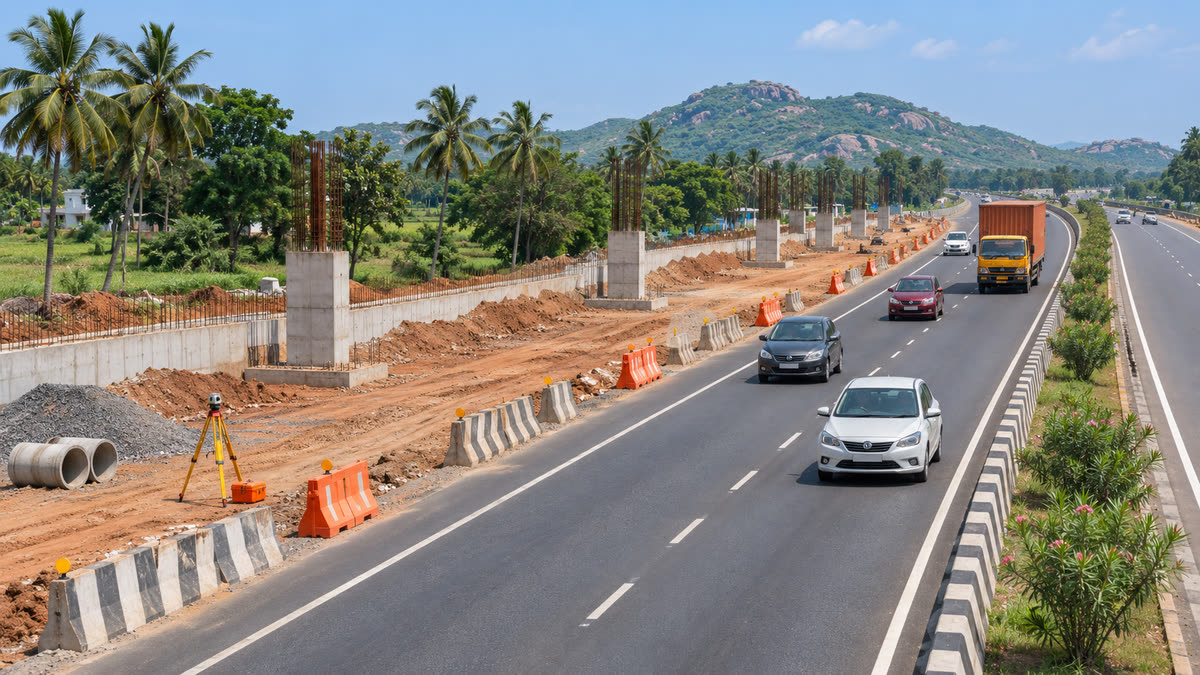
Image: Representative illustration of an existing divided highway being widened; it is not a photograph of a confirmed Tamil Nadu project.
What has been reported
The New Indian Express reported on 27 Nov 2026 that the Union government was favouring upgrades to existing highways over new expressways after a meeting held in New Delhi on 17 Nov between Tamil Nadu Highways Minister Aadhav Arjuna and Union Road Transport and Highways Minister Nitin Gadkari. Zee News Tamil published a separate report on 27 Nov describing the same broad direction.
In the reported account, approval for the proposed Singaperumal Koil–Madurai greenfield expressway could be deferred while the existing Chengalpattu–Madurai GST Road is considered for widening. The reported plan also covers the Madurai–Kanniyakumari section. Because the reports describe a likely or expected decision rather than a gazette notification or project sanction, the status should be treated as reported and proposed, not as work that has already been approved.
Which corridors are in focus
The two 27 Nov reports identify different lane outcomes for the two broad stretches below. They do not provide a start date, tender date or completion target for either upgrade.
| Existing corridor | Reported direction | What is not confirmed |
|---|---|---|
| Chengalpattu–Madurai GST Road | Widening to eight lanes | Sanction, work schedule and opening date |
| Madurai–Kanniyakumari stretch | Widening to six lanes | Detailed design, tender and construction dates |
The state’s official press release dated 2 Jun 2026 provides useful background: it asked the Centre to consider a priority programme to upgrade about 1,500 km of eligible four-lane national highways to six lanes, citing congestion, freight growth, industrial expansion and urbanisation. That release records a state request; it does not by itself confirm the later reported Union position.
Why the shift matters to road users
A new expressway and a widened existing highway serve traffic differently. A greenfield road can add a separate route and may change how traffic is distributed between corridors. Widening the road people already use can improve capacity on that route, but the benefit depends on land work, junction treatment, service roads, bridges, utilities and the pace of construction. None of those delivery details has been confirmed in the reports.
For private drivers, the near-term issue is likely to be planning rather than a new fee. If work begins on a busy GST or southern highway section, temporary barriers, lane shifts, speed restrictions and construction traffic can add time to a trip before the finished road improves movement. A driver can use the road-trip planner when a formal diversion or work-zone advisory is issued, rather than changing a route based only on an early project report.
For buses, trucks and other commercial operators, even a modest detour can affect fuel use, driver hours and delivery windows. The fuel-cost calculator can help model the fuel component after the confirmed route distance and current fuel rate are known. It cannot predict a saving from a project that has not yet received a schedule.
What changes for tolls and FASTag now
Nothing in the reports changes the fee at an existing toll plaza. A widening proposal is not a toll notification, and a new expressway being deferred does not cancel or revise the user fee on another road. The vehicle category, plaza notification and any valid pass continue to determine the amount payable until a separate authority notice says otherwise.
Before a trip, readers can check the applicable route estimate through the toll-charge calculator and then confirm local traffic advisories. If the corridor later moves from proposal to tender or construction, the useful update will be the specific section, diversion, traffic-control window and effective date—not just the headline lane count.
What to watch next
- A formal MoRTH, NHAI or state-government order confirming the preferred alignment and lane configuration.
- A detailed project report, land or utility plan, tender notice and appointed contractor for each section.
- Project-specific advisories covering diversions, lane closures, speed limits and heavy-vehicle movement.
- Any later toll notification if a new facility or altered access arrangement is brought into service.
Reader takeaway
The reported Tamil Nadu shift is important for long-term highway planning, but it is not an immediate change to a driver’s toll bill or route. Treat the eight-lane and six-lane figures as expected project directions until an official sanction and construction schedule are published, then plan around the exact corridor notice.
Sources
- The New Indian Express, “New expressways off the table for TN as centre favours highway upgrades”, 27 Nov 2026
- Zee News Tamil, “No New Expressways for Tamil Nadu: Centre’s Big Decision Explained”, 27 Nov 2026
- Tamil Nadu Directorate of Information and Public Relations, “PWD Minister meets Union Minister on Tamil Nadu road infrastructure requests”, Press Release No. 156, 2 Jun 2026