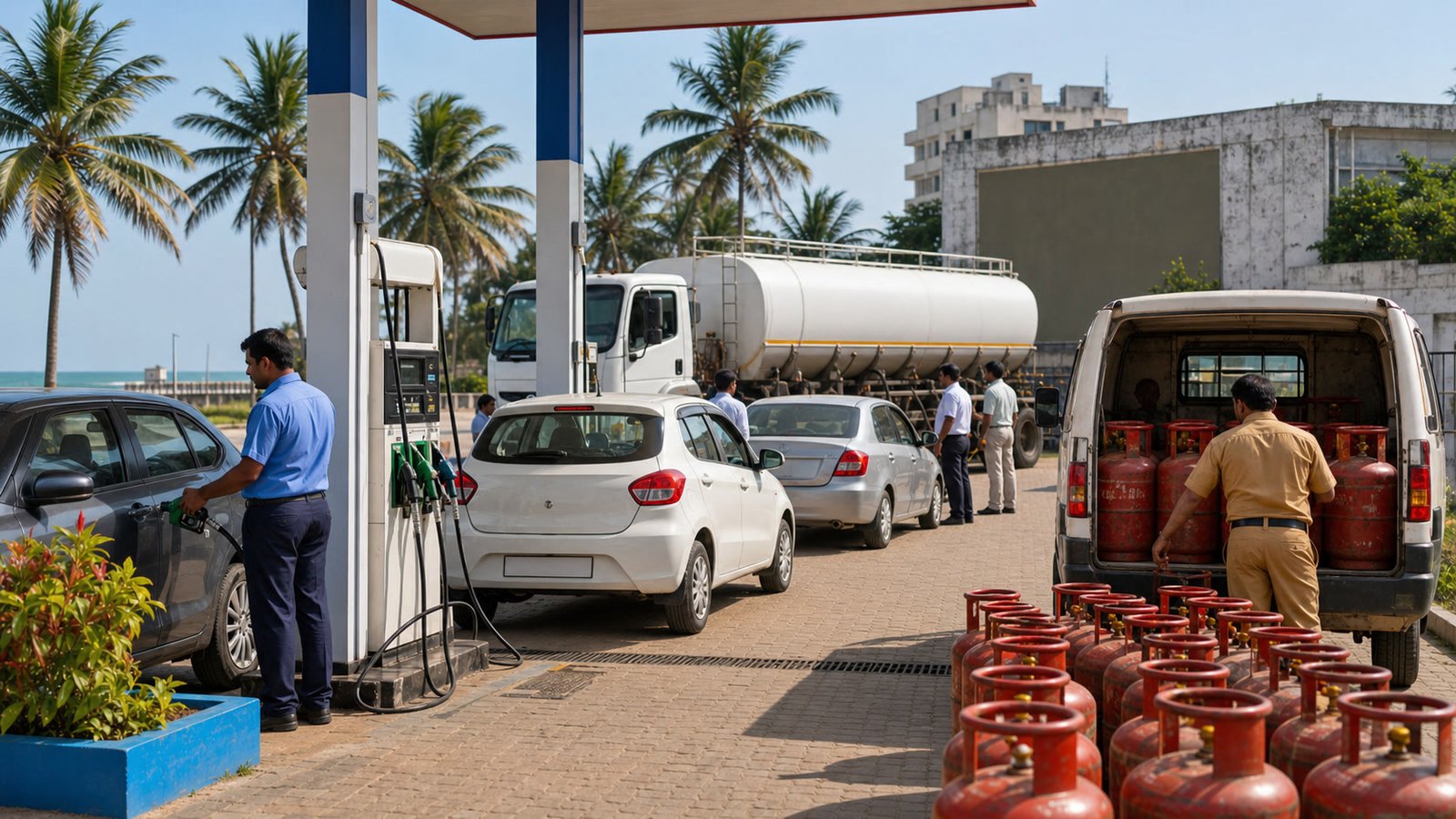
A local fuel disruption in Madurai has put a familiar question back in front of motorists: is this a station-level shortage or a wider supply problem? The latest reporting from Tamil Nadu says constrained fuel arrivals forced some petrol bunks in Madurai district to suspend operations temporarily or curtail night-time service. At the same time, public sector oil marketing companies have been issuing assurances that petrol, diesel and LPG stocks in Tamil Nadu and Puducherry are adequate and that supplies are being maintained.
Fuel supply assurances matter most when local outlets see delayed replenishment, because panic buying can turn a limited disruption into a wider retail problem.What happened in Madurai?
The New Indian Express reported on 4 June 2026 that constrained fuel supplies affected petrol bunks across Madurai district. Dealers said some outlets had to shut temporarily or reduce operating hours, including night-time services, because stock arrivals were not keeping pace. The report cited the Tamil Nadu Petrol Traders Association, which said Madurai district has more than 400 fuel outlets. Indian Oil Corporation was described as catering to nearly half the district's demand, while Hindustan Petroleum and Bharat Petroleum cover the remaining share.
The outlet-level problem matters because it came ahead of school reopening, when diesel demand for school vans and buses becomes more sensitive. The Federation of Private School Associations was quoted as urging authorities to ensure uninterrupted diesel availability for school transportation. For ordinary motorists, the practical issue was immediate: drivers may need to visit more than one outlet if a specific bunk is awaiting replenishment.
What oil companies have said
Public sector oil marketing companies have separately clarified through official and public-broadcast updates that petrol, diesel and LPG supplies remain normal in Tamil Nadu and Puducherry. Akashvani News reported on 2 June that the State Level Coordinator for the Oil Industry in Tamil Nadu and Puducherry said adequate stocks of all petroleum products were available and supplies were being maintained without interruption. The report also said retail outlets of IndianOil, BPCL and HPCL were functioning normally, while LPG distribution was continuing as per schedule.
A PIB Chennai release issued in May carried a similar assurance from V C Asokan, State Level Coordinator for the Oil Industry in Tamil Nadu and Puducherry. It said adequate stocks of petrol and diesel were available across public sector OMC retail outlets, that the supply chain from terminals and depots to retail outlets was functioning normally, and that the public should avoid panic buying or over-stocking. That official line is important because it separates local replenishment pressure from a region-wide fuel shortage.
Why users still feel the disruption
Fuel availability is experienced locally. A motorist does not see refinery inventory, depot dispatch schedules or OMC stock positions. A motorist sees whether the nearest bunk has petrol at 9 pm. A school van operator sees whether diesel is available before morning pickup. A restaurant sees whether LPG refill timing is predictable. That is why even a limited supply delay at a group of outlets can feel like a shortage to the user, especially when social media rumours or long queues start spreading.
Madurai's case also highlights a retail cash-flow issue. Dealers quoted in the June 4 report said companies had withdrawn credit facilities and were insisting on advance payment before fuel consignments were dispatched. If station owners have to arrange funds before each dispatch, weekends and bank holidays can make replenishment harder. This does not automatically mean the state has no fuel. It means retail logistics, payment cycles and local demand spikes can affect availability at specific bunks.
Who is affected most?
- Daily commuters: Two-wheeler and car users may face extra travel time if a nearby outlet is temporarily dry or operating fewer hours.
- School transport: Diesel availability is critical when school buses and vans resume full schedules after holidays.
- Cab and delivery drivers: Any fuel-search time directly cuts earning hours and increases trip uncertainty.
- LPG households and small businesses: Official reports say LPG distribution is on schedule, but consumers should still book through verified channels and avoid duplicate panic bookings.
- Fuel retailers: Station owners are exposed to replenishment timing, payment terms, customer pressure and local rumours at the same time.
What users should do now
The practical response is simple: do not panic buy, but do plan refuelling earlier than usual if you depend on a specific outlet or run a vehicle for work. Keeping a normal buffer is sensible; filling multiple containers, topping up repeatedly, or rushing because of rumours is not. Panic buying can create artificial demand, forcing outlets to run down stocks faster and making the situation worse for emergency users, school vans, autos, taxis and freight operators.
Users should also check official communication from OMCs, district authorities or public broadcasters before forwarding shortage messages. Fuel availability can vary outlet by outlet, so a closed station in one town does not prove a statewide crisis. For LPG, households should track delivery through the distributor or official app rather than relying on informal claims about cylinder shortage.
What to watch next
The key signals are replenishment frequency, night operations at outlets, diesel availability for institutional transport and whether dealer payment issues are resolved before the next weekend cycle. If more districts report similar station-level disruptions, the concern becomes larger than Madurai. If OMC tankers clear delayed replenishment quickly, the episode remains a local retail disruption rather than a supply-chain crisis.
For FuelPrice readers, the takeaway is clear: Tamil Nadu and Puducherry are not facing an officially confirmed regional petrol, diesel or LPG shortage, but Madurai shows how local stock delays can still affect real users. The best response is disciplined fuel use, verified information and early but normal refuelling, not panic buying.
Sources: The New Indian Express on Madurai fuel disruption; Akashvani News on Puducherry petrol, diesel and LPG supplies; PIB Chennai fuel supply assurance for Tamil Nadu and Puducherry; Times of India on adequate stocks and panic-buying advisory; DT Next on Tamil Nadu fuel and LPG stock assurance.