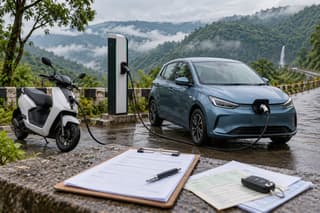
Tata Motors Passenger Vehicles has announced a fresh price increase for its passenger vehicle portfolio, covering both internal combustion engine models and electric vehicles. Economic Times reported on June 12, 2026 that prices will rise by up to 1.5% from July 1, 2026. Times of India also reported that the increase will apply across Tata's passenger vehicle lineup, including petrol, diesel and EV models.
For buyers, the important point is not only the headline percentage. A 1.5% hike can change the final on-road cost, loan amount, insurance value, exchange calculation and the break-even comparison between petrol, diesel, CNG and electric options. The increase also comes at a time when fuel prices have already pushed many cost-conscious buyers to recheck running costs before choosing a powertrain.
What Tata Motors has announced
According to the ET report, Tata Motors Passenger Vehicles said the revision will affect the company's entire passenger vehicle range, including ICE and EV models, from July 1. The report said the increase is intended to partly offset rising input costs and sustained inflationary pressure, while the exact hike will vary by model and variant. TOI noted that this is Tata's second price revision of 2026, after an earlier increase from April 1.
This means buyers should not assume a single fixed increase across all cars. A lower-priced hatchback, a compact SUV, a premium SUV and an EV may see different rupee impacts depending on variant and dealer quote. Since the final impact depends on the model, trim, insurance and city-specific taxes, the right number to compare is the written on-road quote, not just the ex-showroom headline.
Why this matters for fuel and EV users
Tata's portfolio sits across several high-interest buyer segments: small cars, compact SUVs, premium SUVs and electric vehicles. The official Tata Motors passenger vehicle site lists mainstream models, while the Tata.ev site separately presents the company's EV range. That mix matters because the price hike touches buyers who are choosing not only between models, but also between fuel types.
FuelPrice readers should view this as a total-cost update. For a petrol or diesel buyer, a higher acquisition cost adds to monthly EMI before fuel bills are even counted. For an EV buyer, a higher starting price can slightly extend the time needed to recover the upfront premium through lower running cost. For a CNG-leaning buyer, the comparison may shift again if dealer discounts, waiting periods or variant availability differ.
ET's earlier reporting on Tata's EV demand showed how sensitive buyers have become to fuel economics. The report said rising fuel prices were pushing interest toward EVs, with Tata seeing EV bookings rise sharply in recent weeks. That context makes the July hike more meaningful: if both ICE and EV prices move up, buyers need to update the full cost sheet instead of relying on last month's quotation.
| Buyer type | What changes from July 1 | FuelPrice check |
|---|---|---|
| Petrol or diesel buyer | Higher vehicle price can raise EMI, insurance base and down payment. | Recalculate monthly ownership with fuel spend, service plan and loan tenure. |
| EV buyer | Higher upfront cost may affect the running-cost payback period. | Compare home charging cost, public charging cost, battery warranty and daily kilometres. |
| CNG or high-mileage user | A higher car price changes the break-even point against petrol. | Check if fuel savings still offset the price gap within your ownership period. |
| Booked buyer awaiting delivery | Dealer billing date and price-protection terms become critical. | Ask for written confirmation on whether old or revised pricing applies. |
What buyers should do before July 1
First, collect a written quote immediately if you are already close to booking. The quote should separate ex-showroom price, registration, insurance, extended warranty, accessories, road-side assistance, handling or logistics charges, exchange value and finance terms. If the dealership promises old pricing, ask for that promise in writing with the booking date, expected billing date and cancellation terms.
Second, compare the same model across powertrains. A petrol version may remain cheaper to buy, but fuel costs can change the monthly picture. An EV may still save money over time, but only if the buyer drives enough kilometres and has reliable charging access. A high-mileage urban user with home charging will see a different result from a low-mileage weekend user who depends on public charging.
Third, do not ignore insurance and finance. When ex-showroom price rises, insurance declared value and loan amount may rise too. A small percentage hike can become more visible when it is financed over five to seven years. Buyers should ask the lender for an updated EMI and total interest estimate rather than focusing only on the down payment.
Dealer-level offers may decide the real impact
The announced increase is a company-level price action, but the buyer's final bill will still depend on dealer offers. Exchange bonus, corporate discount, insurance package, accessory bundle, stock availability and variant waiting period can change the net cost. A car billed before July 1 may not always be cheaper if an older quote includes unnecessary accessories or expensive insurance.
This is especially important for EV buyers because the cost comparison includes charging installation, electricity tariff, public charging use and battery warranty confidence. Buyers should update their cost-per-kilometre calculation after the revised price and compare it with expected petrol, diesel or CNG spend over the same holding period.
What to watch next
The next important details are model-wise revised prices, dealer billing policy for already booked vehicles, and whether competitors respond with offers or their own price hikes. Watch entry models and high-volume SUVs closely, because even a modest increase can matter in price-sensitive segments. Also watch EV waiting periods, since demand and supply balance can decide whether dealers hold discounts or tighten them.
The reader takeaway is straightforward: Tata's July 1 hike is not a reason to rush blindly, but it is a reason to update the math. If you are buying this month, lock a written quote and clarify price protection. If you are comparing ICE and EV, recalculate total ownership cost after the new price. The smartest decision is the one based on your real monthly kilometres, charging access, fuel bill and finance cost, not only the headline 1.5% number.
Sources: Economic Times price hike report, Times of India price hike report, Economic Times EV demand and fuel-price context, Tata Motors passenger vehicles official site, Tata.ev official EV portfolio.