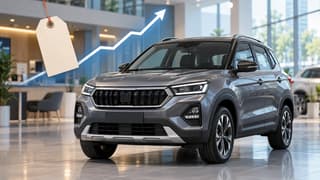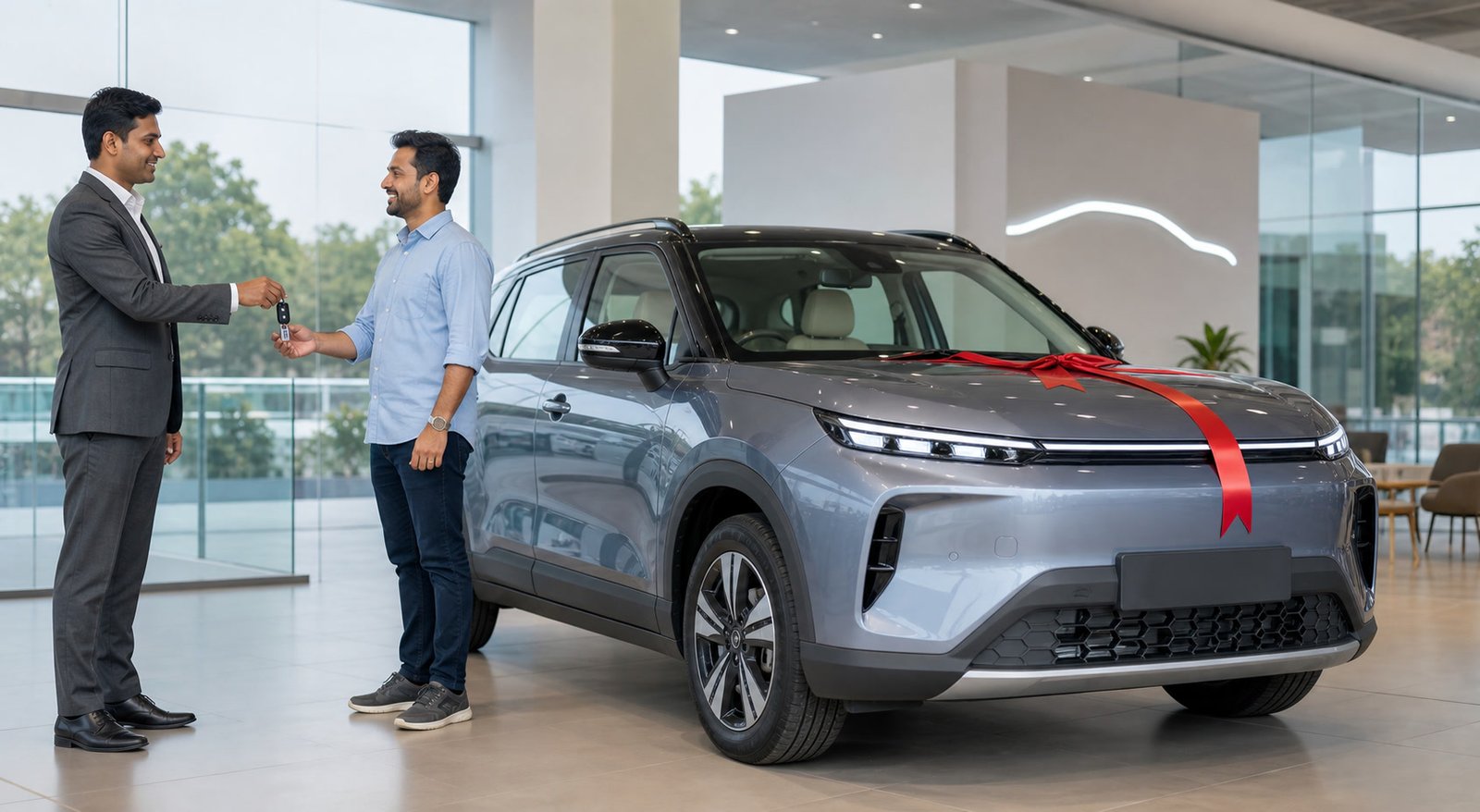
Toyota’s Urban Cruiser Ebella has crossed the line that matters most in the car market: the first customer deliveries have begun. That turns the model from a launch event into an actual ownership proposition, and it gives Toyota a live test of how Indian buyers respond to the brand’s first mass-market electric SUV.
The headline number is still the same. The top-spec Ebella E3 is priced at Rs 23.60 lakh ex-showroom. But Toyota is also using a Battery-as-a-Service model to lower the apparent entry cost. Under that plan, the vehicle price is listed at Rs 15.25 lakh, while battery usage is billed at Rs 4.99 per km. That second part is what makes the story more interesting for FuelPrice readers: Toyota is not just selling an EV, it is trying to change how buyers think about owning one.
This matters because EV pricing in India is not only about sticker shock. A lot of buyers still ask the same questions: How much do I pay upfront? What happens to battery risk? Will resale value hold up? Can I afford the monthly cost without stretching my budget? Toyota’s deliveries beginning now means those questions are moving from theory to real customer choices.
Why the delivery milestone matters
Plenty of vehicles are unveiled in India before they are truly on sale. Deliveries are different. They show that the company has a retail process, service readiness and production supply in place to hand cars over to customers. For Toyota, that is particularly important because the Ebella is its first serious step into India’s mass-market EV space.
The Urban Cruiser Ebella is based on the Suzuki e-Vitara and shares most of its core components with its Maruti counterpart. That shared architecture gives Toyota a faster route into the EV market, but it also means buyers will judge the vehicle on more than the badge. They will compare the offer, the support network, the warranty package and the economics against the alternatives already in showrooms or headed there soon.
In simple terms, launch day says Toyota is interested. Delivery day says Toyota is committed.
What buyers get for the money
According to the launch coverage, the Urban Cruiser Ebella E3 is the top-spec variant in the range and comes with a 61 kWh battery. Toyota also offers a 49 kWh battery option in the lineup. The TOI report says the smaller battery version delivers 440 km of claimed range, while the larger 61 kWh version is rated at 543 km on a single charge. Power output is listed at 144 hp for the 49 kWh variant and 174 hp for the 61 kWh version.
That places the Ebella squarely in the mid-size electric SUV bracket. It is not a stripped-down city EV; Toyota has positioned it as a premium family product with enough range, size and features to compete with established electric SUVs. Features include a 10.25-inch digital instrument cluster, a 10.1-inch infotainment screen with wireless Apple CarPlay and Android Auto, cloud-based navigation, a panoramic sunroof, ambient lighting, ventilated front seats, wireless charging, a JBL sound system, automatic climate control and an in-cabin air purifier.
On safety, the package is equally important. The Ebella gets seven airbags as standard, ABS, EBD, ESP, a 360-degree camera and Level 2 ADAS functions such as Lane Keep Assist, Blind Spot Monitor and Adaptive Cruise Control. That matters because EV buyers in this segment are not just looking for a lower fuel bill; they also expect a full-size, feature-loaded family car experience.
| Key figure | Toyota Urban Cruiser Ebella | Why it matters |
|---|---|---|
| Top-spec price | Rs 23.60 lakh ex-showroom | Signals Toyota’s premium EV positioning. |
| BaaS vehicle price | Rs 15.25 lakh | Lowers upfront entry cost for EV buyers. |
| Battery fee | Rs 4.99 per km | Shifts some cost from ownership to usage. |
| Battery options | 49 kWh and 61 kWh | Lets buyers choose between access cost and longer range. |
| Claimed range | 440 km and 543 km | Range remains a key buying argument for EV shoppers. |
How Toyota is trying to de-risk EV ownership
Toyota’s BaaS strategy is the most important part of the pricing story. By separating the battery from the car in financial terms, the company is trying to reduce the upfront hurdle that often stops buyers from considering an EV. That can be appealing for city users, first-time EV owners and even fleets that care more about predictable monthly usage than asset ownership.
There is also a battery-warranty and buyback backdrop from Toyota’s earlier booking phase, which made the Ebella feel less like an unproven experiment and more like a structured ownership package. That is exactly the kind of reassurance many Indian buyers want before they make the jump from petrol or diesel to electricity.
Still, BaaS is not a free pass. Buyers need to think about annual mileage, charging habits and total cost over time. The model can look attractive on day one, but if the vehicle is driven heavily, the per-km battery fee becomes the part that shapes real-world economics. That makes the Ebella particularly interesting for consumers who want lower entry costs and a clearly packaged EV experience rather than the lowest possible long-term cost at any mileage level.
What this means for the EV market
The deliveries also matter beyond Toyota’s showroom. India’s EV market is now competitive enough that a delivery milestone from a brand like Toyota can pull attention from rivals and suppliers alike. The Ebella will be compared with the Hyundai Creta Electric, the MG ZS EV and the upcoming Maruti Suzuki e-Vitara. Toyota’s advantage is its dealer network and buyer trust; its challenge is proving that the package is compelling enough to justify the premium.
For the broader auto market, the message is straightforward. The EV fight in India is no longer only about who can announce the fastest, longest-range concept. It is about who can convert the launch into delivery, and then the delivery into repeat demand. Toyota has reached that second phase, and now the market can start judging the product by how it performs in the hands of actual buyers.
What to watch next
The next things to watch are simple but important. First, how quickly Toyota expands deliveries beyond the first batch. Second, whether the lower E1 and E2 variants get priced competitively enough to widen the audience. Third, whether the BaaS plan attracts city customers and fleets, or whether most buyers continue to choose a traditional outright purchase. And finally, whether Toyota’s service experience around the Ebella matches the brand promise.
The short version: the Toyota Urban Cruiser Ebella has moved out of the launch spotlight and into customer driveways. That is a meaningful moment for Toyota and for India’s EV market. For buyers, it means the company’s first mainstream EV is no longer a promise. It is now a product they can actually book, pay for and drive home.
Sources: Times of India: Toyota Ebella electric deliveries begin, Economic Times: Toyota Urban Cruiser Ebella E3 launch, Times of India: Ebella bookings and BaaS background.