India's barrierless tolling push has moved into a sharper corridor-specific phase, with IHMCL's Trans-Haryana Expressway Bundle DL 02 tender now reaching its current bid window. The Government eProcurement listing for tender ID 2026_NHAI_272710_1 shows bid submission closing on 4 June 2026 at 5:00 PM and technical bid opening on 5 June 2026 at 5:30 PM.
The tender is for FASTag-ANPR based Multi Lane Free Flow user fee collection on the Trans-Haryana Expressway, an access-controlled corridor on NH-152D. For FuelPrice readers, this is not just a toll technology update. It directly connects to fuel wasted in queues, freight turnaround time, lane discipline, electronic toll compliance and the broader shift from plaza-based tolling to gantry-based highway charging.
What Happened
Indian Highways Management Company Limited, the NHAI-linked entity that manages national highway electronic tolling systems, has issued the RFP for selection of an acquirer bank for FASTag-ANPR based Multi Lane Free Flow toll collection at fee plazas on the Trans-Haryana Expressway under Bundle DL 02. The tender reference is IHMCL/MLFF Delhi 02/2026.
The official RFP describes the project as a closed-loop tolling system for an access-controlled highway. It says the selected bank will be responsible for design, development, testing, commissioning, operation and maintenance of the MLFF based tolling system at the specified fee plazas. The document also places the work in a six-month design, development and implementation period followed by a 60-month operation and maintenance period after successful commissioning.
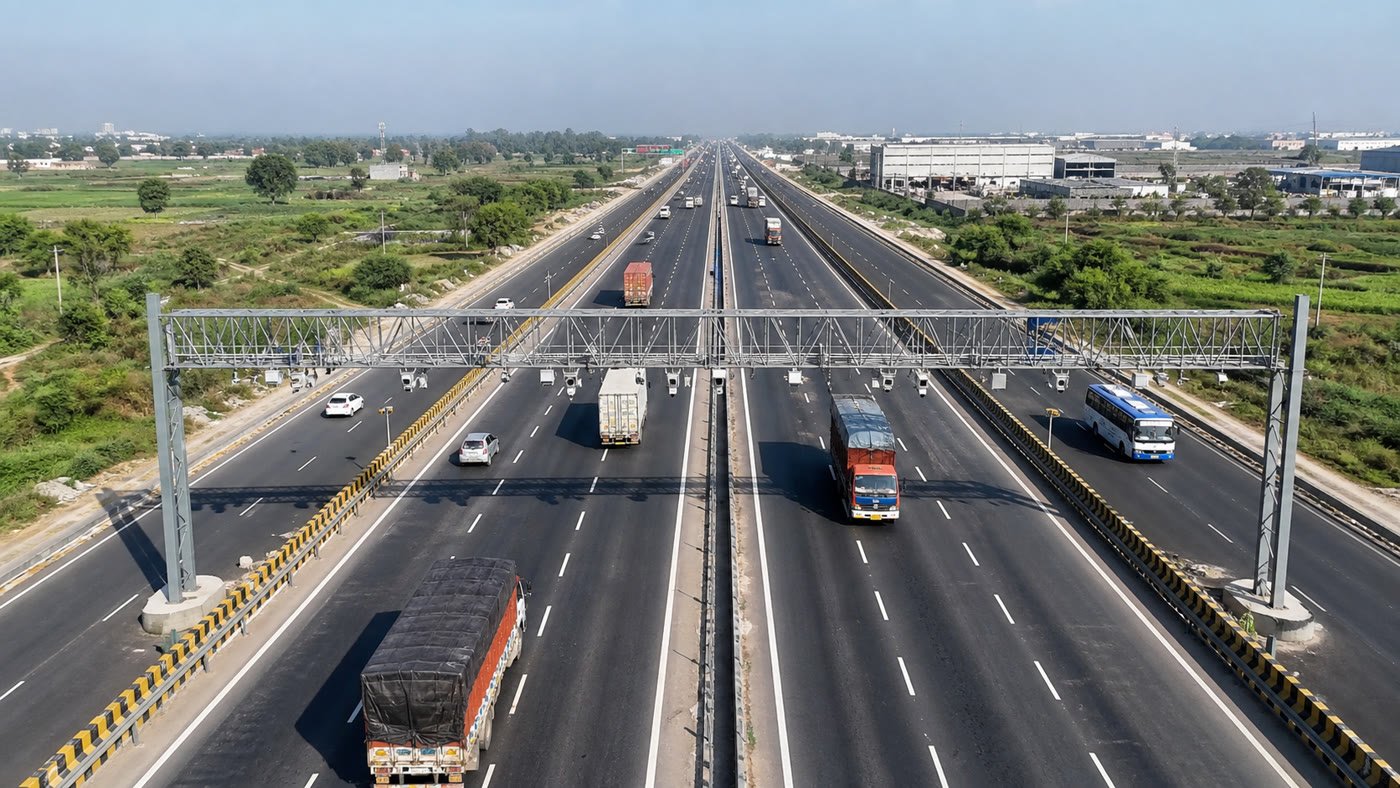
In practical terms, this means the project is moving from policy language to a real procurement process. Once awarded and implemented, it would replace the stop-and-go feel of conventional toll plazas with a system where field equipment and sensors mounted on gantries capture passing vehicle data, connect with the NETC payment ecosystem and support automatic user-fee deduction.
Why This Matters for Fuel and Freight Users
FASTag made electronic payment mainstream, but at busy toll plazas many vehicles still slow down, queue, change lanes or stop because the physical plaza remains the bottleneck. That affects truckers, private cars, buses and fleet operators in different ways, but the cost ultimately shows up as wasted diesel, longer travel time and less predictable logistics schedules.
MLFF is designed to attack that bottleneck. Instead of forcing all vehicles through booth lanes, a gantry-based system reads the FASTag and vehicle registration information while traffic keeps moving. The RFP states that MLFF field equipment and sensors will capture required information from passing vehicles and transmit it into the NETC ecosystem for user-fee deduction.
For freight-heavy corridors, the fuel relevance is straightforward. A truck burning diesel while crawling through a toll queue adds cost without adding distance. If gantry tolling reduces stop-start movement and queue dwell time, fleet operators get better trip predictability, lower idle burn and fewer schedule shocks. The savings per trip may look small at one location, but across repeat highway use, multiple vehicles and time-bound dispatches, the effect can become meaningful.
Key Details at a Glance
| Item | Current Detail | Why It Matters |
|---|---|---|
| Tender | IHMCL/MLFF Delhi 02/2026, tender ID 2026_NHAI_272710_1 | Identifies this as the dedicated Trans-Haryana Expressway MLFF bundle. |
| Road corridor | Trans-Haryana Expressway, Bundle DL 02, NH-152D corridor context | A controlled-access freight and passenger corridor can benefit from smoother toll movement. |
| Technology model | FASTag-ANPR based Multi Lane Free Flow tolling | Supports barrierless tolling using tag, camera and vehicle-data matching. |
| Current bid timing | Bid close: 4 June 2026; technical opening: 5 June 2026 | Shows the project is at an active procurement milestone. |
How Barrierless Tolling Changes the Highway Experience
The biggest before-and-after change is the removal of the mandatory toll booth interaction. In the older model, drivers approach a plaza, slow down, pick a lane, wait for the reader or operator interaction, and then accelerate again. Even when payment is electronic, the physical layout encourages bunching and lane friction.
In the MLFF model described in the RFP, tolling becomes an overhead infrastructure function. Gantries, sensors and ANPR cameras detect the vehicle, match it with FASTag and vehicle records, calculate the payable fee and process the transaction through the electronic toll collection network. The RFP also refers to violation and failure-to-pay handling, which is important because open-road tolling works only if enforcement is strong enough to discourage leakage.
For everyday highway users, the visible benefit should be simpler: less stopping. For the toll ecosystem, the challenge is more complex: accurate vehicle classification, correct entry-exit pairing in a closed-loop environment, reliable FASTag reads, usable ANPR accuracy, dispute handling and integration with NPCI and related systems.
Who Is Affected
The first affected group is highway users on the Trans-Haryana Expressway, especially cars, buses and trucks that regularly use the access-controlled corridor. A smoother tolling system can reduce trip uncertainty and help drivers avoid unnecessary queue time.
The second group is transporters and logistics operators. They track time, fuel burn, delivery slots and driver hours more closely than casual users. If barrierless tolling performs as intended, fleets can plan trips with fewer plaza-level delays. That matters for agricultural movements, industrial cargo, e-commerce line-haul operations and regional supply chains using Haryana as a transit or production corridor.
The third group is banks, toll operators and enforcement agencies. MLFF is not only a hardware project; it is a payment, reconciliation and compliance project. The acquirer bank role is central because toll data must move cleanly into the NETC ecosystem, while failed reads and violations must be resolved without creating new friction for compliant users.
What To Watch Next
The immediate watch point is the outcome of the technical bid opening after the 5 June 2026 stage. The next useful signals will be bidder qualification, award timelines, final implementation schedule, gantry deployment plan, and whether the transition can happen without disrupting ongoing toll operations.
FuelPrice will also watch the practical user side: whether vehicles can move consistently at highway speed through tolling points, how failed FASTag reads are handled, whether ANPR disputes are resolved quickly, and whether frequent commercial users see measurable time savings. The technology is promising, but highway users will judge it by reliability, not by tender language.
Final Takeaway
The Trans-Haryana Expressway MLFF tender is a high-niche but important update because it shows India's toll system moving beyond booth-based FASTag lanes toward open-road tolling. If implemented well, FASTag-ANPR MLFF can reduce toll-queue friction, cut unnecessary idling, improve freight predictability and make access-controlled highways feel more seamless for users. The procurement milestone now makes Bundle DL 02 a corridor to watch closely.