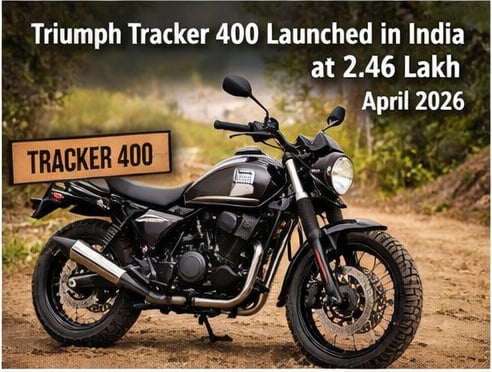
Triumph has expanded its India lineup with the Tracker 400, and this is more than a cosmetic addition. Launched at ₹2.46 lakh ex-showroom, the Tracker 400 introduces a new India-specific 349cc engine strategy, a flat-track-inspired design and a middle position between the Speed 400 and Scrambler 400. It is a highly deliberate product move, not a casual lineup extension.
The significance lies in how Triumph is segmenting its small-capacity family. Instead of relying on one all-round roadster and one rugged scrambler, it is now carving out a third personality — a more style-led, road-biased machine meant to appeal to riders who want visual attitude and premium hardware without jumping to a larger class.
Key points
- Launch price of ₹2.46 lakh ex-showroom, Delhi.
- India-specific 349cc engine derived from the earlier 398cc platform.
- Produces 40hp and 32Nm, matching the higher state of tune seen on the Thruxton 400.
- Flat-track-inspired styling with 17-inch wheels at both ends.
- Tracker slots between the Speed 400 and Scrambler 400 in Triumph’s portfolio.
Why the new 349cc engine matters
The Tracker 400’s engine is one of the biggest stories here because Triumph has adapted the package for India rather than merely copying an overseas formula. The move to a 349cc displacement helps the bike fit into a more favourable tax structure while still preserving premium-bike performance credentials. That shows Triumph is not only thinking about enthusiast appeal; it is also thinking about pricing logic and market fit.
This is the kind of product localisation that can matter enormously in India. Buyers in this segment are aspirational, but they are still highly price-sensitive. If a small engineering adjustment creates a better pricing position without damaging the brand’s performance image, it becomes a very smart commercial decision.
Design and rider identity
The Tracker 400 is clearly intended to be the lineup’s style-first road bike. The flat-track-inspired styling, 17-inch wheels, sharper visual identity and more focused rider triangle all suggest a motorcycle meant to look and feel different from the Speed 400’s easier modern-classic roadster role.
This gives Triumph a stronger emotional pitch in India’s premium small-bike space. Many buyers in this bracket are not only comparing horsepower or torque; they are choosing the kind of rider image they want to project. The Tracker 400 answers that need directly.
Where it fits in the Triumph family
The price slot is highly strategic. The Tracker sits above the Speed 400 and below the Scrambler 400, which means Triumph now offers three different flavours of the same broader premium-entry philosophy. The Speed is the safe all-rounder. The Scrambler is the rugged do-more option. The Tracker becomes the visually sharper road-biased middle choice.
That makes the range easier to understand and more efficient to sell. Instead of forcing one product to satisfy everyone, Triumph is now speaking more directly to different buyer personalities within the same price neighborhood.
Hardware and equipment
Although the Tracker is very image-led, it is not relying on styling alone. It gets quality hardware and a premium component set consistent with Triumph’s positioning in the segment. That is important because buyers in this bracket expect the bike to feel well-engineered, not just well-photographed.
The higher state of engine tune, familiar Triumph 400 underpinnings and focused road intent all support the idea that this motorcycle is meant to be genuinely satisfying to ride, not just admired from a café parking spot.
Competitive significance
The Tracker enters a market where design, engine character and brand identity all matter heavily. It may not directly replace the need for a more practical roadster or a more rugged scrambler, but it gives Triumph something equally important: a product with stronger style differentiation. That can be a major edge in a market where emotional buying decisions are common.
The motorcycle will inevitably be cross-shopped with the Speed 400, Scrambler 400 and even bikes outside the Triumph family such as the Guerrilla 450. That is exactly where it needs to be. The fact that it can enter those comparisons at all suggests Triumph has positioned it intelligently.
What to watch next
The most important next signals will be on-road pricing, dealer response and whether buyers perceive the Tracker as different enough from the Speed 400 to justify the premium. If the answer is yes, Triumph will have strengthened its entry-level premium strategy considerably.
FuelPrice view: The Tracker 400 is an example of smart segmentation done well. It gives Triumph a more nuanced and more emotional offering in India without abandoning the platform discipline that made the 400 range credible in the first place.