TVS Motor chairman emeritus Venu Srinivasan said on 5 Oct 2026 that electric vehicles should not be treated as India’s only route to lower transport emissions, arguing for a technology-agnostic approach that leaves consumers a choice. The comment, made at the IFQM Symposium 2026, matters to Indian drivers because EVs, petrol, CNG and higher-ethanol fuels affect purchase price, refuelling access and running-cost calculations differently.
Key takeaways
- Srinivasan’s remarks are an industry view, not a new government rule, fuel-price change or TVS product announcement.
- He said EV adoption should grow organically and that buyers should not be pushed into one powertrain.
- He backed ethanol blending as a way to reduce fuel imports, while raising compatibility questions at higher blends.
- Drivers comparing powertrains need to check vehicle compatibility, usable charging or refuelling access and total running cost separately.
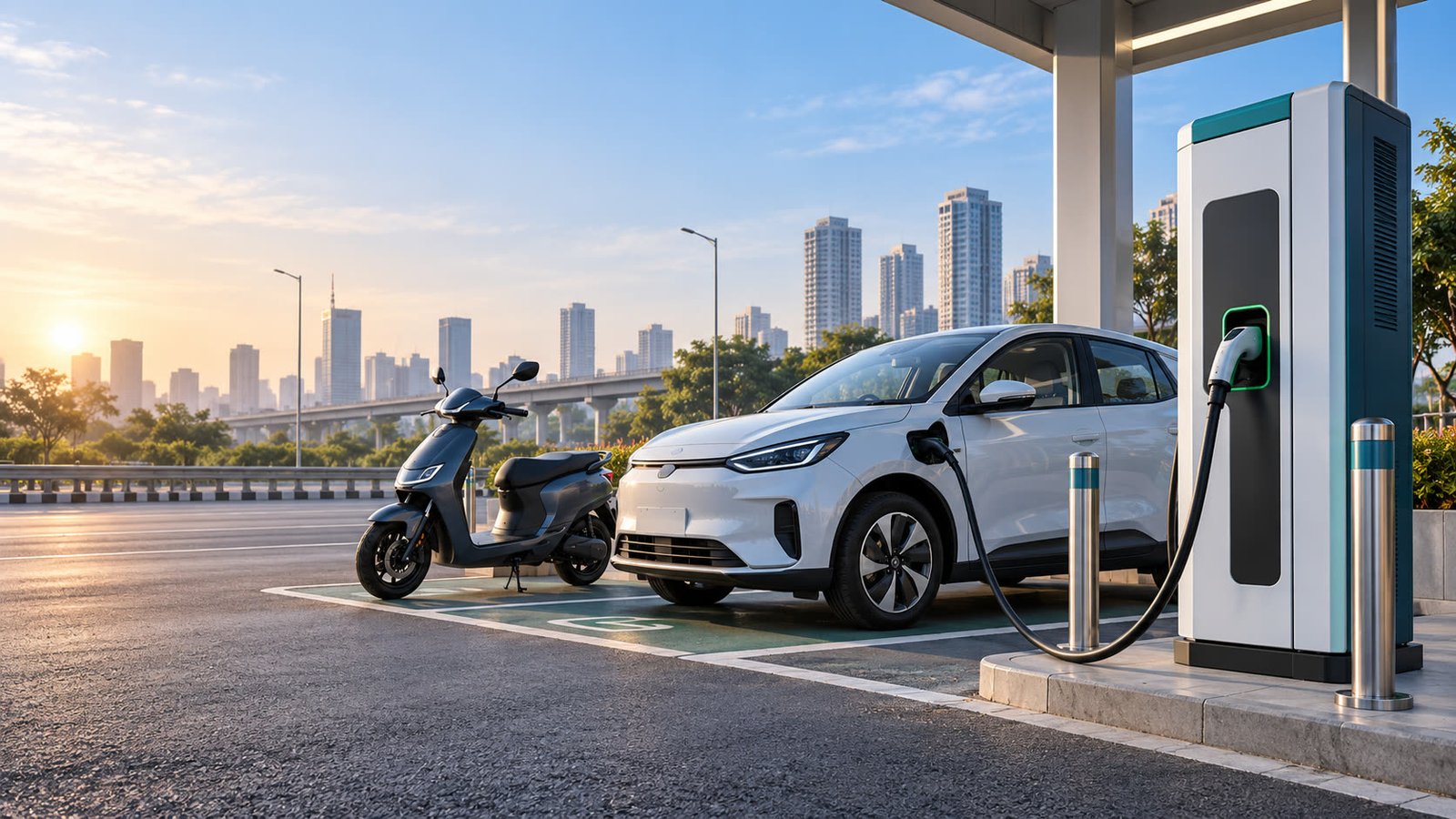
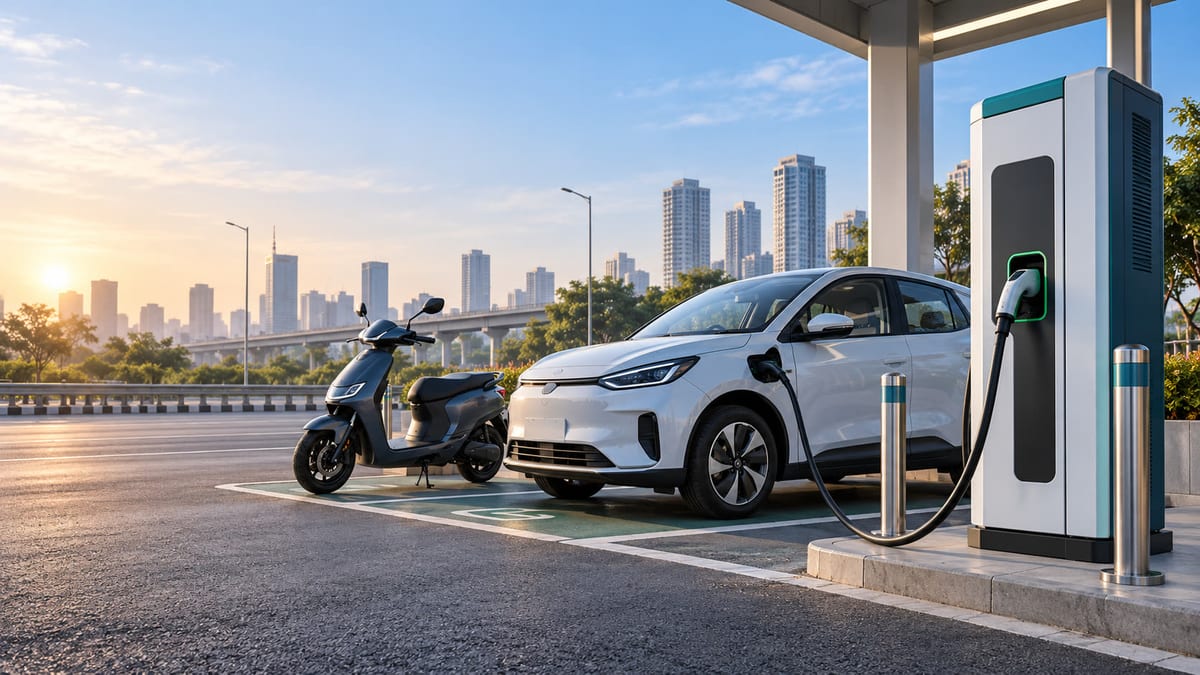 Illustrative editorial image of EV charging infrastructure; it is not a photograph of a specific vehicle, TVS installation or government site. Credit: FuelPrice editorial illustration.
What Srinivasan said—and what he did not announce
Financial Express, The New Indian Express and The Economic Times reported that Srinivasan made the comments on the sidelines of the IFQM Symposium 2026 in New Delhi. His central point was that the industry should assess the net environmental effect of each technology rather than assume that one powertrain will solve every emissions problem. In a short attributed line, he said, “EV is not the only solution.”
The remarks did not announce a change to TVS Motor’s product roadmap, a new fuel standard or a government relaxation. They are better read as a contribution to the policy and industry debate over how India lowers emissions while keeping vehicles affordable and practical across cities, highways and commercial routes.
Why the choice matters to vehicle users
For a private driver, a powertrain decision is not just a comparison of an ex-showroom price. An EV may make sense for a predictable daily route with dependable home, workplace or public charging. A petrol or CNG vehicle can offer a different refuelling pattern, while an ethanol-compatible vehicle depends on the fuel blend it is designed and approved to use. A fleet adds another layer: downtime, payload, service coverage and the cost of keeping a replacement vehicle available can matter as much as energy cost.
The practical comparison is therefore specific to the route and vehicle. A driver can use FuelPrice’s fuel cost calculator to establish a petrol, diesel or CNG running-cost baseline, then compare it with the electricity tariff and charging pattern expected for an EV. For an electric vehicle, the state-wise EV station directory can help identify whether public charging exists along the routes that matter, rather than assuming that a citywide charger count means every location is convenient.
The ethanol point is a compatibility warning, not an approval certificate
Srinivasan supported ethanol blending as a way to reduce India’s dependence on imported fuel and said the performance impact had so far been limited. He also said consumers might not need a choice between blends up to E10, but that a choice at higher blending levels could be considered because of concerns about vehicle materials.
That is an attributed industry opinion, not a blanket assurance that every vehicle can use every petrol blend. Owners still need to follow the vehicle maker’s fuel guidance, warranty conditions and service instructions. The statement also does not change what a pump is required to sell. Any change in fuel standards, compatibility rules or consumer entitlements would need to come through an official notification or an automaker’s confirmed specification.
What a technology-agnostic transition could mean
A technology-agnostic approach does not mean treating all powertrains as identical. It means comparing the relevant costs and impacts before deciding which technology fits a use case. For a city scooter, charging access and daily distance may dominate. For an intercity car, refuelling time and route coverage may carry more weight. For a delivery or passenger fleet, utilisation, payload, maintenance support and resale risk can change the result.
That approach also leaves room for more than one solution at once. Electric vehicles can reduce tailpipe emissions where they are used, while higher-efficiency engines, CNG, ethanol-compatible vehicles and public transport can affect fuel demand and emissions in different ways. The balance will vary by vehicle segment, electricity source, fuel supply and local policy; a speech by an industry leader does not settle that wider question.
What drivers and fleet operators can check now
- Read the vehicle manual and manufacturer specification for approved fuel blends, charging requirements and warranty conditions.
- Compare the final on-road cost and route-level energy cost, not only the advertised purchase price or a claimed per-kilometre figure.
- For an EV, check connector type, charger operating status, payment access and realistic charging time before planning a longer trip.
- For a commercial vehicle, include payload, daily utilisation, downtime, service reach and replacement-vehicle needs in the comparison.
- Treat statements about future policy as reported views until a government notification or confirmed manufacturer communication changes the rules.
FuelPrice’s road-trip planner can help map distance and travel time before a powertrain comparison is made. The reader takeaway is straightforward: Srinivasan’s comments widen the discussion beyond an EV-versus-petrol headline, but they do not remove the need to verify the vehicle, fuel and charging details that apply to a particular owner or fleet.
Sources
- The New Indian Express, “EVs not only answer to curb pollution, says TVS Motor Chairman” — 5 Oct 2026
- Financial Express, “EVs not the only solution to cut pollution: Venu Srinivasan” — 5 Oct 2026
- The Economic Times, “TVS Motor’s Venu Srinivasan says EVs not sole answer to cutting emissions” — 5 Oct 2026
- Indian Foundation for Quality Management, “IFQM Symposium 2026” event listing — 5–6 Oct 2026