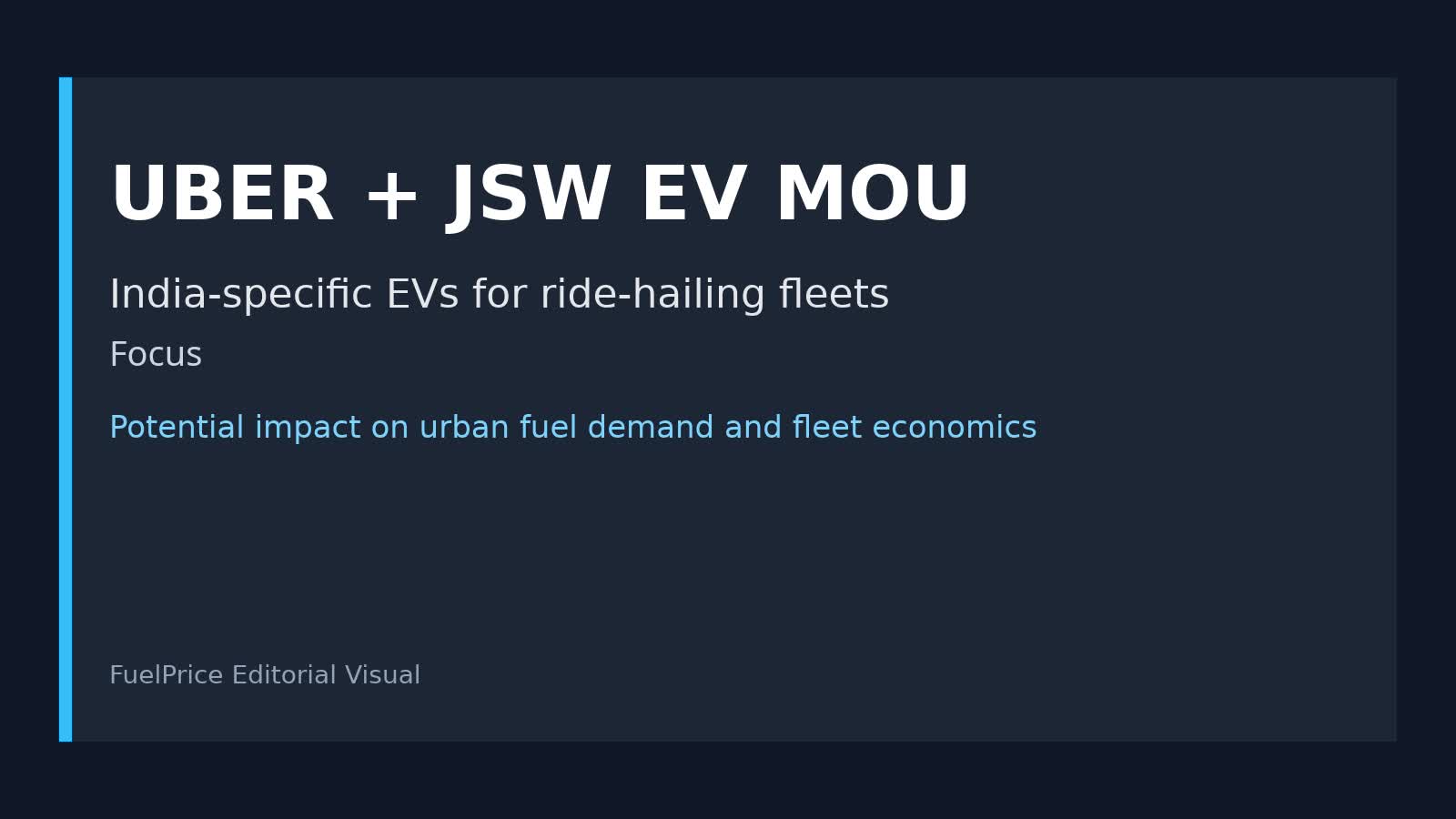
Uber and JSW Group have signed a strategic MoU to jointly co-develop and deploy electric vehicles tailored for India ride-hailing conditions, according to company and Reuters-linked reporting published on 21-22 May 2026.
The biggest actionable takeaway is not an immediate vehicle launch date, but the operating model: platform-led demand from Uber paired with manufacturing and mobility infrastructure support from JSW can accelerate EV penetration in high-utilization fleet segments where fuel and maintenance costs matter most.
The MoU links platform demand and EV manufacturing capability, with a stated focus on India-specific ride-hailing use cases.Key Highlights
- Uber and JSW Group announced a partnership to co-develop and deploy EVs for the Indian ride-hailing market.
- Both sides described the approach as India-focused, aimed at use-case fit rather than generic global fleet imports.
- No financial outlay or unit deployment target has been publicly disclosed at announcement stage.
- The tie-up fits with broader signals that JSW-linked mobility businesses are increasing hybrid and EV focus in India.
- The development is relevant for city fuel substitution, ride economics, charging demand and fleet procurement trends.
What Happened
JSW Group confirmed the partnership publicly, stating that the collaboration with Uber will support co-development and rollout of EV solutions aligned to Indian ride-hailing needs. Reuters-syndicated coverage added that the companies did not disclose financial details at this stage.
This is important because high-usage ride-hailing fleets are among the first segments where EV economics can work at scale when charging uptime and route utilization are managed tightly.
Why This Matters for Fuel and Auto Ecosystem
Fleet electrification in ride-hailing has second-order impact beyond car sales. It influences:
- urban petrol and diesel demand patterns, especially in dense city corridors,
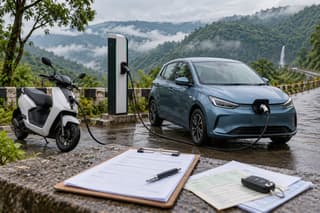
- night-time and depot charging infrastructure build-out,
- vehicle lifecycle decisions for commercial drivers and fleet operators,
- platform-level pricing and availability behavior in major metros.
Market Impact Lens
| Impact Channel | Near-Term Signal | What Readers Should Watch |
|---|---|---|
| Fleet procurement | Platform-backed demand may improve EV purchase confidence | Formal rollout timelines and city-wise deployment phases |
| Fuel substitution | High-usage commercial km can shift from liquid fuel to power | Impact visibility in monthly urban fuel demand trends |
| Charging ecosystem | Demand concentration likely around fleet-heavy zones | Charging uptime, queue management and tariff design |
| Ride economics | Potential long-run operating cost advantages | Driver earnings quality after financing and charging costs |
What Is Still Unconfirmed
At this stage, key operational details remain unannounced, including target vehicle count, exact launch cities, capex commitment, and commercial structure for driver acquisition. Readers should treat these as pending variables rather than fixed outcomes.
Reader Takeaway
This is a high-signal strategic move in India EV transition, especially for commercial mobility. If execution details are credible and charging reliability follows, the partnership could become a measurable fuel-substitution channel in urban transport over the next few cycles.
Final Takeaway
The Uber-JSW MoU is not a headline-only announcement; it is a structural indicator that platform-scale demand and domestic industrial capacity are converging in India EV fleet space. The next decisive milestone will be disclosed rollout numbers, city plans and commercial viability for drivers.