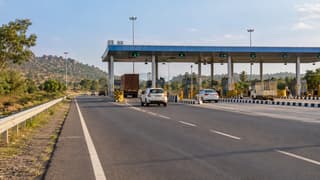
Uttar Pradesh has begun a three-day Operation Kavach 2.0 enforcement drive to inspect private passenger buses from 28 to 30 September 2026. The checks matter to travellers because transport teams are focusing on fitness, permits, safety equipment, bus-body standards and excessive luggage carried on roofs or carriers.
The campaign was announced by the Uttar Pradesh Transport Department at the Uttar Pradesh International Trade Show in Greater Noida and follows a recent private-bus fire in the state. It is an enforcement drive under existing transport rules; the reports reviewed for this article do not announce a new statewide fare, permit category or permanent penalty schedule after 30 September.
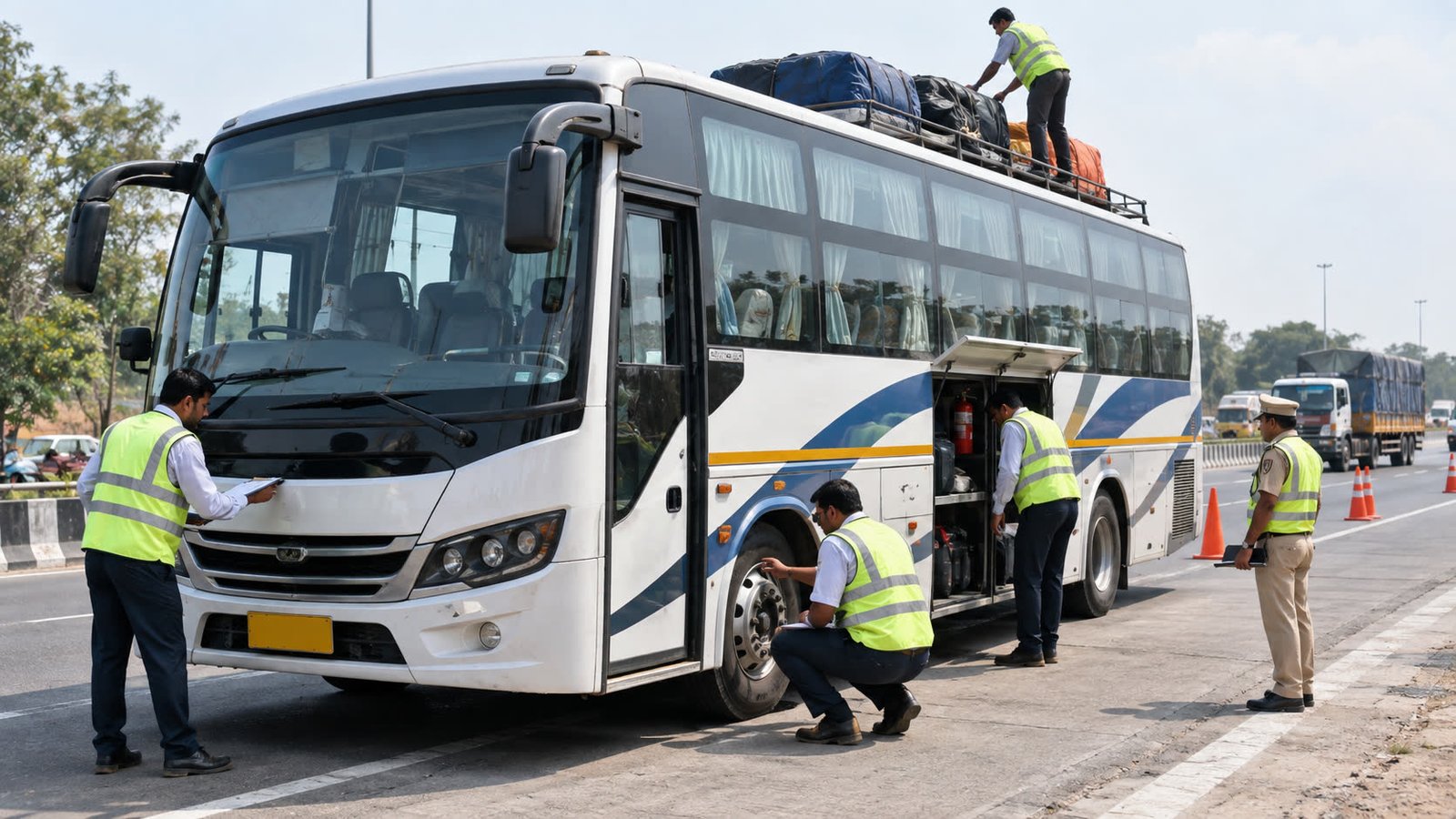
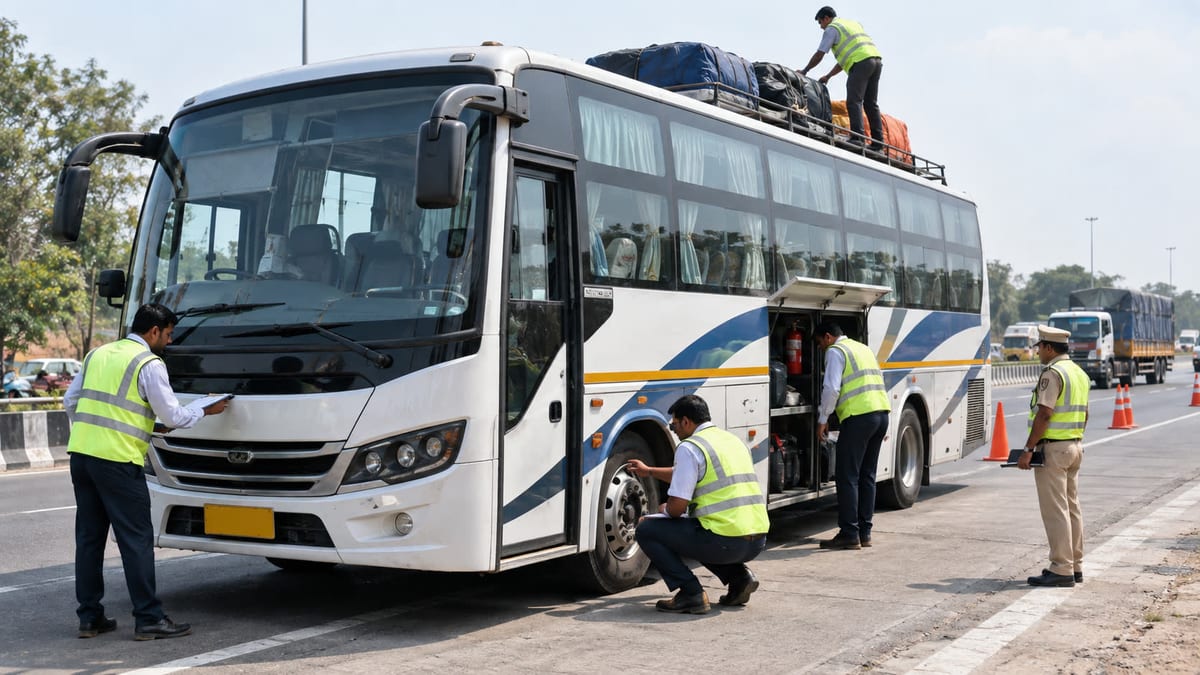 Transport officials inspect a passenger bus at a highway checkpoint. Credit: FuelPrice editorial illustration; not an official government photograph.
Key takeaways
- Operation Kavach 2.0 is scheduled across Uttar Pradesh from 28 to 30 September 2026.
- RTO and enforcement teams are checking private, tourist, double-decker and unauthorised passenger buses.
- Checks cover fitness, permits, traffic compliance, bus-body standards, fire systems and emergency exits.
- Officials are paying particular attention to cargo carried above the permitted height on bus roofs or carriers.
- The reports describe a short enforcement campaign, not a confirmed new fare or permanent bus rule.
What Operation Kavach 2.0 covers
Reports by Hindustan and Dynamite News say the state transport department announced the three-day campaign after the Greater Noida bus incident. The stated focus is unauthorised and rule-violating passenger transport, with inspections on routes used by inter-district and inter-state buses. Hindustan reported that the drive includes private buses operating in urban and rural areas, including double-decker and other buses on short and long routes.
A separate report from Tarun Mitra, covering enforcement in Sant Kabir Nagar, says teams are checking whether passenger buses follow the prescribed bus-body code and whether luggage on the roof or carrier exceeds the permitted height. It also describes checks on expressways and major roads. These details are important for passengers because unsafe loading can affect vehicle stability, emergency access and the space available around exits.
Why the checks matter to passengers
A transport inspection is not a guarantee that every bus on a route has passed, and it is not a substitute for a passenger’s own safety check. It is a point-in-time enforcement action intended to identify buses that should not be operating, or that need corrective action before continuing.
For a long-distance journey, a bus with a clear aisle, accessible emergency exit and visible fire-safety equipment gives passengers more options if something goes wrong. Excessive roof cargo is also a practical warning sign: Tarun Mitra and the Times of India both reported that the current drive is looking at luggage carried on roofs or carriers beyond the permitted limit.
Passenger checklist before boarding
- Keep the ticket, operator details and vehicle number available, especially for an inter-state journey.
- Look for a clear entry and aisle, an accessible emergency window or exit, and a fire extinguisher that is not visibly blocked.
- Avoid boarding a bus where bags, commercial cargo or two-wheelers are piled insecurely on the roof or carrier.
- Use a seat belt where one is provided, stay seated when the bus is moving and do not obstruct an exit with personal luggage.
- Allow some extra time on routes through Uttar Pradesh while the inspection campaign is active; a vehicle may be held for document or safety checks.
What bus operators and fleet owners should check
The reports point to several areas that operators should verify before a vehicle leaves its depot: a valid permit, current fitness status, required safety equipment, emergency windows, the condition of the bus body and compliance with luggage limits. Hindustan’s Kanpur report also described checks of fire systems, emergency windows and permit conditions on tourist buses.
Operators should treat the campaign as a compliance check rather than a temporary reason to move cargo elsewhere. Removing excess luggage at a checkpoint may protect a trip from immediate action, but it does not resolve an underlying permit, fitness or body-condition problem. The published reports do not specify a new uniform fine amount, so operators should rely on the applicable transport rules and directions from their regional transport office.
Planning a journey during the campaign
Passengers and drivers travelling through the state can use the road-trip planner to review a route and approximate travel time before departure. If you are driving rather than taking a bus, the fuel cost calculator can help estimate the trip’s fuel requirement, while the toll-charge calculator can be used to check highway charges separately from the bus or taxi fare.
Those tools cannot confirm whether a private bus is authorised or fit to operate. For that, the useful checks remain the operator’s identity, the vehicle’s visible condition and whether the bus crew is following basic safety practices.
What to watch after 30 September
The current reports establish the 28–30 September 2026 campaign window. They do not confirm an extension, a permanent statewide inspection schedule or a new rule that changes how passengers book buses. The next useful development would be an official enforcement summary or further transport-department directions showing whether the checks continue and which violations were found most often.
Reader takeaway: If you are travelling by private bus in Uttar Pradesh during the campaign, check the vehicle before boarding, keep the aisle and exits clear, and treat excessive roof cargo or missing safety equipment as a reason to ask questions or choose another service. The same precautions are useful on inter-city bus journeys anywhere in India.
Sources
- Hindustan — “Double-decker bus inspection campaign from 28 September” — 27 Sep 2026
- Dynamite News — “UP Launches Operation Kavach, New Road Safety Drive Targets Illegal Buses” — 28 Sep 2026
- Tarun Mitra — “Intensive checking of passenger buses under Operation Kavach-2.0” — 28 Sep 2026
- The Times of India — “UP to crack down on buses carrying excess rooftop luggage” — 26 Sep 2026