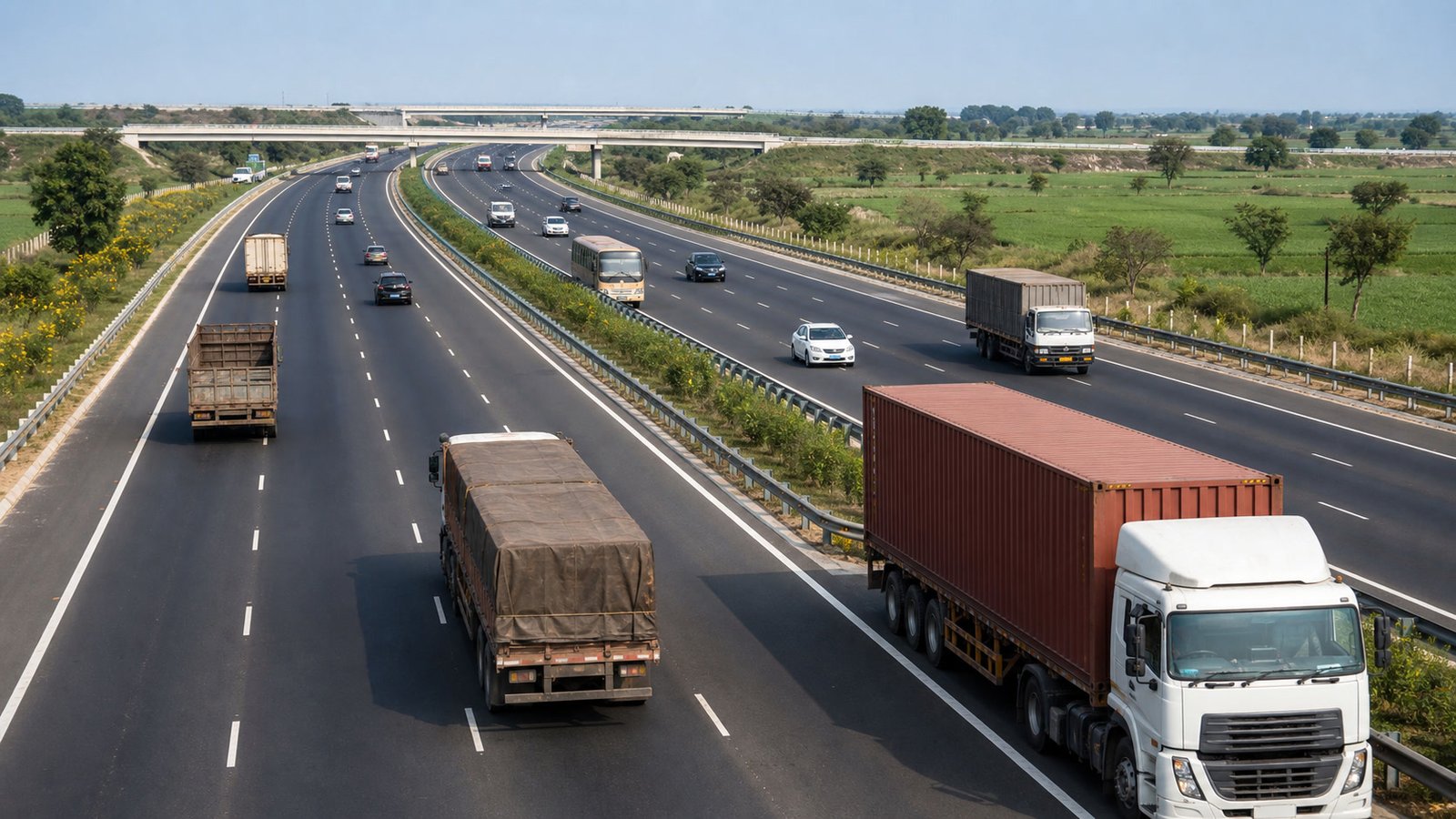
A key western freight corridor has received a fresh connectivity boost. Prime Minister Narendra Modi has dedicated Packages VI and VII of the 8-lane access-controlled Vadodara-Mumbai Expressway, opening two important stretches between Kim-Ena and Gandeva-Ena. Together, the sections add 63.5 km of expressway capacity between Gujarat and Maharashtra, a region where ports, chemicals, textiles, diamonds, industrial cargo, daily commuters and long-distance passenger traffic all compete for road space.
New access-controlled expressway capacity can reduce stop-start driving, improve freight predictability and lower route-level fuel waste when traffic shifts from slower mixed roads.What has opened?
The two newly dedicated sections are Package VI, the 36 km Kim-Ena section, and Package VII, the 27.5 km Gandeva-Ena section. Financial Express reported that both packages have been developed at a combined cost of Rs 7,689 crore. The sections include major and minor bridges, rail-over bridges, flyovers, around 70 underpasses and two interchanges for smoother local connectivity. Seven wayside amenities are also planned across the stretches to support driver convenience.
PIB's official release said the packages are part of the 8-lane access-controlled Vadodara-Mumbai Expressway and are intended to enhance high-speed transportation, logistics efficiency and economic connectivity between Gujarat and Maharashtra. The larger Vadodara-Mumbai Expressway is a key component of the Delhi-Mumbai Expressway corridor, one of India's most important road infrastructure projects for passenger and freight movement.
| Opened section | Length | User impact |
|---|---|---|
| Package VI: Kim-Ena | 36 km | Adds access-controlled capacity for South Gujarat freight and passenger flow |
| Package VII: Gandeva-Ena | 27.5 km | Improves continuity toward the Maharashtra-facing corridor |
| Combined package | 63.5 km | Targets faster movement, fewer interruptions and better logistics reliability |
Why this matters for fuel users
An expressway opening is not a petrol or diesel price cut. The pump price does not change because a new road opens. The fuel impact comes through vehicle operation. Freight trucks and buses use more fuel when they face frequent braking, idling, town traffic, mixed vehicle movement, diversions and unpredictable travel time. An access-controlled expressway can reduce some of that waste by allowing steadier speeds, fewer interruptions and better trip planning.
For fleet operators, the biggest benefit is predictability. A truck that completes a route faster and with fewer stops may use fuel more efficiently, reduce driver hours, improve vehicle turnaround and allow better delivery scheduling. For shippers in Surat, Bharuch, Valsad, Navsari, Hazira-linked industrial zones and Maharashtra-facing markets, more reliable road time can matter as much as headline distance. Fuel is only one part of freight cost, but diesel, tyres, maintenance and driver utilisation all improve when movement becomes smoother.
Before and after: what changes on the corridor?
Before access-controlled capacity expands, freight and passenger vehicles often depend on slower mixed roads, town bypasses and sections where local traffic enters and exits frequently. That increases congestion exposure and makes delivery time harder to estimate. After a working expressway section opens, long-distance users can shift a part of their route to a controlled corridor with better lane discipline, grade separation and fewer conflict points.
The new sections are also linked to a broader infrastructure push in South Gujarat. PIB said the Surat event included road, power and industrial sector projects worth over Rs 18,800 crore. Along with the Vadodara-Mumbai Expressway packages, the government also highlighted NH-56 four-laning works for tribal regions and connectivity toward the Statue of Unity. For FuelPrice readers, the important point is that highway, power, industrial and port-linked investments are being bundled around the same freight geography.
Who is affected?
- Truck operators: Better highway flow can reduce idle time, support faster turnarounds and improve fuel planning.
- Industrial shippers: Surat, Hazira and South Gujarat units can gain from more predictable links toward Maharashtra and the wider Delhi-Mumbai corridor.
- Passenger vehicle users: Cars and buses should see smoother long-distance travel as more expressway sections become usable.
- Toll users: Access-controlled travel usually brings toll cost, so users will compare toll spend against time, fuel and vehicle-wear savings.
- Local communities: Underpasses and interchanges are important because they help separate local movement from high-speed through traffic.
What to watch next
The next checks are operational rather than ceremonial. Users should watch when each entry and exit point becomes fully functional, how tolling is structured, whether wayside amenities open on schedule, and how quickly freight operators shift route plans. The real economic impact will depend on corridor continuity, not only individual section openings. Once more missing links are completed, the Delhi-Mumbai Expressway is expected to sharply reduce travel time between the two metros and support faster freight movement across one of India's busiest industrial belts.
The takeaway is practical: Packages VI and VII do not lower diesel prices today, but they can reduce the hidden fuel cost created by slow, stop-start freight movement. For transporters, manufacturers and regular highway users, the 63.5 km opening is another step toward a faster western logistics spine where time saved can translate into fuel, maintenance and inventory benefits.
Sources: PIB on Surat project dedication; PIB pre-event details for Vadodara-Mumbai Expressway packages; Financial Express route report; Financial Express infrastructure details; DeshGujarat highway project summary; Maritime Gateway infrastructure overview.