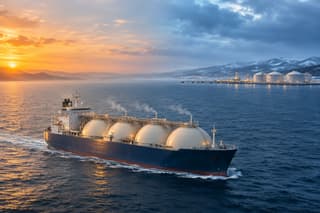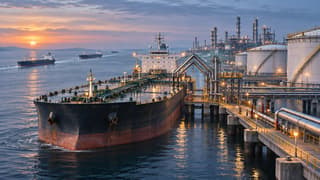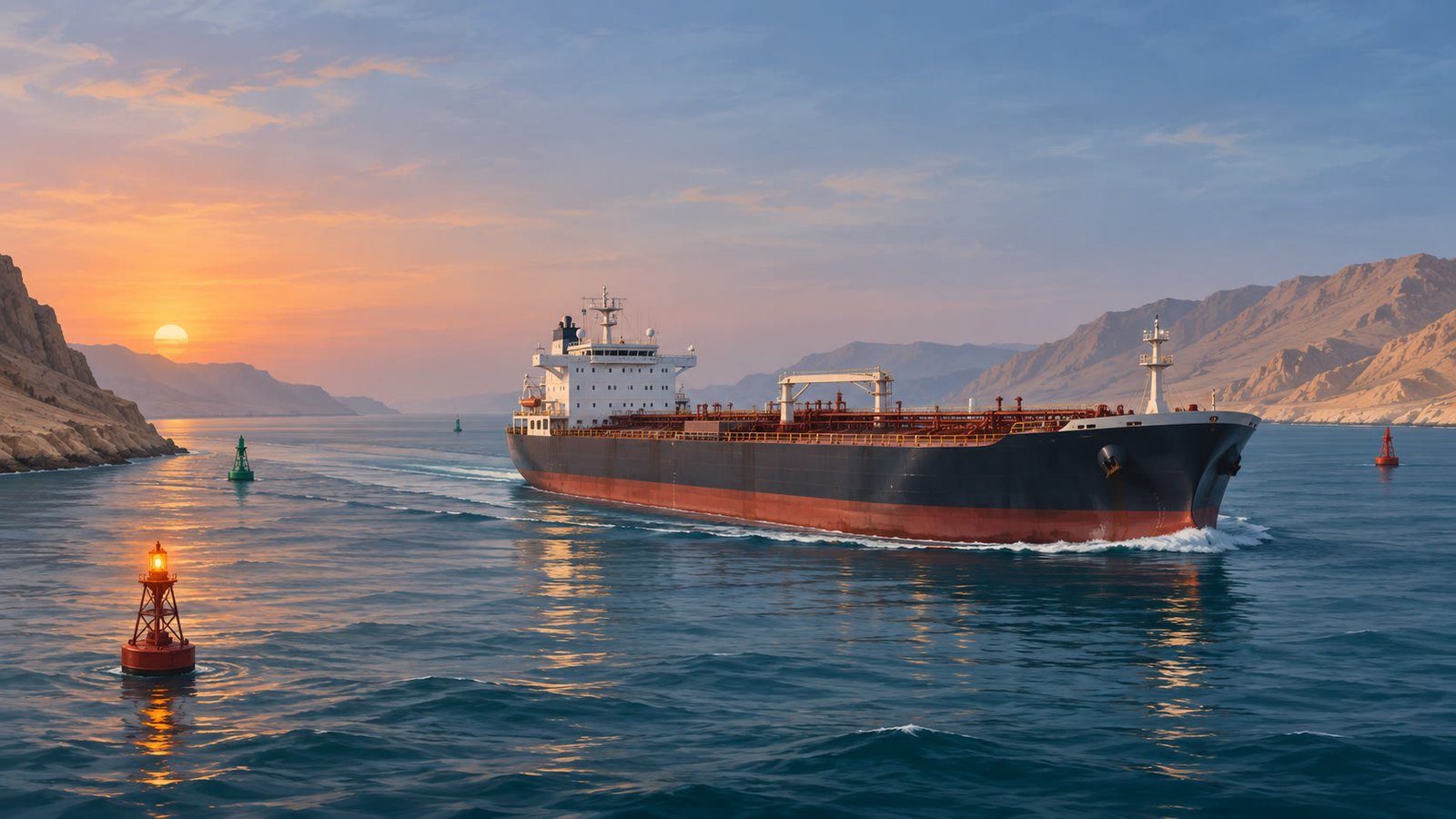
An oil tanker was damaged by two unidentified projectiles north of Qatar on 4 November, and the International Maritime Organization (IMO) now lists one seafarer fatality with no pollution. The incident adds a fresh, confirmed shipping-risk signal around the Strait of Hormuz, a corridor whose security affects global oil, refined-product and liquefied natural gas (LNG) flows.
Key takeaways
- The IMO's confirmed-incident list identifies the vessel as Velos Sapphire and records damage, no pollution and one seafarer fatality.
- The initial UK Maritime Trade Operations (UKMTO) warning placed the incident about 50 nautical miles north of Madinat ash Shamal, Qatar, on 4 November.
- The IMO's list now records 129 confirmed incidents and 25 confirmed seafarer fatalities in the Strait of Hormuz and wider Middle East region as of 6 November 2026.
- The IEA and U.S. Energy Information Administration describe the strait as carrying roughly one-fifth of global oil and LNG trade, so repeated incidents can lift freight, insurance and price volatility well beyond the Gulf.
- No source has established who launched the projectiles, and the incident does not by itself prove an immediate fuel shortage or a one-for-one rise in pump prices.
What happened near Qatar
Reuters reported on 5 November that UKMTO had received a report of a tanker struck by two unidentified projectiles north of Qatar. The first warning did not confirm the vessel's name, the condition of its crew, the extent of damage or any environmental impact. It also did not identify the projectiles or assign responsibility.
The IMO's official confirmed-incident register, updated on 6 November, now identifies the ship as Velos Sapphire (IMO 9321201). It records the location as 50 nautical miles north of Madinat ash Shamal, says the vessel was damaged, reports no pollution and lists one seafarer fatality. That official entry is the clearest available account of the incident's confirmed human and environmental toll.
The wording matters. The incident is confirmed as damage to a commercial ship, but the attacker and weapon have not been established in the sources reviewed. The article therefore does not present it as a confirmed Iranian attack or describe the projectile as a missile or mine.
A separate set of claims adds to the uncertainty
Iranian state television said on 5 November that two oil tankers and a towboat caught fire after striking mines in the Strait of Hormuz. Reuters reported the related statement from Iran's Revolutionary Guards, while the Associated Press said the claim could not be independently verified and that Iran did not provide vessel flags or casualty details.
Those claims should be kept separate from the Velos Sapphire entry. They show how quickly the security picture is changing, but they are not a substitute for the IMO's independently validated incident record. The latest development is materially new even though it extends a corridor risk covered in FuelPrice's earlier report on ships hit and sunk around Hormuz.
Why a tanker incident can move global fuel markets
The Strait of Hormuz is a chokepoint, not an ordinary shipping lane. The IEA's current factsheet says about 20 million barrels of oil per day moved through the strait in 2025, equivalent to around a quarter of world seaborne oil trade. The U.S. Energy Information Administration's first-half 2025 estimate is 20.9 million barrels per day, or about one-fifth of global petroleum-liquids consumption and one-quarter of maritime oil trade.
Both agencies also identify the waterway as a major LNG route. Their estimates differ slightly because they use different measures and periods, but the practical conclusion is the same: roughly one-fifth of global LNG trade normally passes through the strait, much of it from Qatar and the United Arab Emirates to Asian buyers. A prolonged disruption would therefore compete for available cargoes in Asia and Europe, not just affect local Gulf deliveries.
A single damaged tanker does not automatically remove a large volume of crude or fuel from the market. The first effect is usually risk pricing: shipowners may seek higher war-risk cover, operators may delay or reroute voyages, and traders may price a greater chance of future disruption into crude, refined-product and LNG contracts. If incidents remain isolated, that risk premium can fade. If they become more frequent or shipping traffic falls sharply, the impact can spread into refinery feedstock costs, freight bills and retail fuel prices.
What this means for drivers and fleets
For motorists, the useful distinction is between a security headline and a confirmed supply shock. Global crude prices can react immediately to a perceived risk, but the price at a local pump also depends on regional inventories, refinery margins, taxes, currency movements and the timing of price revisions. A tanker incident is therefore a reason to monitor the market, not proof that every driver will see an immediate increase.
Readers checking a local benchmark can use FuelPrice's live fuel-price hub rather than relying on a global headline alone. For a planned journey, the fuel-cost calculator helps separate a route's expected consumption from the price assumption being used. Fleet operators and long-distance travellers can also compare scenarios in the road-trip planner, especially when a trip crosses jurisdictions with different fuel taxes and currencies.
The same logic applies to freight. Diesel users may face higher delivered costs if insurance, rerouting or port congestion lasts, even if the crude benchmark moves less dramatically. That second-order effect can reach food, parcel and manufacturing supply chains before a household sees a clear change in its own fuel bill.
What to watch next
- Whether the IMO or a flag-state authority publishes further details on Velos Sapphire, including the investigation into the fatality and damage.
- Whether UKMTO records more attacks or suspicious incidents in the Gulf and Strait of Hormuz, and whether commercial traffic changes materially.
- Whether crude, diesel and LNG benchmarks hold a risk premium after the latest reports, or give it back if diplomatic efforts reduce the threat to shipping.
- Whether governments or energy agencies announce additional measures to cushion supply, freight or storage risks. Such steps would need their own confirmation before being treated as a change in fuel availability.
For now, the strongest verified conclusion is narrow but important: a commercial tanker was damaged, a seafarer died, and the world's main maritime energy chokepoint remains exposed. The absence of reported pollution and the lack of a confirmed attacker limit what can be concluded about the immediate supply impact, but repeated incidents keep the risk to global fuel costs alive.
Sources
- International Maritime Organization, “Middle East - Highlighted (Confirmed) incidents” — 6 Nov 2026
- Reuters, “Tankers hit in Hormuz as Iran keeps up pressure after US vote” — 5 Nov 2026
- Gulf News, “Hormuz attacks rise as Iran steps up pressure on shipping, UKMTO warns” — 6 Nov 2026
- Associated Press, “Iran’s top diplomat speaks with Gulf leaders about tensions, and other Mideast news” — 5 Nov 2026
- International Energy Agency, “Strait of Hormuz” — updated Feb 2026
- U.S. Energy Information Administration, “World Oil Transit Chokepoints” — 2026
This article is for general information only and is not financial, insurance or legal advice.