Barrierless FASTag tolling, also called Multi-Lane Free Flow (MLFF), lets a vehicle pass a selected toll point without stopping at a booth. The system combines a FASTag reader with Automatic Number Plate Recognition (ANPR); when the tag is valid and funded, the applicable user fee is deducted electronically. The important driver takeaway is that ‘barrierless’ does not mean ‘toll-free’: a failed tag or unpaid e-notice can become a double charge under the National Highways Fee rules.
This guide explains the mechanism, the dated 72-hour payment and grievance windows, the phased rollout, and a practical checklist for drivers. It is useful alongside FuelPrice’s latest update on NHAI’s barrierless toll design, but it is written as a lasting how-to guide rather than a same-day news rewrite.
Key takeaways
- MLFF uses RFID-based FASTag and ANPR cameras to identify a vehicle and collect the applicable user fee while it keeps moving.
- The system is being introduced in phases at selected fee plazas; ordinary FASTag lanes and barrierless points can coexist on the national-highway network.
- If a tag is insufficient, invalid or non-functional, an e-notice can require the original fee within 72 hours of issue.
- Under the rules effective 17 March 2026, an unpaid e-notice can become twice the applicable toll; a representation can also be filed within 72 hours.
- Before a trip, check the FASTag-to-vehicle-number link, account balance, registered mobile number and recent deductions.
- Budget the toll and fuel separately: a faster passage may reduce idling, but it does not change the fee set for that road section and vehicle class.
What barrierless FASTag tolling means
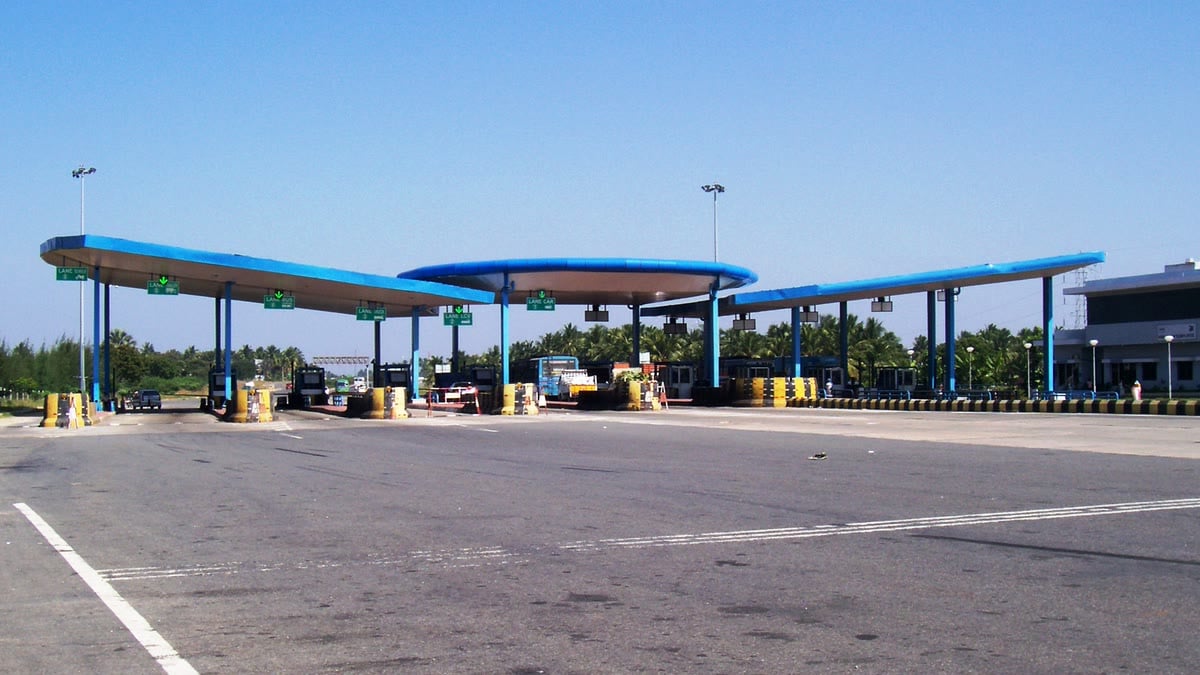
At a conventional toll plaza, the vehicle approaches a lane, the FASTag is read, the fee is deducted and a boom barrier opens. MLFF removes the stopping step at a participating plaza. Gantry-mounted equipment reads the FASTag’s RFID signal and the vehicle registration number through ANPR cameras, then sends the transaction into the existing electronic toll collection ecosystem.
The Ministry of Road Transport and Highways has described this as ANPR-FASTag-based barrier-less tolling, not a nationwide GPS toll already operating on every road. In its April 2025 clarification, the ministry said the system would be installed at selected plazas and that any wider decision would depend on performance, efficiency and user response. That distinction matters: a driver should follow the signs and the payment method displayed for the particular road, not assume every toll point has the same equipment.
- MLFF: the gantry identifies the vehicle while it passes through; there is no toll booth stop for a successful transaction.
- FASTag: the RFID tag remains a central payment identifier. ANPR adds a visual vehicle-number check.
- User fee: the applicable toll still depends on the road section, vehicle category, direction and any valid pass or concession.
- Phased coverage: the operating status of plazas can change, so a route plan should be checked close to the journey date.
How a barrierless toll transaction works
- The gantry reads two identifiers. RFID equipment reads the FASTag, while ANPR records the vehicle registration number. The two signals provide a way to match the electronic tag with the vehicle passing the point.
- The system checks the payment path. A successful transaction depends on the tag being active, mapped to the correct vehicle and connected to an account with sufficient balance or an eligible pass.
- The applicable fee is processed. The toll management system and the NETC banking chain process the deduction. The amount and transaction record should then appear through the FASTag issuer’s normal notification or statement channel.
- The vehicle continues safely. Drivers should not stop to look for a barrier or reverse because the boom is absent. They still have to obey the road layout, speed signs and lane guidance at the gantry.
The July 2026 government release on FASTag-based toll collection says the electronic transaction involves the toll-management software, the acquiring bank at the plaza, NPCI as the central clearing house and the issuing bank. That is why a missing or incorrect vehicle-number link can matter even when the physical tag is stuck to the windscreen.
What happens when FASTag payment fails
A barrierless point cannot rely on a booth operator to ask the driver to recharge or change lanes. If the FASTag has insufficient balance, is invalid or is non-functional, the recorded passage can lead to an electronic notice. The March 2026 NHAI release says the notice can state the vehicle details, date and location of passage and amount payable, and can be delivered through electronic channels or the designated portal.
| Situation at the toll point | What the system does | Payment rule as of 31 Oct 2026 | Driver action |
|---|---|---|---|
| Valid FASTag, correct vehicle link and sufficient balance | RFID and ANPR identify the passage and the applicable fee is processed electronically. | Normal applicable user fee; no booth stop for a successful MLFF transaction. | Check the issuer notification or statement after the trip. |
| Insufficient balance, invalid tag or non-functional tag | An e-notice may be issued for the unpaid user fee recorded at the passage. | Pay the original applicable fee within 72 hours of the e-notice to avoid the additional charge. | Verify the notice’s vehicle, date, location and amount, then pay through the designated channel if it is genuine. |
| Unpaid e-notice with no pending representation | The unpaid amount can move into the digital enforcement process linked with VAHAN. | The payable amount is twice the applicable toll; after 15 days, restrictions on vehicle-related services may be imposed if the conditions in the rule are met. | Do not wait for a reminder. Pay or submit a representation within the available window. |
The 72-hour period is counted from issuance of the e-notice, not from when the driver happens to open a message. Keep the notice and payment receipt. If the passage, vehicle number or charge is wrong, the amended rules provide a 72-hour window to submit a representation through the designated mechanism. The NHAI release says such a representation is to be examined within five days; if it is not disposed of within that period, the unpaid-fee claim lapses.
Worked rupee example: why the deadline matters
Use this as an illustration, not as a current toll rate for any named plaza. If an e-notice shows an applicable toll of ₹250, paying within the 72-hour window means ₹250 × 1 = ₹250. If the notice remains unpaid after that window and the rule’s conditions apply, the amount becomes ₹250 × 2 = ₹500. The extra exposure in this example is ₹250, which is why the first useful step after receiving a notice is to check the date and payment status rather than ignore it.
Is barrierless tolling live everywhere?
No. The rollout is phased and the list of live plazas is time-sensitive. In a 22 July 2026 release, the government said MLFF had been awarded for 17 fee plazas and that five had gone live at that point. The Indian Express reported on 27 August 2026 that the system was operational at six plazas after Shahjahanpur became live on 1 August. These are dated snapshots, not a permanent nationwide count.
For a driver, the practical lesson is simple: treat a barrierless gantry as a payment point even if there is no booth, but do not assume that every plaza on the same route uses MLFF. Read the approach signs, maintain the tag and check the route’s current toll information before departure.
Driver checklist before using a barrierless toll route
- Check the tag status. Confirm that the FASTag is active with the issuing bank and that the tag is not blacklisted, closed or suspended.
- Match the vehicle number. Compare the registration number in the issuer’s record with the vehicle’s number plate. A tag stuck to the glass is not enough if the backend mapping is wrong.
- Keep a practical balance. Recharge before entering a long highway run. Do not rely on a low-balance alert arriving exactly before a gantry.
- Check the registered mobile number. A working number and email help you see a deduction or e-notice promptly.
- Save the last transaction view. A screenshot or downloaded statement gives you a reference if a toll is later shown as unpaid or duplicated.
- Read every e-notice. Confirm the vehicle, passage date, location and amount. A genuine notice should be checked through the official designated portal or your issuer’s verified channel, not an unsolicited payment link.
- Act within 72 hours. Pay the original fee if the passage is correct, or submit the representation within the stated window if the record is wrong.
- Drive normally and safely. Barrierless means no payment stop; it does not remove speed limits, lane discipline or the need to follow instructions at the gantry.
How to include barrierless tolls in a trip budget
Removing a queue can make a journey smoother, but the fee still belongs in the travel budget. Start with the route’s toll estimate in the FuelPrice toll-charge calculator, then add fuel using the fuel cost calculator. If the route has several fee plazas, the road-trip planner can help keep distance, stops and cost in one plan.
For a simple estimate, separate the line items: fuel cost equals distance divided by actual mileage multiplied by the fuel price; toll cost is the sum of the applicable fees or a valid pass treatment; parking and food are separate. Replace the fuel price and toll amounts with values checked for the date of travel. This prevents an assumed ‘free-flow’ passage from being mistaken for a free passage.
- Use the vehicle class shown by the toll tool, not the vehicle’s showroom category.
- Check whether a pass, local concession or return-trip rule applies to that specific fee plaza.
- Keep a buffer for a recharge or a correction if the issuer’s transaction status is delayed.
- Review actual deductions after the trip and compare them with the route estimate.
Common mistakes to avoid
- Confusing MLFF with GPS tolling: current selected-plaza MLFF uses FASTag and ANPR; it is not proof that a nationwide satellite-distance billing system is already in force.
- Assuming the absence of a boom means no payment: the passage is still recorded and the fee remains payable.
- Checking only the sticker: a physically attached tag can still be invalid, low on balance or mapped to the wrong vehicle number.
FAQ: barrierless FASTag tolling
Does barrierless tolling replace FASTag?
No. The current MLFF design uses FASTag’s RFID identification together with ANPR cameras. FASTag remains part of the payment path; the physical toll booth and boom barrier are what the system is designed to reduce or remove at selected points.
Is toll charged by GPS distance on every highway?
No. The government’s clarification describes the current barrier-less system as a selected-plaza ANPR-FASTag model. Do not treat reports about possible future GPS or satellite tolling as a current charge rule for an ordinary trip.
What should I do if I receive an e-notice?
Check the vehicle number, passage date, location and amount through an official channel. If the record is correct, the official rule gives 72 hours from issuance to pay the original fee; if it is wrong, use the designated grievance mechanism within the stated 72-hour window and keep the submission reference.
Can I stop at a barrierless gantry to check my phone?
No. Stopping or reversing at a live gantry creates a road-safety risk. Check the tag and notifications before the journey, and handle any payment or notice after reaching a safe location.
Sources
- National Highways Authority of India — National Highways Fee Rules, 2026 Amended to Strengthen Toll Compliance and Digital Enforcement — 18 Mar 2026
- Press Information Bureau / MoRTH — NHAI Successfully Launches Multi-Lane Free Flow Tolling System at Shahjahanpur Toll Plaza on the Delhi–Jaipur Section of NH-48 — 01 Aug 2026
- Press Information Bureau / MoRTH — FASTAG BASED TOLL COLLECTION AND DIGITAL TOLLING SYSTEM — 22 Jul 2026
- The Indian Express — New barrier-less tolling: 4 months on, how 10% of all vehicles are missing payments — 27 Aug 2026
- The Indian Express — ‘Continue driving’: Delhi gets its first barrier-free toll plaza on UER-II — 12 May 2026
- Press Information Bureau / MoRTH — Clarification on Launch of Satellite-based Tolling System from 1st May 2025 — 18 Apr 2025
- Wikimedia Commons — IVRCL-Vijayamangalam-Toll-Plaza photograph by Rsrikanth05, CC BY-SA 3.0 — captured 24 Dec 2011; accessed 31 Oct 2026
This article is for general information only and is not financial, insurance or legal advice.