For a driver entering or moving through Delhi-NCR, a Pollution Under Control Certificate is now a practical fuel-access and enforcement document, not just paperwork kept in the glovebox. CAQM Direction No. 101 envisages restrictions on dispensing fuel to vehicles without a valid PUCC from 01 Oct 2026, while a Supreme Court order dated 06 Nov 2026 has asked authorities to explain how PUC checks are enforced. This guide shows how to check a PUC record, read the validity date, renew it after a failed test and prepare for a trip without confusing PUC with insurance or the registration certificate.
Key takeaways
- Use the official Parivahan PUCC page with the registration number, last five chassis characters and the displayed security code.
- Read the certificate’s Validity upto, emission norm, fuel type and vehicle details; do not rely only on a receipt or verbal confirmation.
- MoRTH’s quoted national reference says six months generally and 12 months for BS-IV or BS-VI vehicles, so the printed expiry date controls your next check.
- PUC proves an emission test result. It does not prove that third-party or own-damage motor insurance is active.
- Online checking and downloading do not replace the physical emission test at an authorised centre.
- Before an NCR trip, check the record early and allow time to resolve a stale or missing VAHAN update.
Why Delhi-NCR drivers need a PUC workflow now
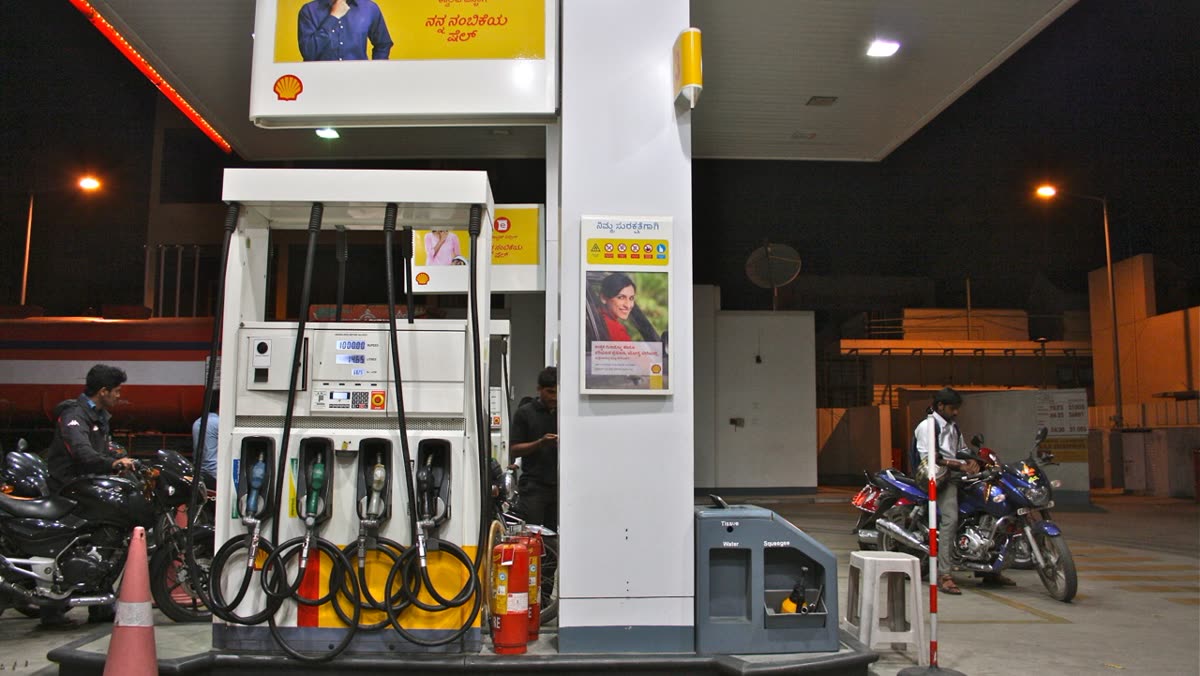
On 15 May 2026, the Commission for Air Quality Management said Draft Direction No. 101 had been approved and envisaged dispensing fuel in the entire NCR only after production of a valid PUCC from 01 Oct 2026. A 30 Sep 2026 PIB update said the NCR governments were reviewing the installation and operationalisation of automatic number plate recognition systems at fuel and CNG stations for this purpose.
The separate Supreme Court air-pollution proceeding listed on the Court’s latest-orders page records an order dated 06 Nov 2026 in which Delhi, the Municipal Corporation of Delhi, Delhi Police and neighbouring NCR states were asked to place vehicle-emission and PUC-enforcement arrangements on record. The order is a request for reports and a roadmap; it is not, by itself, a new universal PUC validity period or a new penalty. FuelPrice’s report on the Supreme Court’s Delhi-NCR PUC action plan gives the dated news context.
- Scope: the no-PUC-no-fuel direction is an NCR measure, not a rule that every petrol pump in India must follow in the same way.
- Implementation: CAQM’s public updates and notices show that systems and compliance have been reviewed in Haryana, Uttar Pradesh and Rajasthan. Do not assume an unverified paper will be accepted because a particular pump has no visible camera.
- Practical step: check the vehicle-linked record before the day of travel rather than waiting at a fuel station.
PUC, RC and insurance answer different questions
A PUC certificate records an in-use emission test. The registration certificate identifies the vehicle and its registration status. Motor insurance covers the risks described in the policy. These documents can be checked together, but one cannot replace another.
- A PUC record should identify the registration number, certificate details, emission norms and validity date.
- The RC remains the reference for registration, fuel type, vehicle class and other vehicle particulars.
- The insurance schedule remains the reference for third-party liability, own-damage cover, IDV, deductibles, add-ons and policy dates. If that document is unclear, use the motor-insurance complaint and escalation guide; do not treat a current PUC as proof of insurance.
How long is a PUC certificate valid?
MoRTH’s 22 Jul 2021 PIB release, while announcing the common PUCC format, quoted Rule 115(7) of the Central Motor Vehicle Rules. It stated that after the first year from registration, a vehicle must carry a valid certificate; the quoted validity was six months, with a 12-month exception for vehicles manufactured to BS-IV or BS-VI norms. MoRTH’s published CMVR chapter carries the same rule wording, and a Delhi Legislative Assembly report presented in March 2026 says BS-IV and BS-VI certificates are typically valid for one year in Delhi.
For a driver, the safest reference is still the Validity upto date on the system-generated certificate. Do not calculate the next date only from the vehicle’s model year or from an old sticker, especially if the vehicle record has been corrected or the test was completed in another state.
| Check point | Dated reference | What the driver should use |
|---|---|---|
| Vehicle within first year of registration | MoRTH/PIB, 22 Jul 2021: PUC requirement described after the first year | Check the vehicle record and local instructions before the first renewal is due |
| BS-IV or BS-VI vehicle | MoRTH/PIB and CMVR chapter: 12 months; Delhi Assembly report, Mar 2026: typically one year in Delhi | Read the certificate’s printed expiry date |
| Other emission norms | MoRTH/PIB and CMVR chapter: six months | Use the issued certificate and confirm with the state transport department if the record differs |
| NCR fuel verification | CAQM, 15 May 2026; PIB, 30 Sep 2026: 01 Oct 2026 start date envisaged | Carry a valid PUCC record before refuelling in the NCR |
How to check PUC status online
- Open the official Parivahan PUCC service and use the page titled PUC Certificate, not a search advertisement or unknown message link.
- Enter the vehicle registration number exactly as shown on the RC.
- Enter the last five characters of the chassis number and the security code shown on the page.
- Review the returned certificate details: registration number, certificate serial number, validity-up-to date, emission norm, fuel and PUC centre details.
- Save the generated certificate or print it for the journey. The standardised Form 59 material describes the record as system generated through the national register and includes a validity field, registration field, emission norms, fuel and PUC code.
A blank result or an old expiry date is a discrepancy to resolve, not automatic proof that a paper certificate is fake. The 2021 MoRTH release says PUC data is linked with VAHAN, while the Delhi Assembly report notes that valid out-of-state certificates can sometimes be absent from the Delhi-linked view. Contact the authorised test centre and the state transport helpdesk with the registration number, certificate number, receipt and test date. Keep the evidence until the record is corrected.
How to renew PUC and what a failed test means
Renewal is an emission-test process. The online portal is useful for checking the result and downloading the record; it is not a substitute for presenting the vehicle at a testing centre authorised by the state transport department.
- Take the actual vehicle to the authorised centre. A certificate issued without testing or through an unofficial intermediary creates a compliance risk.
- Before the test, check the RC details, fuel type, emission category and warning lamps. A mismatch in the national record can delay the result.
- After a pass, confirm that the certificate number and validity date have been generated before leaving, and retain the receipt.
- If the test fails, ask for the system-generated rejection slip. The official Form 59-A identifies a malfunction-indicator lamp condition or emission values above the prescribed limits as possible rejection reasons and advises service or repair before resubmission.
- After repairs, test the same vehicle again and reconcile the new validity date with the Parivahan record. Do not assume a payment receipt alone proves a valid PUCC.
Fees and authorised-centre availability vary by state and can change, so this guide does not quote one national test fee. Dated local references explain the process but should not be treated as a current invoice.
Worked rupee example: cost of delaying a PUC check
Consider an illustrative petrol car with measured mileage of 15 km/l that must make a 15 km detour to an authorised centre. The detour uses 15 ÷ 15 = 1 litre. PPAC’s IOCL-linked Delhi reference and NDTV’s Delhi price page both list petrol at ₹102.12 per litre on 10 Nov 2026. The fuel cost of that detour is therefore 1 × ₹102.12 = ₹102.12. A 30 km return detour under the same assumptions would use 2 litres and cost ₹204.24.
This is an illustration, not a claim that every car delivers 15 km/l or that Delhi’s price applies to every NCR district. Replace the distance with the actual route, mileage with the vehicle’s measured result and price with the local rate. FuelPrice’s fuel-cost calculator can do that calculation, while the guide to how petrol prices are calculated explains why city rates differ.
Before an NCR trip: PUC checklist
- Check the PUC record at least one working day before the journey.
- Match the registration number and vehicle details with the RC.
- Read the exact Validity upto date and check the emission norm and fuel type.
- Keep the current digital record and, where practical, a printed copy accessible to the driver.
- If the portal shows no record, contact the issuing centre and transport helpdesk before the trip; retain the receipt and certificate number.
- If the vehicle fails, service the identified issue and complete a fresh test before treating the vehicle as compliant.
- For a diversion or a search for an authorised centre, compare fuel, toll and time with the road-route comparison guide.
Frequently asked questions
Is a PUC certificate required for a new car or bike?
The MoRTH/PIB explanation of Rule 115(7) describes the requirement after one year from first registration. The first-year position and local process should still be checked against the vehicle record and state transport instructions.
Can I check PUC with only the registration number?
The official Parivahan PUC page asks for the registration number, the last five chassis characters and a security code. Keep the RC available so the chassis characters are entered accurately.
Does a current PUC prove that my insurance is active?
No. PUC is about emissions, while insurance cover depends on the policy schedule and its dates, sections, exclusions and add-ons. Verify insurance separately before driving.
What if the PUC certificate is valid on paper but missing online?
Do not assume either that the paper is invalid or that the online record is correct. Keep the certificate, receipt and test details, then ask the authorised centre or transport department to reconcile the record before relying on it for NCR refuelling.
Sources
- Commission for Air Quality Management — Press Release on the 28th Full Commission Meeting and Draft Direction No. 101 — 15 May 2026
- Press Information Bureau / CAQM — CAQM Reviews Preparedness for Stubble-Burning Prevention, Vehicular and Industrial Emission Control — 30 Sep 2026
- Supreme Court of India — Latest Orders, In Re: Curbing Air Pollution in the National Capital Region, SMW(C) No. 11/2026 — order dated 06 Nov 2026
- India Today — Supreme Court seeks action plan on Delhi-NCR vehicular pollution in two weeks — 10 Nov 2026
- Press Information Bureau / MoRTH — Government standardises the Pollution Under Control Certificate (PUCC) form — 22 Jul 2021
- Ministry of Road Transport and Highways — Central Motor Vehicle Rules, Chapter V — accessed 10 Nov 2026
- Parivahan Sewa — PUC Certificate service — accessed 10 Nov 2026
- Parivahan Sewa — Form 59-A, Pollution Under Control rejection slip — accessed 10 Nov 2026
- Delhi Legislative Assembly, Committee on Public Accounts — Third Report of the Eighth Assembly — presented 23 Mar 2026; adopted 27 Mar 2026
- Petroleum Planning & Analysis Cell — Retail selling price of petrol in Delhi as per IOCL outlet — 10 Nov 2026
- NDTV — Petrol Price in New Delhi Today — 10 Nov 2026
- Wikimedia Commons — Petrol Station.jpg, Shell petrol station in Bangalore, India, by Pp391, CC BY-SA 3.0 — photograph dated 12 Mar 2011
This article is for general information only and is not financial, insurance or legal advice.