A CNG car in India is properly insured only when the registration certificate, policy schedule and CNG kit records describe the same vehicle. This guide explains what factory-fitted and retrofitted CNG owners need to check, how the RC and policy endorsement fit together, and how to read the extra-premium math without treating an example as a quote.
Key takeaways
- Third-party motor insurance remains mandatory, but it does not by itself insure damage to the CNG kit.
- A retrofitted kit needs approved installation, an RC alteration entry and an insurer endorsement; a factory-fitted car still needs the policy schedule checked.
- Rules and tariff references checked in November 2026 mention a 14-day RC-endorsement window, a ₹60 CNG/LPG third-party reference charge and 4% kit-value own-damage math in specified cases.
- IDV, the declared kit value, deductibles and add-ons can change the claim outcome and the renewal quote.
- Keep the RC, policy schedule, kit invoice, installation certificate, type-approval papers and PUC together before raising a claim.
Why a CNG car needs an extra insurance check
When a car is registered as petrol and a CNG system is added later, the fuel system becomes a material change in the vehicle description. The insurer needs to know what is fitted, where it was installed and what value is being insured. The same information must also be reflected in the RC through the transport-authority process.
The distinction matters because third-party cover and own-damage cover do different jobs:
- Third-party cover: pays for the policyholder's legal liability to other people or property, subject to the policy and law. The IRDAI policyholder handbook says at least third-party motor insurance is mandatory.
- Own-damage cover: covers damage to the insured car against the events listed in the policy. A CNG cylinder, valve, regulator and associated kit are not automatically a separately insured aftermarket accessory just because the car can run on CNG.
- Endorsement: is the policy document that records a change such as the addition of a CNG or LPG kit. It should sit alongside the schedule and show the declared kit value or the applicable cover terms.
For a baseline, compare the CNG rate in your city through the recent Mumbai CNG price update, but do not assume a lower fuel bill makes an undeclared kit acceptable to an insurer.
Factory-fitted and retrofitted CNG cars: what changes
Factory-fitted CNG
A factory-fitted CNG car is sold and registered as a CNG or bi-fuel vehicle. The main renewal task is record matching: the RC, invoice, policy schedule and IDV should not describe different fuel types or omit the CNG equipment.
- Check that the policy schedule names CNG, bi-fuel or the relevant kit details.
- Check whether the declared IDV includes the equipment as the policy wording requires.
- Check the compulsory deductible, voluntary deductible and any add-on exclusions separately.
- Keep the vehicle invoice and the first policy schedule even if the CNG system came from the manufacturer.
Factory fitment reduces the retrofit paperwork, but it does not remove the need to read the policy schedule. If the schedule is unclear, request a written clarification or endorsement before renewal rather than relying on a sales conversation.
Aftermarket or retrofit CNG
For a petrol-to-CNG conversion, use a kit and installer that meet the applicable approval and installation requirements. ARAI explains that CNG retrofitment is permitted subject to type approval and the notified safety, emission and installation requirements under the Central Motor Vehicle Rules.
The process has two separate records:
- RTO record: obtain the required permission or submit the alteration application through the applicable Parivahan/RTO process. Form 22C is used for prior permission, while Form 22D records the alteration or retrofitment in the RC.
- Insurance record: send the updated RC, policy copy and kit documents to the insurer and ask for a CNG or bi-fuel endorsement. The insurer may ask for an additional premium before issuing the endorsement.
MoRTH and ARAI material reviewed in November 2026 refers to applying to the registering authority within 14 days of the alteration or the relevant compliance certificate. The exact online workflow, fee and document upload sequence can differ by state, so the live RTO/Parivahan instructions for the vehicle's registration jurisdiction control.
The numbers behind CNG insurance premium
The following are reference figures, not a promise that every insurer will quote the same amount. They were checked against the available tariff wording, government material and insurer documents in November 2026. Actual offers vary by vehicle, location, age, IDV, claim history, deductible, cover type and product wording.
| Situation or reference | Number checked in November 2026 | How to read it |
|---|---|---|
| RC endorsement after retrofitment | Within 14 days | MoRTH/ARAI and CMVR material refer to an application within this window; confirm the live RTO process. |
| CNG/LPG third-party reference | ₹60 per vehicle | The IRDAI-hosted liability schedule and insurer tariff wording show an additional CNG/LPG liability reference; check the current quote. |
| Separately valued kit for own damage | 4% of declared kit value | GR-42/IMT-25 wording uses this reference where the kit is separately declared; it is not a substitute for the insurer's written quote. |
| Kit value not separately available | 5% of own-damage premium | The same tariff reference describes an alternative calculation; ask which method appears on the proposal or endorsement. |
| GST on motor-insurance service | 18% total | CBIC's service-rate table lists the applicable standard GST structure; confirm the tax line on the invoice. |
Worked example: assume a retrofitted kit has a declared value of ₹50,000 and the written proposal uses the 4% reference. The kit-cover component would be ₹50,000 × 4% = ₹2,000. Add the ₹60 third-party reference and the subtotal is ₹2,060. If 18% GST applies to that subtotal, the tax is ₹370.80 and the illustrative total is ₹2,430.80. This is only tariff-reference arithmetic: the actual insurer may use different product terms, loading, discounts, IDV treatment or taxes, and the complete premium also includes the car's cover components.
IDV, kit value and claim exposure
IDV is the amount used for a total-loss or constructive-total-loss settlement under the policy, subject to its terms. The policy documents reviewed for this guide describe IDV as being fixed for the policy period and adjusted for depreciation; the CNG kit should not disappear from the vehicle description when it is part of the insured asset.
- Ask what is inside IDV: determine whether the declared kit value is included, separately listed or excluded from own-damage cover.
- Do not inflate the kit value: use the invoice and the insurer's accepted valuation, because a higher declared figure can change premium while a claim remains subject to policy terms and depreciation.
- Check the deductible: even when the kit is insured, the compulsory or voluntary deductible and any applicable depreciation can reduce the payable amount.
- Separate liability from kit damage: a third-party-only policy can meet liability requirements but generally does not pay to repair the insured owner's own CNG equipment.
- Read exclusions: unauthorised alteration, invalid documents, non-compliant installation, wear and tear, mechanical breakdown and consequential loss may be treated differently from accidental damage.
For a renewal comparison, start with the policy's IDV and cover line, then use the fuel cost calculator to separate the insurance decision from the vehicle's running-cost calculation. A cheaper fuel figure is not evidence that a particular policy has wider cover.
Claim-ready documents for a CNG car
Documents vary by insurer and by loss type, but a complete file removes avoidable uncertainty. Keep scans and originals according to the insurer's instructions.
- Updated RC showing the approved fuel alteration, where the kit is retrofitted.
- Current policy schedule and the CNG/bi-fuel endorsement certificate.
- Kit invoice, installation certificate, serial-number details and type-approval or compliance papers.
- Valid PUC certificate and, where applicable, the inspection or fitness record requested by the authority or insurer.
- Driving licence, claim form, repair estimate, photographs and vehicle keys where relevant.
- FIR or police report for theft, serious accident or any event where the insurer or law requires it.
- Financier communication or NOC if the vehicle is under hypothecation and the claim or endorsement process asks for it.
Report a loss through the insurer's stated channel promptly, avoid dismantling or repairing the vehicle before inspection unless emergency safety requires it, and keep the acknowledgement number. Those are process checks, not a promise that a claim will be accepted.
What to check before renewal or a claim
- Match the fuel type, registration number, engine/chassis details and owner details across the RC and policy.
- For a retrofit, confirm that the RTO entry is complete and keep the approval, installation and compliance papers in one folder.
- Check whether the policy schedule specifically records the CNG kit, its declared value and the own-damage section that applies.
- Read the IDV, deductibles, depreciation terms, exclusions and add-ons instead of comparing only the final premium.
- Ask for a written premium breakup showing the CNG-related component, third-party charge, GST and any inspection or endorsement fee.
- Before a long drive, use the live fuel-price page and the road-trip planner to budget fuel and stops, then carry the digital or physical vehicle documents accepted in your jurisdiction.
If a claim or endorsement is disputed, preserve the written response and escalate through the insurer's grievance process and the applicable IRDAI complaint channel. Do not rely on an informal statement that the RC or CNG endorsement can be corrected after a loss.
FAQ: CNG car insurance in India
Is third-party insurance enough for a CNG car?
It can satisfy the legal third-party requirement, but it normally does not insure accidental damage to the policyholder's own car or CNG kit. A separate own-damage or comprehensive section and a recorded kit endorsement are the items to check for the vehicle itself.
Do factory-fitted CNG cars need a separate endorsement?
The registration and purchase records usually identify a factory-fitted CNG vehicle, but the policy schedule still needs checking. Ask the insurer to confirm that the fuel type, equipment value and applicable cover are recorded rather than assuming factory fitment guarantees every claim.
Can an aftermarket CNG kit be insured if the RC is still petrol?
Insurer requirements commonly require the kit to be endorsed on the RC before the policy change. Complete the approved alteration process and obtain the policy endorsement; do not present an undeclared retrofit as an original vehicle specification.
Does adding CNG always increase the premium?
It can add a CNG-related liability amount and an own-damage component based on the declared kit value or the insurer's product terms. The final premium depends on the entire policy, so the written quote and schedule are more reliable than a general percentage.
What is the most important document at claim time?
There is no single document for every loss. For a retrofit, the updated RC and policy endorsement are the core record match, supported by the installation invoice, certificate, policy schedule, PUC and the event-specific claim documents.
Sources
- ARAI — Vehicle Retrofitment (CNG & LPG) Certification — accessed 16 Nov 2026.
- MoRTH — AIS-024 Amendment: CNG conversion-kit installer and owner requirements — checked 16 Nov 2026.
- Parivahan — Form 22C: Request and Permission for Alteration/Retrofitment/Adaptation — accessed 16 Nov 2026.
- Parivahan — Form 22D: Endorsement of Alteration/Retrofitment — accessed 16 Nov 2026.
- IRDAI — Motor Vehicle Insurance Policyholder Awareness Booklet — checked 16 Nov 2026.
- IRDAI — Liability Only Policy schedule with CNG/LPG kit reference — checked 16 Nov 2026.
- ICICI Lombard — Frequently Asked Questions for Insurance Related Products — accessed 16 Nov 2026.
- HDFC ERGO — Private Car Insurance Policy Wording and endorsement documents — checked 16 Nov 2026.
- Zurich Kotak — How to Add CNG to Your Car Insurance Policy — updated 5 Nov 2026.
- CBIC — GST Goods and Services Rates — accessed 16 Nov 2026.
- NDTV — Eighth Price Hike in 11 Months: Mumbai CNG Price Rises by ₹1.50 — 15 Nov 2026.
- Autocar India — Mumbai CNG Price Hiked by ₹1.50 per kg to ₹91.50 — 16 Nov 2026.
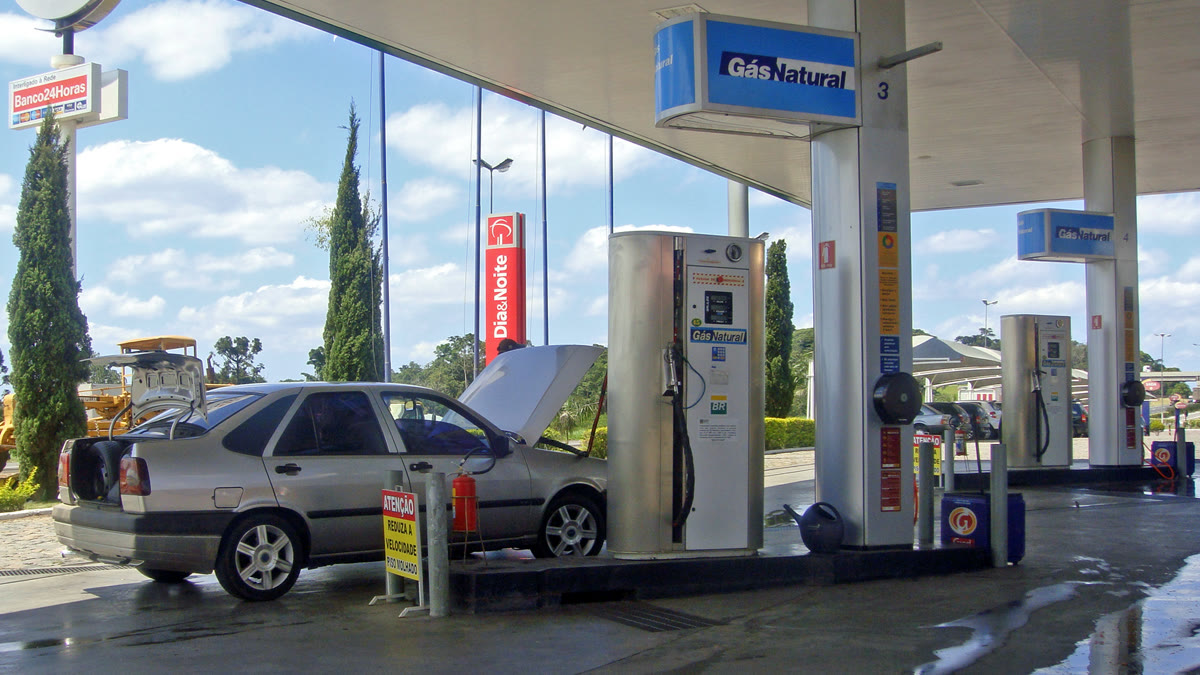
- Wikimedia Commons — Brazilian natural-gas station photo (CC BY 3.0; Mariordo; adapted crop) — accessed 16 Nov 2026.
This article is for general information only and is not financial, insurance or legal advice.