CNG can still have a lower fuel cost per kilometre than petrol for a high-mileage taxi, auto or car, but the result depends on the local rate, real-world mileage and how many kilometres the vehicle actually covers. After fresh CNG price increases in Mumbai and Pune, the useful calculation is not simply the price per kg: it is the monthly bill after city, traffic, load and refuelling conditions are included.
This guide shows the formula, uses dated November 2026 price snapshots, works through a 4,000-km example and gives a checklist for recalculating the number whenever a gas distributor changes its rate. The examples are illustrations, not a promise of savings for every vehicle or route.
Key takeaways
- Use cost per km, not the price on the pump alone: fuel price per unit divided by actual efficiency.
- As of the dated snapshots used here, Mumbai CNG was ₹91.50/kg from 15 Nov 2026 and Mumbai petrol was ₹111.21/litre in PPAC’s 10 Nov 2026 table.
- Rates can differ within the same broad city or district because different city-gas distributors serve different territories.
- For a worked Ertiga example using the manufacturer’s claimed efficiencies, the dated Mumbai price gap is about ₹1.92 per km before maintenance, insurance, tolls or vehicle-price differences.
- High-mileage operators should update the calculation with tank-to-tank mileage, monthly kilometres and the exact distributor rate at the stations they use.
What the latest CNG price changes mean
The immediate trigger is a series of CNG price revisions reported in Maharashtra. Indian Express reported that Mahanagar Gas Limited raised CNG in Mumbai and adjoining areas by ₹1.50/kg to ₹91.50/kg from 15 Nov 2026. The same report said the revision followed earlier changes and was linked by MGL to higher gas procurement costs and a greater share of imported gas.
Pune needs a more careful reading. MNGL’s official rate card lists ₹99/kg for the Pune GA, inclusive of taxes, with the revision effective from midnight on 12 Nov 2026. Separately, Indian Express reported that Torrent Gas would charge ₹101.50/kg in mostly rural areas of Pune from midnight on 17 Nov, after a ₹1/kg increase. These figures are not necessarily conflicting: they refer to different distributors and service territories.
For a driver, this distinction matters because a route can cross a distributor boundary. A city-wide search result or a rate quoted by another driver may not be the price at the next station. Treat every price as “as of” a date and location, then update the calculation before making a monthly budget.
The formula: turn a CNG or petrol price into cost per km
The basic calculation is:
Cost per km = fuel price per unit ÷ vehicle efficiency
- For CNG, use the retail price in ₹ per kg and efficiency in km/kg.
- For petrol, use the retail price in ₹ per litre and efficiency in km/litre.
- For a monthly bill, multiply cost per km by the kilometres actually driven in that month.
- For a trip, multiply cost per km by the planned distance and add tolls or other route costs separately.
Start with three or more tank-to-tank refuelling records if possible. Record the odometer, kilograms or litres filled, amount paid and whether the vehicle was carrying passengers, using the air-conditioner or stuck in heavy traffic. The manufacturer’s claimed efficiency is useful for a clean comparison, but it is not a promise of city mileage.
The FuelPrice fuel cost calculator can do the arithmetic once the price, distance and mileage are entered. For the rate input, use the relevant CNG price city hub and petrol price city hub, then confirm the distributor’s own current rate card where the route crosses multiple service areas.
Dated price snapshots: why geography matters
The table is a reference snapshot, not a single national price list. It uses the latest dated sources available for this guide and deliberately keeps the distributor and service area visible.
| Area or fuel | Rate | Effective or posted date | What the source means |
|---|---|---|---|
| Mumbai and adjoining MMR CNG | ₹91.50/kg | 15 Nov 2026 | MGL revision reported by Indian Express and Autocar India |
| Mumbai petrol | ₹111.21/litre | PPAC table posted 10 Nov 2026 | Official metro retail selling price snapshot |
| Pune GA CNG | ₹99/kg | 12 Nov 2026 | MNGL official rate card, taxes included |
| Mostly rural Pune, Torrent territory | ₹101.50/kg | 17 Nov 2026 | Indian Express report on a separate distributor and area |
The safe habit is to save the date with the rate. A rate without a unit, date and distributor is not enough for a commercial fuel budget.
Worked example: monthly CNG vs petrol cost
To keep the comparison concrete, use the Maruti Suzuki Ertiga because the manufacturer publishes petrol and CNG efficiency figures for the same model: 20.51 km/l for the petrol manual and 26.11 km/kg for the CNG manual. The figures below use Mumbai’s dated prices above and assume 4,000 km in one month. The distance is an illustration for the calculation, not a typical or guaranteed workload.
| Fuel option | Dated price | Claimed efficiency | Calculated cost per km | Fuel cost at 4,000 km |
|---|---|---|---|---|
| Petrol | ₹111.21/litre, PPAC snapshot | 20.51 km/l | ₹5.42 | ₹21,689 |
| CNG | ₹91.50/kg, effective 15 Nov 2026 | 26.11 km/kg | ₹3.50 | ₹14,018 |
| Difference | Same dated price inputs | Same 4,000-km assumption | ₹1.92 per km | ₹7,671 |
The arithmetic is straightforward: ₹111.21 divided by 20.51 gives about ₹5.42 per petrol kilometre; ₹91.50 divided by 26.11 gives about ₹3.50 per CNG kilometre. At 4,000 km, the difference is about ₹7,671 before insurance, maintenance, tolls, financing, downtime and the purchase-price difference between variants.
Real-world efficiency can change the result. Autocar India’s October 2026 mileage reference reported a mixed-driving CNG test figure of 22.32 km/kg and owner-reported petrol manual efficiency of 18.77 km/l for the Ertiga. Using those reference figures with the same dated prices produces roughly ₹4.10/km for CNG and ₹5.92/km for petrol, a gap of about ₹1.82/km. That is why a driver’s own tank-to-tank record is more useful than a brochure-only comparison.
How much does a CNG price hike add to the monthly bill?
A price increase can be converted directly into extra monthly cost:
Extra monthly fuel cost = monthly kilometres ÷ real-world km/kg × price increase per kg
Using the worked 4,000-km month and the manufacturer’s 26.11 km/kg figure, a ₹1.50/kg increase adds about ₹230 to the monthly CNG bill. Using the 22.32 km/kg independent test reference, the same change adds about ₹269. The difference comes from efficiency, not from a different formula.
This is also a useful way to read the Pune numbers. A ₹1/kg change does not add the same rupee amount to every operator: a vehicle covering more kilometres or returning lower km/kg will feel a larger monthly increase. A fare change, if any, is a separate regulatory or market decision and should not be assumed from the fuel calculation alone.
Break-even when the CNG version costs more
Lower running cost does not automatically mean lower total ownership cost. If a CNG variant or an approved conversion costs more upfront, calculate the distance needed to recover that difference:
Break-even distance = extra upfront cost ÷ fuel saving per km
For an illustration only, if the CNG option costs ₹1,00,000 more and the calculated saving is ₹1.92/km, the break-even distance is about 52,139 km. At 4,000 km per month, that is about 13 months of driving. Replace ₹1,00,000 with the actual on-road difference, and replace ₹1.92 with the driver’s measured saving; do not treat the example as a purchase recommendation.
For route planning, use the FuelPrice road-trip planner to estimate distance and tolls separately. A CNG vehicle that needs a long detour for a station can have a different trip cost from the simple pump-price calculation.
What can erase the apparent CNG advantage?
- Traffic and air-conditioning: Stop-start traffic, heavy loads and long idling can reduce the vehicle’s actual km/kg or km/l.
- Different distributors: Two stations in the same broad region may serve different price areas. Use the rate for the station or territory actually used.
- Refuelling time: Queues and station detours are operating costs for a taxi or auto even when they do not appear on the fuel receipt.
- Petrol backup: Some CNG vehicles also use petrol during starting or when CNG is unavailable. Include that fuel in a full monthly record where it is material.
- Maintenance and downtime: Compare scheduled servicing, consumables, tyres and lost earning time rather than assuming fuel is the entire cost.
- Upfront price: A higher purchase or conversion cost must be recovered through actual kilometres, not estimated kilometres.
Monthly CNG and petrol budget checklist
- Write down the exact CNG distributor, station area and rate-card date.
- Record the comparable petrol rate for the same city and a nearby date; do not mix an old petrol rate with a new CNG rate without labelling it.
- Measure mileage tank-to-tank over several refills, separating petrol and CNG entries.
- Enter the actual monthly kilometres, not a best-case estimate, into the cost-per-km calculation.
- Add the fuel cost to tolls, insurance, servicing, parking, financing and the value of refuelling time.
- Recalculate after every price revision or when the route, passenger load or traffic pattern changes.
- Keep the calculation dated so the next month’s bill can be compared with the assumption that produced it.
CNG vs petrol fuel-cost FAQs
How do I calculate CNG cost per km?
Divide the CNG price in ₹/kg by the vehicle’s actual km/kg. For example, a dated rate of ₹91.50/kg divided by a measured 22.32 km/kg gives about ₹4.10 per km. Multiply that result by the month’s kilometres for a fuel-only budget.
Is CNG always cheaper than petrol?
No. The result depends on the local price, the vehicle’s real efficiency, the extra purchase or conversion cost, station access and the amount of petrol used as backup. A brochure comparison is a starting point; tank-to-tank data is the stronger input.
Why can Pune CNG prices differ?
Different distributors and service territories can publish different rates. For this guide, MNGL’s official Pune GA card showed ₹99/kg from 12 Nov 2026, while Indian Express reported ₹101.50/kg for mostly rural Pune supplied by Torrent Gas from 17 Nov 2026.
How much does a ₹1/kg CNG increase add?
Divide the monthly kilometres by the vehicle’s real km/kg and multiply by ₹1. The result is higher for a vehicle that travels more or returns lower efficiency; it is not a fixed amount for every driver.
Should I use claimed or real-world mileage?
Use claimed mileage to compare like-for-like vehicle specifications, but use measured tank-to-tank mileage for a monthly operating budget. Keep both figures labelled so a test or manufacturer number is not mistaken for a guarantee.
Sources
- The Indian Express, Mumbai CNG price hiked by ₹1.50 to ₹91.50 per kg from November 15 — 14 Nov 2026
- The Indian Express, Torrent Gas hikes CNG price in Pune by Re 1 per kg, new rate Rs 101.50 — 16 Nov 2026
- Maharashtra Natural Gas Limited, CNG Rate Card — revision effective 12 Nov 2026, accessed 17 Nov 2026
- Petroleum Planning and Analysis Cell, Daily Retail Selling Price of Petrol and Diesel — table posted 10 Nov 2026
- Mahanagar Gas Limited, CNG Rate Card for Mumbai and Greater Mumbai — accessed 17 Nov 2026
- Maruti Suzuki India, Ertiga specifications and published fuel-efficiency figures — accessed 17 Nov 2026
- Autocar India, Maruti Suzuki Ertiga mileage: claimed and real-world reference — updated 13 Oct 2026
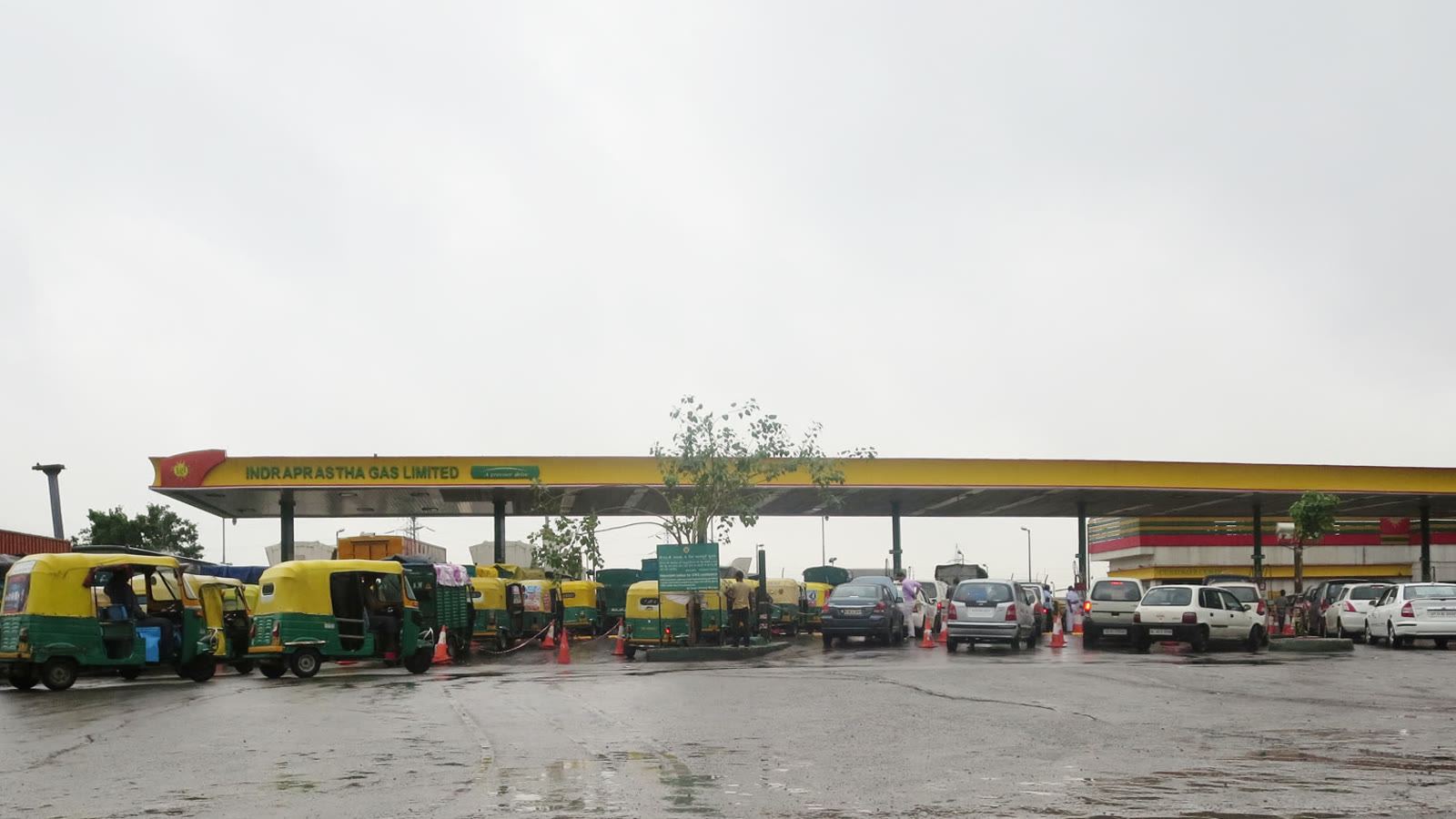
- Hero image: Indraprastha Gas filling, Nikhil B, Wikimedia Commons, CC BY-SA 4.0 — accessed 17 Nov 2026