EV subsidy in India is not one flat cashback for every electric vehicle. Eligibility can depend on the vehicle category, battery and model, registration date, buyer identity, state policy and the way the benefit appears in the invoice or e-voucher. This guide explains how to check the official rule, calculate an illustrative amount and track the benefit as of October 2026.
The practical method is to separate the central demand incentive, any state-level purchase or scrappage benefit and the charges that remain in the final on-road price. A dealer quote that simply says “subsidy applicable” is not enough to verify the amount.
Key takeaways
- PM E-DRIVE supports selected categories such as electric two-wheelers, three-wheelers, e-trucks, e-ambulances and e-buses; it is not a universal purchase subsidy for electric cars.
- The current PM E-DRIVE portal carries a 10 August 2026 notice extending the e-2W terminal date to 31 March 2028, while a July PIB table still showed 31 July 2026. Check the live notification before purchase.
- The July 2026 PIB table listed ₹2,500 per kWh for eligible e-2Ws, capped at ₹5,000 per vehicle and further limited to 15% of ex-factory price.
- Delhi’s 2026 policy uses a separate, year-wise e-2W incentive of ₹10,000 per kWh up to ₹30,000 in its first year, subject to Delhi registration and other conditions.
- State subsidies, scrappage incentives, road-tax relief and registration-fee exemptions are different benefits. Do not add them automatically or subtract them twice.
- Keep the invoice, registration details, Aadhaar-linked mobile, e-voucher or application number and scrapping Certificate of Deposit, where relevant.
What an EV subsidy can mean
“Subsidy” may describe different mechanisms, so identify the process before comparing amounts.
- Central demand incentive: PM E-DRIVE applies an eligible benefit as an upfront reduction in the EV purchase price and then reimburses the original equipment manufacturer. It is not normally a later cash claim that every buyer calculates independently.
- State purchase incentive: a state can set its own vehicle, battery, price, residency and registration conditions. Delhi’s 2026 policy describes direct benefit transfer and an application mechanism notified by its Transport Department.
- Scrappage incentive: a separate payment may depend on scrapping an old eligible vehicle and buying a new EV within a specified period. The old RC and Certificate of Deposit matter.
- Tax and registration relief: an exemption reduces a registration charge; it is not the same as a purchase subsidy and may have a price or policy-period limit.
A lower showroom price can still exclude insurance, accessories, finance charges, warranty packages or other on-road items. Ask for every line separately.
PM E-DRIVE: the national check
The Ministry of Heavy Industries lists e-2Ws, e-3Ws, e-ambulances, e-trucks, e-buses and charging infrastructure within PM E-DRIVE. The portal says privately or corporately owned registered e-2Ws can be eligible in addition to commercial e-2Ws, but the vehicle must meet the technical and manufacturing conditions, including the advanced-battery requirement.
As of October 2026, the official portal displays a notice that the e-2W terminal date was extended to 31 March 2028 by an amendment dated 10 August 2026. A PIB answer posted on 28 July 2026 still reproduced an earlier table with 31 July 2026. Autocar India reported the later extension. This is a material source conflict, so check the live portal and 10 August notification at the transaction date rather than relying on an older dealer leaflet.
The same PIB table lists ₹2,500 per kWh for the later period, capped at ₹5,000 per vehicle and further capped at 15% of ex-factory price. Treat that as a reference calculation, not an automatic flat ₹5,000 credit: the model, battery, registration date and scheme conditions control the final number.
National and state benefits compared
The table uses figures published by the Ministry, the Delhi Transport Department and dated 2026 reporting. It compares rule structures; it does not promise that benefits can be stacked.
| Benefit | Published amount or limit | Who or where it applies | Check point |
|---|---|---|---|
| PM E-DRIVE e-2W | ₹2,500/kWh, capped at ₹5,000 per vehicle; further capped at 15% of ex-factory price | Eligible advanced-battery e-2Ws, including private or corporate registered vehicles, subject to scheme rules | PIB table dated 28 Jul 2026; current portal notice dated 10 Aug 2026 changes the terminal-date check |
| Delhi e-2W purchase incentive | Year 1: ₹10,000/kWh up to ₹30,000; Year 2: ₹6,600/kWh up to ₹20,000; Year 3: ₹3,300/kWh up to ₹10,000 | Eligible e-2Ws registered in Delhi; policy sets an ex-factory-price ceiling of ₹2.25 lakh | Policy dated 19 Jan 2026; implementation and benefit releases reported on 25 Sep 2026 |
| Delhi e-2W scrappage | ₹10,000 | New EV purchase linked to scrapping a Delhi-registered BS-IV or older two-wheeler | Purchase must be within six months of the authorised Certificate of Deposit |
| Delhi electric-car scrappage | ₹1,00,000; new car ex-factory price must not exceed ₹30 lakh | Eligible Delhi-registered BS-IV or older car replaced by a new electric car | Separate benefit with policy limits and conditions |
| Delhi electric-car tax relief | 100% road-tax and registration-fee exemption for eligible electric cars priced up to ₹30 lakh | Electric cars registered in Delhi during the policy period | Policy says the car relief runs till 31 Mar 2030; confirm the live registration calculation |
The national figures come from the 28 July PIB release; the portal and an August 2026 Autocar India report provide the later terminal-date update. The Delhi figures come from the policy PDF and were also reported by The Times of India on 25 September 2026. Save the official page or PDF version used for your quote.
Worked rupee example: a 2 kWh electric scooter
Assume an eligible electric scooter has a 2 kWh battery and an ex-factory price of ₹1,20,000. This is an illustrative calculation using the published October 2026 reference figures, not a model-specific quote.
- PM E-DRIVE reference: 2 kWh × ₹2,500 = ₹5,000. It reaches the per-vehicle cap. The 15% ex-factory check is ₹1,20,000 × 15% = ₹18,000, so the lower scheme cap remains ₹5,000.
- Delhi Year 1 reference: 2 kWh × ₹10,000 = ₹20,000, below Delhi’s ₹30,000 first-year maximum, subject to policy eligibility.
- Illustrative comparison: ₹1,20,000 − ₹5,000 = ₹1,15,000 after the central reference benefit, or ₹1,20,000 − ₹20,000 = ₹1,00,000 after the Delhi purchase-incentive reference. Neither is a final on-road price.
- Scrappage is separate: an eligible Delhi two-wheeler scrappage benefit could be ₹10,000, but do not assume it stacks with every other benefit. Confirm the portal and policy treatment.
Insurance, accessories, charger or installation, finance interest, registration treatment and other charges can change the amount payable. Use the invoice’s ex-factory or ex-showroom label consistently; they are not interchangeable for every scheme.
How to check EV subsidy eligibility and status
- Identify the category. Record whether it is an e-2W, e-3W, car, truck or another category. A general search result may not cover your vehicle.
- Check the national scheme page. Use the PM E-DRIVE portal’s current notification, model information and FAQ. Note the manufacturing and registration window, battery requirement, price cap and terminal date shown for the category.
- Check the registration state. State benefits generally depend on where the vehicle is registered, and some require a residence condition. Use the state Transport Department or official EV portal, not an unverified dealer poster.
- Match model and battery. Ask for the approved model or scheme reference, certified battery capacity, ex-factory price and registration date in writing. A claimed maximum is not proof that a variant qualifies.
- Verify buyer identity. PM E-DRIVE’s FAQ says one individual can qualify for only one EV of a specific category, requires Aadhaar authentication linked to the mobile number and says that number can be used once for incentive purposes.
- Read the invoice. Ask the dealer to show the pre-benefit price, incentive line, GST and every on-road charge separately. The central incentive is an upfront reduction, while Delhi describes direct benefit transfer.
- Save the record. The PM portal says the e-voucher link is sent to the registered mobile after e-KYC Aadhaar face authentication. For a state claim, save the acknowledgement, bank details used for DBT and application-status screenshot.
- Check scrappage timing. Keep the old RC, deregistration proof and authorised Certificate of Deposit. Delhi’s policy uses a six-month purchase window from the CoD for the listed benefits.
- Track through the official channel. If status is pending, check Aadhaar/mobile matching, RC and invoice details, portal notices and the official help route. Do not pay an unofficial release fee or share OTPs with a claim agent.
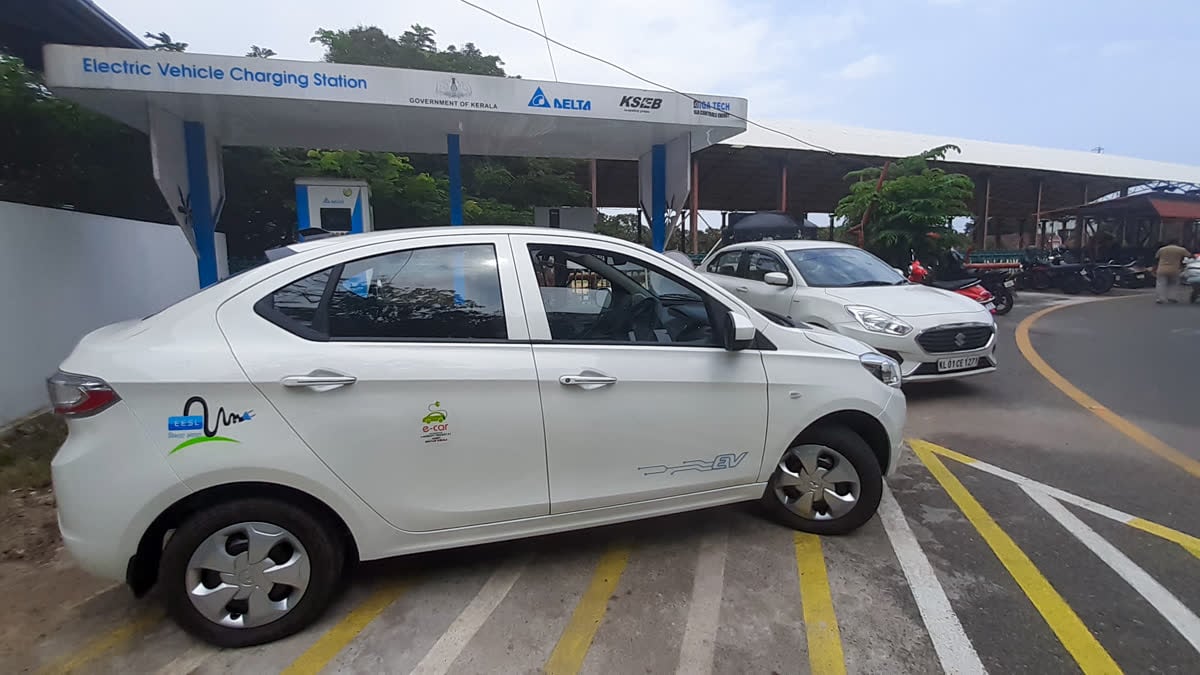
For the ownership side, the FuelPrice EV station directory helps you check charging availability by state. The subsidy is only one part of the cost decision.
How subsidy changes the real EV budget
After the benefit is verified, compare the vehicle’s cost and use pattern. The fuel cost calculator can provide an ICE baseline for the same distance, while the live fuel-price pages keep the petrol or CNG assumption dated.
- Upfront: compare the net vehicle price, insurance, accessories, charger, installation and registration charges after the verified benefit.
- Monthly running: use usable battery energy, real-world efficiency and your electricity tariff. Public charging can have a different tariff and service fee from home charging.
- Finance: calculate the loan on the amount actually financed and confirm whether the lender treats an expected subsidy as a price reduction before disbursal.
- Long trips: check connector compatibility, charging stops and buffer range. The FuelPrice road-trip planner can structure the route before comparing a petrol, CNG or EV itinerary.
- Policy risk: record the rule date and official page used. A later amendment can change a cap, deadline, model list or state benefit.
FuelPrice’s report on Delhi EV policy incentives explains the local implementation signal; this guide adds the reusable eligibility, invoice and status checks needed before purchase.
Common EV subsidy mistakes
- Confusing “up to” with a flat amount: battery capacity, price caps and percentage limits can reduce the maximum.
- Using ex-showroom for an ex-factory rule: match the base used in the policy wording.
- Assuming every EV car gets PM E-DRIVE: check the listed categories; state tax or scrappage relief is separate.
- Adding benefits without checking stacking: central, state, scrappage and tax benefits have separate conditions.
- Relying on an old date: the PM portal and July PIB release show why the latest amendment needs checking.
- Paying before reading the invoice: a verbal promise is weaker than a scheme reference, line item and official record.
- Ignoring resale rules: the PM FAQ says resold EVs are not eligible for the original incentive.
Frequently asked questions
Is PM E-DRIVE a direct cash refund to the buyer?
PM E-DRIVE describes the eligible incentive as an upfront reduction in the purchase price, later reimbursed to the OEM. A state policy may use direct benefit transfer, so the invoice and state portal status should be checked separately.
Can one person claim the national incentive for two scooters?
The PM FAQ says only one EV of a specific category per individual qualifies, and the mobile number can be used once. Check the current FAQ and notification for the category and purchase date.
Why is the subsidy on my dealer quote different from an online maximum?
The maximum may be limited by battery capacity, the per-vehicle cap, the ex-factory percentage, the model list, registration date or remaining funds. Ask for the calculation and final incentive line.
How do I check the status of an EV subsidy application?
Use the relevant official PM or state portal with the application, vehicle or e-voucher details supplied during purchase. Match the status with the invoice, RC and Aadhaar-linked mobile record, then use the official help route for a mismatch.
Do electric cars get the same national subsidy as electric scooters?
No general assumption is safe. PM E-DRIVE’s listed demand-incentive categories include e-2Ws, e-3Ws, e-trucks, e-ambulances and e-buses, while a state such as Delhi may provide separate tax, registration or scrappage relief for eligible electric cars.
Sources
- Ministry of Heavy Industries, “PM E-DRIVE” portal, current e-2W amendment notice and e-voucher information, accessed 16 Oct 2026.
- Press Information Bureau, “PM E-DRIVE Scheme and Promotion of Electric Mobility”, 28 Jul 2026.
- Press Information Bureau, “The PM E-DRIVE Scheme has been implemented on pan India basis”, 28 Jul 2026.
- Ministry of Heavy Industries, “FAQ’s - PM E-DRIVE”, accessed 16 Oct 2026.
- Ministry of Heavy Industries, “Scheme Notifications - PM E-DRIVE”, listing the 10 Aug 2026 e-2W amendment, accessed 16 Oct 2026.
- Autocar India, “PM E-Drive subsidy for electric two-wheelers extended to March 2028”, Aug 2026.
- Transport Department, Government of NCT of Delhi, “Delhi Electric Vehicle Policy 2026”, policy document dated 19 Jan 2026.
- The Times of India, “Electric 2-wheelers lead incentive chart under EV policy, scrapping yet to pick up”, 25 Sep 2026.
- Wikimedia Commons, “Electric Car and Electric Vehicle Charging Station at Government Secretariat, Thiruvananthapuram”, Shagil Kannur, CC BY-SA 4.0, photo dated 26 Aug 2020.
This article is for general information only and is not financial, insurance or legal advice.