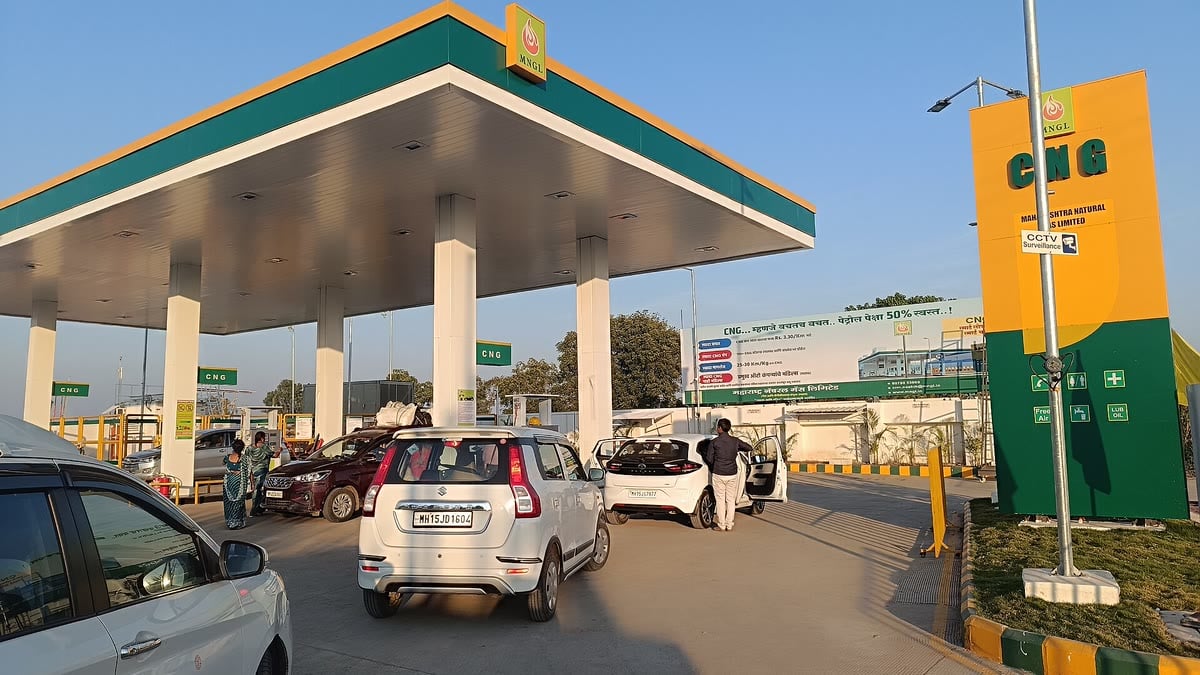
Factory-fitted CNG is integrated and documented by the carmaker; an approved retrofit can also be legal, but only when the kit, vehicle, installer and registration paperwork all match. The lower upfront quote for a retrofit is only one part of the decision: warranty treatment, insurance, boot space, tank checks and the local CNG price can change the real cost. This guide explains how to compare both routes before buying a CNG car or converting a petrol car.
Key takeaways
- Factory-fitted CNG usually gives a cleaner warranty, calibration and documentation trail, while an approved retrofit can open up models or variants that are not sold with CNG.
- Retrofit approval is vehicle-specific. A generic kit brand or a verbal installer promise is not proof that the kit is approved for your exact make, model, engine and emission configuration.
- RC endorsement and insurance disclosure are part of the conversion, not optional paperwork to finish later.
- Fuel saving depends on the city rate and the car’s real economy. A CNG price close to petrol can lengthen the payback period.
- Compare the all-in quote, warranty impact, boot-space loss, service schedule and station availability instead of comparing only the kit price.
Why this comparison matters now
On 5 Nov 2026, Adani Total Gas listed CNG at ₹100.77 per kg for Ahmedabad with the rate effective from that date. PTI, reported by The Economic Times, also reported the move from ₹98.47 to ₹100.77 per kg after a ₹2.30 increase and put Ahmedabad petrol at ₹101.83 per litre on the same date. The figures are city-specific and time-sensitive, but they show why a conversion decision should be tested with current rates rather than a generic promise of cheap running.
For the full dated context, read the Ahmedabad CNG price-hike report. Then check current city rates in the CNG price directory before using any example below.
Factory-fitted and retrofit CNG: what is different?
A factory-fitted car is designed, calibrated and type-approved as a CNG variant before delivery. The manufacturer controls the tank layout, fuel system integration, software calibration and documentation. A retrofit adds a separately approved kit to an in-use vehicle through an authorised installer, so the quality of the kit, the approved layout and the paperwork deserve closer checking.
| Decision area | Factory-fitted CNG | Approved retrofit CNG |
|---|---|---|
| System integration | Designed and calibrated with the vehicle variant; tank and plumbing may be packaged around the car. | Uses an approved kit and an approved layout for a specific vehicle family; packaging may reduce usable boot space. |
| Warranty | Usually handled under the vehicle manufacturer’s stated warranty terms for that CNG variant. | May change the manufacturer warranty position. Get the effect on engine, fuel system and electrical claims in writing before installation. |
| Registration | CNG is recorded as part of the delivered vehicle documentation. | The fuel-source alteration must be endorsed in the RC through the applicable registering authority process. |
| Insurance | The factory CNG specification should be declared when the policy is issued or renewed. | The kit and its value must be disclosed and reflected in the policy schedule or endorsement as required by the insurer. |
| Availability | Limited to models and variants the manufacturer sells with CNG. | Can make some otherwise unavailable petrol variants eligible, but only where a matching type-approved kit exists. |
Is a retrofit CNG kit legal in India?
Yes, conversion is permitted in defined circumstances; an unapproved or undocumented installation is a different matter. ARAI says provisions for emissions, safety and installation are notified under Rule 115 of the Central Motor Vehicles Rules, and that a kit maker must obtain approval from a testing agency notified under Rule 126. ARAI also describes testing at the component, engine and vehicle levels.
MoRTH’s GSR 625(E), dated 11 Aug 2022, sets model-specific conditions for relevant BS-VI retrofitment. It says the approved kit must be for a specific make and a stated engine-capacity range: up to 1,500 cc, the tolerance is ±7%; above 1,500 cc, it is ±5%. The same notification requires applicable AIS-024 and AIS-028 safety compliance and says retrofit type approval is valid for 3 years before renewal. Treat these as approval conditions, not as permission to fit any kit to any car.
- Ask for the type-approval certificate that names the kit, vehicle make/model or family, engine capacity range and applicable emission configuration.
- Confirm that the installer is authorised by the kit maker or vehicle manufacturer and will use the approved layout and components.
- Do not accept a certificate for a similar-looking car as proof for your car.
- For a used car, match the installed cylinder, valves, reducer, ECU and pipe routing to the installation documents.
RC endorsement and documents to keep
The Delhi Transport Department’s CNG/LPG endorsement checklist illustrates the level of documentation an owner may be asked to produce: the original RC, kit and cylinder invoices, type-approval and installer-authorisation documents, cylinder certification, an approved layout, an installation certificate, valid PUC and valid insurance. Requirements and fees can vary by state, so use the relevant registering authority’s current process.
Parivahan’s alteration workflow includes an alteration application and a separate insurance-details step. The national Form 22F describes the compliance report that the company or workshop submits for the alteration or retrofitment, including the vehicle details, rules followed, applicable standards and type-approval or self-certification attachment.
In practical terms, the conversion file should contain the invoice, kit serial numbers, cylinder certificate, installation or compliance report, type-approval reference, updated RC and the insurer’s updated schedule. Keep scans as well as originals; a missing document can complicate resale, inspection or a claim.
What does a CNG retrofit cost?
Published market estimates are not an official tariff. Cars24’s 28 Oct 2026 guide places a good-quality BS6 sequential aftermarket retrofit at ₹40,000–₹60,000 and factory or dealer-fitted systems at ₹90,000–₹1,00,000. Autocar India separately reported that an aftermarket installation averages about 25–30% below the premium charged for a factory-fitted CNG variant. The estimates differ because a factory variant price gap, a dealer fitment and a retrofit invoice are not identical products.
| Published estimate | Figure | How to read it |
|---|---|---|
| BS6 sequential aftermarket retrofit | ₹40,000–₹60,000, as reported by Cars24 on 28 Oct 2026 | Market estimate for the kit category; ask whether installation, cylinder, taxes, testing, RTO work and insurer changes are included. |
| Factory or dealer-fitted CNG system | ₹90,000–₹1,00,000, as reported by Cars24 on 28 Oct 2026 | Use the manufacturer or dealer’s variant price and warranty terms as the controlling quote for a new car. |
| Relative retrofit estimate | About 25–30% below the factory CNG premium, as reported by Autocar India in 2026 | This is a relative estimate, not a universal discount. It does not remove paperwork, insurance, maintenance or warranty trade-offs. |
Worked upfront-cost example. If a factory CNG variant is quoted at a ₹1,00,000 premium over the equivalent petrol variant, a 25–30% lower retrofit estimate would work out to ₹70,000–₹75,000 before any separate paperwork, insurance or maintenance cost. This is arithmetic on the reported relative estimate, not a quote for a particular car. Request an itemised, vehicle-specific invoice before comparing the two routes.
Worked fuel-cost example: do the math for your city
The calculation is simple: fuel cost per kilometre equals fuel price divided by real-world economy. Use a full-tank test or a consistent trip log instead of relying only on a brochure figure. The following is an illustrative Ahmedabad comparison using the reported 5 Nov 2026 rates and deliberately stated assumptions of 15 km per litre for petrol and 18 km per kg for CNG.
Illustrative fuel-cost comparison — Ahmedabad rates as of 5 Nov 2026.
| Fuel | Dated price | Illustrative economy | Cost per km | Cost for 1,000 km/month |
|---|---|---|---|---|
| Petrol | ₹101.83/litre | 15 km/litre | ₹6.79 | ₹6,789 |
| CNG | ₹100.77/kg | 18 km/kg | ₹5.60 | ₹5,598 |
On these assumptions, the CNG vehicle saves about ₹1,191 per month, or ₹14,292 over 12 similar months, before servicing, downtime, station queues, insurance changes and conversion cost. A ₹60,000 illustrative retrofit outlay would therefore take about 50 months to recover from this fuel difference alone. That result changes sharply if your CNG rate, traffic, mileage or monthly distance changes. Use the fuel-cost calculator with your own inputs, and do not treat this example as a guaranteed saving.
Insurance, warranty and maintenance checks
IRDAI’s standard motor policy wording includes an endorsement for own-damage cover of a CNG/LPG kit, subject to the kit’s declared IDV and the policy terms. That does not mean every retrofit is automatically covered. The insurer needs accurate information about the fuel system, kit value and RC status, and the policy schedule should show the relevant cover or endorsement.
- Tell the insurer before or immediately after the conversion, following its stated process; do not wait until a loss occurs.
- Check whether the own-damage section covers the kit, the declared kit IDV and the applicable exclusions.
- Keep the RC endorsement, invoice and installation certificate aligned with the insurance proposal and policy schedule.
- Ask the manufacturer or dealer in writing what happens to the powertrain, electrical and fuel-system warranty after retrofitment.
- Budget for prescribed tank inspections, filter or regulator service and leak checks; the schedule depends on the kit and vehicle.
Autocar India reports that even an approved retrofit may affect the manufacturer warranty, while some dealer-fitted systems or third-party warranties are treated differently. That is why a verbal statement such as “the warranty is fine” is not enough for a new or financed vehicle.
Who needs which comparison?
- Buying a new car: compare the factory CNG variant’s price, warranty, service plan, boot layout and insurance quote with the equivalent petrol variant. A retrofit is relevant only if the model or variant has a matching approved route.
- Converting an existing petrol car: start with the exact type-approval match, the car’s mechanical condition and the all-in quote. A low annual distance may not recover the upfront cost quickly.
- Buying a used CNG car: inspect the RC, cylinder certification, kit serial numbers, installation documents, insurer schedule and service history before paying. Treat undocumented CNG hardware as a compliance and claim risk.
- Driving outside a city-gas network: check station availability along your routine and planned routes. A fuel-cost advantage is less useful if trips require a long detour or frequent petrol fallback.
Checklist before buying or converting
- Record your monthly kilometres, petrol or CNG price and real economy for a representative period.
- Check the fuel-cost-per-kilometre method and calculate the break-even distance, not just the monthly saving.
- Obtain the exact type-approval certificate and confirm the make, model, engine range and emission applicability.
- Verify the installer’s authorisation and the approved layout, component list and cylinder details.
- Get a written all-in quote with kit, labour, taxes, cylinder, paperwork, RTO work, testing and any insurance charge separated.
- Get the manufacturer warranty impact in writing, including which systems remain covered.
- Complete the applicable RC alteration or fuel-source endorsement and retain the compliance report.
- Update the insurer and confirm the kit’s IDV and cover in the policy schedule.
- Check the next tank inspection or hydrotest due date and the kit’s service intervals before taking delivery.
- Plan two or three regular routes with the road-trip planner and verify CNG station access before relying on gas for every trip.
FAQ
Is an aftermarket CNG kit legal in India?
It can be legal when the kit and vehicle have the required type approval, the work is done by an authorised installer and the fuel alteration is endorsed in the RC. A kit being sold in India or carrying a brand label is not, by itself, proof of approval for every car.
Does a CNG retrofit change car insurance?
It can change the declared vehicle value and the cover needed for the kit. Notify the insurer, provide the updated RC and installation documents, and check that the kit’s value and own-damage cover appear correctly in the policy schedule.
Is factory-fitted CNG always cheaper to own?
Not necessarily. Factory fitment may reduce paperwork and warranty uncertainty, while retrofitment may have a lower upfront estimate or make a particular variant available. The outcome depends on the all-in purchase or conversion cost, city fuel prices, real economy, mileage and maintenance.
Can every petrol car be converted to CNG?
No. The kit approval must match the vehicle and engine configuration, and the car must meet the applicable safety and emission requirements. Diesel conversions are more complex and should not be assumed to be eligible just because a kit seller offers a product.
Sources
- ARAI — Vehicle Retrofitment (CNG & LPG) Certification (accessed 6 Nov 2026)
- Ministry of Road Transport and Highways — GSR 625(E), Retrofitment in BS-VI Vehicles, 11 Aug 2022
- Delhi Transport Department — Vehicle Registration FAQ and CNG/LPG Kit Endorsement Documents (accessed 6 Nov 2026)
- Parivahan — Form 22F, Compliance Report for Alteration/Retrofitment (accessed 6 Nov 2026)
- Parivahan — Conversion of Vehicle Service Workflow (accessed 6 Nov 2026)
- IRDAI — Motor Insurance Policy Wording, IMT.25 CNG/LPG Kit in Bi-Fuel System (accessed 6 Nov 2026)
- Autocar India — Aftermarket CNG Conversions Decoded: Installation, Legality and Costs (accessed 6 Nov 2026)
- Cars24 — CNG Kit Price in India: Conversion Kit Brands, Prices, Performance and Features, 28 Oct 2026
- Adani Total Gas — CNG Gas Prices, effective 5 Nov 2026
- The Economic Times / PTI — Adani CNG Price Crosses ₹100 per kg in Ahmedabad, 5 Nov 2026
- Wikimedia Commons — Compressed Natural Gas (CNG) Filling Station, Maharashtra, India, 17 Dec 2024; CC0
This article is for general information only and is not financial, insurance or legal advice.