Third-party car insurance is the legal minimum for driving on Indian public roads, but it does not pay for damage to your own car. This guide explains third-party, standalone own-damage and comprehensive cover, shows the current base premium slabs, and gives a practical way to compare a renewal quote without confusing a low price with adequate cover.
Recent motor-insurance pricing-pressure reporting makes this comparison more useful, but the method remains evergreen: separate the regulated liability portion from the insurer-priced own-damage portion, then check IDV, deductibles, NCB, exclusions and add-ons.
Key takeaways
- Third-party cover pays eligible liability to other people or their property; it does not repair or replace your own car.
- A comprehensive or package policy combines third-party liability with own-damage cover, subject to its wording and exclusions.
- As of 25 Oct 2026, the listed annual base third-party slabs for private petrol, diesel and CNG cars are ₹2,094, ₹3,416 and ₹7,897 by engine-capacity band.
- Own-damage premium varies with IDV, vehicle age, model, location, claims history, deductible and add-ons; compare these fields, not only the total.
- NCB applies to the own-damage portion, not the third-party portion, and the current standard slabs move from 20% after one claim-free year to 50% after five.
1. What each policy actually pays for
Third-party liability only
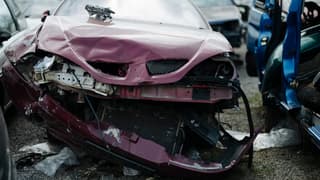
Third-party insurance covers the legal liability that can arise when the insured vehicle causes injury, death or property damage to another person. It is mandatory under Section 146 of the Motor Vehicles Act, 1988 for vehicles used on public roads. The cover protects against the liability to others; it does not cover accident damage, theft, fire or flood damage to the insured car.
- Mandatory: it is the minimum legal cover, not a full vehicle-protection plan.
- Premium basis: the base rate is notified by the government in consultation with IRDAI and does not vary between insurers for the same applicable slab.
- Own-car gap: repair bills for your vehicle remain your responsibility unless a separate own-damage policy applies.
Standalone own-damage
Standalone own-damage cover is designed to protect the insured car against covered events such as accidents, theft, fire and specified natural or man-made events. It is bought alongside a valid third-party policy rather than replacing it. The policy wording decides the covered perils, claim conditions, deductibles and exclusions.
Comprehensive or package policy
A comprehensive or package policy combines third-party liability and own-damage protection. It is convenient because both sections appear in one policy, but comprehensive does not mean every possible loss is paid automatically. Depreciation, deductibles, excluded use, policy conditions and add-on limits can still reduce the payable claim.
For a fuller add-on-by-add-on explanation, see the car insurance add-ons guide for zero-depreciation, engine protection and roadside assistance.
2. Current third-party cost: what is fixed and what is not
As of 25 Oct 2026, the base schedule being quoted for private petrol, diesel and CNG cars remains linked to engine cubic capacity. The table below uses the figures in the Motor Vehicles (Third Party Insurance Base Premium and Liability) Rules, 2022 and a current 2026 insurer rate reference. These are base annual premiums before any applicable taxes, approved discounts, owner-driver personal-accident cover or optional covers; confirm the live amount at renewal because a fresh notification can change the schedule.
| Private car engine band | Annual base TP premium | What the slab tells you |
|---|---|---|
| Not exceeding 1,000 cc | ₹2,094 | Lowest listed petrol/diesel/CNG car band |
| Above 1,000 cc and up to 1,500 cc | ₹3,416 | Common compact SUV, sedan and hatchback band |
| Above 1,500 cc | ₹7,897 | Higher-capacity private-car band |
The third-party component is the predictable part of the quote. The own-damage component is priced by the insurer after considering factors such as the car’s IDV, age, model, registration details, claims record, location and selected covers. Two quotes with the same third-party slab can therefore have very different totals while offering different IDV, deductible or add-on terms.
New private cars purchased from 1 Sep 2018 are commonly sold with a three-year third-party cover at purchase. Check the policy schedule before renewal so that an active long-term TP section is not paid for again by mistake, while also checking whether the own-damage section has a separate expiry date.
3. Worked rupee example: compare the same car on the same basis
Consider a private car with a 1,200 cc engine renewing in October 2026. Its current base third-party slab is ₹3,416 per year. Assume, only for illustration, that one insurer quotes ₹11,500 for own damage and ₹2,000 for selected add-ons.
- Third-party base: ₹3,416.
- Illustrative own-damage quote: ₹11,500.
- Illustrative add-ons: ₹2,000.
- Illustrative pre-tax and fee total: ₹3,416 + ₹11,500 + ₹2,000 = ₹16,916.
On those assumptions, a TP-only comparison would show ₹3,416, while the package-style illustration is ₹13,500 higher because it includes own-damage and add-ons. The ₹11,500 and ₹2,000 figures are assumptions, not a market quote; actual offers vary by vehicle, IDV, location, claims record, policy wording and insurer. If a cheaper quote carries a lower IDV, a higher voluntary deductible or fewer covers, it is not a like-for-like saving.
For the wider ownership budget, add the vehicle’s fuel spend using the FuelPrice fuel cost calculator. Insurance is an annual protection cost; fuel and tolls are usage costs, so they should be compared separately rather than folded into a misleading monthly premium figure.
4. NCB, IDV and deductibles: the renewal fields that change the result
No Claim Bonus is not a discount on TP
NCB is earned by the policyholder for claim-free policy periods and applies to the own-damage premium, not the third-party premium. As of 25 Oct 2026, the current standard progression is:
| Claim-free period at renewal | NCB on own-damage premium |
|---|---|
| After one year | 20% |
| After two consecutive years | 25% |
| After three consecutive years | 35% |
| After four consecutive years | 45% |
| After five consecutive years | 50% |
For example, 45% NCB on an assumed ₹10,000 own-damage premium reduces that component by ₹4,500; it does not reduce the ₹3,416 third-party slab. A claim can affect the NCB available at the next renewal, while an NCB-protection add-on, if selected and applicable, works only within its stated limits.
NCB belongs to the insured person, not the vehicle. When a car is sold, the buyer can have the policy transferred through the prescribed process, but the seller’s NCB does not travel with the car. When changing insurers or buying another car, keep the renewal notice or NCB proof and check the new schedule.
IDV and deductibles
- IDV: the Insured Declared Value is the sum insured for the own-damage section and is used for total-loss or theft settlement subject to policy terms. It generally reduces as the vehicle ages.
- Compulsory deductible: the policyholder bears the prescribed portion of an eligible claim.
- Voluntary deductible: choosing a higher amount can reduce the quoted premium but increases the amount paid from pocket during a claim.
- Add-ons: zero depreciation, engine protection, consumables, roadside assistance, return-to-invoice and key protection address different risks; their limits and eligibility are not interchangeable.
5. A practical renewal checklist
- Check the dates: renew before expiry. IRDAI says motor policies generally have no grace period; a lapse can require vehicle inspection and may add cost.
- Separate the sections: write down the TP, own-damage, add-on and applicable tax or fee amounts from the quote.
- Verify the engine band: match the registration certificate and policy schedule to the correct cc slab. For an EV, the TP calculation uses motor output in kW rather than engine cc.
- Compare IDV: do not compare a lower premium without checking whether the insured value and total-loss treatment are also lower.
- Confirm NCB: check the percentage, make sure it is applied only to OD, and retain proof if changing insurer.
- Read the deductible: record both compulsory and voluntary excess, then test the quote against a realistic repair bill.
- Check exclusions and declared use: private use, driver licence, modifications, CNG/LPG endorsements and claim-notification requirements can affect cover.
- Review the vehicle budget: use current fuel prices by state and city alongside the insurance quote when planning annual ownership cost.
If the policy has already expired, do not treat an online price as proof that cover is active. Verify the policy start time, inspection requirement and issued document before driving on a public road.
6. Third-party vs comprehensive: a quick decision map
- Only legal liability is being compared: third-party cover answers that narrow requirement, but leaves own-car damage outside the policy.
- The car still has meaningful replacement or repair value: compare a package policy with standalone own damage plus separate TP, using the same IDV, deductible and add-ons.
- The car is financed: read the lender’s insurance conditions and compare them with the policy schedule; the finance agreement can have requirements beyond the legal minimum.
- The car is used for long trips: check theft, accident, roadside assistance and claim-network details, then use the road-trip planner to budget the route separately from insurance.
There is no universal premium that represents the right cover for every car. The useful comparison is the amount paid for a clearly stated set of risks, at a stated IDV and deductible, with NCB and add-ons shown separately.
Frequently asked questions
Is third-party insurance enough for an old car?
It satisfies the mandatory liability requirement, but it does not pay for damage to the owner’s car. The relevant comparison is the vehicle’s value, repair and theft exposure, and the amount the owner would carry personally if own-damage cover were absent.
Can I buy standalone own-damage cover if I already have third-party insurance?
Yes, standalone own-damage is designed to sit alongside a separate valid third-party policy. Match the policy periods and keep both documents, because the own-damage section does not replace the legal TP requirement.
Does NCB reduce the third-party premium?
No. NCB applies to the own-damage premium only. The third-party base amount is linked to the applicable vehicle slab, so a claim-free record does not reduce that component.
What happens if my car insurance expires?
Do not drive until valid third-party cover is in force. A lapse can lead to inspection before reissue, and IRDAI guidance warns that a break in comprehensive cover can affect accrued NCB if the lapse exceeds the stated period.
Where can I verify the details before paying?
Compare the issued quote with the RC, policy schedule and previous renewal document. Check policy type, dates, IDV, NCB, engine or motor-power band, deductibles, add-ons and exclusions rather than relying only on the headline premium.
Sources
- IRDAI — Motor Insurance: Policy Holder guidance (accessed 25 Oct 2026)
- Ministry of Road Transport and Highways — Motor Vehicles (Third Party Insurance Base Premium and Liability) Rules, 2022 (25 May 2022)
- Autocar India — Car insurance explained: types of policies, coverage, claims, renewals and more (22 Aug 2026)
- Zurich Kotak General Insurance — Third-Party Car Insurance Price List 2026 in India (updated 16 Oct 2026)
- ICICI Lombard — Buy/Renew Car Insurance: NCB slabs and policy comparison guidance (accessed 25 Oct 2026)
- Wikimedia Commons — Car dash.jpg, India-shot dashboard photograph by Arisepeter, CC BY-SA 4.0 (image source, accessed 25 Oct 2026)
This article is for general information only and is not financial, insurance or legal advice.