Assam is drafting a new EV Policy 2.0 and its transport department has said the state is open to electrification mandates. The 2026–27 state budget also announces a 3% motor-vehicle-tax subvention for electric-vehicle buyers, but the benefit is not ready to claim until detailed eligibility and implementation guidelines are notified.
+ +Key takeaways
+-
+
- The mandate discussion is reported and proposed; Assam has not published a final EV sales mandate or a start date. +
- The Assam Budget 2026–27 announces a 3% motor-vehicle-tax subvention for citizens buying EVs during the year. +
- The transport department says the new policy will also address EV charging stations, but the locations, coverage and delivery schedule are not public. +
- The state’s earlier EV policy remains available on its official portal, while the new Policy 2.0 is still being prepared. +
What Assam has confirmed so far
+Mint reported on 15 Oct 2026 that Assam’s transport department told the publication it was open to electrification mandates while preparing Assam EV Policy 2.0. The department’s response also said details would be provided in the new policy alongside plans for EV charging stations. That wording is important: it signals a policy direction, not a rule that currently restricts petrol or diesel vehicle sales.
+ +The same report said Assam’s 2021 EV policy had lapsed in September 2026. The state’s Industries and Commerce portal still hosts the 2021 policy document, so buyers and dealers should not treat the presence of that PDF as proof that every earlier incentive continues. The operative position will depend on the government’s new notification and any departmental guidelines issued after it.
+ +What the 3% tax support means for buyers
+The Assam Budget Speech 2026–27 announces a 3% Motor Vehicle Tax subvention for citizens purchasing electric vehicles during the year and says detailed guidelines on eligible EV categories will be issued by the department. Mint separately reported the transport commissioner’s confirmation that the support is to be notified soon.
+ +Until that notification arrives, the 3% figure should not be treated as a final reduction in the on-road price. The eventual document needs to answer whether the subvention applies to private cars, two-wheelers, three-wheelers, commercial vehicles or a defined combination; whether it is deducted at registration or reimbursed later; which purchase and registration dates qualify; and whether there is a price, battery-size or vehicle-use ceiling.
+ +Those details can materially change the amount a buyer pays upfront. A quote that shows an EV’s ex-showroom price, insurance, registration, road tax and other charges should be read line by line until the transport department publishes the implementation mechanism. A tax subvention is also different from a manufacturer discount or a central purchase incentive, so the three should not be combined without checking the applicable notification.
+ +Charging capacity is the practical test
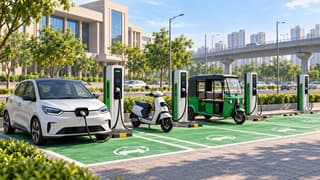
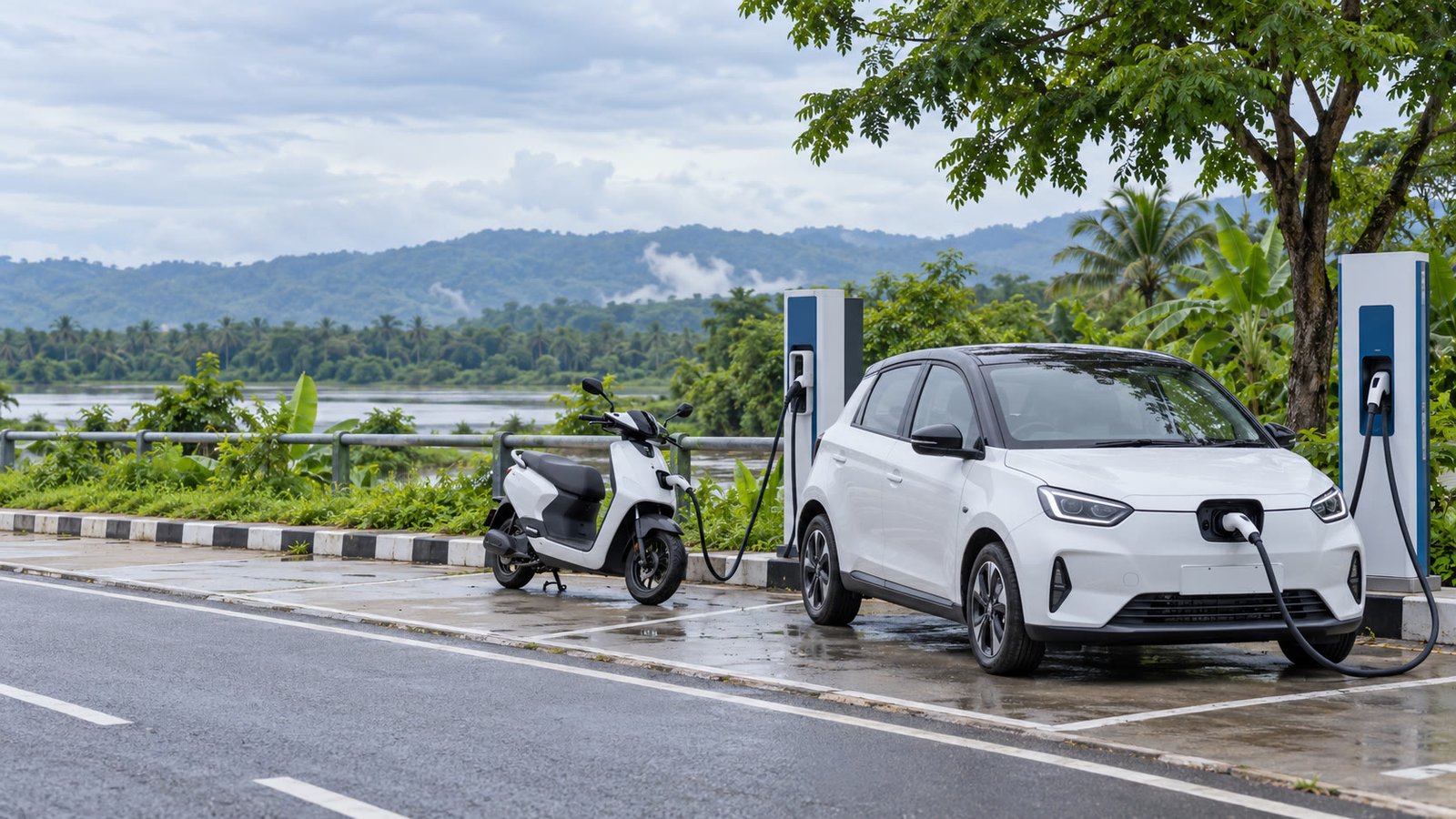
+For an EV policy to change daily mobility, the incentive needs to be matched by charging access. The Ministry of Heavy Industries said in a 28 Jul 2026 parliamentary reply that EV public-charging stations had been sanctioned and made operational in Assam under FAME-II. That central data is a useful baseline, but it does not by itself show whether a charger is close to a buyer’s home, supports the vehicle’s connector and power requirement, or is reliable during a long trip.
+ +Assam’s 2021 policy had also proposed support for public charging and battery-swapping infrastructure. The new policy’s charging plan will matter more than a headline station count: drivers need to know the district coverage, charger type, operating hours, live availability, payment method and whether commercial vehicles can use the site. EV owners can use FuelPrice’s state-wise EV charging directory to begin a route check, then confirm the live status and access rules with the operator.
+ +Why the policy matters beyond Guwahati
+Assam’s move is significant because a state-level mandate would affect the supply mix for two-wheelers, three-wheelers and cars, not just government fleets. The policy could influence dealer inventory, charging investment and the running-cost choices available to households and small commercial operators. It could also become a test of how a state balances cleaner transport with affordability and the availability of service support outside its largest city.
+ +The National Institution for Transforming India has noted that states control several parts of the EV ecosystem, including road transport, power distribution and urban planning. Its India Electric Mobility Index says states are revising policies as they expire and records Delhi’s 2026 policy as the first to set electrification mandates for multiple vehicle categories. Assam’s reported interest therefore fits a wider policy trend, but the final design will determine whether the approach is an incentive-led transition or a binding sales requirement.
+ +What buyers and fleet operators should watch
+-
+
- Notification: the Assam transport department’s formal order, effective date and eligible vehicle categories. +
- Tax treatment: whether the 3% subvention is applied at registration, reimbursed later or limited by vehicle price, battery size or use. +
- Mandate wording: whether the proposal covers new sales, government procurement, commercial fleets, specific vehicle classes or charging-station obligations. +
- Charging rollout: the district-wise site list, charger power, uptime, tariffs and access for private and commercial vehicles. +
- Running-cost comparison: electricity tariff, home-charging feasibility and route length should be compared with fuel use rather than relying on a claimed range alone. FuelPrice’s fuel-cost calculator can help set a petrol or diesel baseline, while the road-trip planner can help map the practical charging stops for a proposed route. +
What changes now
+Nothing in the new report immediately bans a petrol or diesel purchase in Assam, and the 3% tax support is not yet a fully operational buyer benefit. The next meaningful step is the state’s Policy 2.0 notification: it should convert the reported direction and budget announcement into clear rules that dealers, registration offices, charging operators and vehicle owners can apply consistently.
+ +Until then, buyers can treat the development as a policy signal and keep the current tax and charging position separate from the proposed future framework. The reader takeaway is straightforward: Assam is preparing stronger EV support, but the price benefit, any mandate and the charging obligations remain subject to official notification.
+ +Sources
+-
+
- Mint — Assam plans to take a leaf out of Delhi’s playbook to announce EV sales mandates — 15 Oct 2026 +
- Government of Assam, Directorate of Information and Public Relations — Assam Budget Speech 2026–27 — 2026 +
- Ministry of Heavy Industries, PIB — A total of 117 number of EV public charging stations have been sanctioned and 88 EV PCS are operational in Assam under FAME-II Scheme — 28 Jul 2026 +
- NITI Aayog — India Electric Mobility Index 2025 — 2026 +
- Government of Assam, Industries and Commerce Commissionerate — Electric Vehicle Policy of Assam, 2021 — 2021 +
This article is for general information only and is not financial, insurance or legal advice.
+