Brent crude jumped 4% to around $113 a barrel on Thursday, its highest level since May, and remained near that level in early Asian trade on 23 Oct 2026. Reuters and AP linked the move to renewed concern that attacks around Saudi Arabia, the Gulf and nearby shipping routes could disrupt future oil flows, putting fresh pressure on petrol, diesel, jet-fuel and freight costs worldwide.
The key distinction is that this was a risk-driven market move, not confirmation that Saudi production had stopped. Saudi authorities said a drone was intercepted near the Shaybah oil field and that operations were unaffected, while Reuters reported that Aramco told staff to leave its Dhahran headquarters as fighting intensified.
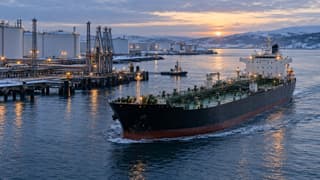
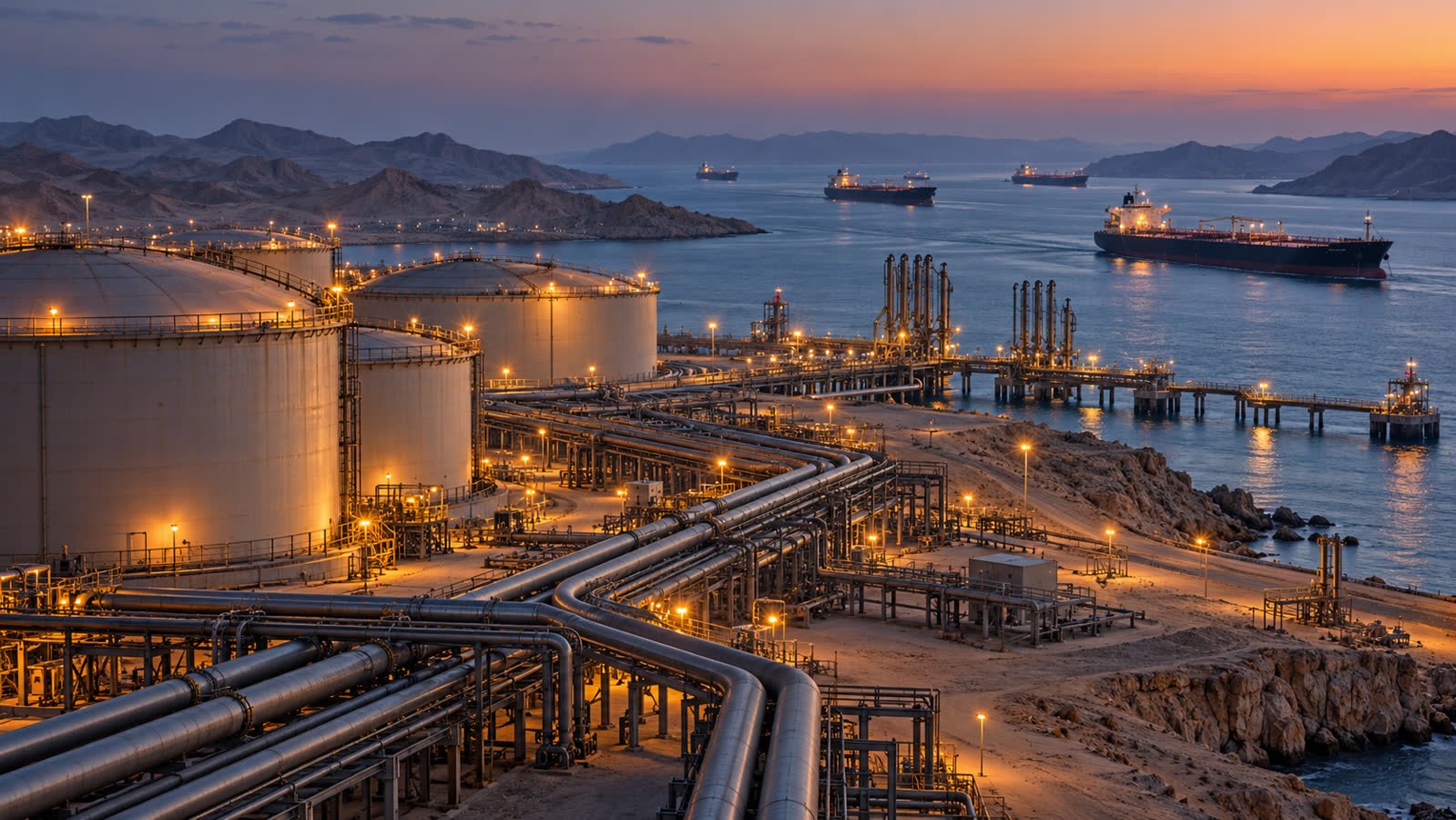
Hero image: an illustrative editorial rendering of oil storage and tanker traffic; it is not a photograph of the reported incidents.
Key takeaways
- Brent gained 4% to around $113 a barrel, with Reuters and AP placing the benchmark at roughly the same level across Thursday and early Friday trading.
- Saudi authorities reported an intercepted drone near Shaybah; the cited source said the incident did not affect the oil field's operations.
- Aramco's East-West route to the Red Sea is an important bypass when shipping through the Strait of Hormuz is under pressure.
- Drivers and fleet operators should not assume a 4% crude move creates a 4% pump-price change in their market.
What moved Brent higher
Reuters said Brent settled at its highest level since May after a 4% rise, while AP also described the benchmark as reaching its highest level since May. The two reports were published at different points in the market day, so their precise quotes varied slightly, but both put Brent near $113 a barrel.
Oil markets react to expected availability, not only barrels already missing. If traders see a higher probability that tankers, terminals or pipelines could face disruption, futures can add a risk premium before a physical shortage appears. That helps explain why the move occurred even as some oil continued to move through the region.
The latest readings were not identical because they were taken at different times. Reuters put Brent around $113 in early Asian trade on 23 Oct, and AP's Friday market update also kept it near that level. For readers, the useful signal is the level and direction, not treating one intraday quote as a new fixed retail price.
What is confirmed — and what is still being reported
QNA, citing the Saudi Press Agency and a Saudi Ministry of Energy source, said air defenses intercepted a drone that tried to target a facility at Aramco's Shaybah field. It reported a fire in a contractor vehicle outside the facility perimeter and said operational activity was not affected. This matters because it separates an attack report from a confirmed outage.
AP reported that Aramco President and CEO Amin Nasser said the East-West pipeline, which moves crude to the Red Sea and bypasses Hormuz, has become a key outlet during the crisis. The same AP report said the company was using drones to assess damage and support firefighting. Reuters separately reported that Aramco instructed staff to evacuate its Dhahran headquarters; the reason was unclear and the company had not immediately commented. These developments increase the market's sense of vulnerability, but they do not by themselves prove a supply loss.
Shipping risk is also not a single confirmed number. AP reported claims by Iranian state media that multiple oil tankers were hit or damaged in the Strait of Hormuz, but said the claims could not be independently confirmed. That attribution is important: the market can price the possibility of a disruption even before every incident is verified, but readers should not treat an unconfirmed claim as a measured loss of global supply.
Why the move matters beyond oil traders
Crude is the feedstock for widely used fuels, but the path from an international benchmark to a local pump is not direct. Refinery margins, inventories, freight, taxes, exchange rates, local subsidies and competition all influence the final price. A driver in one country may see no immediate change while a fleet in another faces a faster diesel adjustment.
For a practical check, use FuelPrice's live fuel-price pages rather than converting a headline crude quote directly into local currency. If the goal is trip budgeting, the fuel-cost calculator can translate distance and vehicle efficiency into an estimate using the relevant pump price.
Transport operators have a second exposure: higher tanker risk premiums and longer routes can raise the delivered cost of fuel and other goods even if a refinery has crude available. Airlines and shipping lines watch jet-fuel and bunker-fuel benchmarks, so the impact can show up in ticket, freight or logistics costs rather than at a car pump.
What to watch next
- Whether Saudi Arabia reports any change in production, exports or East-West pipeline operations.
- Whether attack claims are corroborated by maritime authorities, vessel operators or official incident reports.
- Whether Brent holds near the latest level or retraces as supply routes prove resilient.
- How quickly regional wholesale fuel markets move into retail prices after taxes and refining margins.
Reader takeaway
For now, the story is a warning about the cost of fragile routes, not proof of a global fuel shortage. Track dated local prices and your own trip or fleet consumption, and compare them with supply developments that can influence the next wholesale reset. For background, FuelPrice's earlier worldwide report on Hormuz shipping risk explains why route resilience has become central to the crude outlook.
EV owners and buyers are not insulated from every energy-market shock: electricity tariffs, charging availability and logistics costs can still move. The EV charging directory helps readers assess charging access in the regions where they drive, while keeping the comparison separate from today's crude-price move.
Sources
- Reuters, “Oil little changed as supply concern lingers amid Houthi attacks on Saudi Arabia,” 23 Oct 2026.
- Associated Press, “Sharp drops for AI stocks overwhelm markets worldwide as oil prices jump,” 22 Oct 2026.
- Qatar News Agency, “Saudi Arabia Says Drone Intercepted Near Oil Field, Two Killed,” 22 Oct 2026.
- Associated Press, “Iran says 7 tankers damaged in Strait of Hormuz, and other Mideast news,” 22 Oct 2026.
This article is for general information only and is not financial, insurance or legal advice.