The National Highways Authority of India (NHAI) says the FASTag-based access restriction reported at Delhi Airport Terminal 3 has been removed after intervention with the relevant authorities. For drivers dropping passengers at T3, the update means a FASTag balance or annual-pass status should not be used as a separate condition for entering the departure lanes, although normal airport parking and traffic rules still apply.
The clarification matters because FASTag can be used to collect a parking fee, but it is not meant to become an access-control tool. Drivers should therefore treat the latest statement as a correction to a specific airport practice, not as a new nationwide change to tolling or a waiver of parking charges.
Key takeaways
- NHAI said on 15 Oct 2026 that the restrictions on vehicles with FASTag at Terminal 3 had been removed.
- The reported dispute involved annual FASTag-pass users being asked to maintain a separate balance in their regular FASTag account before entering a T3 departure lane.
- FASTag may continue to be used for airport parking payments, but it should not be used to enforce entry restrictions.
- The separate T3 arrival parking arrangement includes an eight-minute free waiting window; longer stays can attract charges.
- NHAI’s statement concerns Delhi Airport T3. It does not change the validity or coverage of the nationwide FASTag Annual Pass on National Highways.
What NHAI has changed at T3
NHAI’s 15 Oct statement followed a complaint raised by former NITI Aayog vice-chairperson Rajiv Kumar. He said cars with an annual FASTag pass were being kept out of T3 departure lanes unless the main FASTag account also held a balance, with some vehicles directed towards the airport parking area.
In its response, NHAI said the matter had been taken up with the relevant stakeholders and that the restrictions had been removed. The Indian Highways Management Company Limited (IHMCL), which manages the FASTag ecosystem, had separately said the tag is a payment instrument for airport parking and should not be used to enforce entry rules.
This is a material follow-up to the earlier incident. FuelPrice’s report on the temporary halt to T3 FASTag parking payments covered the immediate response after the system was found to be used for entry control. The newer NHAI statement is about the restriction being removed after that intervention.
Why the rule created a problem for drivers
Terminal 3 handles both passenger drop-offs and airport parking movement. When vehicles without an active tag, or without enough balance in the regular tag account, were diverted away from the arrival or departure lanes, the detour could consume the free waiting period and create an unexpected parking bill. The Indian Express reported that vehicles were being directed to the Multi-Level Car Parking facility and could run beyond the free waiting time.
The Indian Express reported on 14 Oct 2026 that the airport’s separate arrival-lane arrangement provides eight minutes of free waiting for private vehicles. Based on figures reported on 14–15 Oct 2026 by The Indian Express and Moneycontrol, a stay of nine to 13 minutes can attract a ₹250 parking charge, while a stay beyond 13 minutes can attract ₹500. These are airport parking charges, not toll deductions, and they should not be confused with the FASTag Annual Pass.
Annual FASTag pass does not cover airport parking
The NHAI FASTag Annual Pass is a separate highway product. It applies to eligible non-commercial cars, jeeps and vans at designated National Highway and National Expressway fee plazas, subject to its own validity and crossing conditions. It is not an airport parking pass and does not make a driver exempt from charges at Delhi Airport.
Drivers who use the highway Annual Pass can review the FASTag Annual Pass eligibility and activation guide before a trip. The useful check is whether the pass is active for the vehicle and whether any airport parking charge is being collected under the airport’s own arrangement. A pass that works at a National Highway toll plaza should not be assumed to pay for parking at T3.
What drivers should check now
- Follow the latest lane signage. NHAI’s update removes the reported FASTag-based restriction, but airport staff may still direct vehicles for safety, congestion or terminal operations. Follow the lane instructions in force when you arrive.
- Keep the parking payment route separate. If the airport uses FASTag to collect parking charges, the transaction can still be deducted from the linked account or wallet. Check the receipt, transaction message and vehicle number if a charge appears.
- Allow for the waiting window. Passenger pickup can take longer than expected. The eight-minute free period reported for the T3 arrival lane is not a guarantee that a vehicle will clear the terminal in that time.
- Check the tag before the highway leg. For the road journey to or from the airport, drivers can use the FASTag balance and status guide to confirm that the tag is active and linked to the right vehicle.
If the airport trip is part of a longer road journey, the toll-charge calculator can help keep highway tolls separate from airport parking and other trip costs. That separation is useful because the T3 issue concerns access and parking operations, not the toll payable on the route.
What to watch next
The immediate question is whether the revised arrangement is applied consistently at the arrival and departure approaches. IHMCL’s direction, as reported by The Times of India, was that the FASTag system should not be used for any purpose beyond collecting the parking fee, with possible action against a participating bank for non-compliance.
Drivers who still face a tag-based entry refusal should record the time, lane, vehicle number and transaction details, then raise the issue with the airport parking operator and the relevant FASTag issuer. A parking charge that follows a genuine stay is a separate matter from a restriction that diverts a vehicle before the departure lane.
Bottom line
NHAI’s latest statement removes the specific FASTag access restriction reported at Delhi Airport T3. Drivers may still need to pay airport parking charges and follow terminal traffic directions, but an annual FASTag pass or a low balance in the regular account should not, under the clarified arrangement, be used to block access to the departure lane.
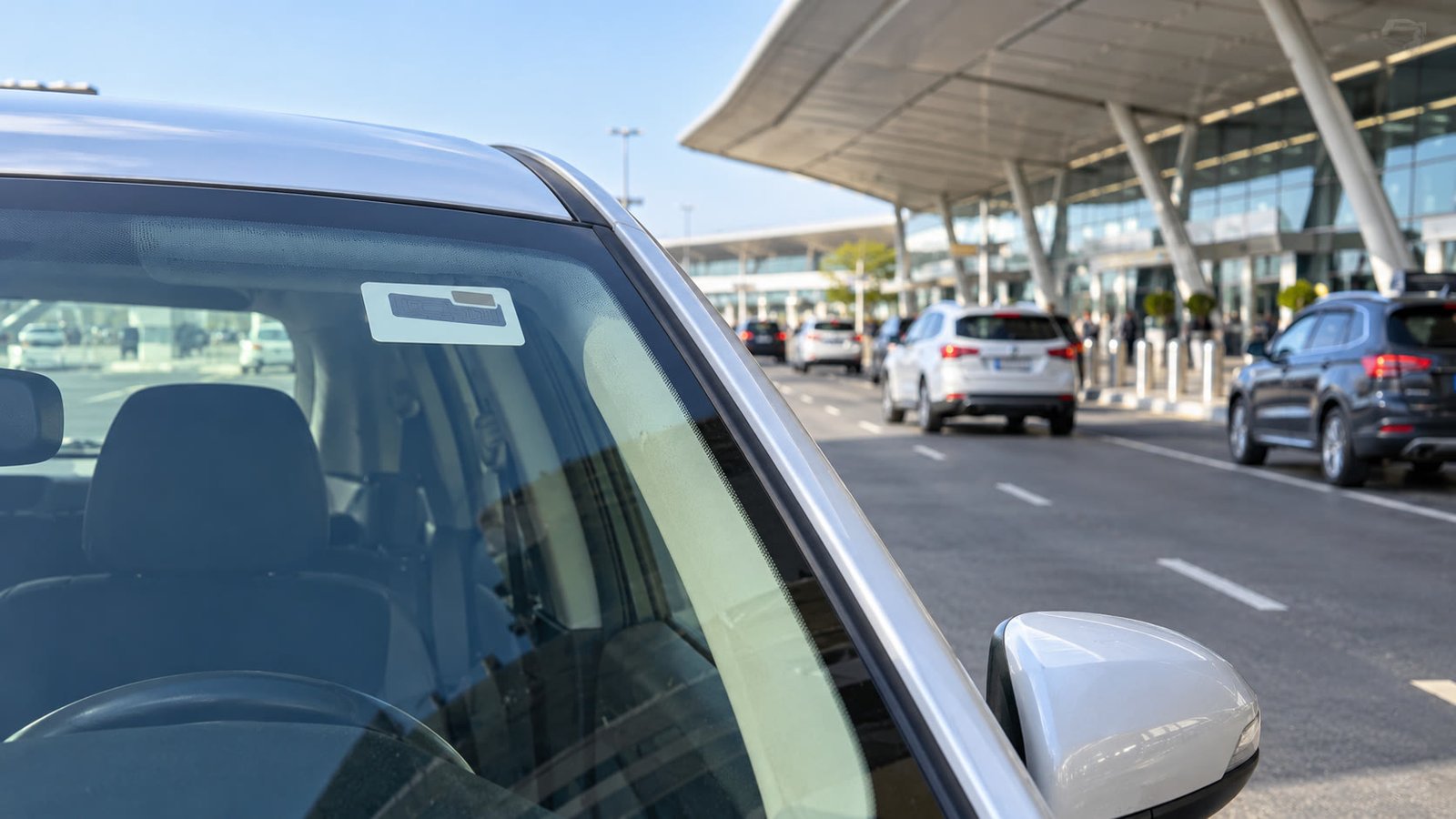
Illustrative image: a FASTag-equipped car approaching an airport departure lane; it is not a photograph of Delhi Airport Terminal 3.
Sources
- NHAI Official — Terminal 3 FASTag restriction update — 15 Oct 2026
- NHAI Removes FASTag Restrictions at Delhi Airport Terminal 3 — 15 Oct 2026
- T3 parking operator used FASTag to restrict entry, payment facility suspended — 15 Oct 2026
- NHAI tells Banks not to allow FASTag to restrict entry at Delhi Airport — 14 Oct 2026
- FASTag parking payments suspended at Delhi airport T3 after NHAI flags entry restrictions — 15 Oct 2026