As of October 2026, the FASTag Annual Pass costs ₹3,075 for the 2026–27 financial year and is meant for private, non-commercial cars, jeeps and vans. It is a prepaid pass attached to one eligible vehicle, not a replacement for the FASTag wallet: eligible National Highway and National Expressway crossings can be covered, while other tolls can still be deducted from the regular balance.
This guide shows who can activate the pass, how to check its status and crossing count, and what to do when a toll is deducted even after payment. The current fee, limits and plaza coverage are time-sensitive; check the official status before a long trip.
Key takeaways
- The FY 2026–27 Annual Pass fee is ₹3,075, applicable from 1 April 2026.
- It is for a private non-commercial car, jeep or van with a valid FASTag linked to the vehicle registration number.
- It is valid for one year from activation or 200 eligible crossings, whichever comes first.
- It does not waive charges at State Highway, local-body or other non-designated plazas; the regular wallet may still be charged there.
- Activation is done through Rajmarg Yatra or the NHAI website, and NHAI says it normally reflects within two hours after payment.
What the FASTag Annual Pass actually is
The Annual Pass is an optional toll-payment facility built on an existing FASTag. For the 2026–27 financial year, NHAI revised the fee from the base-year ₹3,000 to ₹3,075 with effect from 1 April 2026. NHAI’s 15 March 2026 release says the facility is available at about 1,150 fee plazas on National Highways and National Expressways.
At a covered plaza, the pass substitutes the normal per-crossing user-fee debit. It does not turn every FASTag-enabled road in India into a free road. A State Highway or a road operated by a State Government, local body or another agency may accept FASTag but still charge the normal fee from the wallet.
Who is eligible for the Annual Pass?
IHMCL’s Annual Pass FAQ sets out the operational checks. Before paying, confirm each of these points:
- Vehicle category: the vehicle must be a private, non-commercial car, jeep or van. Commercial vehicles are not covered by this facility.
- Valid vehicle registration number: the FASTag must be linked to the vehicle’s VRN. A tag registered only against a chassis number cannot be used to activate the pass until the VRN is updated.
- Correct installation: the tag should be properly affixed to the windscreen of the registered vehicle. A tag carried in the hand is not the same as a functioning, correctly installed tag.
- Active tag status: the FASTag should not be blacklisted and should meet the issuer’s KYC and vehicle-class records.
- One vehicle only: the pass is non-transferable. It follows the registered vehicle and tag combination, not the owner’s phone number or a different car.
The Annual Pass is not mandatory. A driver who does not opt in can continue using regular FASTag transactions at the applicable toll rates.
Where does it work, and what counts as a crossing?
For FY 2026–27, NHAI describes the network as about 1,150 National Highway and National Expressway fee plazas. Indian Express reporting based on MoRTH information also notes that the pass is not valid at State Highway and local-body plazas, where FASTag behaves as a regular payment method.
The crossing count is not the same as distance travelled. At a point-based plaza, each passage counts as one crossing, so a return journey through the same plaza normally uses two crossings. In a closed tolling system, the entry-and-exit pair is treated as one crossing.
Before budgeting a journey, check the route’s toll points in the toll-charge calculator and confirm which plazas are part of the Annual Pass network. For a multi-day drive, the road-trip planner can help separate fuel, toll and stop planning, but the exact pass treatment still depends on the plaza.
| Situation | Payment as of FY 2026–27 | What happens at the plaza | Limit or follow-up |
|---|---|---|---|
| Annual Pass at a designated NH/NE plaza | ₹3,075 one-time pass fee | No normal per-crossing user-fee debit while the pass is active | Ends at 200 crossings or one year, whichever comes first |
| Regular FASTag at any applicable plaza | No separate Annual Pass fee; the plaza’s applicable toll is charged | Per-crossing debit from the linked wallet | Continues under normal issuer and plaza rules |
| Annual Pass holder at a State Highway or local-body plaza | ₹3,075 pass fee still remains separate | Regular FASTag charge may be deducted from the wallet | Check the plaza operator and current route information |
| Commercial vehicle or ineligible tag | Not eligible for this pass | Regular toll mechanism applies | Do not treat a commercial or mismatched tag as covered |
The fee, limits and approximate plaza count in this table come from NHAI and IHMCL information for FY 2026–27. Toll charges outside the pass can change by plaza, vehicle class and notified rate.
How to activate the FASTag Annual Pass
- Check the tag and vehicle record. Confirm that the tag is on the windscreen, the VRN is correct, the vehicle is private, and the tag is active rather than blacklisted.
- Use an official channel. Start the Annual Pass flow on the Rajmarg Yatra mobile application or the official NHAI website. Avoid payment links shared through messages or unofficial websites.
- Enter the vehicle details. The system verifies the vehicle and the associated FASTag. Resolve any VRN, class or tag-status mismatch before attempting payment again.
- Pay the current fee. For FY 2026–27, the displayed fee is ₹3,075. The older ₹3,000 figure belongs to the 2025–26 base year.
- Wait for activation. NHAI says the pass normally activates on the registered FASTag within two hours after payment confirmation. Keep the transaction reference until the status is visible.
- Check before departure. Confirm the pass status and keep enough regular wallet balance for non-covered toll plazas on the route.
Does the existing FASTag balance pay for the pass?
No. IHMCL says the fee is paid through the Rajmarg Yatra payment flow, not from the existing FASTag wallet. That balance remains available for regular tolls and other supported uses.
How to check activation, balance and crossing status
Use the receipt and an official status check together: a payment receipt proves the transaction, but not that the toll-lane system has refreshed the active status.
- Open the Annual Pass section in Rajmarg Yatra and check the vehicle number, activation status and order history.
- Check the issuing bank’s FASTag app, portal or SMS alerts for the regular wallet balance and latest transaction.
- Use the official FASTag status facility linked from IHMCL to verify whether the tag is active, low-balance or blacklisted.
- Read the toll SMS after a crossing. A wallet debit can be legitimate if the plaza is outside the Annual Pass network.
- Record the activation time and crossing history. The pass reverts to regular FASTag after 200 crossings or one year, whichever arrives first.
After the limit is reached, a later toll deduction may simply mean the Annual Pass has ended. Check the date and crossing count before raising a complaint.
Worked rupee examples: how the pass changes the math
Use an illustrative toll amount rather than assuming every plaza has the same rate. Suppose a private car makes 16 one-way crossings at designated plazas where the normal user fee would have been ₹200 per crossing. The regular total would be 16 × ₹200 = ₹3,200. Against the FY 2026–27 pass fee of ₹3,075, the difference is ₹125 before any non-covered tolls.
Now consider 12 eligible crossings at an illustrative ₹150 each: 12 × ₹150 = ₹1,800. That is below ₹3,075. The example does not predict a saving or recommend a purchase; it shows why the result depends on actual crossings, notified tolls and route coverage.
For a complete trip budget, combine the toll estimate with the fuel cost calculator. A route that looks attractive on tolls can still cost more if it adds distance or fuel use. The earlier FASTag Annual Pass versus regular toll break-even guide covers that comparison; this guide focuses on eligibility, activation and status problems.
What to check before a long drive
- Match the vehicle registration number in the Annual Pass record, FASTag account and RC.
- Check that the tag is fixed to the windscreen and that the vehicle class is recorded correctly.
- Confirm the pass is active and note its activation date and remaining crossing count.
- Review the route for State Highway, local-body and other non-designated toll plazas.
- Keep regular FASTag wallet balance for those charges, parking or other supported deductions.
- Save the payment receipt, activation screen and toll SMS until the trip is complete.
- If a debit looks wrong, note the plaza, time, vehicle number and transaction reference before contacting the issuing bank, Rajmarg Yatra or the National Highways helpline.
Common FASTag Annual Pass problems and practical checks
Payment succeeded but the pass is not active
Allow the normal activation window of up to two hours, then refresh the official status page and keep the payment reference. If the status still does not change, raise the issue through the official Annual Pass channel and the issuing bank instead of paying again without checking the first order.
The regular wallet was charged at a toll
First check the plaza. State Highway, local-body and other non-designated plazas can charge the regular wallet. If the plaza should be covered, compare the transaction time with activation and check for a blacklisted tag, wrong VRN or vehicle-class mismatch.
The tag was replaced or the vehicle changed
The Annual Pass is not transferable. It is tied to the eligible registered vehicle and the FASTag fixed to it, so do not assume it will move to a replacement tag or another vehicle. Confirm the official process with NHAI, Rajmarg Yatra and the issuing bank.
FASTag Annual Pass FAQ
Is the FASTag Annual Pass unlimited?
No. For FY 2026–27 it is limited to one year from activation or 200 eligible crossings, whichever comes first. It is a capped facility, not toll-free travel across every road.
Can I use it on State Highways?
Not automatically. The Annual Pass applies to designated National Highway and National Expressway fee plazas; at State Highway, local-body or other non-designated plazas, the FASTag can work as a regular wallet-based payment method.
Do I need a new FASTag?
No, an existing tag can be used if it is properly affixed, linked to the correct VRN and not blacklisted. A chassis-only record, an incorrectly installed tag or a mismatched vehicle record can stop activation.
Can I pay the Annual Pass fee from my FASTag wallet?
No. The pass fee is paid separately through the official Rajmarg Yatra or NHAI payment flow. Keep the wallet balance for non-covered tolls and other supported transactions.
Sources
- NHAI, “NHAI to Revise FASTag Annual Pass Fee from 1st April 2026 for FY 2026–27,” 15 Mar 2026
- Press Information Bureau, “NHAI to Revise FASTag Annual Pass Fee from 1st April 2026 for FY 2026–27,” 15 Mar 2026
- IHMCL, “FAQ: Annual Pass facility for FASTag Users,” 12 Aug 2025
- The Indian Express, “FASTag Annual Pass Price Revised to Rs 3,075 from April 1: Check Details,” 15 Mar 2026
- Business Standard, “FASTag Annual Pass price to rise from April 1: What you need to know,” 15 Mar 2026
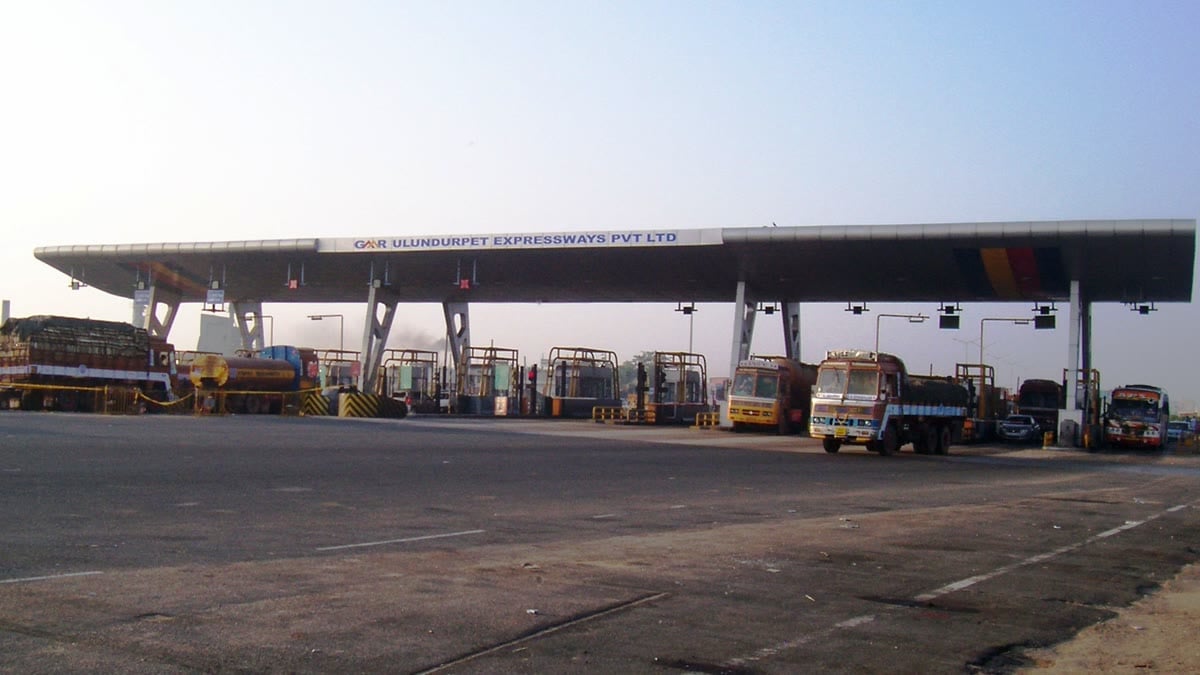
- Hero image: “GMR-Vikravandi-Toll-Plaza.JPG,” Rsrikanth05, Wikimedia Commons, 25 Jan 2013, CC BY-SA 3.0
This article is for general information only and is not financial, insurance or legal advice.