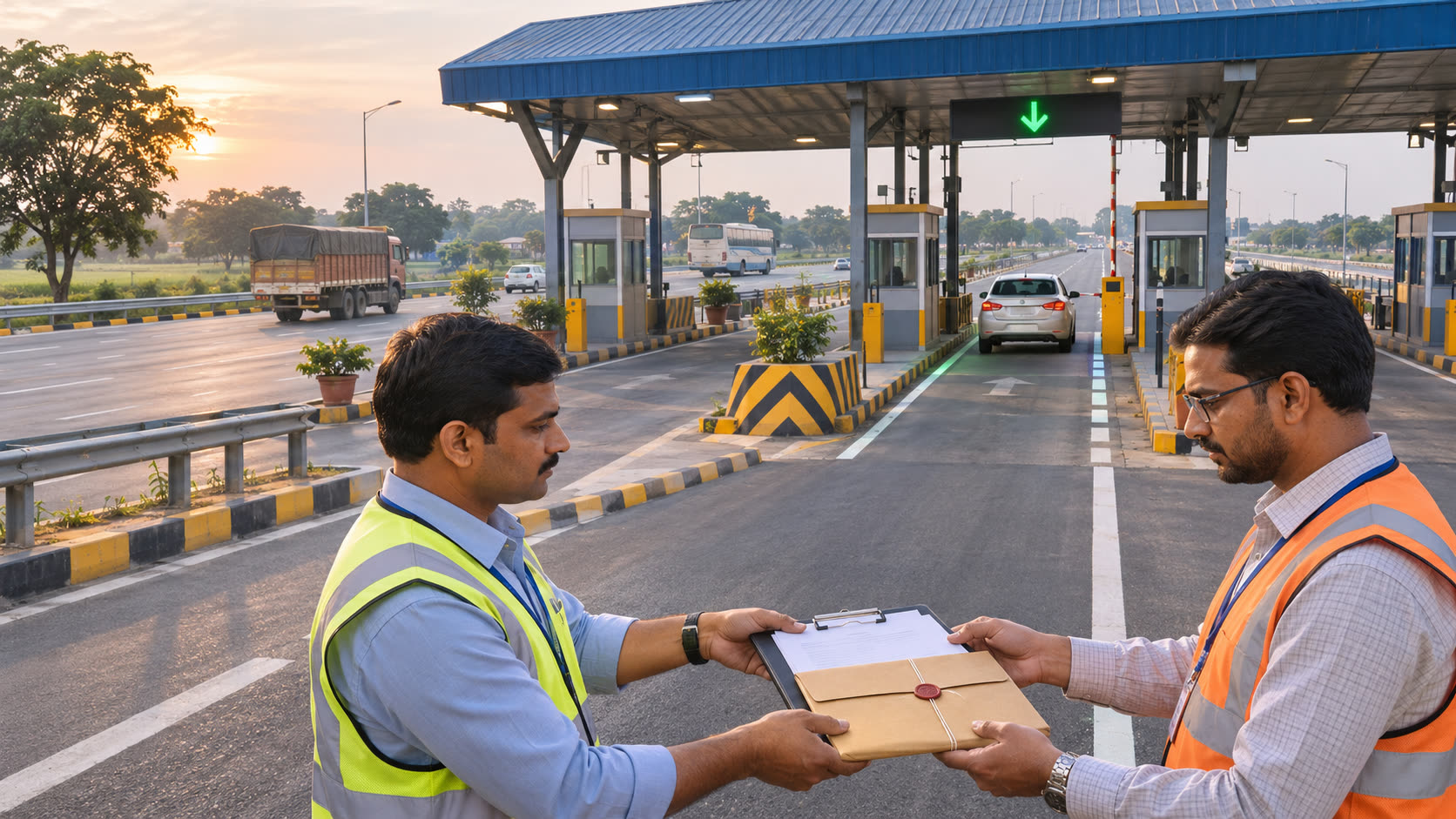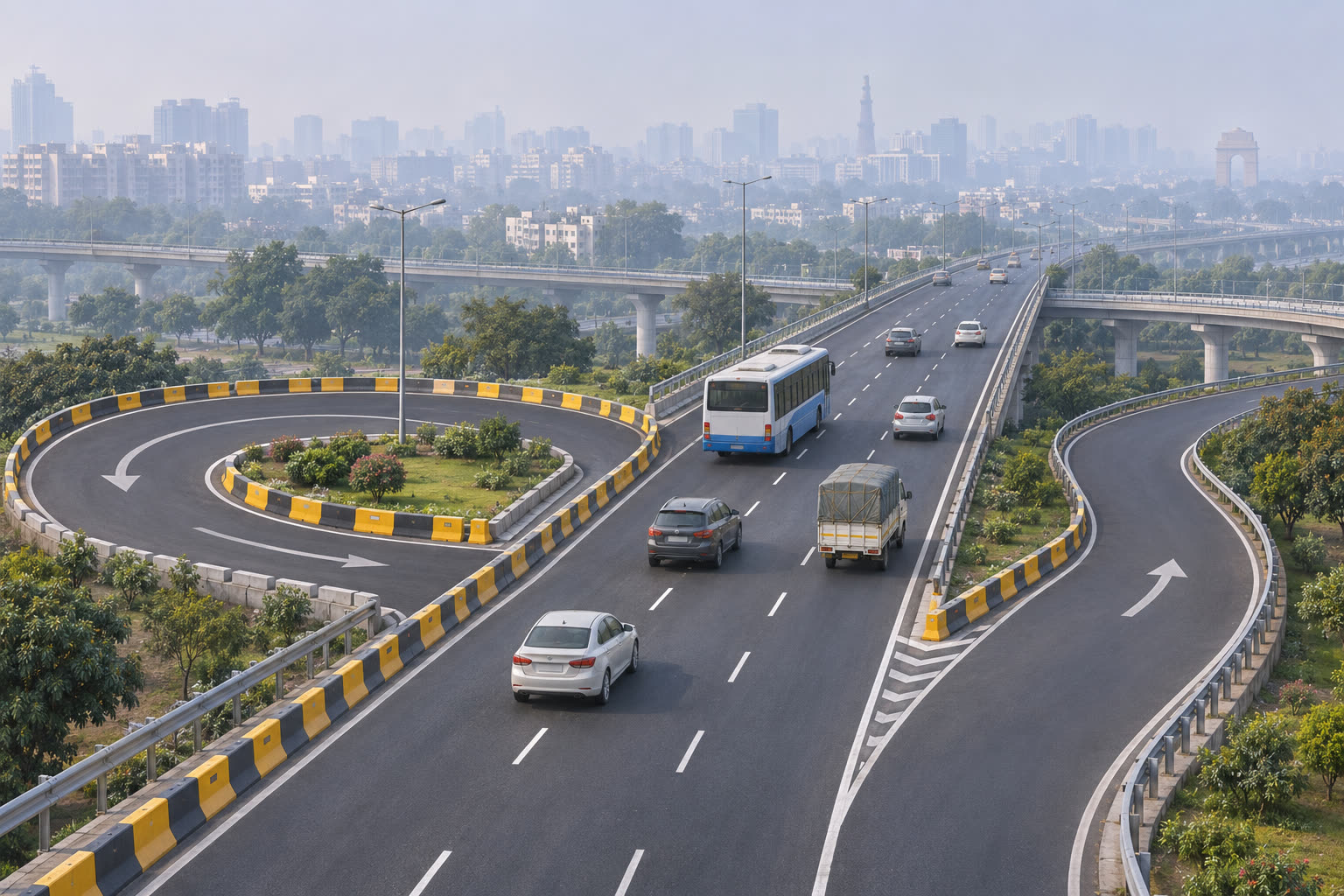
Delhi has turned back over 16,000 vehicles at its borders since 1 Nov 2026 under the winter rule that bars non-Delhi-registered vehicles below BS-VI from entering the capital. The latest enforcement figures matter to NCR commuters, delivery operators and visitors because a valid Pollution Under Control Certificate (PUCC) alone does not make a below-BS-VI vehicle eligible for entry.
Key takeaways
- The notified restriction runs from 1 Nov 2026 to 31 Jan 2027 for vehicles registered outside Delhi and below BS-VI.
- Hindustan Times and ET Infra both reported 16,827 non-CNG and non-electric vehicles turned back at Delhi borders between 1 and 9 Nov 2026.
- Reports covering 1–9 Nov 2026 counted 73,877 vehicles checked, 16,827 turned back and 696 challaned, with fines of about ₹1.4 crore.
- Delhi’s winter notification separately requires petrol, diesel, CNG and LPG outlets to dispense fuel only to vehicles with a valid PUCC.
What the latest border data shows
Hindustan Times and ET Infra both reported official enforcement data through 9 Nov 2026. The reports counted 73,877 vehicles checked at Delhi’s borders, 16,827 non-CNG and non-electric vehicles registered outside Delhi turned back, and 696 vehicles challaned for violating the entry restriction.
The two reports put the penalties at about ₹1.4 crore: Hindustan Times described more than ₹1.39 crore in penalties and environmental compensation, while ET Infra rounded the total to ₹1.4 crore. Both reports attribute the figures to Delhi Traffic Police data or officials involved in the enforcement drive.
| Report | Cut-off | Reported enforcement |
|---|---|---|
| Hindustan Times, 10 Nov 2026 | 1–9 Nov 2026 | 73,877 checked; 16,827 turned back; 696 challaned; more than ₹1.39 crore in penalties |
| ET Infra, 10 Nov 2026 | 1–9 Nov 2026 | 16,827 turned back; 696 challaned; about ₹1.4 crore in fines |
The shared totals make the development clear: the border drive is affecting tens of thousands of vehicles before they reach the capital. The reports use the same nine-day window, while the fine total is presented with slightly different rounding, so the figures are shown with their original attribution.
What the Delhi rule actually covers
The Delhi Gazette notification, issued on 23 Jun 2026 and published on 1 Jul 2026, says motor vehicles registered outside the National Capital Territory of Delhi and below BS-VI emission standards shall not be permitted to ply in Delhi from 1 Nov to 31 Jan every year. The current winter window therefore ends on 31 Jan 2027.
The notification exempts vehicles operating on CNG or electric power, emergency and sovereign-duty vehicles such as ambulances, fire tenders and police vehicles, and any other category specifically exempted by Delhi’s Environment Department. A vehicle being registered outside Delhi is not itself a violation; the restriction depends on the combination of the registration location and the vehicle’s emission standard.
That distinction matters for NCR travel. A valid PUCC does not override the separate entry restriction for an outside-Delhi vehicle below BS-VI. Commercial goods vehicles and buses can also face additional CAQM directions, so fleet operators should not assume that an exemption for one vehicle category automatically covers another.
PUCC is a separate check at fuel pumps
The same Delhi notification requires petrol, diesel and CNG/LPG retail outlets in the NCT to dispense fuel only when the vehicle produces a valid PUCC. The notification allows verification through a physical certificate, ANPR or electronic systems including VAHAN. This requirement is year-round, while the outside-Delhi, below-BS-VI entry restriction is seasonal.
For a practical checklist on checking validity, renewal dates and document errors, see the Delhi-NCR PUC check and renewal guide. The enforcement reports also show why the two checks should not be confused: the PUCC challan count reported by ET Infra was a separate figure from the vehicles turned back at borders.
What to check before an NCR trip
- Check the vehicle’s registration certificate for the registered state and the stated emission standard.
- Keep the PUCC valid and make sure its details match the vehicle registration; digital verification may be used.
- Confirm whether the vehicle is covered by a CNG, electric, emergency-duty or specific official exemption.
- Check the route and current traffic advisories before entering Delhi, especially if a trip depends on an outside-Delhi commercial vehicle or bus.
Drivers should not treat an unattended checkpoint as permission to enter. Hindustan Times reported that enforcement presence varied during spot checks at six borders, while a transport official said teams operate during assigned shifts and can conduct mobile interceptions. The notified restriction applies across Delhi, not only where a barricade is visible.
Route and cost impact for drivers
A vehicle that is turned back may need to park outside Delhi, use public transport, or take a different NCR route. The resulting delay and extra distance can change both arrival time and fuel spend. Use the road-trip planner to compare route time, then estimate the added petrol or diesel expense with the fuel cost calculator.
For the latest city-level rates before departure, check live fuel prices. The calculator result will still depend on the vehicle’s actual mileage, traffic and the distance added by any diversion.
What to watch next
The Supreme Court’s 6 Nov 2026 order in its vehicular-emissions proceedings asked Delhi, the MCD, Delhi Police and neighbouring states to file details on the rules and enforcement mechanisms, including vehicles inspected, challaned and denied entry. The order lists the matter for 23 Nov 2026; it does not itself create a new entry rule.
For now, the Delhi Gazette framework remains the operative baseline: the vehicle-entry restriction runs through 31 Jan 2027, the PUCC fuel condition applies throughout the year, and any stricter GRAP measure takes priority if CAQM invokes one.
Reader takeaway
For an outside-Delhi petrol or diesel vehicle below BS-VI, a valid PUCC is necessary for fuel access but is not a pass into Delhi during the winter window. Checking the RC emission standard, PUCC validity and any applicable exemption before departure is the clearest way to avoid a border turn-back, challan or an unplanned detour.
Sources
- Government of NCT of Delhi, “Comprehensive directions for air pollution control” (Delhi Gazette SG-DL-E-01072026-273956) — 1 Jul 2026.
- Hindustan Times, “Delhi’s ban on non-BS-VI vehicles: 16,827 vehicles turned back from borders in 9 days, data shows” — 10 Nov 2026.
- ET Infra, “Delhi turns back 17,000 vehicles at borders since November 1” — 10 Nov 2026.
- Supreme Court of India, order in SMW (C) No. 12/2026, Vehicular Emissions and Pollution — 6 Nov 2026.
- Commission for Air Quality Management, Direction No. 88 on commercial goods vehicles below BS-VI — 23 Apr 2025.
- Commission for Air Quality Management, Direction No. 93 on cleaner buses entering Delhi — 3 Jun 2025.