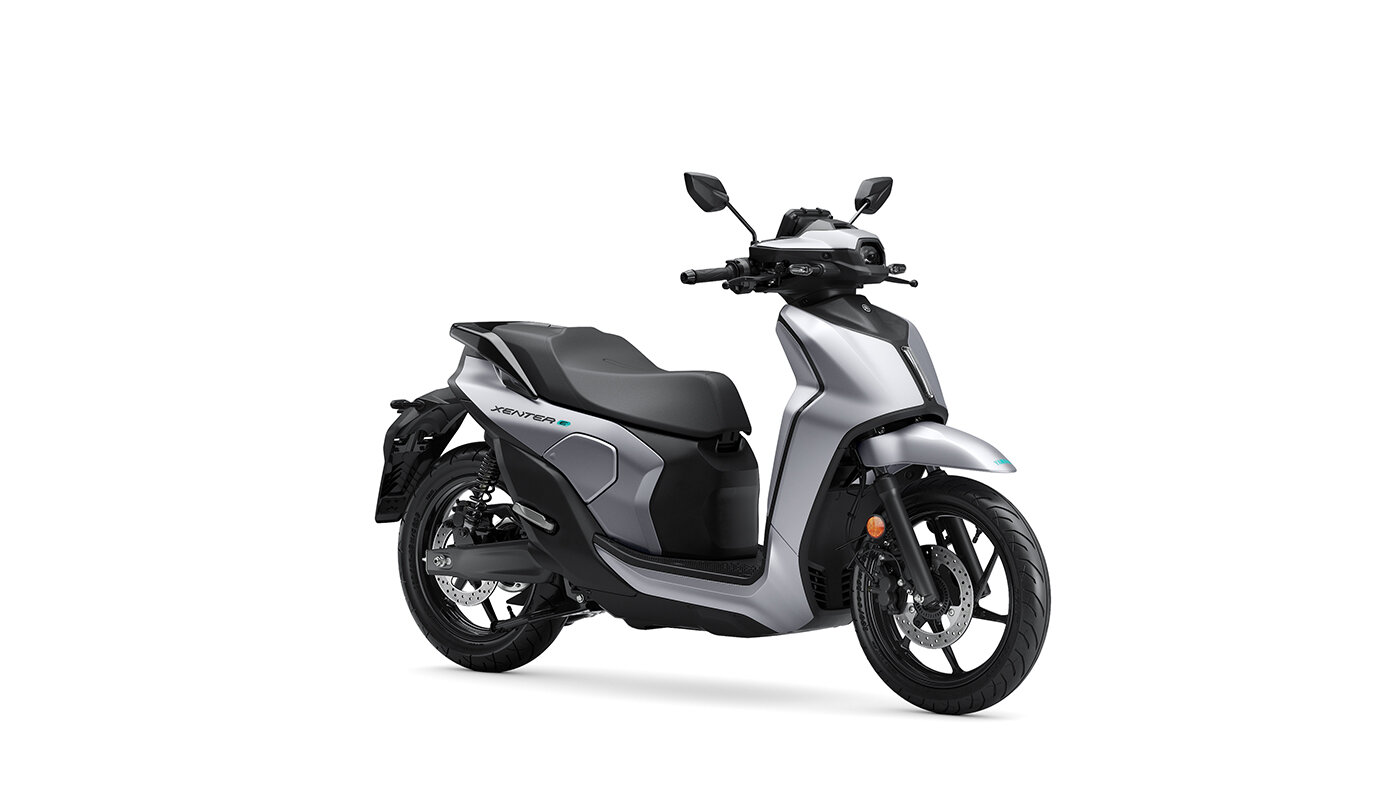
Yamaha has unveiled the XENTER E electric scooter at EICMA 2026 with a fixed 3.5 kWh battery, a claimed 108 km WMTC range and 16-inch wheels. For Indian riders, the important limitation is that Yamaha has not announced an India launch or price; current reporting points to Europe first in spring 2027.
Key takeaways
- The XENTER E is a global reveal, not a confirmed India launch.
- Yamaha claims 108 km under the WMTC test cycle from a fixed 3.5 kWh battery.
- The scooter has 16-inch wheels, an 800W onboard charger and a claimed 5.5-hour full charge time.
- Its equipment includes a 5-inch TFT display, three riding modes, regenerative braking, reverse function and connected navigation.
- Indian buyers still need confirmed local pricing, homologation, charging compatibility and service support before comparing it with scooters sold here.
What Yamaha has revealed
Yamaha Motor's official 4 November 2026 release says the XENTER E was exhibited at EICMA 2026 in Milan alongside the NMAX E. Yamaha describes the XENTER E as a high-wheel electric scooter designed for everyday urban mobility, with larger wheels intended to improve stability and comfort on uneven roads. Yamaha Motor Vietnam will handle production.
The model is positioned as a 125cc-equivalent electric scooter for overseas markets. That positioning matters for Indian readers, but it does not mean the scooter is approved for India or that its international specifications will carry over unchanged. The brand's release confirms the product and its technical direction; it does not announce an Indian launch plan.
Range and battery: what the 108 km claim means
The XENTER E uses a fixed 3.5 kWh lithium-ion battery. Yamaha quotes a range of up to 108 km in WMTC mode, while Times of India Auto also reported the same test-cycle figure and identified the battery as an L-shaped pack. The pack layout allows Yamaha to retain a flat footboard and leave room for under-seat storage.
A simple calculation using Yamaha's published battery and range figures gives roughly 32 Wh per km before charging losses: 3.5 kWh multiplied by 1,000 and divided by 108 km. That is an on-paper energy-use estimate, not a promised running cost for India. Speed, rider weight, traffic, temperature, road surface and riding mode can all change actual range. A WMTC result should therefore not be read as an India-certified IDC figure or as a guarantee of 108 km in Indian city traffic.
For a rider evaluating a future India launch, the useful question is not only the headline range. It is whether the final India version keeps the same battery, how much usable capacity is available, what warranty covers the pack, and how the company measures range in the local market. Those details will matter more than a single international test number.
Charging and everyday hardware
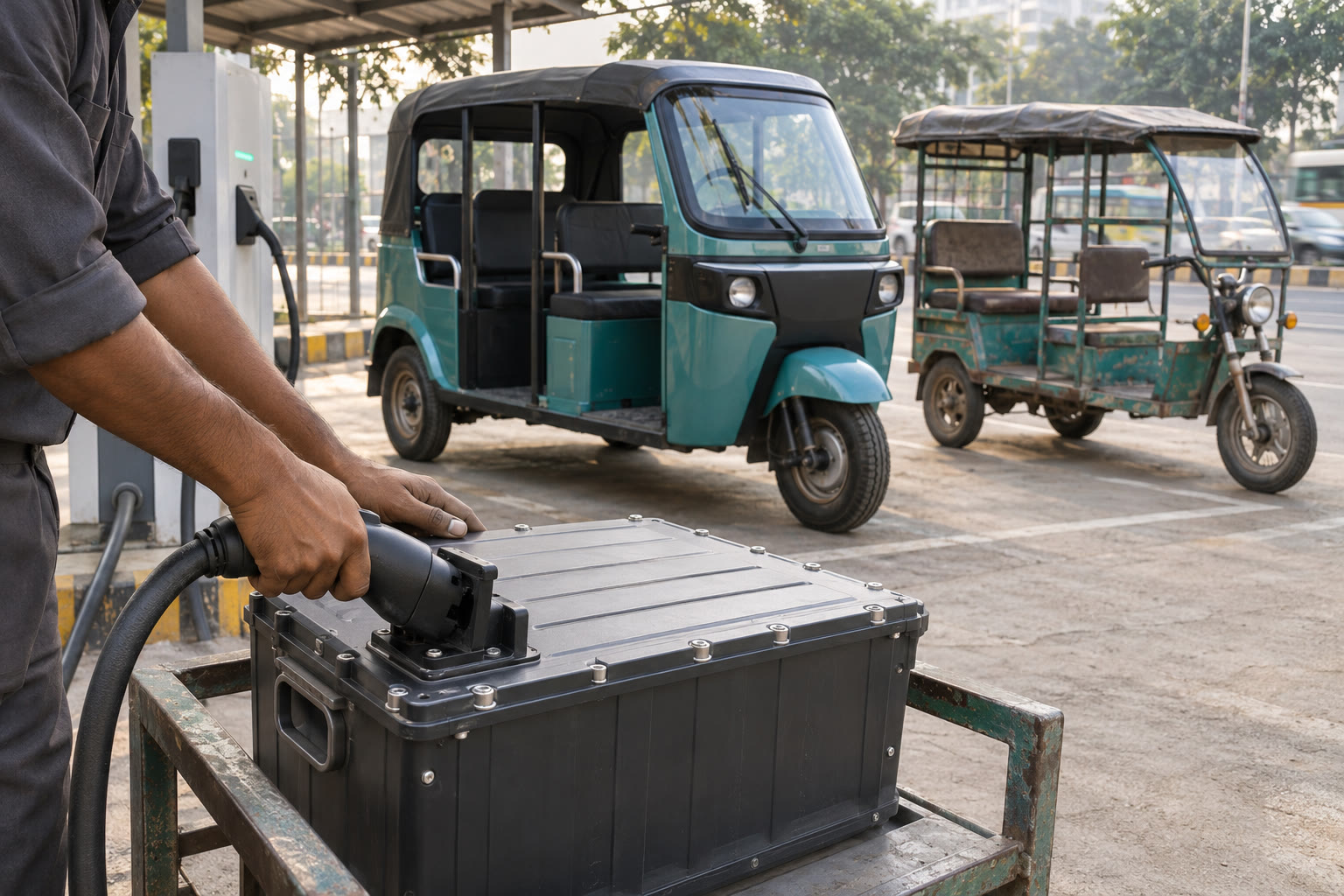
Times of India Auto reported that the XENTER E gets an 800W onboard charger and takes about 5.5 hours to charge from 0 to 100 percent under specified conditions. Yamaha's own release says the charger supports charging at home and at public charging stations for automobiles. The scooter is also reported to support compatible public AC Type 2 points. Until Yamaha confirms an India version, the connector, cable, tariff and public-charging support available to Indian users remain open questions.
Readers planning an EV commute can use FuelPrice's state-wise EV charging station directory to understand how public charging is distributed today. The XENTER E is not yet listed as an India product, so the directory is a planning reference rather than proof that this specific scooter will work at every listed station.
The scooter's hardware is built around daily usability. Yamaha specifies 16-inch front and rear wheels, a flat footboard, a 790 mm seat height and a newly designed underbone frame. Times of India Auto reported 245 mm disc brakes at both ends, ABS, traction control, keyless ignition, a USB Type-C port and regenerative braking. The larger wheels are intended to help the scooter stay composed over uneven urban surfaces, but Indian buyers would still need the final ground-clearance and suspension specifications.
A 5-inch TFT display connects to Yamaha's Motor On app for turn-by-turn navigation, battery information, service details and parking location. Three power modes, labelled S, T and E, change the scooter's response and range priorities. A reverse function is designed to help with tight parking spaces and slopes. These features are confirmed in Yamaha's release and described in the current India-facing coverage, but their final availability in any future Indian trim is not confirmed.
Why Indian buyers need to wait for local confirmation
Times of India Auto reported on 12 November that European availability is planned for spring 2027 and that Yamaha has not announced an India launch. Mint's 13 November report also described the Europe-first timeline. Neither source reports an Indian price, booking window or launch date. The accurate status is therefore expected overseas availability, with India unconfirmed.
That distinction matters because a foreign-market reveal can create a misleading price or range comparison. There is no official India ex-showroom price to convert, and the 108 km WMTC claim cannot be used to estimate an Indian on-road range without a local test result. Indian buyers also need to wait for clarity on type approval, battery certification, charging connector, warranty terms, spare-parts availability, software support and the service network.
If Yamaha later confirms India, a practical comparison should cover the complete ownership picture: usable range rather than only the laboratory claim, home-charging time, public-charging access, battery warranty, replacement policy, insurance, servicing and resale support. A scooter with a strong specification sheet can still be difficult to use if its charging or service ecosystem is thin.
For a broader view of public charging, FuelPrice's guide to public EV charging in India explains the practical questions around station choice, charging time and trip planning. The XENTER E's overseas specification does not answer those India-specific questions yet.
How to read the running-cost promise
The XENTER E's battery and range figures suggest an efficient urban design, but they do not establish a rupee-per-kilometre figure for Indian owners. Electricity tariffs differ by state and connection, public charging can cost more than home charging, and charging losses mean the energy drawn from the wall is higher than the energy stored in the battery. Insurance, maintenance and battery-warranty terms would also affect the total cost.
Readers comparing this type of electric scooter with a petrol model can use the fuel cost calculator for a fuel-only baseline, then keep electricity, charging equipment, servicing and insurance as separate line items. That gives a more honest comparison than treating the 108 km claim as a direct saving figure.
What to watch next
The next meaningful update will come from Yamaha on market availability, not from another international specification leak. Indian readers should look for a confirmed launch statement, an India-specific product page, a certified range or test cycle, the final charging hardware, price, warranty and dealer-service coverage. Until then, the XENTER E is a confirmed global Yamaha electric scooter with an unconfirmed India future.
Reader takeaway
Yamaha's XENTER E is a notable high-wheel EV reveal because it combines a 3.5 kWh fixed battery, a claimed 108 km WMTC range, large wheels and commuter-focused controls. But the India-relevant fact is the boundary around that news: Europe is planned first for spring 2027, while Yamaha has not confirmed an India launch or price. Indian riders can track the model's charging and range technology, but any purchase or running-cost comparison here must wait for local specifications and approvals.
Sources
- Yamaha Motor: Yamaha Motor to Exhibit All-New NMAX E and XENTER E Electric Scooters at EICMA — 4 Nov 2026
- Times of India Auto: EICMA 2026: New Yamaha Xenter E Electric Scooter Unveiled With 16-Inch Wheels, 108 km Range, 800W Charger — 12 Nov 2026
- Mint: Yamaha Xenter E electric scooter unveiled at EICMA: 108 km range, 16-inch wheels, launch details — 13 Nov 2026