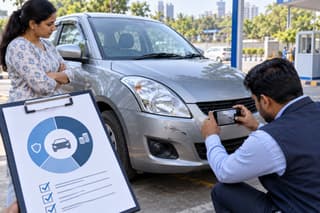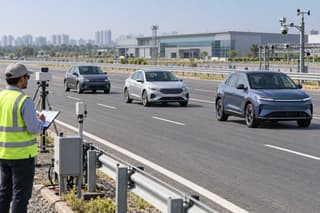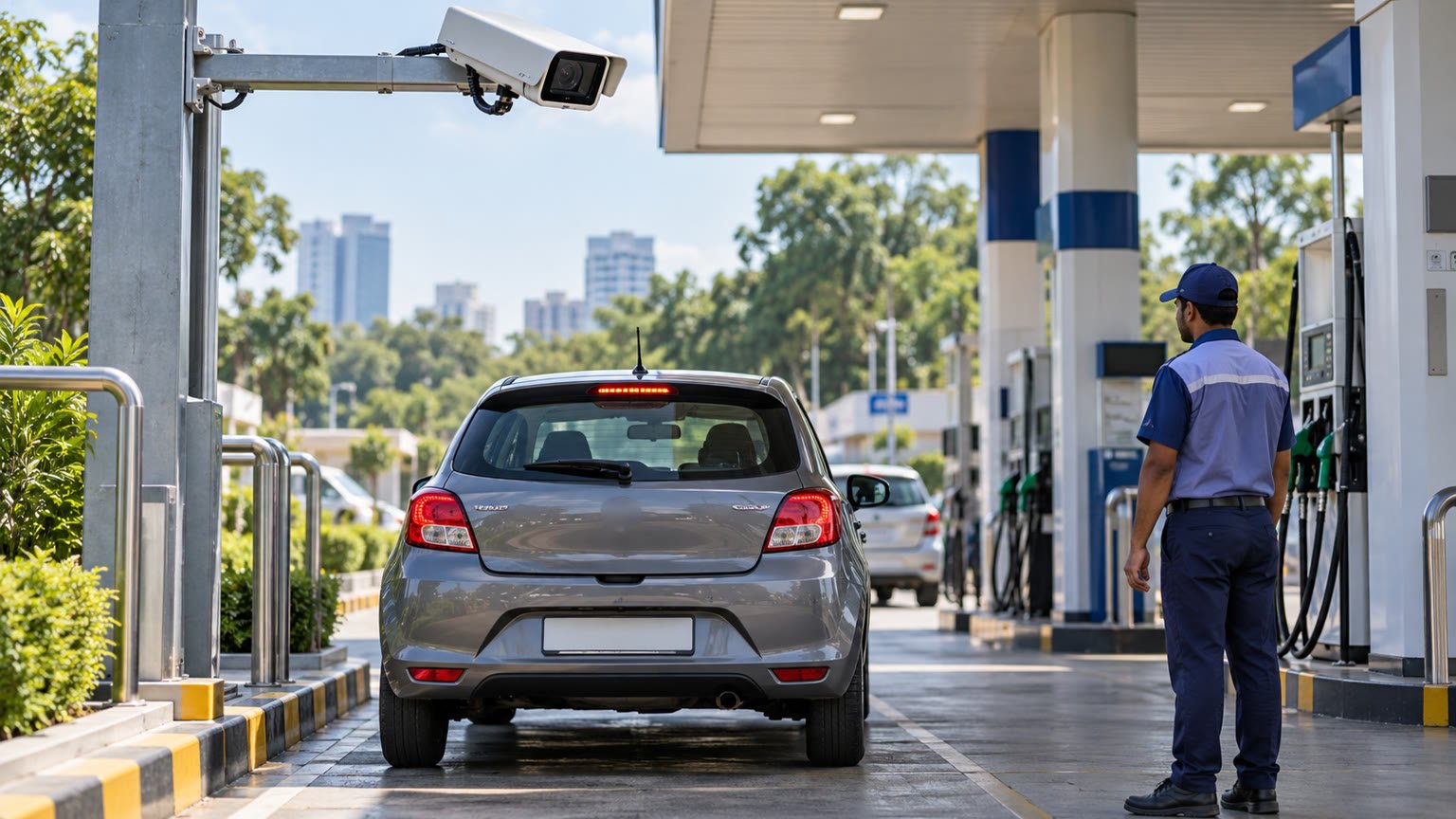
Delhi-NCR’s “No PUCC, No Fuel” enforcement is scheduled to take effect on 1 Oct 2026, meaning vehicles without a valid Pollution Under Control Certificate may be refused petrol, diesel or other covered fuel at outlets in the National Capital Region. The move is a fuel-access rule, not a change in the retail price of petrol or diesel, so drivers should check their certificate before they set out to refuel.
Key takeaways
- CAQM Direction No. 101 sets 1 Oct 2026 as the effective date for restrictions on fuelling vehicles without a valid PUCC across the NCR.
- Delhi’s implementation will run in “mission mode” at 500 ANPR-enabled fuel stations, with action against pumps that do not comply.
- The implementation review covers Delhi and the NCR governments of Uttar Pradesh, Haryana and Rajasthan; the rule is framed around fuelling in the NCR, not only vehicle registration in the region.
- A valid certificate proves that the vehicle cleared the pollutants covered by the current test. It is not a complete measurement of every pollutant emitted on the road.
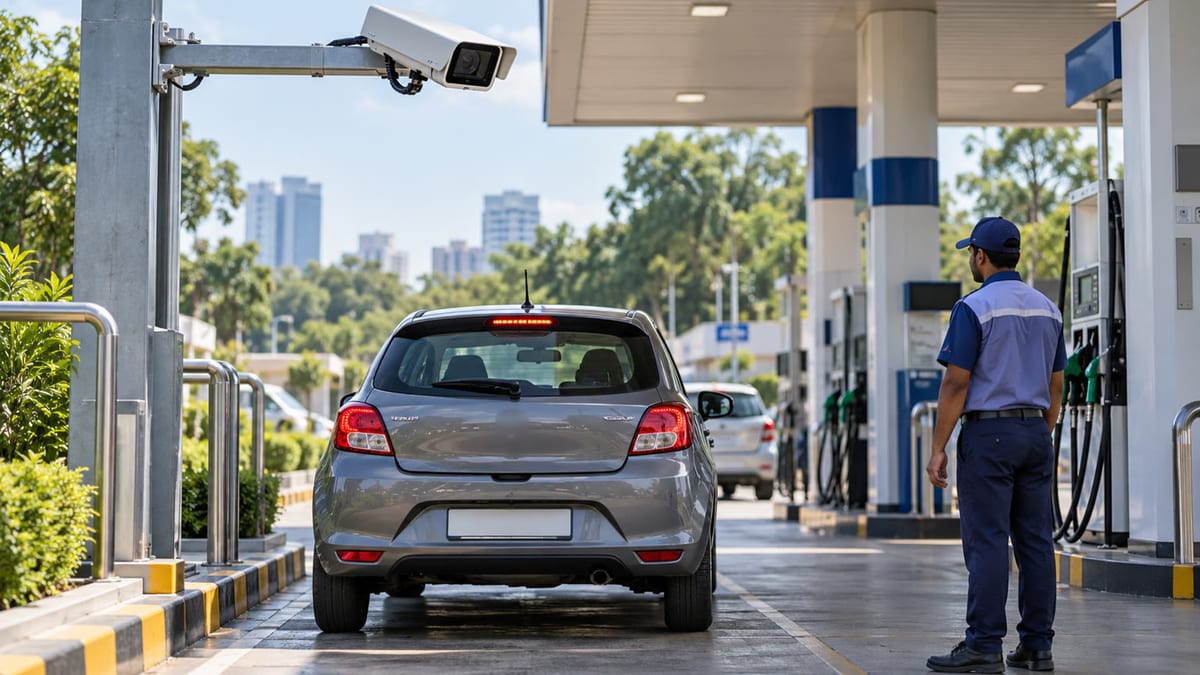 Representative editorial illustration of an ANPR camera checking a vehicle at a fuel station. Credit: FuelPrice editorial image, AI-generated; not an official photograph.
What changes at NCR fuel stations from 1 October
The Commission for Air Quality Management (CAQM) approved the fuel restriction under Direction No. 101. Its official May release said fuel would be dispensed in the entire NCR only after production of a valid PUCC from 1 Oct 2026. A later implementation review recorded preparations for ANPR cameras at fuel and CNG stations by the Government of NCT of Delhi and the NCR states of Uttar Pradesh, Haryana and Rajasthan.
The Union environment ministry’s 28 Sep 2026 update adds the immediate Delhi enforcement detail: the city will run a public-awareness and enforcement campaign in mission mode at all 500 ANPR-enabled fuel stations, with action against defaulting pumps. The official PIB meeting release does not announce a new petrol or diesel rate. It sets out how an existing compliance direction will be enforced at the point where a driver tries to buy fuel.
In practical terms, the number on the pump may be unchanged while the transaction still fails if the vehicle’s PUCC is expired, unavailable in the checking system or not matched to the registration details. Because the official wording regulates fuelling in the NCR rather than only NCR-registered vehicles, drivers entering the region from another state should not assume that their registration alone will bypass the check.
How the ANPR and PUCC check is expected to work
An automatic number-plate recognition camera can read the registration mark as a vehicle enters a participating outlet. The system can then be used to check whether the vehicle has a valid pollution certificate before fuel is dispensed. The precise operating experience may differ between stations as states complete installation and connect their systems, but the policy objective is the same: make an expired or missing certificate visible before the refill is completed.
The check will matter most to drivers who normally renew a PUCC only when they are stopped on the road. A last-minute trip through Gurugram, Noida, Ghaziabad, Faridabad or another NCR corridor could now include an extra compliance step at the pump. FuelPrice’s earlier Gurugram no-PUC rollout report covered local preparations; this wider update confirms the mission-mode implementation and the region-wide effective date.
What drivers should check before refuelling
1. Confirm the certificate expiry date
Check the PUCC record before leaving for a journey that enters or crosses the NCR. If it has expired, use an authorised pollution-testing centre and allow time for the certificate record to be reflected in the relevant system. Do not wait until the fuel tank is nearly empty to discover that the refill cannot be completed.
2. Check the vehicle details
Make sure the registration number and vehicle details on the certificate correspond to the vehicle being driven. A mismatch can create the same practical problem as an expired certificate even when the vehicle has recently been tested. Keep the certificate record accessible while travelling so that station staff can resolve a genuine verification issue without guesswork.
3. Budget for a possible stop, not a higher fuel rate
This is not a fuel-price hike. The direct cost risk is an interrupted trip, a detour to an authorised testing centre or a delayed refill. Drivers can still compare current rates on FuelPrice’s live fuel-price page, then use the fuel cost calculator to estimate the journey budget. The separate compliance check should be completed before relying on that estimate.
For longer journeys, the road-trip planner can help organise the route and fuel stops, but it cannot replace a valid PUCC. The sensible sequence is to verify the certificate first, then plan the refill points and expected fuel spend.
A valid PUCC is a compliance gate, not a full emissions guarantee
The rule makes a valid certificate a condition for buying fuel, but the test itself has limits. NDTV’s 30 Sep report, citing the International Council for Clean Transportation, said current tests for petrol, CNG and LPG vehicles measure carbon monoxide and hydrocarbons, while diesel vehicles are checked for smoke opacity. The report also noted that the test does not directly measure important pollutants such as nitrogen oxides and fine particles.
Hindustan Times’ explainer similarly described the certificate as a record of a test performed under specific conditions, rather than a complete picture of real-world emissions. That distinction matters for readers: renewing a PUCC is now more important for uninterrupted access to fuel, but a valid certificate should not be read as proof that a vehicle has zero or uniformly low emissions in every driving condition.
What to watch after the rollout
The first weeks will show how consistently station-side systems handle vehicles registered outside the NCR, recently issued certificates and data mismatches. The official Delhi plan includes action against defaulting pumps, while the CAQM framework depends on coordination among Delhi and the neighbouring NCR states. Drivers should watch for state transport or district advisories if a local station reports that its system is not yet operational.
The immediate reader takeaway is simple: before refuelling in Delhi-NCR from 1 Oct 2026, check that the vehicle has a valid PUCC and that its registration details are correct. If a station refuses fuel despite a current certificate, record the outlet, time and verification issue, then contact the relevant transport or fuel-station support channel rather than treating the incident as a petrol-price change.
Sources
- Ministry of Environment, Forest and Climate Change/PIB, “Union Environment Minister reviews Delhi’s Air Pollution Mitigation Plan with CM Smt. Rekha Gupta; Calls for Time-bound, Coordinated Action and Public Participation” — 28 Sep 2026
- Commission for Air Quality Management, “28th Full Commission Meeting” — 15 May 2026
- Ministry of Environment, Forest and Climate Change/PIB, “CAQM reviews enforcement measures across key sectors to curb air pollution in Delhi-NCR” — 13 Jun 2026
- NDTV, “‘No PUC, No Fuel’ Rule To Be Enforced Across Delhi-NCR From October 1” — 30 Sep 2026
- Hindustan Times, “No PUC, no fuel in Delhi-NCR: What the vehicle pollution test measures, and the pollutants it cannot trace” — 29 Sep 2026