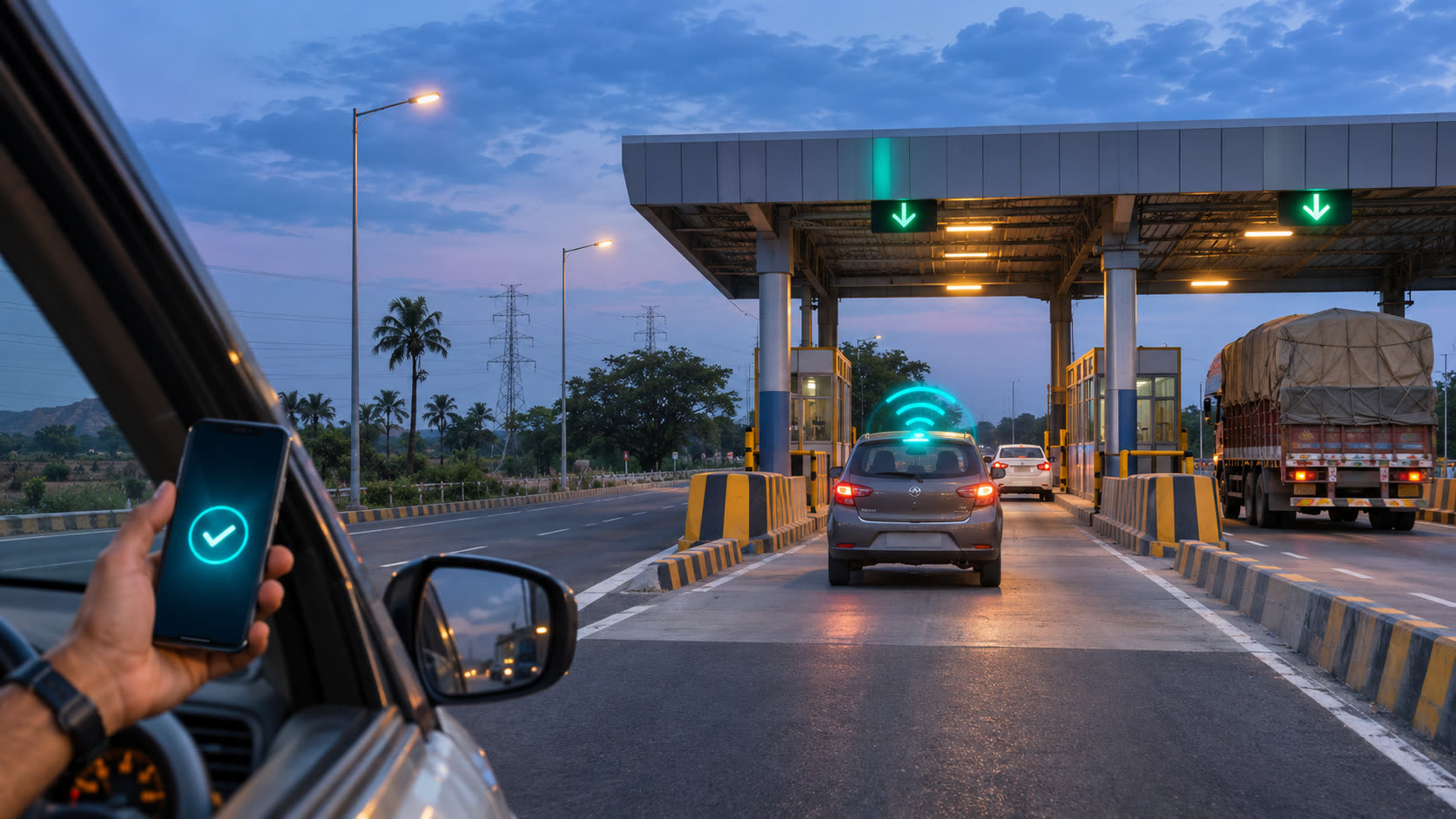
National-highway and expressway toll collection reportedly reached a record ₹6,640 crore in October 2026, while cash collection fell to about ₹4 crore as FASTag and UPI became the dominant payment routes, according to a 15 Nov 2026 report by The Times of India. For drivers and transporters, the immediate takeaway is not a newly announced toll hike: it is that a working FASTag and a usable digital payment backup are becoming increasingly important for paying at highway fee plazas.
The reported record reflects the total collected across national highways and expressways. It does not, by itself, change the fee at any particular toll plaza. Drivers should check the applicable route charge separately when budgeting a journey.
Key takeaways
- The Times of India reported around ₹6,640 crore in national-highway and expressway toll collection for October 2026, about 16% above ₹5,715 crore in October 2025.
- Reported cash collection fell to about ₹4 crore in October 2026 from ₹84 crore in October 2025, while UPI collection reached around ₹100 crore in October 2026.
- IHMCL's official October 2026 report provides plaza-wise ETC counts and amounts, but warns that the data can change after settlement and reconciliation.
- A February 2026 MoRTH/PIB release set out the move toward FASTag or UPI at national-highway fee plazas; it described the cash-free transition as a planned measure, not a blanket new toll rate.
What changed in October
The Times of India said the October 2026 figure was about 16% higher than the ₹5,715 crore collected in October 2025. It also reported that the previous monthly high was around ₹6,185 crore in May 2026. The comparison is useful for understanding the scale of highway payments, but it should not be read as proof that every driver paid more at every plaza.
Monthly toll receipts can move for several reasons, including traffic volume, the length of the network under fee collection, changes in vehicle mix, annual fee revisions and the use of annual passes. A national total can therefore rise even when an individual route's notified fee is unchanged. The October figure was reported by the newspaper from officials; the report did not announce a new fee schedule.
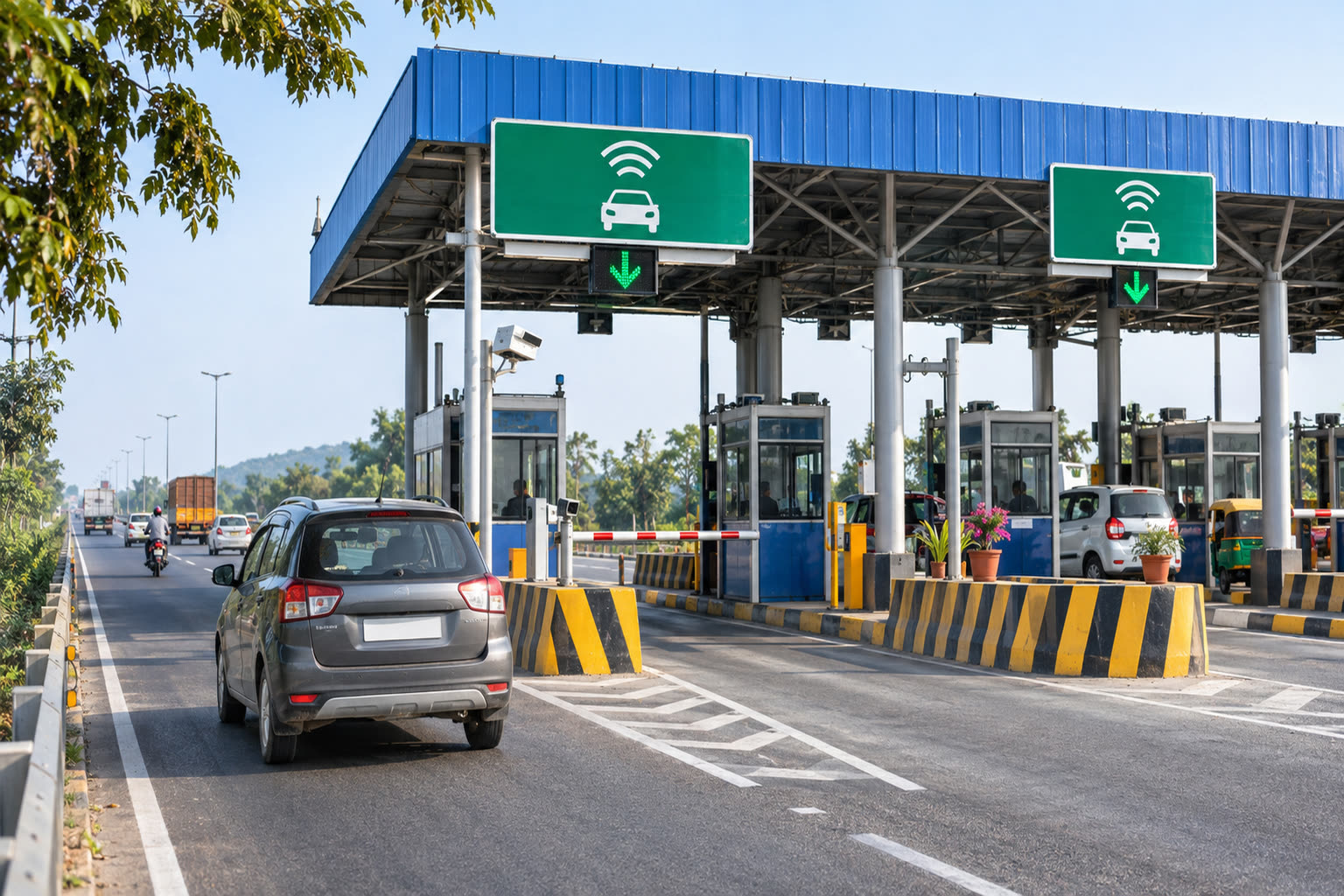
The more visible change was in the payment mix. The report put October 2026 cash collection at about ₹4 crore, compared with ₹84 crore in the same month of 2025. It also put October 2026 UPI collection at around ₹100 crore, compared with no UPI collection in its year-earlier comparison. These figures point to a payment-system shift rather than a change in the underlying toll due on a vehicle category.
Why the payment shift matters on a trip
For a private car driver, a functional FASTag reduces the chance of being diverted into a payment problem at a busy plaza. For a transporter, digital records make it easier to compare a trip sheet with toll deductions, especially when several vehicles use the same corridor. A transaction message, plaza name, date and vehicle details are useful records when a deduction needs to be checked.
For trip budgeting, keep the road fee and fuel cost as separate numbers. The toll-charge calculator can help estimate the fee component, while the fuel cost calculator can estimate the vehicle's fuel spend. Combining both estimates in the road-trip planner gives a more realistic view of the cash required for a long drive, without assuming that a higher national collection total means a higher charge on your chosen route.
What the official data confirms
The Indian Highways Management Company Limited (IHMCL) has published a vehicle-class-wise ETC report for October 2026. It lists transaction counts and amounts for individual toll plazas across the network. IHMCL also says the figures are subject to post-settlement adjustments, reconciliation and the distribution of revenue among agencies at closed-system toll facilities. That is why the official plaza-level file should be treated as a live operational dataset, while the national record cited in the news report should remain attributed to the reporting outlet.
There is supporting evidence of stronger toll activity in a separate company filing. IRB Infrastructure Developers reported October 2026 toll revenue of ₹836 crore, up about 26% from ₹664 crore in October 2025 across its own highway portfolio. This is not an alternative to the all-network ₹6,640 crore figure; it is a company-specific result that shows why one operator's traffic and toll receipts should not be confused with the national total.
What the FASTag and UPI rules mean
A 20 Feb 2026 MoRTH release published by the Press Information Bureau said NHAI was working toward discontinuing cash transactions at national-highway fee plazas from 1 Apr 2026 and processing payments through FASTag or UPI. The release said FASTag penetration had crossed 98% at that time. It also stated that, under the applicable fee rules, a vehicle without a valid functional FASTag that pays in cash can be charged twice the applicable user fee, while a UPI payment can attract 1.25 times the applicable fee.
The wording matters: the release described the cash-free move as a planned transition. It should not be treated as proof that every plaza has identical operating instructions or that cash has disappeared at every location. Before a long trip, check that the tag is attached correctly, the linked account has sufficient balance and the vehicle category is recorded correctly. The guide on checking FASTag balance and wrong deductions covers the records to keep if a transaction needs review.
What to watch next
The next useful indicators will be the monthly IHMCL data, any NHAI or MoRTH notice on payment operations and whether UPI continues to grow at fee plazas. A future notice may also clarify how cash handling works at individual facilities during the transition. Until then, a reported national collection record should be read as a network and payment trend, not as a blanket increase in the toll rate.
For readers planning a highway trip, the practical checklist is simple: confirm the route's toll estimate, keep the FASTag active, retain transaction alerts and set aside the fuel budget separately. Those checks matter more to the journey than the national collection record alone.
Sources
- The Times of India, “Strong economy drives NH toll to record 6,640cr in Oct”, 15 Nov 2026
- Indian Highways Management Company Limited, “VC-wise ETC Data for the Month of October 2026”, 13 Nov 2026
- Ministry of Road Transport and Highways / Press Information Bureau, “Cash Payments at National Highway Fee Plazas Likely to be Discontinued from 1st April 2026”, 20 Feb 2026
- IRB Infrastructure Developers, “Toll Revenue for the month of October 2026”, 10 Nov 2026