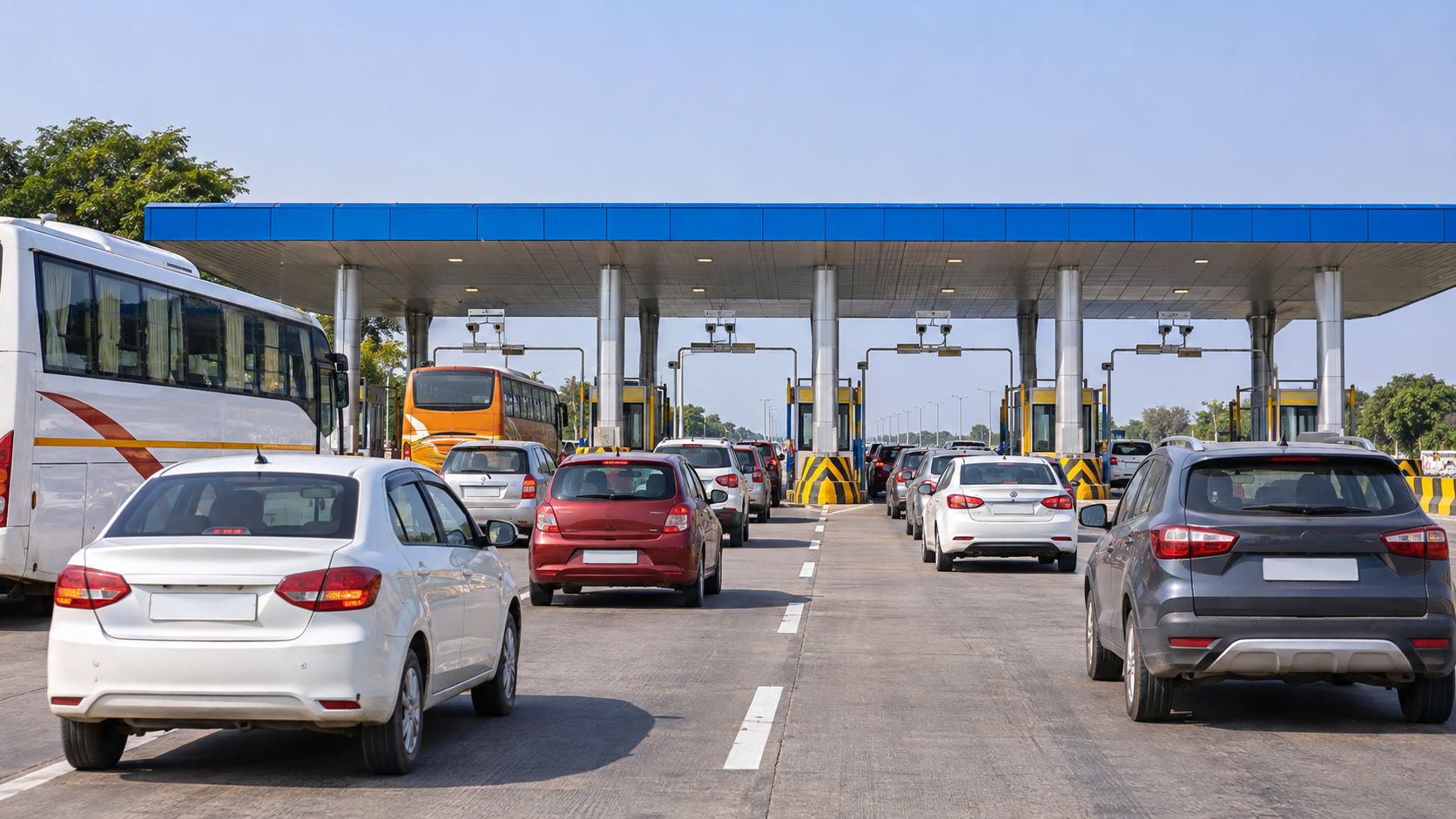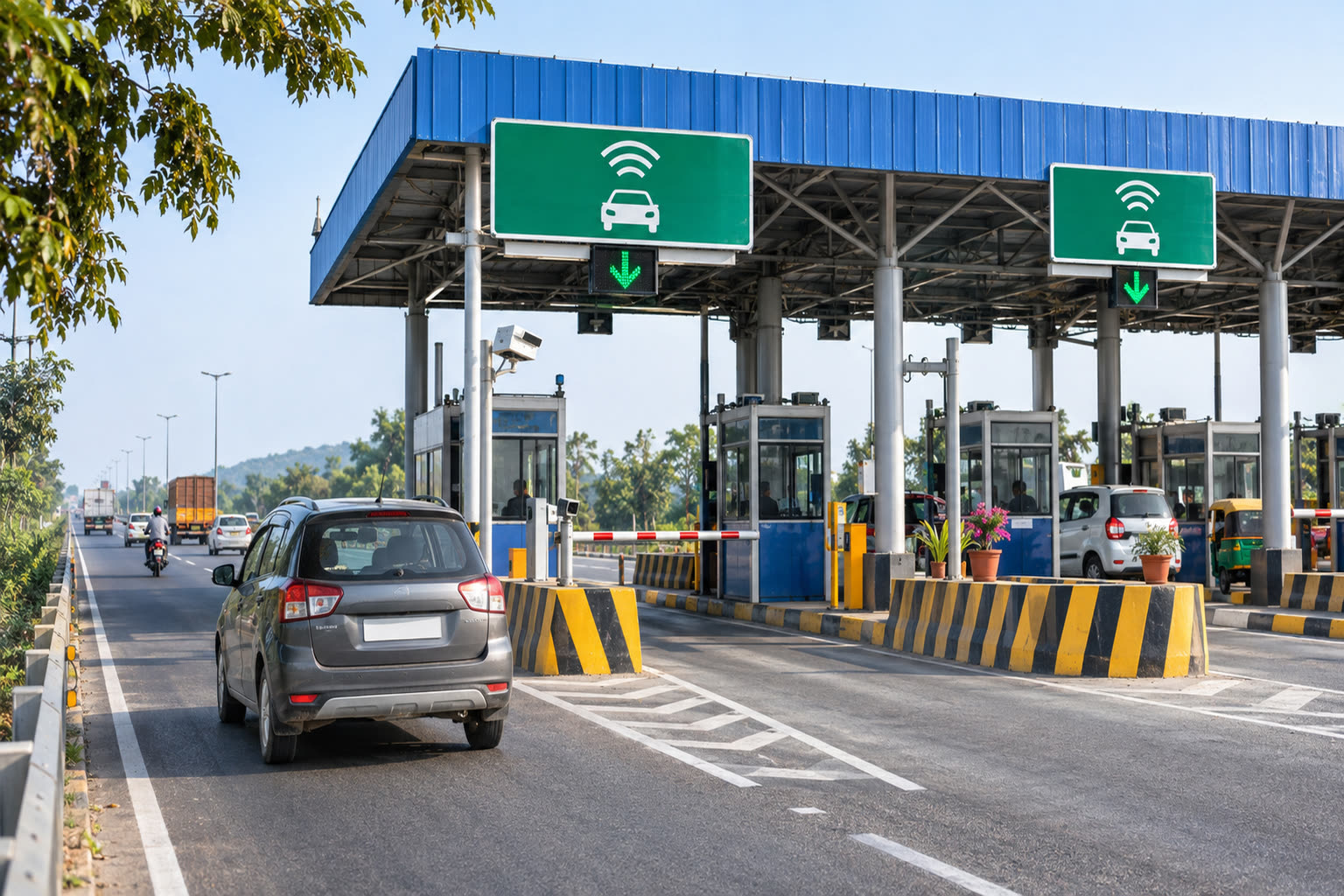
India's Concessional Local Pass is available at eligible National Highway toll plazas for non-commercial vehicle owners who live within 20 km of the plaza. The annual fee is ₹1,500 outside municipal or local town limits and ₹3,000 inside those limits, but the pass works only at the specific plaza for which it is issued.
The rule took effect on 1 Nov 2026. With the Ministry of Road Transport and Highways (MoRTH) saying the facility will be available through the Rajmargyatra app from 1 Dec 2026, drivers should check the plaza's eligibility and collection system before assuming that living nearby is enough.
Key takeaways
- The pass is for eligible non-commercial vehicles with a valid, functional FASTag registered for non-commercial use.
- The owner must reside within 20 km of the fee plaza, and the pass is valid only at that one plaza.
- The annual fee is ₹1,500 for a plaza outside municipal or local town limits, or ₹3,000 for one inside those limits.
- It is not available on closed user-fee stretches or where a service road or alternative road is available.
- MoRTH has announced plaza availability from 1 Nov and Rajmargyatra app access from 1 Dec 2026.
What the FASTag Local Pass changes
The Gazette notification G.S.R. 917(E), dated 26 Oct 2026, amended the National Highways Fee (Determination of Rates and Collection) Rules, 2008. It created an annual Concessional Local Pass alongside the existing monthly local-pass option. The amended rule came into force on 1 Nov 2026.
The policy is aimed at residents who repeatedly cross the same nearby fee plaza for local travel. The Economic Times reported that the ministry's stated use cases include regular trips for work, education and other daily needs. In practical terms, the scheme changes the payment pattern from repeated toll transactions or monthly renewals to one annual fee, but only for the designated plaza.
| Where the fee plaza is located | Annual Local Pass fee |
|---|---|
| Outside municipal or local town limits | ₹1,500 |
| Within municipal or local town limits | ₹3,000 |
The rates can be revised by the Central Government every year, with a revision taking effect on 1 Apr. The fee is therefore not a permanently fixed amount for future years.
Who can qualify
The Gazette sets out three core conditions. First, the applicant must own a mechanical vehicle with a valid and functional FASTag registered for non-commercial use. Second, the person must reside within 20 km of the fee plaza. Third, the pass is tied to that particular plaza and cannot be used at another plaza on the same highway or elsewhere.
The 20-km distance condition is not the only test. The rule excludes a National Highway or expressway where the fee is collected through a closed user-fee collection system. It also bars the pass where a service road or alternative road is available for the driver, owner or person in charge of the vehicle.
That means a private car owner who lives close to a toll plaza may still be ineligible. Commercial vehicles are outside the non-commercial eligibility described in the rule, and a pass issued for one plaza cannot be treated as a route-wide toll subscription.
How and when to get it
MoRTH's 27 Oct release says the Annual Local Pass is available at eligible toll plazas from 1 Nov 2026 and will also be available through the Rajmargyatra app from 1 Dec 2026. The date matters because the Gazette creates the entitlement, while the plaza and app processes determine how an owner is verified and issued the pass.
NHAI's Policy Circular No. 17.3.8, dated 31 Oct, says an existing monthly local-pass holder with a functional FASTag can migrate to the annual pass through the renewal process when the active monthly pass expires from 1 Dec. It also says the process can be handled manually at the toll plaza using the required details shown in Rajmargyatra. Where there is no previous local-pass record in the acquiring bank's system, the circular allows eligibility verification at the plaza or through the app's Local Pass module.
The circular also says the eligibility reflected in Rajmargyatra should prevail where there is a discrepancy. Because the annual-pass provision in the app was still being made when the circular was issued, drivers should rely on the current status shown by the app or the eligible plaza rather than an old screenshot, a forwarded message or an unverified list.
What it means for local drivers
The strongest use case is a non-commercial vehicle that crosses one eligible plaza regularly. The annual fee may make recurring local travel easier to budget, but the actual value depends on the plaza's current monthly-pass terms and how often the vehicle crosses it. The official rule does not make the pass valid across a wider journey, so normal tolls can still apply at other plazas.
For a longer trip, check the complete route rather than assuming that a Local Pass covers every toll on the corridor. FuelPrice's toll-charge calculator can help identify the toll points on a planned route, while the road-trip planner can be used to review the wider trip before departure.
Checklist before applying
- Confirm that the FASTag is active, functional and linked to the same non-commercial vehicle.
- Check that the residence is within 20 km of the specific fee plaza, not simply somewhere near the highway.
- Verify that the plaza is eligible and does not use a closed user-fee system.
- Check whether a service road or alternative road disqualifies the location.
- Use the Rajmargyatra app or the plaza's official helpdesk for the latest verification and issuance process.
What to watch next
The next operational milestone is the announced Rajmargyatra rollout on 1 Dec 2026. Users should also watch for the annual fee revision cycle from 1 Apr and for any plaza-specific guidance from NHAI or the toll-collection agency. Until then, the key distinction is simple: this is a plaza-specific concession for eligible nearby residents, not a replacement for every FASTag toll or a universal annual highway pass.
Sources
- Ministry of Road Transport and Highways — National Highways Fee (Determination of Rates and Collection) (Fifth Amendment) Rules, 2026 — 26 Oct 2026
- Press Information Bureau — Government of India Introduces Concessional Local Pass for National Highway Users Living Near Fee Plazas — 27 Oct 2026
- National Highways Authority of India — Policy Circular No. 17.3.8/2026 on implementation of the Concessional Local Pass — 31 Oct 2026
- The Economic Times — Road ministry introduces concessional local pass for FASTag user living near toll plazas — 27 Oct 2026