Euler Motors said on 5 October 2026 that its share of India’s electric four-wheeler cargo light-commercial-vehicle segment had risen to nearly 25%, with the company reporting around 6,500 vehicles sold during the period it cited. For Indian delivery and small-fleet operators, the more useful question is not the headline share: it is whether an electric cargo vehicle fits a route after charging time, payload, financing and policy eligibility are counted.
Key takeaways
- ET Auto reported Euler’s nearly 25% figure as a company statement about the electric four-wheeler cargo LCV segment, not as a government registration series.
- Euler said monthly sales rose from roughly 50 vehicles in early 2025 to nearly 1,000 by September 2026, while segment EV penetration moved from about 1% to around 5%.
- Business Standard quoted a different estimate of roughly 29–30% for Euler’s share of the electric N1 segment; the differing denominators should not be treated as one official market-share number.
- Delhi’s Electric Vehicles Policy 2026 sets a stepped purchase incentive for eligible electric N1 goods vehicles, but the benefit is tied to eligibility, residency and Delhi registration.
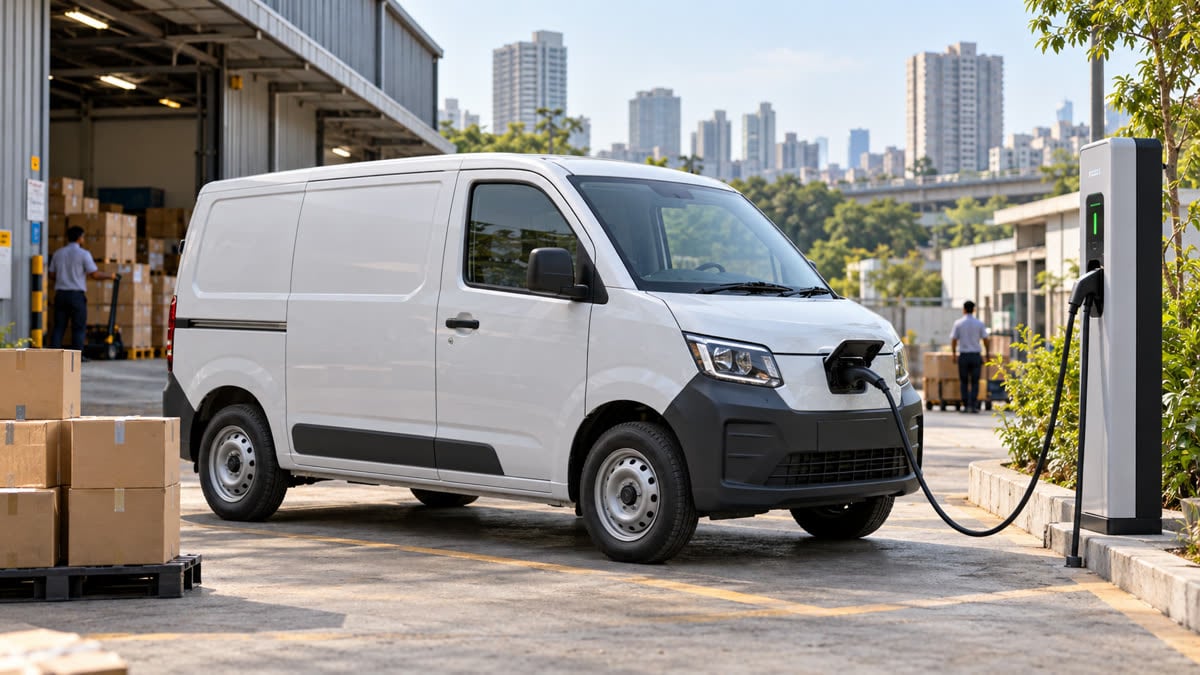
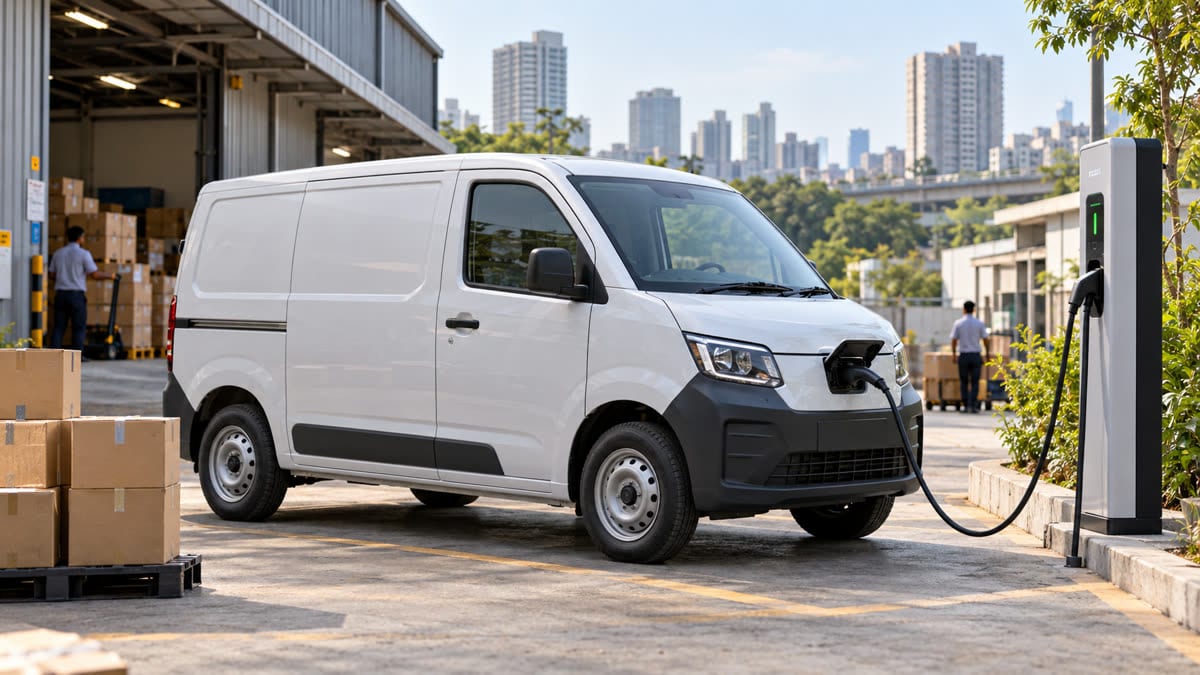 Illustrative editorial image of an unbranded electric cargo vehicle at a delivery depot; it is not a photograph of an Euler model. Credit: FuelPrice AI-generated editorial illustration.
What Euler reported on 5 October
ET Auto reported that Euler said its electric four-wheeler cargo LCV share had grown from under 2% to nearly 25%, led by its Storm EV and Turbo EV 1000 products. The company said it had sold around 6,500 units during the period it cited, with monthly sales increasing from roughly 50 in early 2025 to nearly 1,000 in September 2026. ET Auto also reported Euler’s estimate that electric vehicles’ share of the broader four-wheeler cargo segment had risen from about 1% to around 5%.
Those figures need careful reading. They are company-reported estimates, and the reports do not establish an independent all-India registration base or a uniform measurement period. Business Standard, reporting on the same day, quoted Euler at around 29–30% of the electric N1 segment. The gap between nearly 25% and roughly 29–30% is best understood as a difference in segment definition or time window, rather than a reason to select one figure silently.
Why the market-share number matters to fleets
A rising share indicates that electric cargo vehicles are moving beyond pilot deployments into more regular delivery and light-commercial use. It does not mean that an EV will automatically be cheaper for every operator, or that a reported market share is a guarantee of uptime, resale value or savings.
Route design is central. A vehicle that returns to a depot every evening may be able to charge in a predictable window, while a multi-shift operation or a route with variable payloads may need faster charging, a larger battery or operational backup. Electricity tariff, charging losses, maintenance, finance cost, insurance, battery warranty and the cost of idle time all belong in the comparison. A fleet manager can use the fuel cost calculator to establish a baseline for an existing vehicle, but the result should use the fleet’s actual distance, load and energy prices.
Delhi’s confirmed incentive benchmark
The official Delhi Electric Vehicles Policy 2026 gives a concrete example of how a state incentive can affect the upfront comparison. For eligible electric four-wheeler goods vehicles in the N1 category, it lists a purchase incentive of ₹1,00,000 in the first policy year, ₹75,000 in the second year and ₹50,000 in the third year.
The policy says purchase incentives are disbursed through direct benefit transfer to eligible individual buyers, proprietary firms, agencies or companies resident in the National Capital Territory of Delhi, with the vehicle registered in Delhi. It also says vehicle eligibility is aligned with PM E-DRIVE and subsequent schemes. The policy therefore describes a conditional benefit, not a universal national subsidy or an automatic discount on every electric cargo vehicle.
Delhi’s policy also lists a ₹50,000 scrapping incentive for an eligible electric four-wheeler goods carrier when a new EV is bought within six months of the Certificate of Deposit after scrapping a Delhi-registered BS-IV-and-below N1 vehicle. Operators should confirm the current application process and model eligibility before treating any policy amount as part of a purchase calculation.
What a fleet should check before comparing
- Vehicle class and payload: Confirm the gross-vehicle-weight class, usable payload, body configuration and duty cycle. “Electric cargo vehicle” covers more than one operating use, so a segment percentage is not a substitute for a vehicle-level specification.
- Daily route and charging window: Record kilometres, stops, average load, return-to-base timing and the number of shifts. Check whether the intended depot or public network can support the duty cycle using the EV charging directory.
- Total ownership cost: Compare purchase price, eligible incentive, loan or lease cost, insurance, scheduled maintenance, tyres, battery warranty and expected downtime. Actual offers vary by buyer profile and vehicle, so a headline subsidy should not be treated as a guaranteed final price.
- Energy inputs: Use the latest fuel-price reference for the incumbent diesel vehicle and the operator’s actual electricity tariff for the EV. Include charging losses and any demand or connection charges where relevant.
- Route-level outcome: Run the proposed trips through the road-trip planner and compare the result with real dispatch data. This helps separate a suitable urban delivery route from a route that would require unplanned charging or replacement capacity.
What to watch next
The next useful test is whether independent registration data confirms the broader rise in electric four-wheeler cargo adoption, rather than only a single manufacturer’s reported share. Fleet operators will also need to watch whether other states introduce comparable commercial-EV incentives, how quickly depot and public charging expand, and whether electric adoption spreads beyond the cities and tier-II and tier-III markets highlighted in the company’s update.
For buyers outside Delhi, the policy lesson is limited but practical: check the rules in the state where the vehicle will be registered and operated. Incentive year, eligible vehicle category, residency condition, registration requirement and payment route can change the effective cost.
Reader takeaway
Euler’s update is a useful signal that electric cargo vehicles are becoming more visible in India’s light-commercial market, but the nearly 25% figure is a reported segment estimate, not a promise of savings for every fleet. The sound comparison is route-specific: match payload and uptime needs with charging access, then calculate the full ownership cost after only those incentives for which the operator and vehicle are actually eligible.